Financial Planning In Healthcare Powerpoint Presentation Slides

Rating:
95%
Financial Planning In Healthcare Powerpoint Presentation Slides
Slide 1 of 43
Favourites Favourites

Try Before you Buy Download Free Sample Product

Audience Impress Your
Audience
Editable 100%
Editable
Time Save Hours
of Time
The Biggest Sale is ending soon in
0
0
:
0
0
:
0
0
Rating:
95%
This complete deck is oriented to make sure you do not lag in your presentations. Our creatively crafted slides come with apt research and planning. This exclusive deck with forty-three slides is here to help you to strategize, plan, analyze, or segment the topic with clear understanding and apprehension. It is compatible with Google Slides which makes it accessible at once and can be saved in multiple image formats such as JPEG, PNG and document formats such as PDF. Utilize ready to use presentation slides on Financial Planning In Healthcare Powerpoint Presentation Slides with all sorts of editable templates, charts and graphs, overviews, analysis templates. This presentation deck can be used by all professionals, managers, individuals, internal-external teams involved in any company organization.

Content of this Powerpoint Presentation


Slide 1: This slide introduces Financial planning in healthcare. State Your Company Name and begin.
Slide 2: This slide shows Content of the presentation.
Slide 3: This slide presents Financial Performance Key Trends describing the current financial trends in healthcare industry.
Slide 4: This slide represents Healthcare Expenditure Comparison describing the sources of revenue and finance available with the healthcare industries.
Slide 5: This slide displays Healthcare Financing Models used to show the financial system analysis in a healthcare industry.
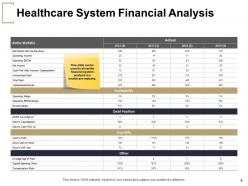
Slide 6: This slide showcases Healthcare System Financial Analysis comparing healthcare financial system on the basis of 2 alternatives i.e. equity and debt.
Slide 7: This slide shows Healthcare Financial Statement Under Two Alternatives i.e. direct and indirect costs.
Slide 8: This slide presents Direct and Indirect Healthcare Costs Calculation.
Slide 9: This slide displays Healthcare Industry Key Stats describing the general healthcare stats worldwide to give the user insights on healthcare industry.
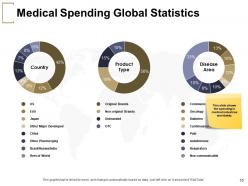
Slide 10: This slide represents Medical Spending Global Statistics of medical industries worldwide.
Slide 11: This slide showcases Healthcare Industry Revenue Cycle through which revenue is generated in healthcare industry.
Slide 12: This slide shows Healthcare Market Size Analysis of healthcare industry dynamics.
Slide 13: This slide presents Healthcare Financial Report.
Slide 14: This slide displays Healthcare Marketing Trends that exists in healthcare industry.
Slide 15: This slide represents Healthcare Management KPI Dashboard Showing Incidents Severity and Consequences.
Slide 16: This slide showcases Healthcare Management KPI Dashboard for Organizations.
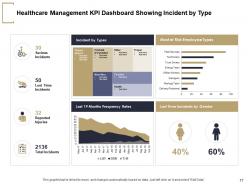
Slide 17: This slide shows Healthcare Management KPI Dashboard Showing Incident by Type.
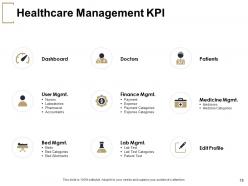
Slide 18: This slide presents Healthcare Management KPI with Total and Pending Patient Cases.
Slide 19: This slide displays Healthcare Management KPI with additional text boxes.
Slide 20: This slide represents Healthcare Management KPI Metrics Showing Incidents Length of Stay.
Slide 21: This slide showcases Healthcare Management KPI Metrics Showing Treatment Cost and Waiting Time.
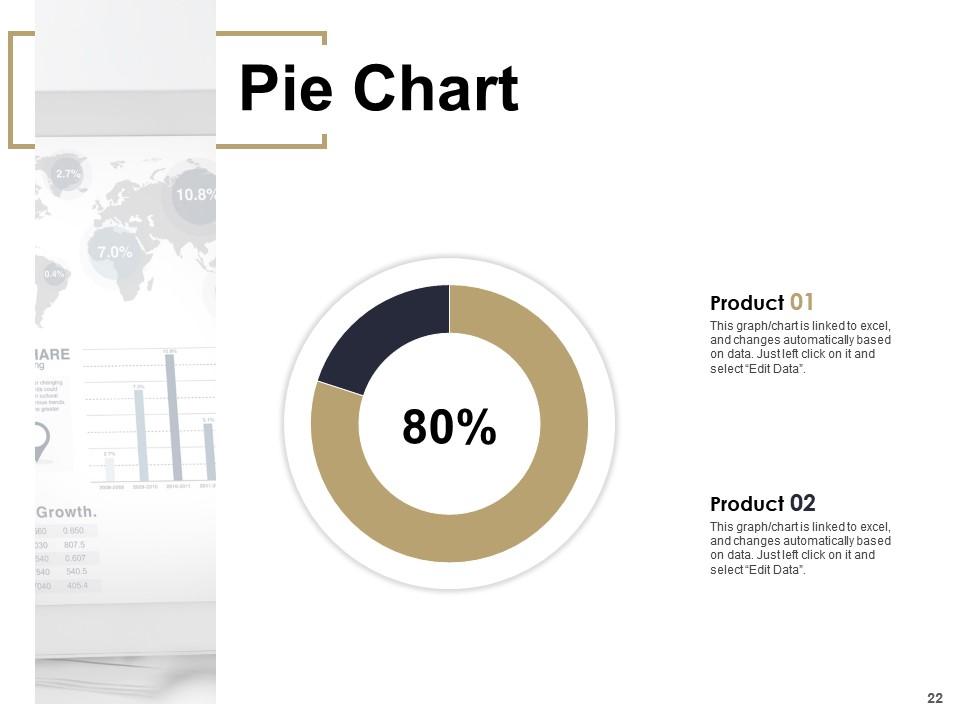
Slide 22: This slide displays Pie Chart with data in percentage.
Slide 23: This slide shows Bar Chart with two products comparison.
Slide 24: This slide showcases Area Chart with two products comparison.
Slide 25: This slide reminds about 15 minutes coffee break.
Slide 26: This slide displays Financial Planning in Healthcare Icons.
Slide 27: This slide is titled as Additional Slides for moving forward.
Slide 28: This is Mission slide with related imagery and text.
Slide 29: This is Meet Our Team slide with names and designation.
Slide 30: This is About Our Company slide to show company specifications etc.
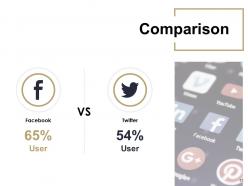
Slide 31: This is a Comparison slide to state comparison between commodities, entities etc.
Slide 32: This is a Financial slide. Show your finance related stuff here.
Slide 33: This is a Quotes slide to convey message, beliefs etc.
Slide 34: This is a Location slide with maps to show data related with different locations.
Slide 35: This is a Timeline slide to show information related with time period.
Slide 36: This is another slide continuing timeline.
Slide 37: This slide shows Important Notes. Post your important notes here.
Slide 38: This is a Puzzle slide with text boxes.
Slide 39: This is Our Target slide. State your targets here.
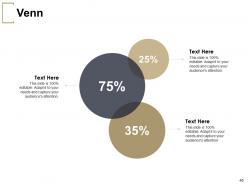
Slide 40: This is a Venn slide with text boxes to show information.
Slide 41: This is a Lego slide with additional text boxes.
Slide 42: This is a Idea or Bulb slide to state a new idea or highlight information, specifications etc.
Slide 43: This is a Thank You slide with address, contact numbers and email address.

FAQs for Financial Planning In Healthcare

So there are four big things you gotta focus on. Budgeting and forecasting is the obvious one - but make sure you're planning for seasonal swings and when regulations change (which happens constantly, ugh). Revenue cycle management is critical because insurance delays will kill your cash flow. Staffing and supplies are probably your biggest money drains, so watch those closely. Oh, and don't forget capital planning for new equipment and upgrades. Honestly though? Start by figuring out where you're already wasting money - audit your current processes first.

Focus on stuff that actually makes care better while saving money - that's the sweet spot. Preventive programs are gold. So is cleaning up your admin mess and using data to spot wasteful spending. Training your staff well saves you tons down the road - fewer screwups, fewer readmissions. Don't just slash budgets randomly though, that usually blows up in your face. Look at your supply chain instead, renegotiate contracts, maybe automate some of the boring repetitive tasks. Start with an audit to find where better care actually costs less. Those opportunities exist more than you'd think.

So basically, you're switching from getting paid per visit to getting paid based on how well your patients actually do. Yeah, the first year's gonna suck financially - new tech costs, training everyone, totally different cash flow. But honestly? Practices that nail this make way better money long-term since you're preventing problems instead of just fixing them after. You'll definitely need good data systems to track everything. My advice is start small - find your sickest patients first and focus your energy there. Way less overwhelming than trying to change everything at once.

Healthcare costs are absolutely crushing budgets right now - that old 3% annual increase is a joke. Your staff wages, supplies, equipment? All going up way faster than what you're bringing in. I'd bump your contingency fund to like 15-20% instead of 10%. Monthly cost tracking is huge - don't wait for those yearly reviews anymore. Build different scenarios for various inflation rates because honestly, who knows what's coming next? The whole game has shifted from just reacting to problems to actually predicting them. Quarterly adjustments are your friend here.

Dude, the tech side is honestly pretty wild now. AI can actually predict how many patients you'll see and what revenue to expect. Automated billing cuts way down on coding mistakes that drain your budget. Your EHR talks directly to financial systems - no more typing everything twice, thank god. Real-time dashboards show cash flow and claims instantly. The predictive stuff is clutch for planning capacity ahead of time. I'd start by automating whatever manual process eats up most of your day. Build on that foundation once it's running smooth.

Start with your past 3-5 years of revenue data - patient volumes, seasonal patterns, all that stuff. Rolling forecasts work way better than those rigid annual budgets, especially after COVID basically broke everyone's predictions. Don't forget payer mix changes and any new services you're launching. Break expenses into fixed vs variable costs. Staff-to-patient ratios are huge to watch. Honestly, scenario planning saves your butt - best case, worst case, realistic case. Update monthly and actually compare what happened vs what you predicted. Otherwise you're just guessing with fancy spreadsheets.

Start with your historical data as the foundation. Then factor in stuff like new equipment, staffing changes, or any regulatory headaches coming down the pipe. Breaking everything out by department and cost center makes tracking so much clearer - you'll actually see where the money's bleeding out. Always build in contingency funds because healthcare throws curveballs constantly. Department heads need to be part of this process since they know their day-to-day operations way better than finance does. Run monthly variance reports religiously so you can catch problems before they snowball. Honestly, the earlier you spot budget drift, the easier it is to fix.

Look, financial planning is basically your safety net when everything goes sideways in healthcare. Build up some cash reserves first - trust me on this one. Then diversify where your money comes from so you're not totally screwed if one payer decides to mess with you. I'd also run those "what if" scenarios regularly. What happens if reimbursements tank by 10%? Patient volume drops? The places that survive are the ones actually thinking ahead instead of just hoping for the best. Oh, and start with your biggest risks - don't try to plan for everything at once.

Honestly, start with your billing - that's where most places bleed money. Get claims out faster and chase down those denials hard. Try negotiating better terms with suppliers while giving patients more flexible payment plans (cuts down on bad debt). Revenue cycle stuff is huge too - you'd be shocked how much gets missed just from sloppy coding or forgetting to bill for services. My cousin's clinic was losing like 15% just from that! If cash gets really tight, factoring receivables might help short-term. I'd do a quick audit of your billing timeline first though - see where things are getting stuck.

Ugh, regulatory changes are the worst - they mess with your forecasts constantly because new rules flip your costs and revenue upside down. Build way more flexibility into your budget than you think you need. Honestly, the changes never stop coming, so don't wait for annual planning. Set up quarterly reviews specifically for reg impacts. Keep bigger contingency funds too - learned that the hard way. Oh, and get tight with some healthcare finance consultants who know compliance stuff. They'll catch changes early and help you model what it'll cost before deadlines smack you in the face.

Look at operating margin first - that's your bread and butter for whether daily ops actually make money. Days cash on hand tells you survival time without revenue coming in. Accounts receivable turnover shows how fast you're collecting payments (this one's critical). Revenue cycle stuff matters too. Track denial rates and time from service to payment. Patient satisfaction scores now affect reimbursements, so can't ignore those anymore. Your payer mix is honestly make-or-break - government vs commercial insurance is night and day for profits. Pull these monthly instead of going crazy over single numbers. Trends matter way more.

Honestly, data analytics is a game-changer for healthcare budgeting. Pull info from your EHR and billing systems to spot actual patterns - seasonal spikes, which services make real money (trust me, it's surprising sometimes). Build dashboards that show financial and clinical metrics together in real-time. Your CFO will be thrilled to ditch the guesswork. Start with just one department first though. Get comfortable with what the data's telling you, then expand from there. Way better than the old "hope and pray" method we've all been using forever.

Look at both quick wins and long-term gains when you're putting money into healthcare infrastructure. Patient volume projections matter, plus all those regulatory compliance costs you can't avoid. Tech upgrades are honestly a pain because everything gets outdated so fast, but you'll fall behind without them. Don't forget staff training costs - that stuff adds up quick. Workflow disruptions during rollout are inevitable too. I'd start with investments that directly improve patient outcomes or cut operational costs. Those typically pay for themselves fastest. The sweet spot is finding things that boost quality while also making your operations more efficient.

Partnerships are honestly a game-changer for cutting costs and spreading risk around. Buy supplies together and you'll get way better bulk pricing. Split admin stuff too - why duplicate everything? Joint ventures work really well, like instead of every hospital building their own cardiac wing, just team up and share the investment. I've seen this work best when you find partners who are strong where you're weak. Look at whatever's draining your budget most and see if other health systems nearby would want to collaborate there. Makes total sense financially.

Honestly, the money stuff will drive you crazy. Revenue streams are all over the place - grants vanish without warning, donations spike and crash randomly, and don't get me started on how slow Medicaid pays out. You're constantly trying to balance serving everyone (regardless of what they can afford) with board members asking why you can't just "break even." It's basically impossible math. Meanwhile you're fighting other nonprofits for the same donor pool while trying to provide quality care that costs way more than insurance actually covers. My biggest tip? Stash away 90 days of operating expenses if you can swing it, and spread your funding sources around.

Ratings and Reviews

95% of 100
Review Form
Write a review
Most Relevant Reviews
  1. 100%

    by Curtis Herrera

    Best Representation of topics, really appreciable.
  2. 100%

    by Dusty Hoffman

    Great designs, really helpful.
  3. 100%

    by Darell Vargas

    Best way of representation of the topic.
  4. 80%

    by Dewitt Soto

    Thanks for all your great templates they have saved me lots of time and accelerate my presentations. Great product, keep them up!

4 Item(s)

per page: