


Digital health platform for consumers





Try Before you Buy Download Free Sample Product
 Impress Your
 Audience
 100%
100% Editable
 Save Hours
 of Time


Track your wellness digitally and book the consultation online with this Digital Health Platform For Consumers. Everything is being converted digitally to provide a seamless and hassle-free experience to customers. Therefore, use our proficient and expertly-designed E-health customer PowerPoint theme and explain the services available for users on these platforms. Elucidate the benefits of digital health programs with our expertly-designed wellness care PPT template. Discuss the elements and technologies by using our eye-catching online healthcare program PowerPoint design. Explain the advantages and disadvantages of this system through this telehealth PPT layout. Mention the features of the healthcare platforms, such as customer choosing care, managing prescription, and maintaining health with this e-health PowerPoint design. Create awareness about the digital health program, so clients can make informed choices and outline its importance in pandemic times. Grab this aesthetically-planned telehealth PPT theme and deliver an outstanding presentation to impress your audience.
People who downloaded this PowerPoint presentation also viewed the following :
Content of this Powerpoint Presentation
Description:
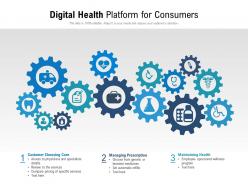
The image presents a conceptual framework for a "Digital Health Platform for Consumers," highlighting the interconnected nature of various health services functionalities, represented by interlocking gears with different health-related icons.
Below the central graphical element, three key areas of service are outlined:
1. Customer Choosing Care:
This section emphasizes customer empowerment through access to physicians and specialists, the ability to review services, and the comparison of pricing for specific healthcare services. It suggests a customer-centric model where choice and transparency are paramount.
2. Managing Prescription:
This segment addresses the management of prescriptions, offering options such as choosing between generic or branded medicines and setting up automatic refills, highlighting convenience and ease of use.
3. Maintaining Health:
The last point focuses on health maintenance, discussing an employee-sponsored wellness program. This aspect underlines the preventative approach of the digital health platform, where maintaining health is as crucial as treating illnesses.
Use Cases:
The slide can be utilized in various industries which emphasize health and well-being, personalized healthcare, or employee wellness programs. Below are seven specific industries where such a slide might be relevant:
1. Healthcare Technology:
Use: To introduce digital platform features for patient care
Presenter: Product manager
Audience: Healthcare providers and investors
2. Pharmaceuticals:
Use: Demonstrating prescription management services
Presenter: Marketing strategist
Audience: Pharmacy chains and pharmaceutical representatives
3. Insurance:
Use: Presenting digital tools for customer engagement and service comparison
Presenter: Insurance product developer
Audience: Insurance brokers and clients
4. Corporate Wellness:
Use: Explaining employee wellness programs supported by digital platforms
Presenter: HR benefits coordinator
Audience: Company executives and employees
5. Healthcare Consulting:
Use: Advising healthcare organizations on enhancing consumer engagement
Presenter: Healthcare consultant
Audience: Hospital management and administration staff
6. Digital Health Startups:
Use: Pitching a digital health platform to potential investors or partners
Presenter: Startup founder
Audience: Venture capitalists and technology partners
7. Telemedicine Services:
Use: Showcasing the remote health management features of a digital platform
Presenter: Telemedicine program director
Audience: Medical practitioners and telehealth advocates
Digital health platform for consumers with all 2 slides:
Use our Digital Health Platform For Consumers to effectively help you save your valuable time. They are readymade to fit into any presentation structure.
FAQs for Digital health
Honestly, AI diagnostics are blowing up right now - plus remote monitoring and genetic-based personalized medicine. Telemedicine isn't going anywhere after COVID (thank god, because waiting rooms suck). Wearables are getting insane too, tracking blood oxygen and catching diseases early. Mental health apps are huge. Oh, and digital therapeutics - that's where the real money is. If you're thinking about investing, don't try to revolutionize everything at once. Focus on stuff that plays nice with how doctors already work instead of forcing them to completely change their systems.
Honestly, telemedicine is a game-changer for breaking down those annoying barriers that stop people from getting care. Rural patients don't have to drive three hours to see a specialist anymore. Working parents can squeeze in appointments without taking half a day off. Follow-ups become way less of a hassle, so people actually stick to their treatment plans - which is huge for managing chronic conditions. Remote monitoring catches problems early too, before they spiral. My advice? Start small with routine check-ins and see how it goes from there.
So data analytics is what makes those health apps actually worth downloading. Your Fitbit data, medical records, all that stuff gets crunched into something doctors can use. Like spotting patterns before you get sick, or figuring out which treatments work best for people like you. Pretty neat how it can predict health issues early - honestly beats waiting until something's already wrong. The key thing? Don't just fall for flashy interfaces. Look for apps that actually explain how they're analyzing your data, not just showing you colorful charts.
Ugh, regulatory stuff is such a pain for digital health companies. FDA approvals drag on forever - we're talking years sometimes. The guidelines are super vague too, so companies just have to guess what they actually need to do. Smaller startups get hit the hardest since compliance costs are brutal when you don't have deep pockets. Oh and don't even get me started on international expansion - every country has totally different rules. My advice? Build those regulatory timelines into your planning from day one. Maybe find partners who've already been through this mess before. It'll save you major headaches later.
Honestly, these things are like having a personal health spy on your wrist. They track your steps, heart rate, sleep, stress - basically everything. The cool part? You start seeing patterns you'd never notice otherwise. Like your heart rate spiking before you actually feel sick, or how that 3pm latte totally wrecks your sleep. I'll admit I got way too obsessed with hitting my daily goals for a while there. But having real data instead of just guessing makes such a difference. You can actually tweak your habits based on what's really happening with your body.
Honestly, bias is probably the scariest one - AI can totally screw over certain groups if the training data sucks. Privacy's another huge mess since these systems hoover up insane amounts of patient info. When AI screws up a diagnosis, who gets sued? The doctor? The tech company? It's murky as hell. Patients also can't understand how these black box systems make decisions about their bodies, which feels pretty dystopian if you ask me. You'll want solid governance policies and regular bias testing. Oh, and maybe pray your lawyers are good.
Digital health is pretty amazing for closing healthcare gaps, honestly. Telemedicine connects rural areas to specialists they'd never reach otherwise. Mobile apps can teach health basics in different languages, and AI diagnostic tools slash costs - which is huge. Geography, language barriers, even doctor bias? These tech solutions sidestep all that mess. But here's what I've noticed - you can't just slap equity on at the end. Design for the people who actually need it most from day one. That means thinking about who has reliable internet and whether they're comfortable with tech. Otherwise you're just creating fancier barriers.
So interoperability is just letting different health systems talk to each other and share patient data. Without it? Total mess. Your doctor's EHR can't talk to the lab, pharmacy, or specialists - everything's in separate silos. It's probably the most annoying problem in healthcare tech right now, honestly. But when it works, patient records actually follow people around to different providers. Less errors, better care coordination, way less manual typing. Oh and if you're ever looking at health tech stuff, ask about their API capabilities first - saves you headaches later.
Make your platforms actually solve real problems first. Personalized content helps, plus automated reminders for meds and appointments. Easy communication with care teams is huge. Gamification works better than I expected - progress tracking, little achievement badges, whatever keeps them coming back. But here's the thing: if your 70-year-old patients need tech support from their grandkids just to log in, you've already lost. Keep it dead simple. Start small though. Pick one feature that fixes an actual pain point they're dealing with. Don't try to build everything at once.
Pick one super specific problem and nail it - you can't beat the big guys at everything. Get healthcare providers on your side early because they're basically your ticket to credibility. The regulatory stuff is honestly a pain but do it from day one or you'll hate yourself later. Focus on proving real results with actual data, not just cool features. And here's the thing - your users aren't messing around with fun apps, they're dealing with real health problems. So make something that actually helps, not another thing they'll download and forget about.
Yeah, privacy stuff is a massive headache for digital health apps. People freak out about their medical info getting leaked - can't really blame them with all those hospital data breaches lately. Makes users super hesitant to even try your app, let alone put in real information. The regulatory stuff is brutal too since HIPAA compliance isn't optional. I'd probably start small with less sensitive data first, build some trust. Oh and definitely be upfront about security from the get-go. People appreciate honesty about how you're protecting their stuff.
Honestly, social media's a total game-changer for health info. Real-time outbreak updates? Amazing. Finding patient communities and expert insights instantly? Love it. But here's where it gets messy - the garbage spreads faster than the good stuff. I swear I'll see solid diabetes tips right next to some wild vaccine conspiracy theory. Super frustrating. Before sharing anything health-related with patients, just double-check it against actual medical organizations or peer-reviewed stuff. Takes two seconds but saves you from looking like an idiot later.
So digital health is basically a game-changer for managing chronic stuff. Wearables and apps track your vitals, symptoms, medication - all in real time. When something looks off, you get alerts before it becomes a real problem. Telemedicine is honestly amazing too - no more skipping appointments when you're having a rough day and can't drive. Your doctors can jump in quickly when your data shows weird patterns. Oh, and there's tons of educational stuff plus support groups available whenever. I'd say just pick one tool that tackles whatever's bugging you most right now.
So remote monitoring is a game changer - you're basically watching your patients recover in real-time instead of just hoping they're doing okay between visits. Track vitals, see if they're taking meds, catch problems before they blow up into readmissions. Honestly, it beats that helpless feeling when someone shows up way worse than expected. Your patients feel more secure too knowing you've got eyes on their progress. Just don't get caught up picking the shiniest gadgets - go with whatever they'll actually use every day. Simple wins over fancy here.
So three big things to nail down: encrypt everything (data moving around AND stored), set up multi-factor auth for anyone logging in, and do regular security audits. Honestly, penetration testing is where most apps totally drop the ball - don't be that guy. Your dev team needs to code securely and stay on top of patches. Oh, and have a solid incident response plan ready because scrambling during a breach is the worst. I'd start with a risk assessment though, figure out what could actually hurt you first. Trust me on the pen testing thing - I've watched too many startups learn this lesson the hard way.
No Reviews