

Digital change powerpoint presentation slides






Try Before you Buy Download Free Sample Product
 Impress Your
Audience
 100%
Editable
 Save Hours
of Time


Digital change is the transformation of business processes through technology initiatives. Select Digital Change PowerPoint Presentation Slides to showcase the process of digital transformation. The technology change plan PowerPoint complete deck contains professionally designed slides such as components and barriers of digital change strategy, ways to achieve digital transformation, transformation roadmap, task distribution, transformation budget, value added from transformation, pie charts, bar chart, combo chart, etc. Digital transformation presentation graphics covers various topics and highlight important concepts like digitization, IT integration, digital transformation, technology change plan, digital revolution, information revolution and many more. IT integration Plan Presentation layout includes charts and graphs that enable users to analyze the outcomes and their impact on employees and organization. Icons used in slides represent each term effectively. Download digital change PPT slides to make an impressive business presentation. Our Digital Change Powerpoint Presentation Slides can be custom designed. Improvise on it to highlight your individuality.
People who downloaded this PowerPoint presentation also viewed the following :
Content of this Powerpoint Presentation
Slide 1: This is an introductory slide to Digital Change with imagery. Add company name and begin.
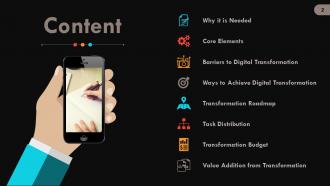
Slide 2: This is a Content slide stating- Why it is Needed, Ways to Achieve Digital Transformation, Barriers to Digital Transformation, Core Elements, Transformation Roadmap, Task Distribution, Transformation Budget, Value Addition from Transformation.
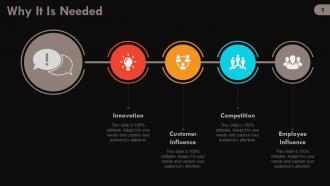
Slide 3: This slide states the reasons for Why It Is Needed with respect to- Innovation, Competition, Customer Influence, Employee Influence.
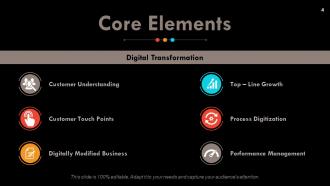
Slide 4: This slide showcases Core Elements of- Digital Transformation, Customer Understanding, Customer Touch Points, Digitally Modified Business, Top – Line Growth, Performance Management, Process Digitization.
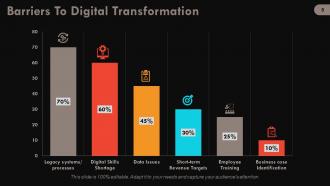
Slide 5: This slide showcases Barriers To Digital Transformation in a bar graph/ chart form.
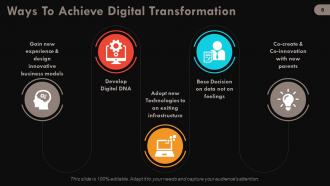
Slide 6: This slide states various Ways To Achieve Digital Transformation such as- Gain new experience & design innovative business models, Develop Digital DNA, Co-create & Co-innovation with new parents, Base Decision on data not on feelings, Adopt new Technologies to an exiting infrastructure.
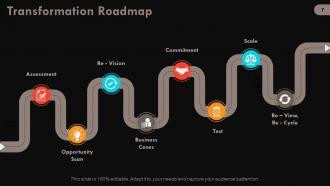
Slide 7: This slide showcases Transformation Roadmap flowchart. Use it to state the following points- Current Organisation, Transformed Organisation, Assessment, Opportunity Scan, Re - Vision, Business Cases, Commitment, Test, Scale, Re – View, Re - Cycle.
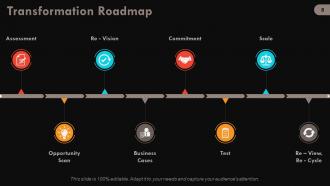
Slide 8: This slide also showcases Transformation Roadmap in a timeline form.
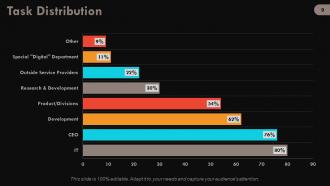
Slide 9: This slide showcases Task Distribution in a bar graph/ chart form.
Slide 10: This slide showcases Transformation Budget.
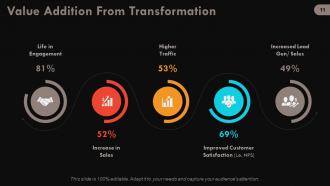
Slide 11: This slide shows Value Addition From Transformation with icon imagery.
Slide 12: This is a Donut Pie Chart slide to present product/ entity comparison, specifications etc.
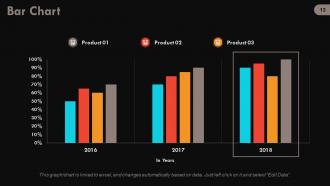
Slide 13: This is a Bar Chart slide to present product/ entity comparison, specifications etc.
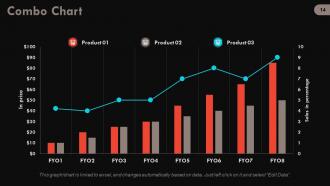
Slide 14: This is a Combo Chart to present product/ entity comparison, specifications etc.
Slide 15: This slide is titled Additional Slides to move forward. You can change the content as per need.
Slide 16: This slide states Our Mission with values, goals etc.
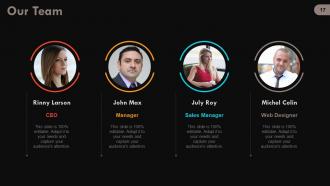
Slide 17: This slide showcases Our team with name, designation and image boxes.
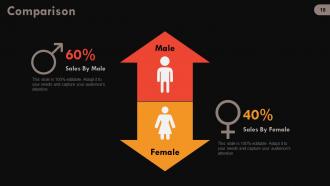
Slide 18: This slide showcases Comparison of two entities in male female imagery form.
Slide 19: This is Our Goal slide. State your goals here.
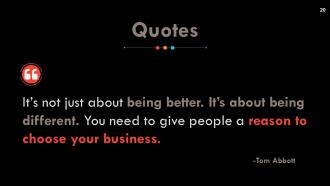
Slide 20: This is a Quotes slide to convey company/ organization message, beliefs etc. You may change the slide content as per need.
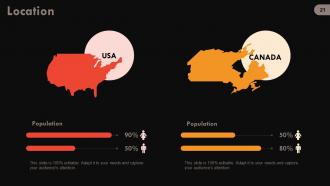
Slide 21: This is a Location slide to show global segregation, presence etc. on a map image and text boxes to make it explicit.
Slide 22: This is a Thank You slide with Address# street number, city, state, Contact Numbers, Email Address.
Digital change powerpoint presentation slides with all 22 slides:
Elaborate on controlling intoxication with our Digital Change Powerpoint Presentation Slides. Advise folks on drug abuse.



FAQs for Digital change
Honestly, you need four things to nail this. First - get leadership actually behind it, not just nodding along in meetings. Focus on solving real customer pain points instead of just slapping "digital" on everything (that drives me crazy). Tech-wise, go for stuff that actually talks to each other rather than shiny standalone toys. The culture shift is brutal though - people hate change. You'll need decent training and maybe some hand-holding. My advice? Pick one process that's completely broken right now and start there. Build momentum before tackling the bigger stuff.
Honestly, you've gotta track the obvious stuff first - revenue growth, cost savings, how much you're spending to get new customers. But don't ignore the harder-to-measure things like whether your processes actually run smoother or if employees are happier (even though quantifying that is a pain). Here's what I'd do: pick maybe 3-5 metrics that actually tie to your goals before you start anything. Definitely get your baseline numbers first. Then check quarterly - I learned this the hard way, but the real benefits take time to show up since everything builds on itself.
Culture basically makes or breaks digital transformation - I can't stress this enough. People will just ignore new tech if your workplace punishes trying stuff or hates change. You need folks who are cool with failing sometimes and actually talk to other departments. I've watched companies with solid digital plans completely tank because nobody thought about the people side first. The tech part? Usually pretty straightforward. Getting everyone to actually work differently though... that's where it gets messy. Figure out what's blocking people culturally and fix those mindsets before you dump new tools on them.
Honestly, AI and IoT are game-changers for going digital. You get automation that handles the boring stuff, plus AI can actually predict when things might break before they do. IoT connects everything so your systems finally talk to each other - which sounds nerdy but it's actually pretty satisfying when it works. Real-time data means no more guessing what's happening in your operations. The combo kills those annoying manual steps that slow everyone down. My advice? Don't try to transform everything at once. Pick that one process that makes everyone want to pull their hair out and start there.
Honestly, most companies shoot themselves in the foot trying to change everything overnight. Resistance is huge - people hate when you mess with their workflow. Get them involved early and show how it'll actually make life easier, not create more headaches. Skills gaps are another pain point, but training your existing team beats hiring from scratch every time. Oh, and pilot projects are your friend - prove it works small before going big. Map out realistic timelines and don't forget to celebrate the small wins. Trust me, those quick victories keep everyone motivated when things get messy.
Honestly, data analytics is a game-changer for going digital. You'll stop making decisions based on hunches and actually know what's happening. Real-time trends, predicting what customers will do next, catching problems before they blow up - it's all there. Your customers leave digital breadcrumbs everywhere, so why not use them? I'd say start with something manageable like figuring out why people stop using your service. Quick wins are motivating. The testing part is where it gets fun though - you can try different approaches and see results fast. Much better than flying blind.
So basically, digital transformation makes everything way more personal for customers. They get instant chatbot responses, better product suggestions, and can jump between your app and website without losing their place. Customers expect this stuff now - no joke, it's become table stakes. The real game-changer is using your data to predict what people want before they even ask. My advice? Map out your customer journey first and find where people get frustrated. That's where you'll see the biggest wins from going digital.
Honestly, the biggest thing is connecting your digital stuff directly to actual business results - revenue, costs, customer happiness, whatever matters most. Skip the flashy tech that doesn't move the needle (learned that one the hard way). Get your executives on board first or you're dead in the water. Monthly scorecards work great - just show how each project links to your main goals. Check in regularly because this stuff changes fast. Oh, and set clear KPIs upfront so you're not guessing if it's working. Simple scorecard beats fancy dashboards every time.
Look, just pick one thing that's driving you crazy right now - maybe invoicing or tracking inventory. Don't go nuts trying to fix everything. Cloud stuff is way cheaper than buying a bunch of servers (trust me on this one). Even dumping your spreadsheets for actual software will blow your mind. Your team needs to be on board early or they'll just ignore whatever you roll out. I'd test it for like 6 months first. See if it actually helps before you expand to other areas. Baby steps work better than going all-in immediately.
Yeah so basically when you go digital, you're throwing way more stuff online and connecting systems that were never meant to talk to each other. Creates a massive attack surface. The real killers are data getting leaked during migrations, crappy access controls, and - this drives me crazy - teams just adopting random tools without telling security. Here's what actually works: zero-trust from the start, encrypt literally everything, and don't skip security audits. I've seen too many companies treat security like something they'll "add later." Bad idea. Build it in from day one or you'll regret it.
Honestly, it's all about breaking down those annoying silos between teams. Cloud platforms make prototyping so much faster - like, minutes instead of waiting months for IT approval. Your people can actually share ideas and test things without jumping through a million hoops. The data analytics piece is huge too because you'll spot opportunities that were totally invisible before. That whole "fail fast" thing everyone talks about? It actually works when you can spin up environments quickly. I'd look at your biggest operational headaches first - those pain points are usually where the best innovation happens anyway.
Honestly, start with getting comfortable using new software - don't worry about mastering everything though. Data stuff is huge too, even if it's just basic Excel or understanding simple analytics. The learning mindset beats knowing every single platform out there. Virtual collaboration skills matter way more now than they used to. Oh, and communication in digital spaces is totally different than in-person meetings. Pick one skill you're weak at right now and just commit to getting better at it this quarter. Stay curious about tech changes instead of fighting them - that's probably the biggest thing.
Honestly, leadership support makes or breaks everything. I've watched so many digital transformations crash because executives talked a big game but didn't actually commit. Your C-suite needs to be all in - not just saying the right things but actually putting money behind it and showing up visibly. Without that, you'll get stuck dealing with budget fights and people pushing back on every change. They have to communicate the vision clearly and model what they want everyone else to do. Seriously, if your leadership isn't bought in first, don't even bother with the tech stuff yet.
Look, going digital with your supply chain is honestly a game changer. Real-time tracking through IoT sensors shows you exactly what's happening with inventory and shipments - no more guessing games. AI can actually predict when stuff's about to go wrong, which is wild when you think about it. Blockchain makes tracking products so much cleaner too. The best part? You catch problems immediately instead of weeks later when it's too late. Oh, and automation handles procurement decisions for you. My advice - just pick your messiest process first and digitize that. Don't try to do everything at once.
Start small with pilot projects instead of going all-in on some massive overhaul. Build flexibility right into everything from the beginning - don't treat it like a one-time thing you check off a list. I'd focus on quick sprints where you can test stuff, get feedback, and actually pivot when things aren't working. Cross-functional teams are huge for this because they can make decisions fast without waiting for approval from like five different departments. Oh, and the teams that stay curious? They're the ones who stumble into the best solutions. Keep training your people continuously so they're not scrambling when new tech drops.
No Reviews