


Digital marketing ecosystem ppt presentation





Try Before you Buy Download Free Sample Product
 Impress Your
 Audience
 100%
100% Editable
 Save Hours
 of Time


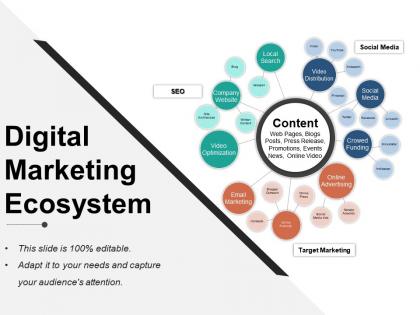
Bring on a change for the better with our digital marketing ecosystem PPT presentation. Market your products or services using digital technologies, on the Internet, including mobile phones, display advertising, and any other digital medium, through this PPT design. This digital marketing PPT deck contains a circular format of various digital platforms. Use company website, video marketing, online advertising, crowd funding, social media, video distribution and local search to reach your target audience. The main purpose of these pre-designed layouts is to produce the details of your clients and customers background in order to analyze their requirements and then create products respectively. Use extensive options to reach our audience and support digital channels such as search engines, social media, email, and their websites to connect with current and proposed customers. Fast forward your career with our Digital Marketing Ecosystem Ppt Presentation. They help you press the right buttons.
People who downloaded this PowerPoint presentation also viewed the following :
Digital marketing ecosystem ppt presentation with all 5 slides:
Ensure the event becomes highly enjoyable with our Digital Marketing Ecosystem Ppt Presentation. It will increase the entertainment factor.
FAQs for Digital marketing
You've got three main buckets to think about: owned stuff (your website, email lists, socials), paid stuff (ads and sponsored posts), and earned media like reviews. Then there's all the backend tech - CRM, analytics, automation tools, content management. Honestly, the data tracking part is huge too because otherwise you're just guessing what works. The trick is getting everything to actually talk to each other instead of living in separate worlds. I'd start by writing down what you have now, then figure out where info isn't flowing between platforms.
Think of your marketing channels as teammates who actually talk to each other. Social brings people to your site, then email keeps them warm. SEO pulls in new folks organically while paid ads cover the gaps. Here's what most people miss though - you gotta coordinate this stuff, not just let each channel do its own thing. Content you create helps SEO but also becomes your social posts. Retargeting can hit up email subscribers who ghosted you. Honestly, just track how people bounce between channels. That's where you'll spot the big wins.
Dude, content marketing is like the foundation everything else sits on. Your SEO needs it. Social media has nothing to post without it. Email campaigns? They're just empty without good content backing them up. I learned this the hard way when I first started - paid ads with crappy landing pages convert terribly. Blog posts pull in organic traffic, videos get people engaged on social, and those lead magnets actually work when the content's solid. The trick is making stuff that actually helps people first, then figuring out how to spread it around your other channels. Works way better than the other way around.
Skip the vanity metrics - impressions look pretty but don't pay your bills. What you actually need is proper conversion tracking set up in Google Analytics and your ad platforms. Focus on cost per acquisition and customer lifetime value instead of getting caught up in reach numbers (trust me, been there). Calculate ROI by dividing revenue by marketing spend, then multiply by 100. Pick maybe 3-5 metrics that actually connect to your business goals and stick with tracking those consistently. Short attention spans these days make it tempting to track everything, but you'll just overwhelm yourself.
Honestly, social media is like having a megaphone that reaches people you'd never connect with otherwise. Your content can spread organically through shares and hashtags - the viral potential is crazy when something hits just right. Plus you can run targeted ads to find your exact audience. The real magic happens when you're consistent across platforms though. People start recognizing your brand and actually engaging instead of just scrolling past. Pick maybe 2-3 platforms where your people actually spend time (don't try to be everywhere at once, trust me). Focus on building those genuine connections rather than just posting into the void.
Honestly, SEO and PPC are amazing when you use them together. Your paid ads tell you right away which keywords actually convert - then you can focus your SEO efforts there. Works the other way too. SEO research uncovers those hidden gem keywords that don't cost much in PPC. When you show up in both organic AND paid results? Game changer. I've seen click rates jump 20-30% just from owning more of that search page real estate. Oh, and make sure your SEO and PPC people are actually talking to each other - sharing keyword data will help both campaigns way more than you'd think.
Honestly, AI and machine learning are crushing it right now - automating ad targeting, content creation, all that stuff. Voice search is making everyone scramble to fix their SEO. AR's pretty cool for brand engagement, though VR is still kinda meh in terms of actual adoption. Oh, and blockchain could totally solve those sketchy ad fraud issues we're always dealing with. 5G means way better mobile experiences too. But here's the thing - don't try tackling everything at once. Pick like one or two techs that actually make sense for what you're doing and just mess around with them first.
Look, consumer behavior is literally the backbone of your whole digital strategy. It shows you where people actually spend time online and what makes them click "buy." Track their journey through your funnel and see which devices they're using - spoiler alert, attention spans are basically nonexistent now. This stuff directly impacts your channel choices, messaging, and where you spend money. Don't be that person dumping cash into Facebook when your audience lives on TikTok. My advice? Dig into your customer journey data first. Then tweak campaigns based on real patterns, not what you think should work.
Start by hooking up your email platform to your CRM and website - that's where the magic happens. Your social posts can totally feed into email campaigns (and flip it around too). Facebook and Google retargeting for email subscribers is clutch. Most people mess up the automation part though. Set triggers based on what people actually do on your site, what they've bought, how they engage. Oh, and keep your messaging consistent across everything - nobody wants to feel like they're talking to three different companies when it's just you.
Dude, you NEED data analytics. Like seriously - I've watched so many people burn money on campaigns that looked great but were actually trash once you checked the numbers. Without tracking, you're basically gambling with your budget. Start setting up proper metrics from day one, then check them weekly (not just when stuff goes sideways). Analytics will show you which channels actually convert and what audiences respond. Oh, and which segments are just eating your money for breakfast. It's literally the difference between smart spending and throwing cash into a black hole.
Dude, just be real with people about what data you're collecting and get their actual consent first. Dark patterns are sketchy AF - I hate when companies trick users into stuff they didn't mean to do. Be honest in your ads too, no BS claims or misleading promos. When someone opts out, respect that choice. Oh and here's the thing - if your ad copy feels slimy to you, it probably is. Just market to people the way you'd want someone marketing to you. Honestly not that complicated.
Honestly, smaller businesses have a huge advantage over the big guys - you can pivot fast when trends hit. Focus on those super niche markets that Amazon and Walmart totally ignore. Social media and email marketing are way cheaper than traditional ads anyway, so you're not competing on budget. Build real connections instead of trying to outspend them (spoiler: you won't). Pick maybe 2 platforms where your people actually are. Get good at those first. Don't spread yourself thin across everything. The personal touch wins over corporate messaging every time.
Dude, mobile marketing isn't just important anymore - it's literally everything. Your customers are glued to their phones like 24/7. When did you last see someone actually use a desktop to browse Instagram or whatever? Most people discover stuff, shop, and engage through mobile now. Social media, local searches, app purchases - it all happens on phones. So your ads and landing pages better look amazing on small screens or you're basically throwing money away. Even your emails need to work perfectly on mobile. It's where the action is, honestly.
Map out how customers actually find and buy from you first. SEO and content marketing work great for people actively researching. Social media and display ads help with awareness - though honestly, display ads can be hit or miss depending on your audience. Email is clutch for nurturing leads through your funnel. Don't forget retargeting for the window shoppers who bounced. Make each step flow naturally into the next one. Track everything with UTM codes so you'll know what's actually driving sales, not just pretty traffic numbers that don't convert.
The hardest part? Every platform wants something different but you can't lose your brand identity. Instagram needs different energy than LinkedIn, obviously. Your team probably doesn't talk enough either - social media does their thing while email marketing does theirs. Then you're cranking out so much content just to keep up that quality gets messy. Honestly, most brands I see struggle with this exact thing. Make a simple guide showing how your tone shifts per platform, but keep your visuals and core message the same everywhere. Also, get your teams meeting regularly so they're not working against each other.
-
Awesome use of colors and designs in product templates.
-
Innovative and Colorful designs.