


Digital Marketing Channels Powerpoint Presentation Slides





Try Before you Buy Download Free Sample Product
 Impress Your
 Audience
 100%
100% Editable
 Save Hours
 of Time


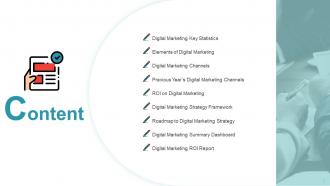
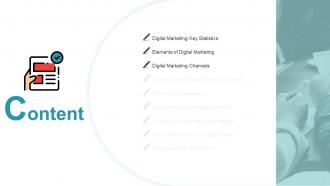
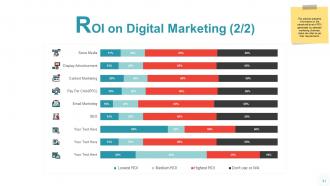
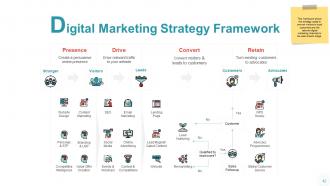
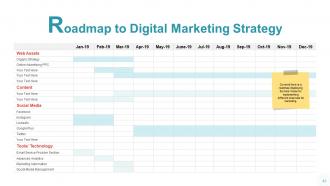
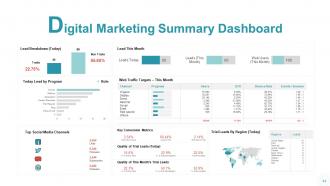
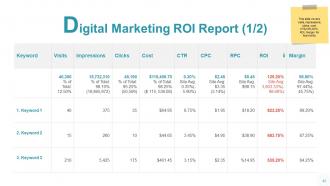
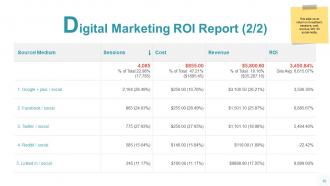
Talk about online marketing channels with readymade digital marketing channels PowerPoint presentation slides. This exclusive e-marketing PPT will be very useful for people in digital marketing. Showcase different ways to promote your business, services, and products by using our e-marketing PowerPoint template. This content ready e-marketing channel presentation consists of a total of 62 slides. All the slides are completely editable and can be easily changed as per your requirement. The social media marketing channel PowerPoint complete deck covers various topics like digital marketing key statistics, email marketing, pay per click advertising, search engine optimization, display advertising, social media marketing, content marketing, elements of digital marketing, digital marketing channels, ROI on digital marketing, digital marketing strategy framework, roadmap to digital marketing strategy, digital marketing summary dashboard, digital marketing ROI report and many other slides. Download this digital advertising channel PowerPoint theme to expand the horizons of your business and to increase the sales revenue. Our digital marketing ppt Slides act like elbow grease. They enhance the force of your effort.
People who downloaded this PowerPoint presentation also viewed the following :
Content of this Powerpoint Presentation
Online marketing is indispensable for businesses or individuals seeking growth in their products or services. A data-driven social media marketing strategy for all digital marketing channels is paramount to producing viable sales results. Obtaining this data, compiling and storing it, and further presenting it for decision-making is a task.
However, if you are lost in the nuances of marketing channels and can't grasp them, we are here to help. Download our focused and ready-made digital marketing channels PowerPoint Presentation slides to manage and present them all in one go.
Overview of the Template:
This digital marketing channel PowerPoint is your ultimate go-to for all online marketing requirements. If you have yet to start compiling an online marketing strategy or brainstorming your E-marketing channels, you can easily utilize this template as a segment for your topics.
This presentation is an editable deck of 62 slides covering specific e-marketing needs to help you plan, analyze, or segment the topic with clear understanding and apprehension.
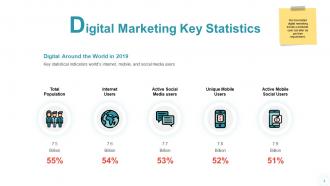
Template 1: Digital Marketing Key Statistics
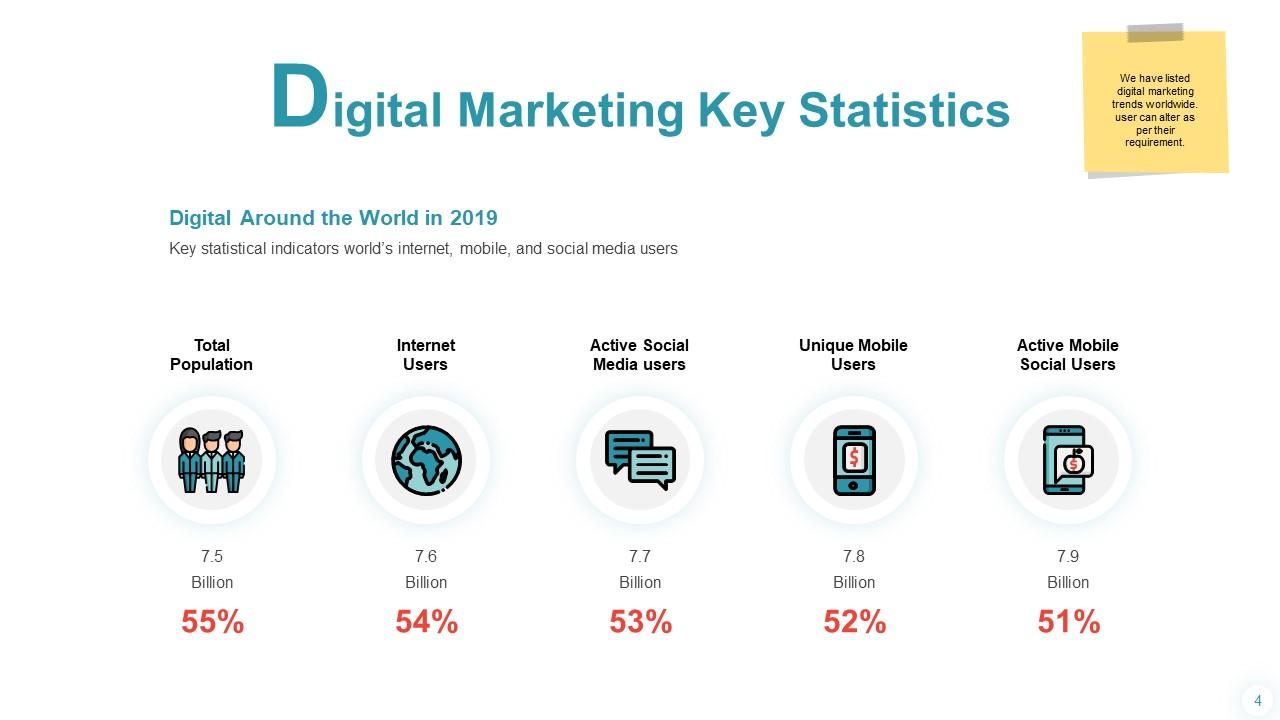
Factual data and statistics bring credibility to your work.
This PPT Template covers the basic statistical records and facts you need to get started with your presentation. You can add more or remove some of these to make the presentation more focused and personalized. This will also help you design your online marketing plan to focus on and address your audience
You can also check online and offline digital marketing channels to determine which suits your needs.
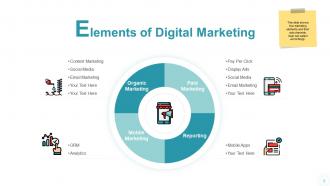
Template 2: Elements of Digital Marketing
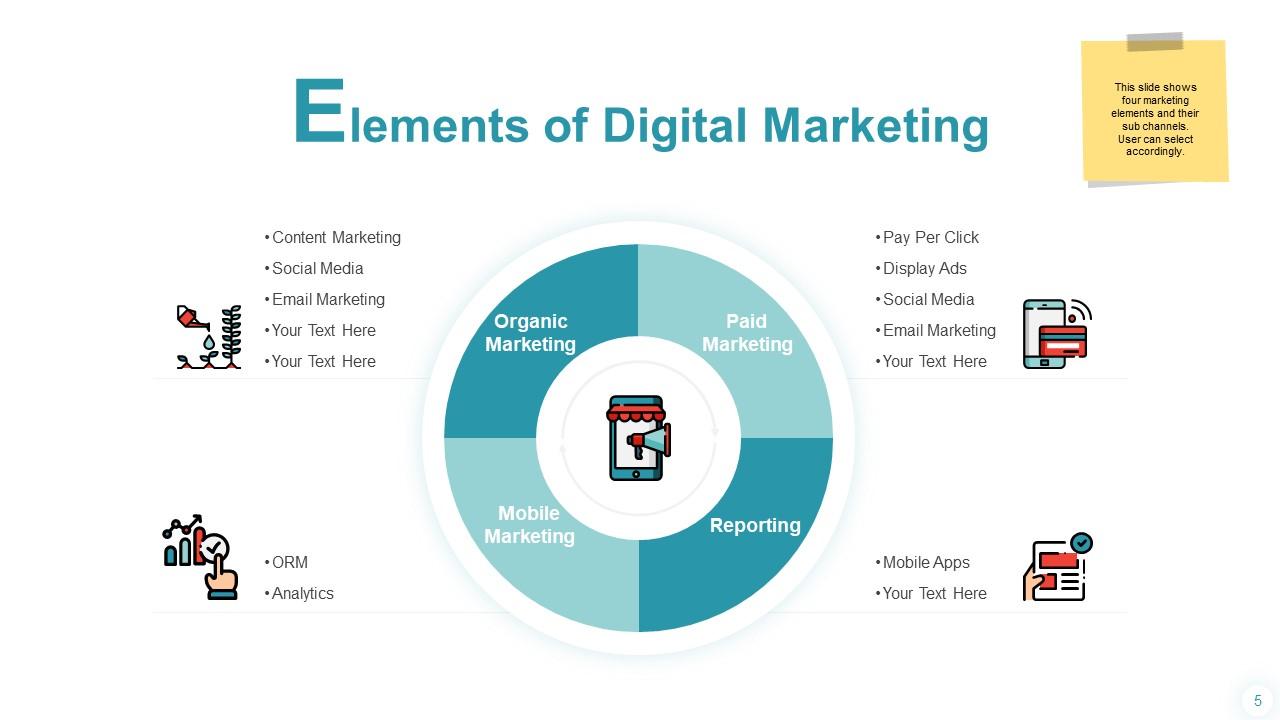
Mobile optimization is a common aspect in all digital marketing spheres. The above deck illustrates four key digital marketing channels. When crafting digital marketing strategies, it's crucial to consider that most people now use mobile devices to consume content and conduct product searches. This slide helps you segregate your digital marketing strategy into parts such as paid, organic, and mobile marketing. Use this slide to decide upon your marketing channel to enhance your reach.
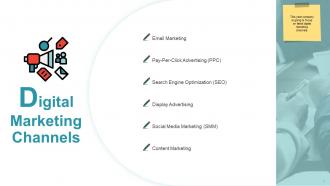
Template 3: Digital Marketing Channels
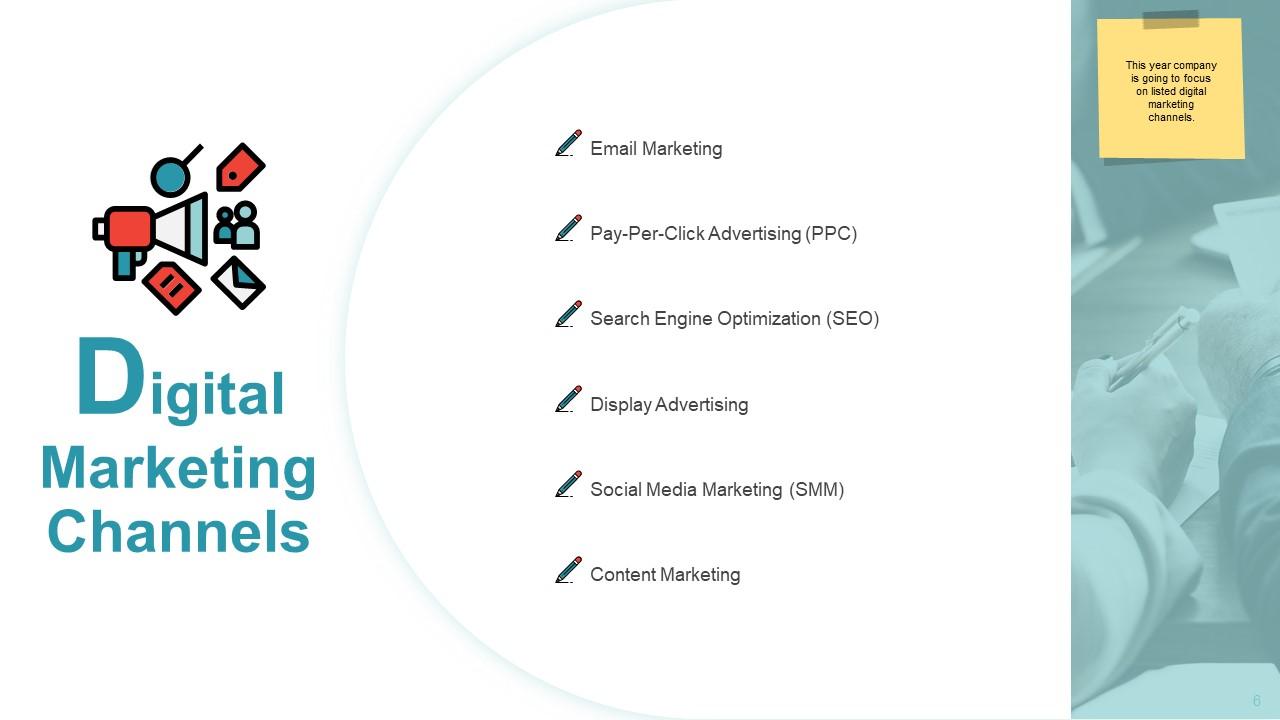
This ready-to-use PowerPoint Presentation swooshes off troubles and makes formulating your personalized e-marketing channels easy. It displays some digital marketing channels to help businesses effectively reach and engage their target audience:
- Email marketing,
- Pay-Per-Click advertising (PPC)
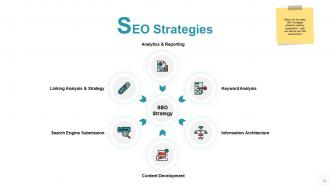
- Search Engine Optimization (SEO)
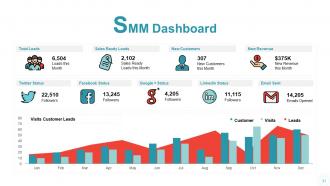
- Social Media Marketing (SSM)
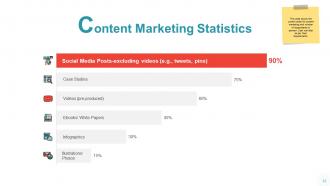
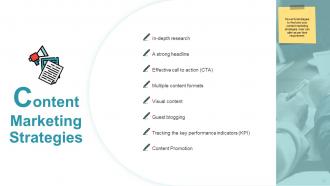
- Content marketing
You can use any of the above to make your digital marketing strategies more efficient and provocative.
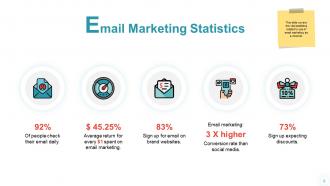
Template 4: Email Marketing Statistics
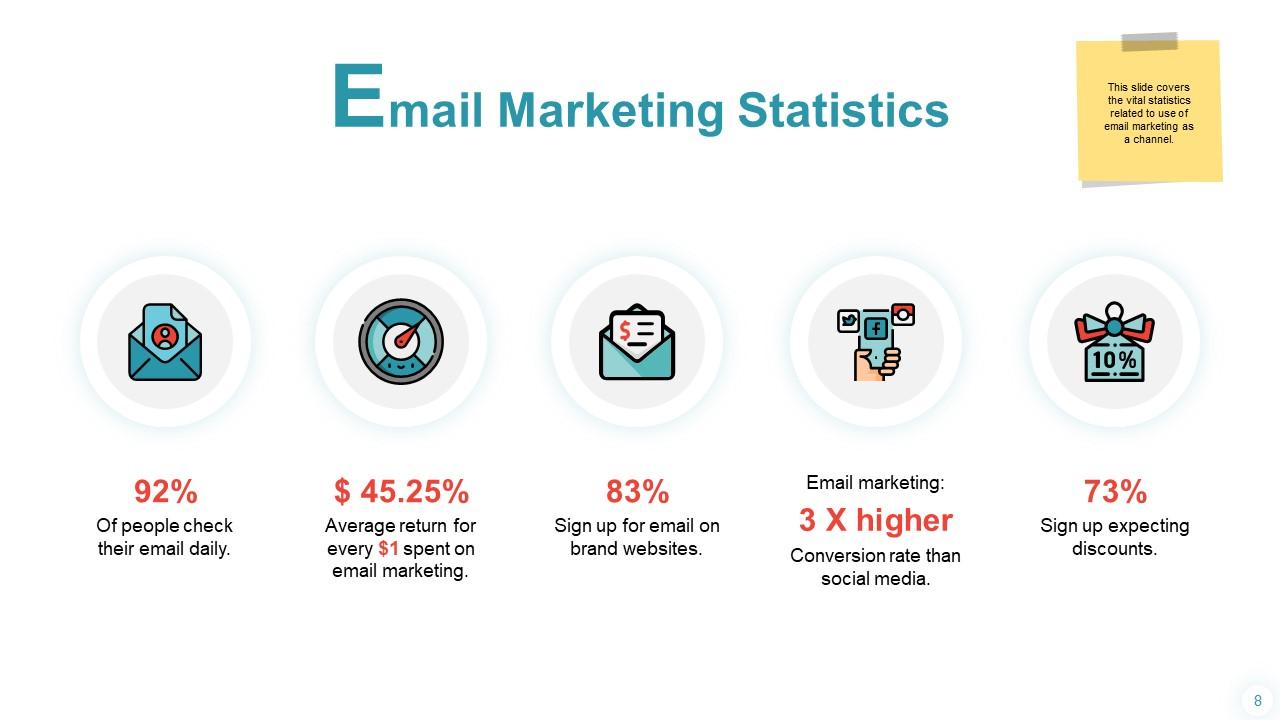
This PPT Template helps you walk into the meeting confidently. It lets you present the necessary statistics to optimize your digital marketing strategy. Email marketing is much more effective and has higher conversion rates than digital marketing. This will help to grow your business by leaps and bounds.
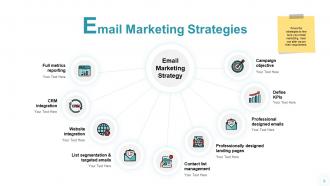
Template 5: Email Marketing Strategies
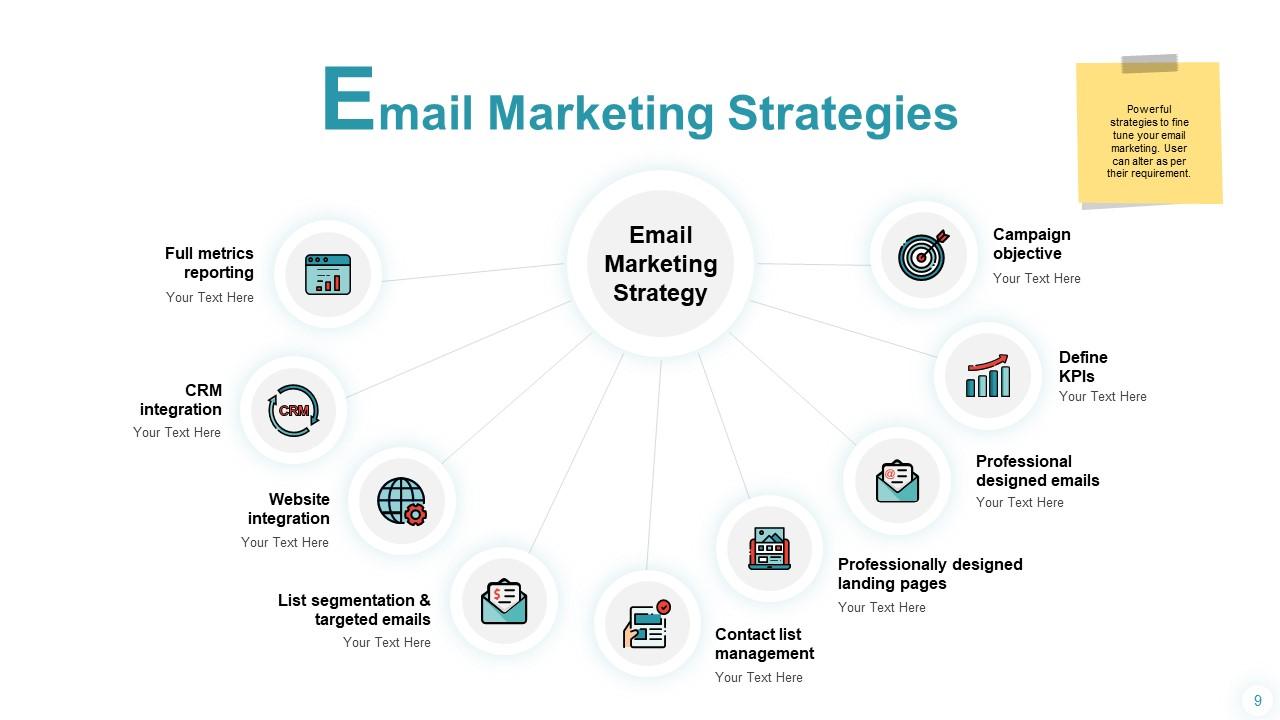
This PPT Slide highlights the most effective email marketing strategies. It demonstrates how to discover your target audience using relevant keywords, deliver a personalized message, and present your product or service. Reach them with authenticity and surprising offers, and land them on your website to use your product or service.
Launch your email campaign using consumer personas and let your email talk to them. After impressing them by email, work on your landing page, which will be your ultimate task in making them your audience. This particular slide covers the list of things you will need.
Template 6: Email Marketing Budget
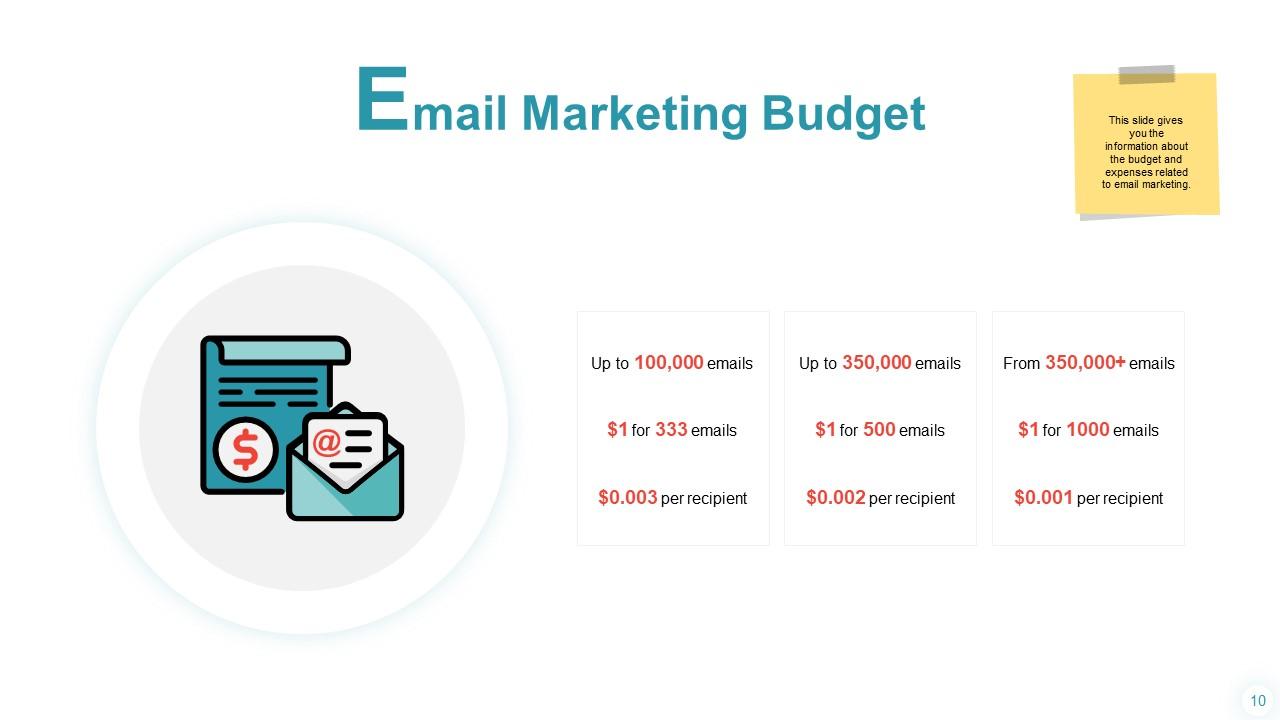
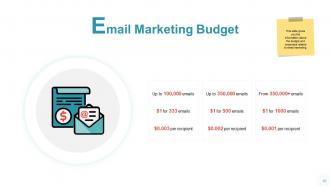
How much should you spend to make email marketing successful? This slide covers the estimated costs of email marketing. It showcases that email marketing has a $45.25% ROI on every $1. Hence, the template also helps you with your expenditure planning and tracking.
Template 7: Email Marketing Dashboard
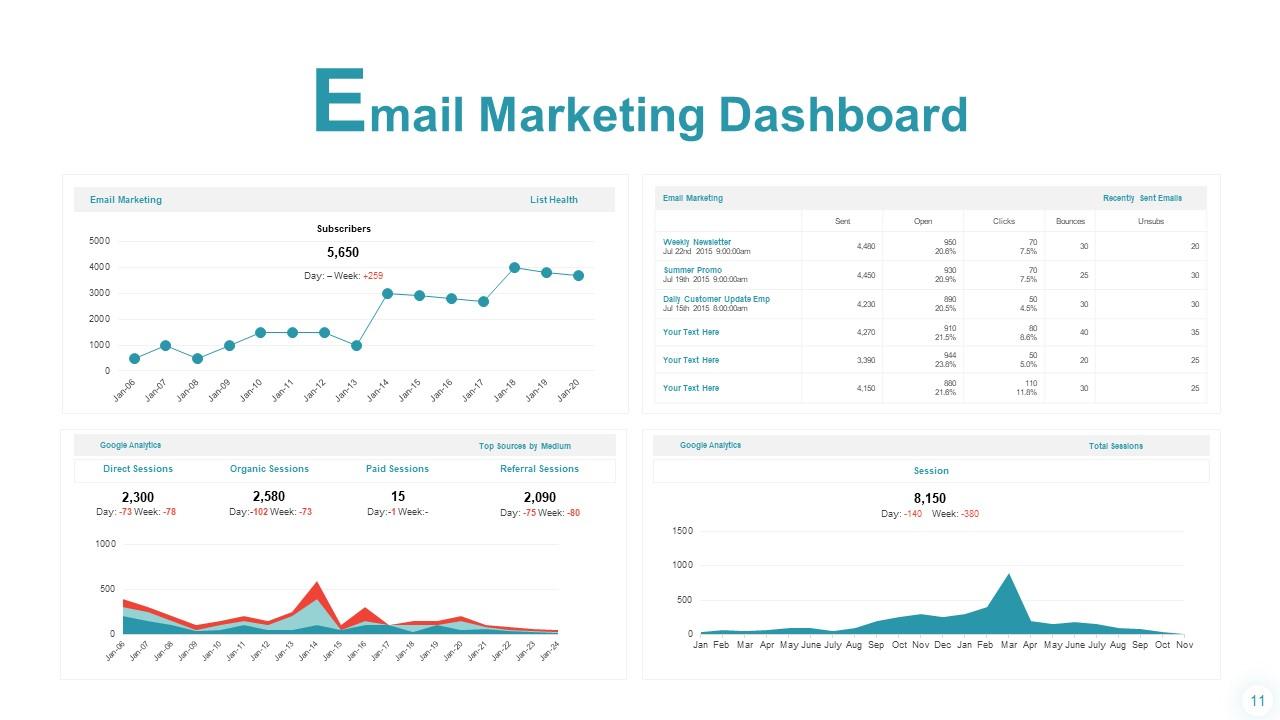
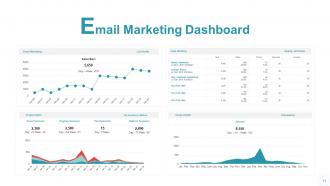
The most exciting feature of this template is its email marketing dashboard. One place for all your decision-making needs!
The above dashboard will help you capture the growth of subscribers and engagement over time. It shows how email marketing, including weekly newsletters, seasonal promotions, and engaging content related to the product, produces outstanding results and profit.
Template 8: Pay Per Click (PPC) Statistics
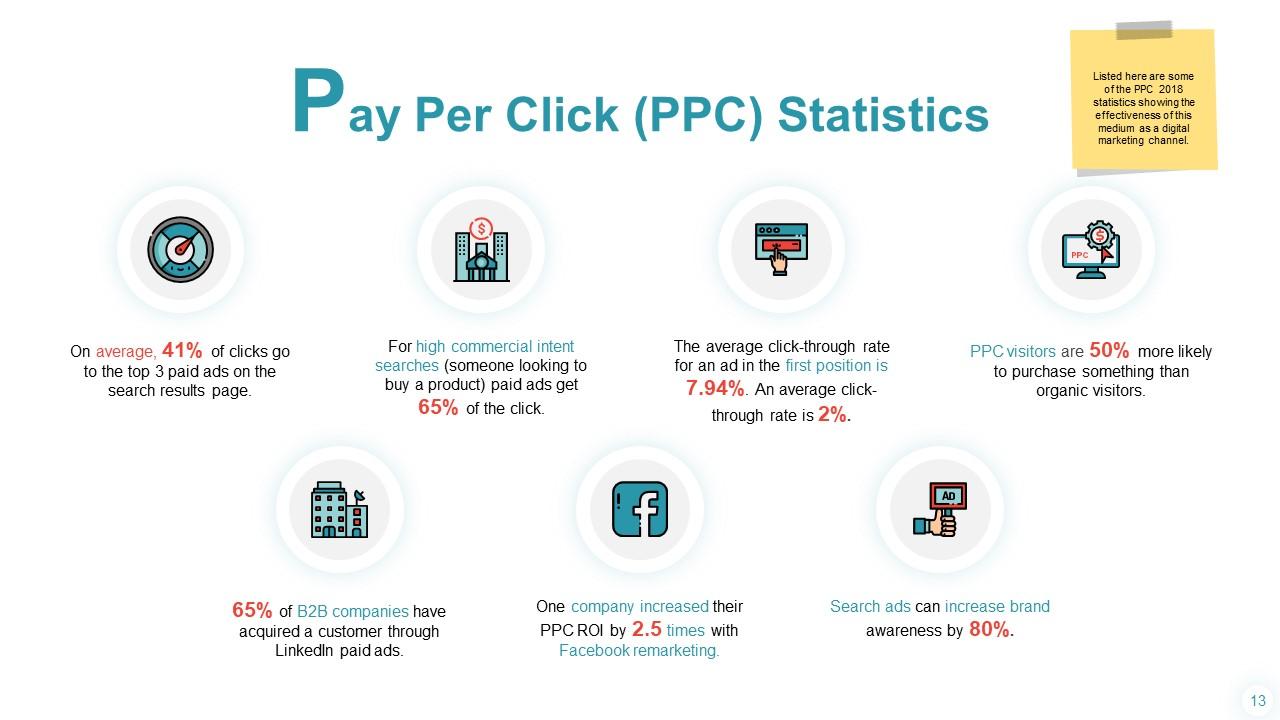
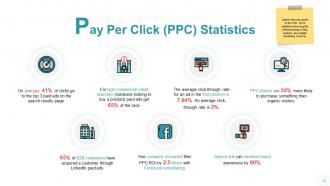
PPC creates a difference because it directly reaches the target audience through any social media platform and browser. It analyzes what consumers consume online and then uses algorithms to run such PPC to reach the greatest amount of people. These PPC data will help you understand the process and get the best outcomes possible.
Template 9: Pay-Per-Click (PPC) Strategies
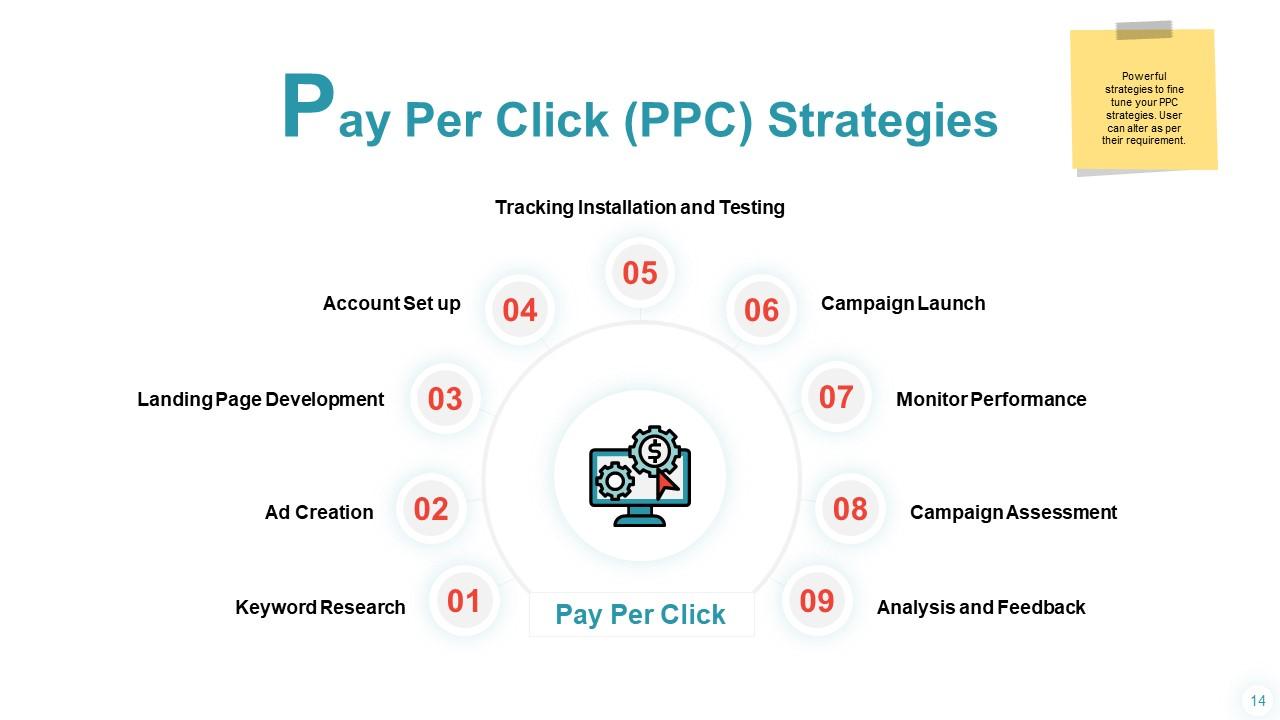
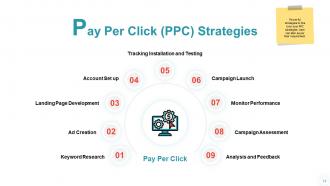
Pay-per-click (PPC) is a way to reach a target audience through a paid ad. You need to launch a campaign to reach the maximum audience and increase engagement. This is done by sending personalized messages and showing your product. Use this presentation to think, organize, and execute your PPC plans.
Template 10: Pay-Per-Click (PPC) Dashboard
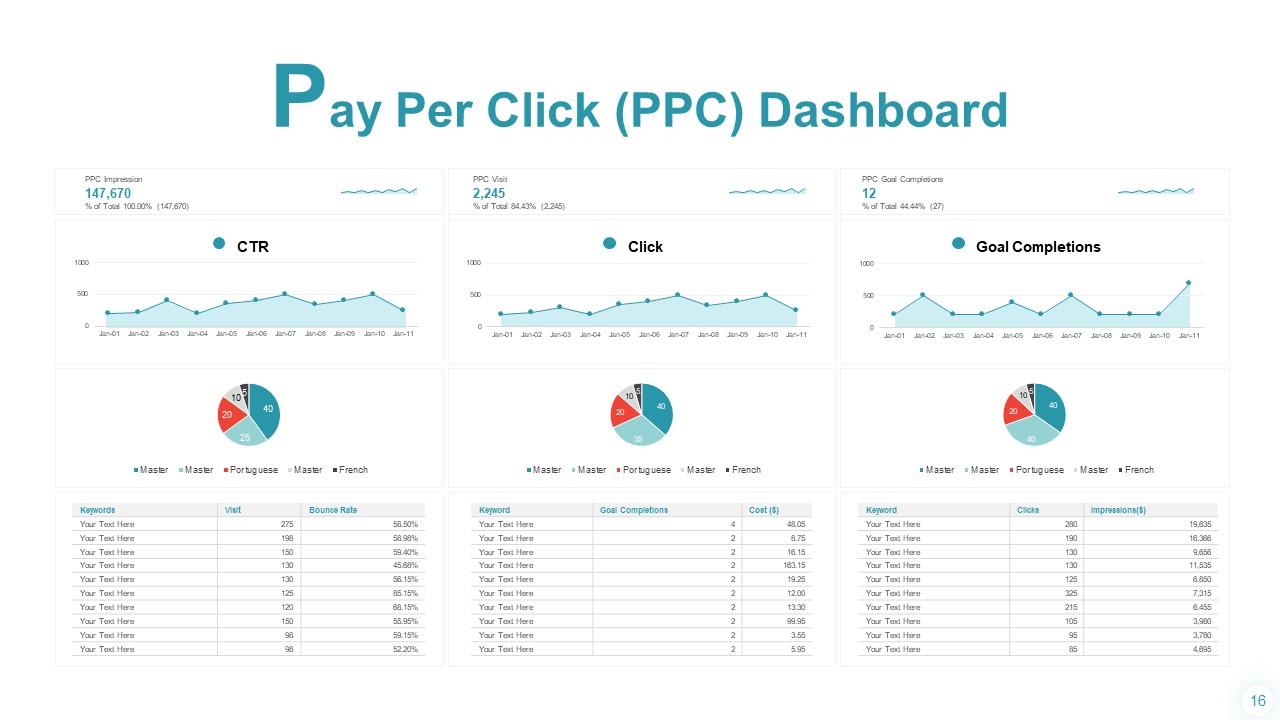
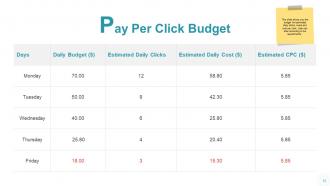
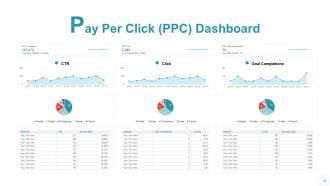
Like Email Marketing, PPC has great conversion rate results, reaching an audience with less effort, but it is costlier than Email Marketing. The subsequent graphs in this template will help you present the CTR of PPC, which has a huge impact on your product promotion and increases the conversion rate. Again, this helps you with budget planning as well
Conclusion
In this digital era, where everyone's on their screen and influenced digitally, you must invest in digital marketing to get maximum results. These digital marketing channels PowerPoint Slides are a one-pack solution that offers all your digital marketing needs, from introductory stats to specific PPC expenditures.
This will help to cover every step to drive success in your digital marketing campaigns.
If you are looking for a power-packed online marketing strategy, check out our Ultimate Market Leader Strategy.
Digital Marketing Channels Powerpoint Presentation Slides with all 62 slides:
Give it the gas with our Digital Marketing Channels Powerpoint Presentation Slides. Your career will accelerate away.





FAQs for Digital Marketing Channels
So there's a bunch of options - social media like Facebook and Instagram, Google Ads, SEO stuff, email campaigns. Content marketing through blogs or YouTube works well too. Influencer partnerships are killing it lately, honestly probably the best ROI I've seen. TikTok's massive if your audience skews younger. You've also got display ads, affiliate programs, podcasts depending on your niche. My buddy just started a podcast campaign and... anyway, point is there's tons of channels. Don't try to do everything though - pick 2-3 where your customers actually hang out and nail those first.
Honestly, stop thinking about it like broadcasting and start having real conversations. Behind-the-scenes content works great - people eat that stuff up. Reply to comments fast and actually engage with their posts too. Stories and lives are gold because they're messy and real-time, which feels way more authentic than polished posts. Throw up some polls, ask random questions, share what your followers create. Oh and definitely make a community hashtag if you can swing it. The biggest thing though? Pick like 1-2 platforms where your people actually are and just focus there first. Don't spread yourself too thin.
Honestly, it comes down to money vs time. SEO is technically free but you'll be waiting months to see any real results - super frustrating when you need traffic now. PPC costs money upfront but boom, you're at the top of search results immediately. With SEO you're basically playing the long game, optimizing your site so Google naturally ranks you higher. Builds credibility over time. Paid ads let you bid on keywords and skip the line, though man, those costs add up quick if you're not watching your targeting. I'd probably start with some paid ads for quick wins while slowly building up your SEO game.
Dude, email marketing is seriously underrated for keeping customers around. You're literally sitting in their inbox where they check daily anyway. I love how you can set up those automated sequences - welcome emails, cart abandonment stuff, the works. Once it's running, you don't have to babysit it. The targeting gets pretty wild too. Someone browsed shoes but didn't buy? Hit them with a shoe discount. Haven't seen them in months? Send a "we miss you" offer. It's cheap compared to ads and honestly converts way better since these people already opted in. Just don't be that brand that emails every single day - nobody wants that spam.
So content marketing is like fuel for your SEO game. You write helpful blog posts or make videos, and you're naturally working in keywords that Google loves. Good stuff also gets other sites linking to you - which honestly makes a huge difference for rankings. We've had solid luck with this on our blog too. When people stick around reading your content instead of bouncing right off, that tells Google your page is actually worth something. I'd say pick 3-4 topics your audience actually gives a damn about and just keep creating around those. Fresh content keeps the whole thing moving.
Okay so basically influencers are like your cool friend recommending stuff - way more trustworthy than some random ad. Their followers see them as actual people, not salespeople trying to push products. When someone with a decent following genuinely uses your skincare and talks about it, people actually listen. It's wild how much more believable that is than polished commercials (which honestly feel so fake now). The trick isn't just finding someone with tons of followers though. You want people whose vibe actually matches your brand - that's where the real magic happens for conversions.
So basically start with the metrics that actually matter for what you're trying to do - click-through rates, conversions, cost per acquisition, return on ad spend. Google Analytics is clutch, and Facebook/Google Ads have their own dashboards too. Pick like 3-5 metrics to focus on first because honestly the data gets pretty overwhelming otherwise. Oh and definitely set up conversion tracking right away - that's the only way you'll know which platforms are actually making you money vs just burning through your budget. You can always add more metrics later once you figure out what you're looking at.
Start with HubSpot or Marketo - they're basically your command center for everything. Buffer or Hootsuite will save your sanity for social posting. Obviously you need Google Analytics, but honestly Asana is a lifesaver too because campaigns turn into chaos without proper organization. Mailchimp plays nice with most platforms for email stuff. The real trick? Make sure your tools actually sync up. Nobody wants to copy-paste data between a million different screens all day. Pick one solid automation tool first, then add pieces as you go. Way less overwhelming that way.
Video works great as your content hub - make one video, then chop it up for everywhere else. Full version goes on YouTube, short clips for Instagram/TikTok, pull the audio for podcasts. Honestly it's probably the best bang for your buck content-wise. Each video should fit somewhere in your funnel though - are you trying to get new people or nurture existing ones? Plan your video calendar with your other stuff so it all connects. Oh and don't forget videos drive solid traffic back to your site and get people engaging way more than text posts.
Okay so three main things - match your headlines to whatever's in your ad, keep forms super short (like seriously, each extra field you add tanks your conversions), and stick to one big call-to-action button. Make sure it loads fast on mobile since that's where most people are coming from anyway. Strip out the nav menu and other random stuff that'll distract them. You want them laser-focused on signing up, not clicking around your site. Try different button colors if you want, but honestly don't get too crazy with it. Nail these basics first and you'll probably see better numbers pretty quick.
Dude, analytics are a game changer - you'll actually know what's working instead of throwing money at random stuff and hoping. Track which channels bring in conversions and what content people actually engage with. Once you see the patterns it gets pretty addictive, not gonna lie. You can spot exactly where people bail on your funnel and fix those weak spots. The whole segmenting audiences thing is clutch too. Honestly though? Start with conversion tracking first - that's your foundation. Then just focus on whatever metrics actually tie back to making money.
Honestly, the biggest pain point is your team getting used to totally different metrics. Traditional stuff like reach and frequency? Easy. But then you're thrown into CTRs, conversion funnels, attribution models - it's a lot. Budget gets weird too because now you're spreading money across like 5 different channels instead of just throwing it all at TV. Digital moves stupid fast compared to what you're probably used to. My take? Pick maybe two channels to start with. Train everyone properly (seriously, don't skip this). And don't feel like you need to flip everything at once - that's a recipe for chaos.
Mobile users scroll with their thumbs while multitasking, so everything needs to be way shorter and faster. Attention spans are basically zero. Make your CTAs huge so they're actually tappable, and vertical video performs way better than landscape. People want quick answers or stuff nearby, so be direct about location. Oh and load times? Super critical - more than desktop honestly. I'd check how your current stuff actually looks on mobile first though. Half the time campaigns are totally broken on phones and nobody realizes it until they actually test it out.
Okay so basically you want to focus on three big things: data privacy, being transparent, and getting real consent. Don't do those sketchy pre-checked boxes - we've all done it but it's annoying as hell when you're on the receiving end. Be upfront about how you're collecting data and what you're doing with it. Avoid dark patterns that trick people into stuff they don't want. Your ad copy should be honest, and don't target vulnerable groups or spread BS. I know it sounds obvious, but just think about how you'd want companies to treat you. Oh, and double-check everything matches your company values before launching.
Honestly, AI has gotten pretty wild for marketing lately. You can personalize content for thousands of people without losing your mind, and the predictive stuff actually works now. Chatbots don't make people want to throw their phones anymore either lol. Real-time ad optimization is huge - no more burning budget on campaigns that aren't working. The targeting is borderline creepy good these days. Some AI tools can even write copy that converts better than most marketers I know (ouch). My advice? Don't try to do everything at once. Pick whatever's driving you crazy right now and test one tool for that specific problem first.
No Reviews