

Digital trends presentation examples





Try Before you Buy Download Free Sample Product
 Impress Your
 Audience
 100%
100% Editable
 Save Hours
 of Time


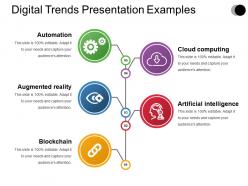
Craft your ideas through our, digital trends presentation examples PPT design. Include your work style, information website that distributes news, how-to articles reviews, guides, and related information through business meetings and this PPT design. This PPT slide is crafted with the graphics of interlinked steps and appropriate icons which reflect the motive of this presentation. Five stages shown here covers up a wide range of digital medium to get you through the business project. Stage showed here are, automation, augmented reality, blockchain, cloud computing, artificial intelligence. Include your key points and get your ideas across through the help of a PowerPoint template by editing the text boxes shown here. Each design created at SlideTeam is dedicated to working for the best of a client and works with a problem-solving motive. So just click on the download button to use the assistance of our, digital trends presentation examples PPT design and leaves a remarkable impression on your clients. Discourage dependence on fossil fuels with our Digital Trends Presentation Examples. Campaign for clean air.
People who downloaded this PowerPoint presentation also viewed the following :
Digital trends presentation examples with all 5 slides:
Folks find it difficult to find a flaw with our Digital Trends Presentation Examples. It enables impeccable conduct.
FAQs for Digital
Honestly, the stuff that's actually making a difference right now is AI productivity tools and those VR collaboration spaces that don't suck. Project management platforms finally sync properly with how you work. Async communication is huge too - way better than being stuck on Zoom calls all day with people in different time zones. Digital wellness apps help you stop checking work emails at 9pm (guilty as charged). Everything's cloud-based now, obviously, plus you need decent cybersecurity since we're all working from random coffee shops. I'd say look at your current setup and figure out what's annoying you most - start there.
Dude, AI is totally changing the marketing game right now. You can predict what customers will do before they even know it themselves. Plus it automates content creation and optimizes your ad spend instantly - which honestly saves so much time. Chatbots are handling customer service, and some AI tools write email subject lines that actually get people to click. It's pretty wild how accurate they've gotten. The whole thing's shifted from targeting huge audiences to creating super personal experiences for everyone. My advice? Start with one tool that fixes your biggest headache first, then expand from there.
Dude, social media is where all the shopping magic happens now. TikTok Shop and Instagram checkout are absolutely everywhere - I swear I can't scroll without seeing something I want to buy. People don't even go to actual websites anymore; they just see an influencer post something, check the comments for reviews, and boom - purchased. The whole "browsing vs buying" thing? Totally gone. Your customers are probably doing most of their product discovery on their feeds anyway. Honestly, if you're still thinking of social media as just marketing instead of an actual sales channel, you're behind. That's where people are hanging out AND spending money.
Okay so basically watch three things: how customers actually behave on your site, what competitors are doing, and try to predict what's coming next. Track where people click and bounce - you'll be surprised how wrong your assumptions probably are. Use analytics tools to spy on competitor pricing and content (honestly everyone should be doing this already). The patterns jump out pretty fast once you start looking. Oh and set up those automated dashboards so you're not scrambling for data every few months. Predictive stuff is huge too - catch trends before everyone else does.
So mobile UX is getting pretty wild right now. Everyone's obsessed with gesture controls and voice stuff - honestly makes sense since we're all lazy. Dark mode isn't even special anymore, it's just expected. Your app basically needs to read users' minds before they know what they want, which sounds crazy but that's where AI personalization comes in. Micro-interactions are way more polished too. Oh, and haptic feedback is everywhere now - makes everything feel more tactile. The whole game is about cutting out friction and making flows super smooth. Add some subtle animations to guide people and you'll be golden.
So blockchain basically spreads security around instead of putting everything in one place that can get hacked. Your data stays way more reliable because of that whole unchangeable record thing. Smart contracts can handle security stuff automatically now - though honestly they're still a pain to set up properly. We're moving away from regular passwords toward cryptographic methods, which is probably overdue. Oh, and if you're updating your security setup anytime soon, blockchain identity verification might actually be worth checking out. It's not just hype anymore.
Honestly, just talk to your customers constantly - surveys, social media stalking, whatever works. Don't wait for perfect data either, things move way too fast for that. I'd rather be quick and slightly wrong than slow and right, you know? Set up A/B tests for literally everything. Your website, emails, even how you word stuff. Oh, and make sure your tech can actually handle pivots without breaking (learned that one the hard way). Most crucial thing though? Let your team make decisions fast. All those approval chains will kill you when competitors are moving at lightning speed.
Dude, VR and AR are game-changers for letting people test stuff out first. Picture this - you're trying on furniture in your living room through your phone, or walking through a hotel room before booking. Cars, real estate, retail... everyone's jumping on this because customers actually feel confident buying when they can experience it beforehand. Some of these demos are honestly mind-blowing now. My cousin just bought a couch using AR and it looks perfect in her space. If you're thinking about it for your business, maybe start with AR product visualization? It's usually the easiest way to dip your toes in without going crazy with the budget.
Dude, sustainability is everywhere in tech right now. Companies are optimizing code to use less server power, going with green hosting, building stuff that makes devices last longer instead of forcing upgrades. There's this whole digital minimalism movement too - apps that actually help you use less instead of doom-scrolling for hours (wish I was better at that myself). Users really give a shit about environmental stuff now and they'll pick the greener option. Server loads are getting crazy expensive anyway, so the efficiency thing kills two birds. Definitely worth thinking about for any new features you're building.
Honestly, apps are totally changing because of this whole digital wellbeing thing. Screen time dashboards and "take a break" notifications are everywhere now. Thank god we're finally moving past those evil infinite scroll designs - they were literally designed to trap you. Now there's focus modes, notification batching, stuff that actually makes you think before opening an app. It's wild how companies are prioritizing user value over just keeping you glued to the screen. If you're building anything user-facing, definitely look at your notification strategy and maybe add some usage transparency features. Users actually want to know how much time they're spending.
Dude, the metaverse is gonna completely change how we hang out online. You won't just be scrolling through feeds anymore - you'll actually BE in virtual spaces with people. Like chilling in a digital coffee shop instead of commenting on posts, which honestly sounds kinda cool? Your relationships might get way deeper since everything's more immersive and real-time. But there's definitely downsides to think about - privacy stuff, how you present yourself digitally, and whether everyone can even access it. Plus you gotta figure out how much time you actually want spending in fake worlds vs. real life.
Ugh, GDPR totally flipped marketing on its head. Now you can't just sneakily track people - you need their actual permission first. Those annoying cookie banners? Yeah, that's why they're everywhere now. Companies have to spell out exactly what data they're grabbing and let people delete it whenever. Honestly though, maybe it's not the worst thing? Forces you to actually build trust instead of being sketchy about it. The whole game now is making your content so good that people willingly hand over their info.
So voice search is totally changing the game - people ask full questions like "where's good pizza around here?" instead of just typing "pizza." You'll want to target those longer, natural phrases. Featured snippets are worth focusing on since Alexa and Siri just read those out loud. Local stuff matters way more now too, which honestly surprised me how much location impacts everything. FAQ pages work great for this. Just write them how people actually talk. Oh, and definitely keep your Google My Business updated - that's clutch for local searches.
Dude, cloud computing is a total game-changer for small businesses. You get access to all the fancy enterprise software and storage without dropping tons of cash on servers or IT people. Your team can work from literally anywhere, which is clutch. The best part? You only pay for what you actually need, so costs scale with your business. Updates happen automatically and security's built-in, so you're not constantly stressed about tech stuff breaking. Honestly, my cousin's bakery started with just moving their accounting online and it made everything so much easier. Start small - maybe file storage first?
Short videos are totally taking over - TikTok really changed the game there. AI's making it super easy for anyone to create content now, which is pretty wild. Interactive stuff like polls and live streams are huge too. People want that "authentic" behind-the-scenes content more than polished posts. Cross-platform strategies work better than putting all your eggs in one basket. Podcasts and voice notes are having their moment again - honestly didn't see that coming. Personalized feeds keep getting smarter at serving up content. Creators are building direct relationships instead of just hoping the algorithm works. You should definitely try some quick video content this month if you haven't already.
-
Very unique and reliable designs.
-
Good research work and creative work done on every template.