


Digital transformation consulting powerpoint slides





Try Before you Buy Download Free Sample Product
 Impress Your
 Audience
 100%
100% Editable
 Save Hours
 of Time


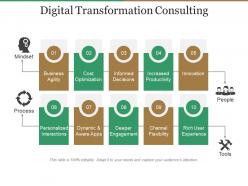
Create stunning presentations to visualize digital service interactions with the help of our professionally crafted digital transformation consulting PowerPoint slides. PPT is absolutely perfect to display digital transformation activities from converting processes, activities and models to meet digital economy requirements until the organization is a fully networked digital firm. With the help of this digital business PPT diagram, you can highlight digital transformation consulting services to increase business agility, cost optimizations, increased productivity and performance of the system. You can also identify tools and processes to increase digital service interactions in your business. PPT is helpful to enrich personalized experiences, deeper engagement, channel flexibility and user experience. This digital strategy consulting and transformation is highly useful to improve business performance. Design structure is powerful and can easily be understood by your audience. So, keeping all this in mind, download this awesome digital transformation strategy PowerPoint template and use in your future presentations. Give it a global flavor with our Digital Transformation Consulting Powerpoint Slides. Derive the best from diverse cultures.
People who downloaded this PowerPoint presentation also viewed the following :
Digital transformation consulting powerpoint slides with all 5 slides:
Adjust the data as you desire with our Digital Transformation Consulting Powerpoint Slides. Your ideas acquire a great degree of accuracy.



FAQs for Digital transformation
Okay so you need four main things for this to actually work. First, know exactly what business outcomes you're after - not just "be more digital" but real goals. Second, pick tech that plays nice with what you already have. Third - and this is where companies totally bomb - you need a plan for getting your people on board with the changes. Fourth, get your data house in order first. Here's what I'd do: map out your customer's experience right now, find where things suck the most, then figure out which tech will fix those specific problems. Don't go crazy - start with some easy wins so everyone sees it's working.
Honestly, just audit five main areas: your tech setup, how you handle data, whether your team actually knows digital stuff, customer experience, and your day-to-day processes. Rate each one 1-5 based on how advanced you really are. Most companies are way less digital than they think - it's kinda funny actually. Check specific numbers too like automation percentage and whether your systems actually work together (spoiler: they probably don't). Also look at how easily people can access data. The gaps you find? That's your roadmap right there. Start with a basic self-assessment before you spend money on consultants.
Look, data analytics is what separates successful digital transformation from expensive disasters. Without it, you're flying blind - no clue if your tech investments are working or just draining cash. Analytics shows you which processes actually need fixing and tracks real progress as you go. Plus it reveals customer behavior patterns that should drive your whole strategy. I can't tell you how many companies I've watched skip this step, then act shocked when everything falls apart. Set up your data systems first so you're making decisions with real insights instead of just winging it.
Honestly, resistance to change is brutal - people hate leaving their comfort zones. Your legacy systems will absolutely refuse to work with anything new, which is such a pain. Budget issues always come up when timelines get messy. Plus most teams just don't have the digital skills yet. Leadership needs to actually have a clear plan too, otherwise you're screwed from day one. I'd focus on change management first. Get everyone on board before touching any tech. Without buy-in from the top and your people? Even amazing tools will crash and burn.
Get your people involved from day one - seriously, this makes or breaks everything. Most pushback happens when folks feel blindsided or left out. I've watched so many changes crash because leadership just dropped announcements without context. Bad move. Try starting with small pilot groups first, they'll become your biggest advocates. Skip the documentation dumps and do actual hands-on training instead. Be upfront about timelines and what you're expecting. Regular check-ins help too - you can catch problems early before they snowball. Bottom line: make them partners, not victims of whatever you're rolling out.
Honestly, focus on three things: cloud platforms, data analytics, and automation tools. Cloud gives you flexibility to actually change how you operate. Analytics turns your data into real decisions. And automation? Total game-changer for cutting out mind-numbing repetitive work. You'll also want AI and machine learning - they're pretty much expected now for customer stuff and efficiency. Oh, and don't sleep on cybersecurity. Build it in from the start or you'll regret it later. My advice? Audit what you've got first, then pick ONE area to tackle. Don't try doing everything at once - that never works.
Pick 3-5 metrics that actually matter to your goals - revenue growth, cost savings, employee productivity, customer satisfaction. The usual suspects. Set your baselines first or you'll be guessing what "success" even looks like later. Here's the thing though: some benefits won't show up for over a year, which honestly drives everyone crazy but it's just how transformation works. Don't freak out if things look meh at first. Skip the vanity metrics that make you feel good but don't move the needle. Focus on what ties directly to your objectives and build everything around those core indicators.
Don't just go with whoever has the flashiest demo. Find someone who gets your industry and can show actual examples - not just case studies they clearly copied from their website. Cultural fit is huge since you'll be stuck with these people for months (learned that the hard way). Ask them tough questions about ROI measurement upfront. If they can't explain how they'll actually transfer knowledge to your team, run. Change management expertise matters more than the tech stack they're pushing. You don't want to be calling them every time something breaks.
Customer experience should be your main focus when planning digital transformation. Map out every place customers interact with your business - website, apps, support, checkout, all of it. Find the frustrating parts and fix them with better tech. Nobody has patience for slow, confusing systems anymore (honestly, who does?). Start by actually asking your customers what annoys them most. Then audit your current setup. You're basically redesigning how people experience your brand digitally. Make everything faster and more intuitive. Short wins matter - even small improvements can make customers way happier.
Dude, these technologies are literally making companies rebuild how they do everything. IoT sensors give you crazy visibility into stuff you couldn't see before - like, you finally know what's actually happening in your operations. Then AI takes all that data and turns it into something you can act on, which is honestly pretty cool when it works right. Don't try to do everything at once though. Pick one specific problem that's bugging you and start there. Real-time analytics and automated decisions sound fancy, but they're only worth it if they're solving an actual headache you have.
Dude, you basically can't pull off digital transformation without agile. I mean, think about it - you'll hit random obstacles, users will completely change what they want, and tech moves so damn fast. Waterfall just crumbles under that kind of chaos. With agile you can actually pivot when things go sideways, test your ideas early instead of guessing, and ship stuff in chunks rather than one massive release that could totally bomb. Honestly, I've watched companies just implode trying the old-school approach. My advice? Run some small agile pilots first to prove it works, then scale from there.
Okay so first thing - be super clear about what data you're grabbing and why. People hate feeling like they're being spied on. Don't just axe jobs either, retrain your team instead. Way too many companies mess up the AI bias thing (seriously, it's embarrassing how often this happens). Your algorithms can't be discriminating against people in hiring or whatever. Oh, and don't forget about customers who aren't tech wizards - you'll lose them if everything becomes too digital. Run an ethics check before rolling anything out.
Honestly, you can't just slap security on at the end - that's where everyone screws up. First thing: figure out what data you actually have and where it's hiding. Then go with zero-trust architecture and encrypt everything end-to-end. I know it sounds like a lot, but you really don't have a choice here. Keep GDPR and CCPA in mind throughout (assuming they apply to you). Your team's gonna need training on whatever new security stuff you roll out. Oh, and loop in your security people from the very beginning - they'll catch things you won't. Regular vulnerability checks are clutch for spotting problems early.
Look, your team's gonna mirror whatever energy you bring to digital stuff. If you're curious about new tools and actually try them out, they'll follow. But here's the thing - I've watched so many tech-scared leaders try pushing digital transformation and it's painful to watch. You gotta make it safe for people to experiment and screw up without consequences. My advice? Pick something new and try it publicly, even if you fail at it. Shows everyone that trying beats being perfect. The whole "do as I say not as I do" approach just doesn't work with this stuff.
Don't try to fix everything at once - that's a recipe for disaster. Pick one or two things that are driving you nuts and tackle those first. Maybe it's automating some boring repetitive stuff or finally moving to the cloud so your team can actually work together. Skip the big consulting firms (they'll charge you enterprise prices). Find a local tech person who gets small business budgets. Here's the thing though - you gotta see some real results before dumping more money into it. Get one process working really well, then use those savings to fund whatever's next.
-
Illustrative design with editable content. Exceptional value for money. Highly pleased with the product.
-
Awesome use of colors and designs in product templates.