


Joint Venture For Foreign Market Entry And Competitive Edge Powerpoint Presentation Slides Strategy MD





Try Before you Buy Download Free Sample Product
 Impress Your
 Audience
 100%
100% Editable
 Save Hours
 of Time


Our Joint Venture For Foreign Market Entry And Competitive Edge Powerpoint Presentation Slides Strategy MD are topically designed to provide an attractive backdrop to any subject. Use them to look like a presentation pro.
People who downloaded this PowerPoint presentation also viewed the following :
Content of this Powerpoint Presentation
Slide 1: This slide introduces Joint Venture for Foreign Market Entry and Competitive Edge. State your company name and begin.
Slide 2: This slide shows Table of Content for the presentation.
Slide 3: This slide presents Overview of joint venture for global expansion.
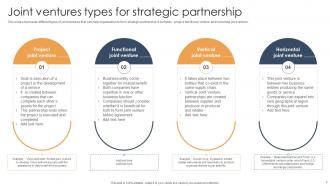
Slide 4: This slide displays Joint ventures types for strategic partnership.
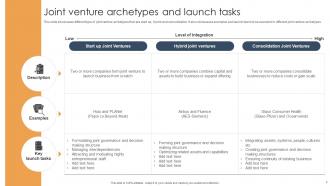
Slide 5: This slide represents Joint venture archetypes and launch tasks.
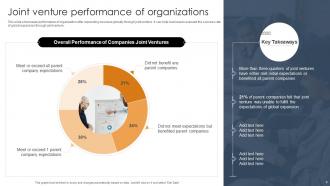
Slide 6: This slide showcases Joint venture performance of organizations.
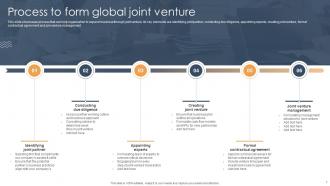
Slide 7: This slide shows Process to form global joint venture.
Slide 8: This slide presents Key elements of joint venture deal making.
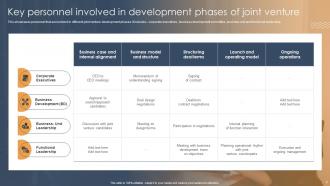
Slide 9: This slide displays Key personnel involved in development phases of joint venture.
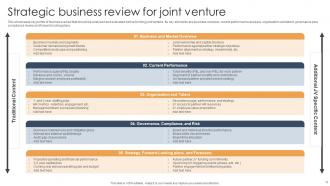
Slide 10: This slide represents Strategic business review for joint venture.
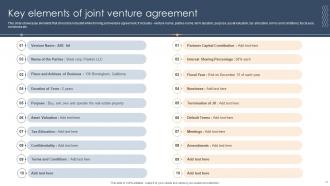
Slide 11: This slide showcases Key elements of joint venture agreement.
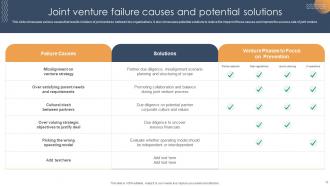
Slide 12: This slide shows Joint venture failure causes and potential solutions.
Slide 13: This is a Thank You slide with address, contact numbers and email address.
Joint Venture For Foreign Market Entry And Competitive Edge Powerpoint Presentation Slides Strategy MD with all 18 slides:
Use our Joint Venture For Foreign Market Entry And Competitive Edge Powerpoint Presentation Slides Strategy MD to effectively help you save your valuable time. They are readymade to fit into any presentation structure.










FAQs for Joint Venture For Foreign Market Entry And Competitive Edge Powerpoint Presentation
Key factors include strategic alignment, complementary capabilities, cultural compatibility, financial stability, and shared risk tolerance. These considerations enable organizations to identify partners who bring valuable resources, market access, and expertise while maintaining operational harmony, with many companies finding that thorough partner evaluation ultimately delivers sustained competitive advantage and accelerated market penetration.
Companies effectively align their goals through comprehensive due diligence, clearly defined success metrics, transparent communication frameworks, and structured governance models that balance each partner's strategic interests. Through detailed partnership agreements and regular milestone reviews, organizations in sectors like technology and pharmaceuticals streamline decision-making processes, minimize conflicts, and ultimately deliver shared value creation and competitive market positioning.
Joint ventures include equity ventures, contractual alliances, strategic partnerships, research collaborations, and market entry ventures. These arrangements enable organizations to share resources, minimize risks, and access new markets while maintaining operational independence, with many companies finding that strategic combinations deliver enhanced competitive advantage, accelerated innovation, and improved market penetration across diverse industries.
Cultural differences between partners significantly influence joint venture success by affecting communication styles, decision-making processes, operational approaches, and relationship-building methods. While these differences can create initial challenges in areas like negotiation styles and management hierarchies, they also deliver strategic advantages through diverse perspectives, expanded market insights, and enhanced innovation capabilities, with many international joint ventures finding that proactive cultural integration ultimately strengthens competitive positioning.
Companies should anticipate challenges including complex contract negotiations, intellectual property protection, regulatory compliance across multiple jurisdictions, antitrust scrutiny, and varying corporate governance requirements. These legal complexities often involve navigating different regulatory frameworks, securing necessary approvals, and establishing clear liability structures, with many organizations finding that early legal consultation streamlines formation and minimizes future disputes.
Companies measure joint venture success through financial metrics like revenue growth, profit margins, and return on investment, alongside operational indicators such as market share expansion, cost synergies, and timeline adherence. These performance assessments enable partners to track strategic objectives, identify optimization opportunities, and ensure alignment with broader business goals, with many organizations finding that regular milestone reviews and balanced scorecards ultimately deliver enhanced accountability and sustainable competitive advantage.
Effective communication serves as the foundation for joint venture success, enabling aligned decision-making, conflict resolution, transparent resource allocation, and coordinated strategic planning between partner organizations. Through regular stakeholder meetings, shared reporting systems, and clear governance protocols, partners can navigate cultural differences, manage expectations, and maintain operational efficiency, with many joint ventures finding that structured communication frameworks ultimately deliver stronger partnerships and competitive market positioning.
Technology facilitates joint venture collaboration through cloud-based platforms, real-time communication tools, integrated project management systems, shared data analytics dashboards, and automated workflow coordination. These solutions streamline information sharing, enhance transparency, and enable seamless coordination across different organizations, with many manufacturing and financial services partnerships finding that digital integration accelerates decision-making and reduces operational friction.
Dispute resolution strategies include mediation, arbitration, escalation protocols, independent expert evaluation, and structured negotiation frameworks. These approaches streamline conflict management by establishing clear communication channels, defining decision-making authority, and creating neutral evaluation processes, with many organizations finding that proactive dispute mechanisms ultimately deliver faster resolutions and preserve strategic partnerships.
Market research informs joint venture decisions by identifying market opportunities, assessing competitive landscapes, evaluating partner capabilities, and analyzing customer demand patterns. Through comprehensive market analysis, companies can determine strategic fit, validate revenue potential, and minimize investment risks, with many organizations finding that data-driven partner selection ultimately delivers stronger market positioning and accelerated growth outcomes.
Joint venture risks include cultural misalignment, unequal resource contributions, intellectual property disputes, conflicting strategic objectives, and governance challenges. These risks can be mitigated through comprehensive due diligence, clear contractual frameworks defining roles and responsibilities, establishing robust communication protocols, and implementing regular performance reviews, with many organizations finding that structured exit clauses ultimately protect long-term strategic interests.
Companies protect intellectual property in joint ventures through comprehensive legal agreements, clearly defined IP ownership structures, and strategic disclosure protocols. These safeguards include non-disclosure agreements, IP licensing frameworks, and collaborative development clauses, with many organizations finding that structured IP governance ultimately enhances innovation while maintaining competitive advantages across partnership boundaries.
Successful joint ventures include Sony Ericsson's mobile innovation, Starbucks-PepsiCo's ready-to-drink expansion, Hulu's streaming platform collaboration, Toyota-Tesla's electric vehicle development, and Disney-Pixar's entertainment synergy. These partnerships demonstrate how strategic resource combination, complementary expertise sharing, and market access alignment enable accelerated growth, reduced development costs, and enhanced competitive positioning across diverse industries.
Joint ventures impact brand reputation by combining the credibility, market presence, and customer trust of both partners, creating enhanced visibility and shared expertise. While successful collaborations strengthen both brands through expanded market reach and improved capabilities, partners must carefully manage potential risks, with many companies finding that strategic alignment and clear communication ultimately deliver stronger market positioning and competitive advantage.
Joint venture exit strategies include predetermined buyout clauses, asset liquidation agreements, IPO provisions, strategic sale options, and dissolution frameworks with clear asset distribution terms. These mechanisms enable partners to navigate changing business priorities, market conditions, or strategic shifts while protecting investments, with many organizations finding that well-defined exit terms ultimately enhance venture stability and partner confidence.
-
Spacious slides, just right to include text. SlideTeam has also helped us focus on the most important points that need to be highlighted for our clients.
-
Extremely professional slides with attractive designs. I especially appreciate how easily they can be modified and come in different colors, shapes, and sizes!