

Key Stages Of Data Engineering Lifecycle




Try Before you Buy Download Free Sample Product
 Impress Your
 Audience
 100%
100% Editable
 Save Hours
 of Time


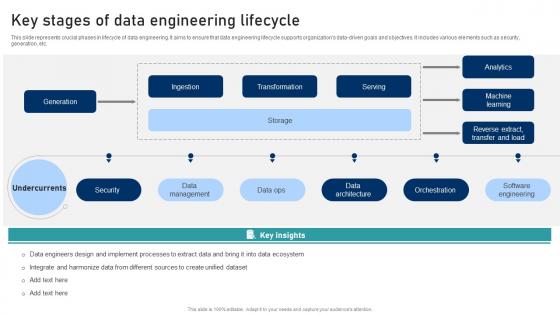
This slide represents crucial phases in lifecycle of data engineering. It aims to ensure that data engineering lifecycle supports organizations data-driven goals and objectives. It includes various elements such as security, generation, etc.
People who downloaded this PowerPoint presentation also viewed the following :
Key Stages Of Data Engineering Lifecycle with all 9 slides:
Use our Key Stages Of Data Engineering Lifecycle to effectively help you save your valuable time. They are readymade to fit into any presentation structure.








FAQs for Key Stages Of
So there are five main stages you'll go through: generation, storage, ingestion, transformation, and serving. Generation is just figuring out your data sources. Storage is designing where it all lives. Ingestion moves everything into your systems - and honestly, this part breaks constantly so prepare yourself lol. Transformation cleans up the mess and makes it actually useful. Then serving pushes it out to users through dashboards or APIs or whatever. Oh, and it's called a "lifecycle" because you'll be tweaking and redoing stuff forever as requirements change. Fun times!
So it really depends on what you're working with. Databases? CDC or scheduled batch pulls through APIs work best. Streaming stuff like Kafka needs real-time consumers that won't choke on high throughput. Files are usually batch - nightly CSV dumps, parquet from S3, that sort of thing. APIs are honestly the worst because you're constantly fighting rate limits and auth tokens (OAuth refresh is such a pain). Match your approach to how the source actually updates. I'd start by listing all your sources and how often they change. Then just pick batch or streaming based on that. Short sentences help sometimes.
So data validation is like having a bouncer for your data - it catches all the garbage before it messes up everything downstream. You're checking data types, ranges, if stuff is complete, business rules, all that good stuff. Honestly, I've seen too many projects crash because they skipped this step. Build these checks right into your pipelines instead of bolting them on later. Focus on ingestion points first since bad data just gets worse as it moves through your system. Start with your most critical rules and automate those - you'll thank yourself later when you're not debugging weird edge cases at 2am.
Track both technical stuff and business metrics for the full picture. Technical side: data quality scores, pipeline uptime, processing latency, error rates - basically making sure your pipes don't break. Business metrics are more fun though - data freshness vs SLA requirements, downstream performance, how fast teams actually get their data. Oh and definitely watch costs per processed record because I've seen pipelines that work amazingly but cost a fortune. Weekly dashboard reviews with your team work well. Some companies obsess over uptime but ignore whether the data's even useful - don't be those people.
Python and SQL are absolutely everywhere - you can't escape them in data engineering. Airflow runs most orchestration workflows, though Prefect and Dagster are gaining ground. AWS, GCP, and Azure handle the cloud infrastructure stuff (S3, BigQuery, all that). Spark's your go-to for processing massive datasets - honestly still blows my mind how fast it crunches through terabytes. Docker and Kubernetes keep everything neat and scalable. My take? Master Python and SQL first, no question. Then pick whichever cloud platform your company's already using and go deep on that one.
So it really depends on how you'll actually use the data. PostgreSQL is solid for structured stuff you query a lot. Logs and documents? Just throw them in S3 - way easier. InfluxDB handles time-series data pretty well, though I'll be honest, I haven't used it much lately. For analytics, columnar stores like BigQuery absolutely crush regular databases performance-wise. Oh and definitely check costs first because some of these solutions will eat your budget alive. Map out your access patterns first, then pick whatever fits best. Don't overthink it too much.
Data quality will bite you first - trust me on that one. Schema changes love breaking pipelines at the worst possible times, and mixing different data formats from various sources gets messy fast. Performance tanks when volumes spike too. Here's what actually works: build validation into your pipeline early, not as an afterthought. Version control everything religiously. Design for scale upfront because retrofitting sucks. Set up monitoring so you catch problems before your boss does - nothing worse than finding out from a panicked Slack message. Oh, and schema evolution techniques are lifesavers. Start small though.
Just throw everything in Git - your code, configs, data schemas, the whole mess. SQL scripts, transformation logic, all of it needs version control. Trust me on this one: I've watched teams completely lose their minds trying to debug a broken pipeline when they have zero visibility into what changed. Short commits work fine, just make them meaningful. Oh and if you're dealing with huge datasets, maybe look into DVC or lakeFS later for actual data versioning. But honestly? Start basic. Get your pipeline code tracked properly and you'll already be doing better than like 80% of data teams out there.
Think of metadata management as your GPS for data - it tells you what everything is, where it came from, and how it got transformed along the way. When stuff breaks (and it will), you'll actually know where to look instead of panicking. Plus stakeholders love asking "where did this number come from?" at the worst possible times. Good metadata saves you from those awkward silences. It also stops new team members from rebuilding things that already exist. Honestly, just start with your most important datasets - even a basic spreadsheet is better than the chaos most teams live with.
So basically real-time means processing data the second it comes in - like fraud detection stuff that can't wait. You'd use tools like Kafka or Flink for that. Batch processing is different though, it handles big chunks of data on a schedule, like those overnight ETL jobs that run while everyone's sleeping. Honestly, real-time is way more of a headache to set up and costs more too. Plus you're constantly dealing with scaling issues and failures. Before you go down that rabbit hole, just ask yourself if you actually need instant results or if waiting a few hours is totally fine.
Build governance right into your data pipeline from day one - don't try adding it later. Track who owns what data and document everything religiously (trust me, you'll need this when someone's panicking about a mystery field). Set up naming conventions early and classify sensitive stuff properly. Quality checks should run automatically, and honestly? Schema change alerts are a lifesaver. The trick is making it feel natural, not like jumping through hoops. Oh, and always keep audit trails - being able to trace problems back saves so much headache.
So basically you're switching from owning all the hardware to just connecting different services together. Like using S3 for storage, Lambda for processing - that kind of stuff. The databases scale themselves which is honestly amazing once you get the hang of it. You'll be designing pipelines that use elastic compute and only pay for what you actually use. Quick prototyping becomes way easier too (seriously, the speed difference is nuts). I'd start by figuring out which parts of your current setup would work best with managed services first.
Python and SQL are absolutely non-negotiable - learn those first. Cloud stuff and pipeline tools like Airflow come next. Data modeling is huge too, though honestly most people skip it and regret it later. But here's the thing - communication skills matter way more than anyone tells you. You're basically a translator between business people and databases all day. Problem-solving and system design thinking will save your butt constantly. Oh, and don't try learning everything simultaneously. I made that mistake. Start small, build up piece by piece.
Dude, automation is a lifesaver for data engineering. I'd start with the boring stuff you do every day - data ingestion, transformations, quality checks. Once it's running, your pipelines just work without you babysitting them constantly. Way fewer things break when humans aren't manually clicking buttons everywhere. The scheduling gets consistent too, which sounds boring but it's actually huge. You'll end up with so much more time for the interesting problems instead of the same tedious tasks. Honestly, I should've started automating way earlier than I did. Just pick one annoying manual process first.
Honestly, the biggest thing is getting everyone talking way earlier in the process instead of just throwing stuff over the fence at the end. Get your data scientists in on pipeline conversations from the start so they actually understand what you're working with. And make them tell you what they need before they disappear for three weeks building something you can't support. Weekly standups are clutch - I've watched teams burn so much time because nobody checked if they were on the same page. Document your schemas and quality stuff clearly, give scientists real staging access with actual data volumes. Also set up a Slack channel or whatever for quick hits. Trust me, it saves everyone's sanity.
-
Fantastic collection of visually appealing PowerPoint templates. They certainly uplift the look of the presentation.
-
The designs by SlideTeam are honestly the best I have seen so far. Will be definitely coming back for more.