

Linguistic Diversity Powerpoint Ppt Template Bundles





Try Before you Buy Download Free Sample Product
 Impress Your
Audience
 100%
Editable
 Save Hours
of Time


Our Linguistic Diversity Powerpoint Ppt Template Bundles are topically designed to provide an attractive backdrop to any subject. Use them to look like a presentation pro.
People who downloaded this PowerPoint presentation also viewed the following :
Content of this Powerpoint Presentation
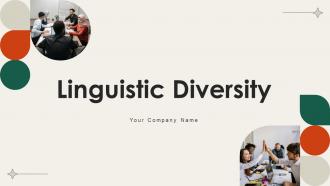
Slide 1: The slide introduces Linguistic Diversity. State your Company name and begin.
Slide 2: This slide presents various best practices to improve linguistic diversity at workplace including language training, translators, and employee encouragement.
Slide 3: This slide shows strategy adoption report to enhance linguistic diversity at workplace including initiatives.
Slide 4: This slide renders training plan for employees to enhance linguistic diversity at workplace including elements.
Slide 5: This slide represents various strategies to mitigate challenges to manage workplace linguistic diversity.
Slide 6: This slide highlights action plan to enhance linguistic diversity in organization including approaches such as hiring multilingual translators, etc.
Slide 7: This slide displays various applications of linguistics diversity at call centers.
Slide 8: This slide presents analysis report to recognize workplace linguistic diversity scores including elements such as level of proficiency, key insights, etc.
Slide 9: This slide renders framework to manage workplace linguistic diversity effectively including phases such as linguistic exclusion, linguistic inclusion, etc.
Slide 10: This slide shows timeline to enhance organizational linguistic diversity score including initiatives.
Slide 11: This slide renders use cases of implementing linguistic diversity with AI and ML including customer services, media and entertainment, etc.
Slide 12: This slide demonstrates Gantt chart to implement linguistic diversity at workplace including phases.
Slide 13: This slide presents mentorship program to enhance linguistic diversity at workplace including elements such as program details, mentees, mentors, etc.
Slide 14: This slide highlights benefits of hiring linguistically diverse professionals including benefits such as problem-solving, product development, etc.
Slide 15: The slide displays Linguistic diversity icon to enhance customer interaction.
Slide 16: The slide renders Employee training icon to enhance linguistic diversity.
Slide 17: The slide represents Global linguistic diversity icons to optimize international business.
Slide 18: This is a Thank You slide with address, contact numbers and email address.
Linguistic Diversity Powerpoint Ppt Template Bundles with all 26 slides:
Use our Linguistic Diversity Powerpoint Ppt Template Bundles to effectively help you save your valuable time. They are readymade to fit into any presentation structure.










FAQs for Linguistic Diversity Powerpoint
Geographic isolation, cultural heritage, historical migration patterns, social structures, and environmental factors drive linguistic diversity across regions. Mountains, rivers, and vast distances create natural barriers that allow distinct languages to develop independently, while trade routes, colonial influences, and population movements introduce new linguistic elements, ultimately delivering rich communication systems that reflect each community's unique identity and adaptive strategies.
Linguistic diversity strengthens cultural identity by preserving unique worldviews, traditional knowledge, and community bonds embedded within each language. Different languages shape distinct ways of thinking and expressing cultural values, with indigenous communities, regional dialects, and multilingual societies finding that language preservation directly maintains their historical narratives, customs, and intergenerational knowledge transfer systems.
Globalization and technology present both challenges and opportunities for endangered language preservation, with digital platforms enabling documentation, online learning resources, and virtual communities while economic pressures often accelerate language shift. Through mobile apps, social media, and digital archives, many indigenous communities are creating language learning tools and cultural repositories, ultimately delivering new pathways for intergenerational transmission and global awareness.
Socio-economic factors significantly influence language vitality through employment opportunities, educational access, urbanization patterns, and resource allocation for language preservation programs. Higher-income communities often maintain linguistic diversity through private schools and cultural institutions, while economically disadvantaged groups may prioritize dominant languages for social mobility, ultimately creating complex dynamics between economic survival and cultural preservation.
Education systems can adapt by implementing bilingual curriculum models, training multilingual educators, establishing community language partnerships, and integrating culturally responsive teaching methods. These approaches enhance cognitive development, preserve cultural heritage, and prepare students for global opportunities, with many institutions finding that multilingual education ultimately delivers improved academic outcomes, stronger community connections, and competitive advantages in increasingly diverse societies.
Linguistic diversity significantly enhances cognitive development in children by strengthening executive function, problem-solving abilities, and mental flexibility through exposure to multiple language structures and cultural perspectives. Children in multilingual environments demonstrate improved attention control, enhanced creative thinking, and superior academic performance, with many educational institutions finding that diverse linguistic exposure ultimately delivers stronger analytical skills and greater adaptability in increasingly globalized learning environments.
National language policies significantly affect minority speakers through education access, government service availability, cultural preservation opportunities, and economic mobility pathways. While some countries adopt multilingual approaches that enhance minority language vitality and cultural identity, others implement dominant-language policies that can marginalize speakers, with many linguistic communities finding that inclusive policies ultimately deliver better social cohesion and preserve invaluable cultural heritage.
Language revitalization strategies include community immersion programs, digital documentation projects, educational curriculum integration, intergenerational transmission initiatives, and media content creation in endangered languages. These approaches work by engaging native speakers as teachers, leveraging technology for preservation and learning, and creating practical usage opportunities, with many indigenous communities finding that combining traditional storytelling with modern digital platforms ultimately delivers both cultural preservation and enhanced community identity.
Linguistic diversity enhances creativity and innovation by fostering cognitive flexibility, expanding problem-solving approaches, and enabling cross-cultural knowledge exchange across communities. Through multilingual environments, organizations access diverse perspectives, accelerate breakthrough thinking, and develop culturally adaptive solutions, with many research institutions and global companies finding that linguistic variety ultimately delivers enhanced innovation capacity and competitive advantage.
Linguistic diversity presents both challenges and opportunities for global business communication, including translation complexities, cultural nuance interpretation, market access barriers, and varying communication styles across regions. While these factors can initially complicate international operations, organizations increasingly find that embracing multilingual strategies enhances customer relationships, expands market reach, and delivers competitive advantages through deeper cultural understanding and localized business approaches.
Dialects significantly shape social dynamics by creating in-group identity, establishing social hierarchies, and influencing professional opportunities within communities. These linguistic variations enable cultural preservation and community bonding while also presenting challenges for cross-group communication, with many organizations finding that embracing dialectal diversity enhances workplace inclusion and customer engagement across different demographic segments.
**INPUT**: What are the ethical considerations when documenting endangered languages? **OUTPUT**: Ethical considerations include obtaining informed consent from speakers, ensuring community ownership of materials, respecting cultural protocols, protecting sensitive knowledge, and providing fair compensation for participants' time. These approaches streamline collaboration by honoring indigenous rights, maintaining cultural integrity, and establishing transparent partnerships, with many linguistic communities finding that ethical documentation ultimately delivers preserved heritage and enhanced cultural continuity.
Technology aids language learning and preservation through mobile apps, interactive platforms, digital dictionaries, virtual reality environments, and AI-powered tutoring systems. These tools enhance accessibility by providing immersive experiences, real-time translation, and personalized learning paths, while enabling communities to document endangered languages digitally, ultimately delivering broader cultural preservation and educational opportunities.
Linguistic diversity contributes to sustainable development goals by preserving indigenous knowledge systems, enhancing educational outcomes through multilingual approaches, promoting cultural sustainability, and fostering inclusive governance structures. These diverse linguistic resources enable communities to maintain traditional environmental practices, facilitate knowledge transfer across generations, and ensure equitable participation in development initiatives, with many organizations finding that multilingual strategies ultimately deliver more effective and culturally appropriate solutions.
Multilingual environments enhance workplace culture by fostering cross-cultural understanding, expanding global market reach, and encouraging diverse problem-solving approaches. While communication challenges may initially arise, organizations increasingly find that linguistic diversity drives innovation, strengthens international partnerships, and enables more nuanced customer engagement across different markets, ultimately delivering competitive advantages in an interconnected business landscape.
-
Huge collection of high-quality templates. Worth each penny.
-
SlideTeam makes creating presentations easy. Unlimited products, premium quality designs and affordable.