List of accomplishment powerpoint guide
Try Before you Buy Download Free Sample Product
Audience
Editable
of Time
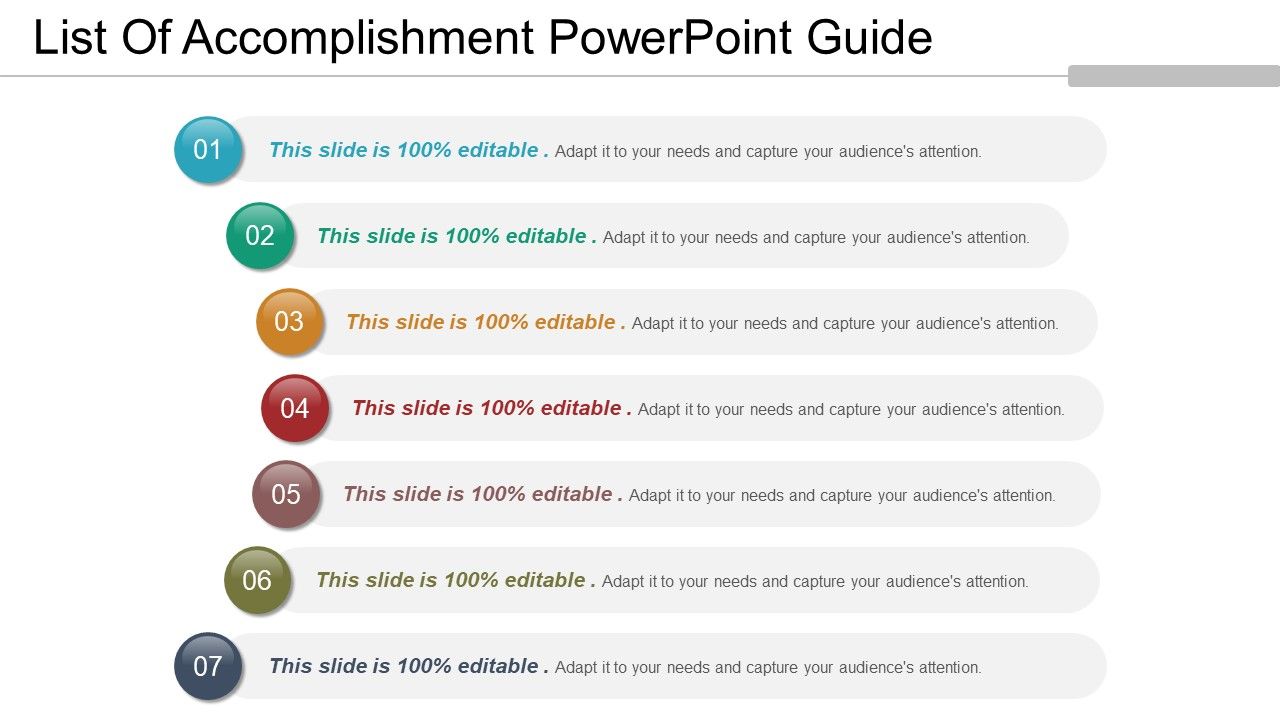
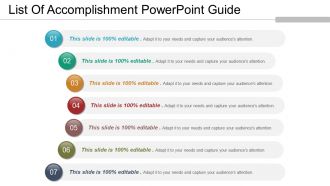
We present our list of accomplishments PowerPoint guide. This PPT slide would be helpful to outline your accomplishments. If you want to showcase business or personal achievements, this professionally designed achievements statement PowerPoint template could give you an edge. Our effective presentation slide can help you get your message across in a most effective way. The key highlights PPT slide is intended to present subjects such as goals, achievement, objectives, awards in resume, best work achievements, business and career accomplishments, career achievements, career highlights, business highlights, company accomplishments, core accomplishments, company highlights, success statement, key achievements, key highlights, goals and accomplishments at work, experience and achievements etc. Use this PPT slide to present your company success in front of the clients. Presentation graphics will help you in delivering an effective presentation. Download our list of accomplishment presentation slide to impress the audience. Folks feel driven to consider your ideas with our List Of Accomplishment Powerpoint Guide. Your influence will have an effect.
People who downloaded this PowerPoint presentation also viewed the following :
List of accomplishment powerpoint guide with all 5 slides:
Give her concerns due attention with our List Of Accomplishment Powerpoint Guide. Elaborate on the female cause.
FAQs for List of
So you need three main things for a solid professional accomplishment. First, measurable impact - like "boosted sales 15%" instead of just "helped with sales." Way more convincing. Second, make it clear what YOU actually did versus the whole team. Third, pick something that connects to business goals or skills you want to highlight. Honestly, I know everyone says this but the STAR method really works - situation, task, action, result. It's kind of annoying how well it works actually. Focus on problems you solved or processes you improved. Numbers are your friend here, so quantify whatever you can. The best accomplishments show you delivered something that actually mattered.
Dude, charts and graphs are game-changers for presentations. People's brains just process visuals faster than walls of text - I learned this the hard way after watching executives' eyes glaze over during my first quarterly review. Show that 30% sales jump as an actual upward line instead of just mentioning it. Before/after comparisons work great too. One metric per slide though, don't overcrowd it. Honestly, most people remember stories way better than random numbers anyway. Your data needs to tell a story they'll actually care about.
Your accomplishments are basically what make people believe you're legit. Awards, big projects, actual results - that's the stuff that makes someone think "damn, they really do know what they're talking about." It's the difference between saying you're good at something and proving it. When you're not around, these become the stories people tell about you. Pick the ones that match how you want to be seen, then work them into conversations naturally. Don't just list them off like a robot though - weave them in so they feel organic, not forced.
Track stuff like raises, promotions, or new responsibilities that happened after your big wins. Did you get invited to lead projects? Better meeting invites? Sometimes it's honestly just people listening to you more - sounds dumb but it's real. Keep notes on what opened up after each accomplishment. The trick is connecting your achievements to actual career moves. Like, did that presentation land you the client-facing role you wanted? Then boom, you've got proof of impact when it's time to negotiate your next thing.
Skip the boring bullet points and tell actual stories instead. What challenge did you face? How'd your team solve it together? Way more interesting that way. Call out specific people by name - everyone loves getting credit. Visuals help too, like before/after shots or charts showing progress. Oh, and start keeping a "wins folder" now so you're not frantically trying to remember stuff later (learned that one the hard way). Always wrap up each win by mentioning what you learned. Makes it feel less like bragging, more like growth.
Honestly, just lead with the "so what" instead of getting into the weedy technical stuff. People's eyes glaze over fast - trust me on this one. Start with what actually changed or improved, then maybe explain how you did it if they seem interested. Drop the jargon completely. I like using analogies they'll get, and real numbers work way better than percentages. "Saved 2 hours daily" hits different than "15% efficiency gain." Connect it to something they actually care about. What's in it for them or the company? That's what sticks.
Dude, you want accomplishments with actual numbers attached. Revenue increases, money saved, efficiency gains - that stuff. Don't just list what you were supposed to do (boring). Show how you actually made things better. Like instead of "improved sales," say "boosted regional sales 23% in six months." Way more impressive, right? Pick wins that match the job you want, especially if they show leadership or problem-solving. Honestly, hiring managers see so much generic fluff that real metrics make you stand out. Numbers don't lie.
Honestly, turning your wins into actual stories is a game-changer. Nobody's gonna remember "boosted sales 15%" but they'll totally remember how you spotted that customer service issue killing deals. Stories give context - the messy stuff, what went wrong, how you figured it out. People connect with that way more than random bullet points. Plus you seem more real when you share the whole journey, not just the shiny end result. I learned this the hard way in interviews lol. Pick like 2-3 big accomplishments and tell them as mini-stories instead of just rattling off numbers.
Honestly, imposter syndrome hits the hardest - you'll downplay everything or worry you sound braggy. Quantifying impact is rough too, especially for collaborative stuff or things that aren't super measurable. Then there's that whole "I was just doing my job" thing that makes your wins feel meh. Oh, and you literally forget half your accomplishments by year-end (I'm terrible at this). Sometimes you don't even realize something was impressive until way later. Start keeping a wins list now though - seriously saves you from that December panic scramble trying to remember what you actually did all year.
Honestly, infographics are a game-changer for showing off what you've done. People can scan them super quickly instead of slogging through paragraphs about your 40% sales boost. A simple chart or timeline tells that story way better. Our brains process visuals like 60,000 times faster than text - which sounds crazy but makes total sense when you think about it. Before/after comparisons work great too. I mean, who has time to read dense blocks of text these days? Visual stuff just sticks in people's heads better.
So quantifiable stuff is your hard numbers - "increased sales by 30%" or "cut processing time by 2 hours." Qualitative is trickier to measure but still matters, like boosting team morale or building better client relationships. Honestly, you need both. Numbers catch attention (managers eat that stuff up), but qualitative shows your people skills and broader impact. Just numbers? You'll sound like a robot. Only qualitative gets a bit vague though. Best move is combining them - "Led initiative that improved customer satisfaction scores by 25%." Shows leadership AND results.
Think of your wins as conversation starters, not resume lines. When you meet someone, drop in real results naturally - like "I just cut our processing time by 40%" sounds way more interesting than "I work in operations." People actually want to hear about concrete stuff you've done because it shows what you can do for them too. Don't be braggy about it though, that's weird. Have 2-3 solid examples ready that fit your field. Practice telling them like actual stories instead of just rattling off achievements. Short version: make it conversational and specific.
Don't be vague - saying "I'm a team player" means absolutely nothing to them. Use the STAR method instead and tell specific stories with actual numbers if you can. Avoid taking all the credit when it was obviously a group thing, but don't downplay what you did either (imposter syndrome hits hard sometimes). Skip the humble bragging completely. Never lie or stretch the truth because they'll catch you. Oh, and make sure your examples actually relate to the job you want. Nobody cares about your college debate trophy if you're applying for a marketing role.
Honestly, I always screenshot their values page because I'm terrible at remembering exact wording later. Look up what they actually care about first - like if they're obsessed with "innovation," don't just say you improved something. Say you "pioneered a creative solution" or whatever. Match your stories to their language with real numbers when you can. They value teamwork? Skip the solo wins and talk about group projects instead. Basically you want them thinking you already fit their vibe before you even show up. It's kind of manipulative but it works.
Oh man, this is such a real thing! What counts as impressive totally depends on where you're from. Americans love talking up their personal wins - it's expected here. But in places like Japan or Korea? You'd look like a total show-off doing that. Academic stuff gets huge props in some cultures, while others care way more about family milestones or helping your community. The tricky part is figuring out how to talk about your successes without stepping on cultural landmines. I'd honestly just watch how people around you do it first, then copy their vibe.
-
Unique design & color.
-
Informative design.