


Sales engagement plan




Try Before you Buy Download Free Sample Product
 Impress Your
 Audience
 100%
100% Editable
 Save Hours
 of Time


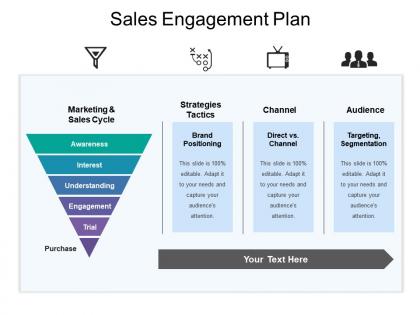
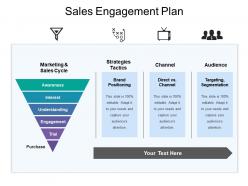
Introduce Sales Engagement Plan to improve your performance revenue and take your business to the next level. Guide your sellers better with this sales development PPT template. Elucidate strategies that enhance revenue with the help of sales performance PPT template. With the help of pie-charts and diagrams, you can explain these strategies better. So make the most of these features while preparing your presentation. Elaborate on the key segments of revenue planning by adopting our aesthetically-designed sales enhancement PPT template. Also, tell the readers how monitoring the sales can be useful to them. The sales interactions PPT slide comes in handy and is easy to use. Business experts can use this sales development PPT slide to convey their message effectively and can have an interactive session on sales productivity. Make desirable changes to make it look attractive and appealing. Download this sales development PPT layout and deliver an impressive presentation.
People who downloaded this PowerPoint presentation also viewed the following :
Sales engagement plan with all 5 slides:
Be a fashionista with our Sales Engagement Plan. Folks will closely follow your every thought.


FAQs for
Honestly, most teams get this backwards - they obsess over calls made instead of what actually matters. Track your response rates and how many meetings turn into real deals. Email opens and replies tell you if people care about your message. Connection rates show whether your timing's off or you're hitting the right people. But here's the thing - pipeline contribution and cycle length are where the magic happens. Those reveal if you're creating real engagement or just... well, annoying prospects. I'd check these weekly so you can spot patterns fast. Activity metrics look good on paper but they don't move deals forward.
Stories are your secret weapon in sales calls. People connect with them way more than boring feature lists - it's just how our brains work. When you're talking to prospects, share quick customer wins that sound like their exact situation. I'm talking 30-60 seconds tops, not some long-winded case study. Keep a few go-to stories ready for your biggest objections. Like, if everyone worries about implementation time, have that "client who thought it'd take months but went live in two weeks" story locked and loaded. Makes them actually picture themselves succeeding instead of just hearing you pitch.
Dude, personalization is a game changer - seriously can triple your response rates. Nobody wants to feel like they're getting blasted with some copy-paste template (we all see right through that garbage). Reference something specific about their company or role. Maybe they just got promoted or their company made news recently. Even mentioning a mutual connection works wonders. Look, I get it - it takes more time than mass emails. But people actually respond when they think you've done basic research and you're talking to them, not just anyone with a pulse. Small effort, huge payoff.
Dude, start with automating your follow-ups - that's honestly where most deals die anyway. CRM systems will track everything for you automatically, and you can set up email sequences that nurture leads while you're doing other stuff. Sales engagement platforms are pretty sick - they let you mix emails, calls, and social media touches across different channels. AI tools can even tell you the best times to reach out, which is kinda creepy but whatever works. Use data to see what's actually moving the needle instead of just winging it. Frees you up to focus on the actual selling part.
Dude, the worst thing you can do is blast everyone with the same copy-paste message - instant turnoff. Don't be that salesperson who calls nonstop without actually helping anyone. Research your prospects first or you'll sound like a total amateur. Timing matters way more than people think. Space out your follow-ups but don't go radio silent either. Maybe I'm old school, but I still think starting with their problems beats pitching your product every time. Oh, and please don't send like 15 emails in one week - that's just annoying.
Honestly, stalk them a bit first - but like, professionally. Check out their LinkedIn posts and actually engage with stuff that makes sense. Drop some thoughtful comments, share things they'd care about. LinkedIn's obviously the go-to for B2B, though Twitter works too if they're posting there. The whole point is building real connections before you pitch anything. I usually follow their accounts, engage for maybe 2-3 weeks, then message them with something personal that shows I've been paying attention. Way better than cold outreach - people can smell desperation from a mile away.
Honestly, it's all about staying helpful without being annoying. Share stuff that actually matters to them - industry news, useful resources, whatever solves their problems. I switch between emails and LinkedIn messages, maybe a call if we're cool like that. Don't blast them though. Space it out every few days, longer if they're not ready to buy yet. Always give value before asking for anything - that's huge. Oh, and definitely track what content gets responses. Some leads love case studies, others want quick tips. Once you figure out their vibe, you're golden.
Dude, feedback loops changed everything for me in sales. Track your outreach responses and actually look at what's working. I was stuck sending the same boring templates until I paid attention to reply rates - total game changer. You'll notice patterns pretty quickly. Like which subject lines get opened, best times to call, what messaging hits with different prospects. The trick is actually doing something with that data instead of just hoarding it. Oh, and don't overthink it at first - even small tweaks make a difference. Start somewhere and adjust as you go.
Match their vibe first - formal means you go formal, casual means you can chill out. Don't pitch right away. Instead, ask about their actual business problems. I always hunt for some real common ground early on, like same industry background or hell, even if we went to the same school. Listen way more than you talk those first few minutes. Show genuine curiosity about their world before diving into yours. Honestly, the best conversations happen when you get them talking about what's actually stressing them out business-wise. That's where the gold is.
You seriously can't treat every buyer the same - a penny-pinching CFO needs totally different messaging than some IT director who geeks out over features. C-suite folks want those big ROI numbers, while managers are digging into implementation details. Some people love data-packed emails, others just want a quick call or demo. The timing matters too, honestly. What works is mapping your top 3 personas and building specific playbooks for each. Don't wing it with generic outreach.
Honestly, timing is huge for outreach - like, it can totally make or break whether people actually respond. Tuesday through Thursday works best, especially 9-11am or 2-4pm when people aren't drowning in meetings. Mondays are a mess and Fridays? Forget it, everyone's mentally checked out already. For follow-ups, I'd wait 3-5 business days between messages. Keeps you on their radar without being that annoying person blowing up their inbox. Oh, and definitely test different send times - what works for tech folks might bomb with retail managers. Track your response rates and you'll start seeing patterns pretty quickly.
Dude, you've gotta get sales and marketing talking to each other. Marketing hands over leads with all the juicy behavioral data, sales gives feedback on what's actually converting. Game changer. Most companies are still doing this weird territorial thing - honestly makes no sense. Your messaging stays consistent across touchpoints, which prospects notice more than you'd think. Set up shared lead scoring and maybe have them crash each other's weekly meetings. Sounds basic but you'll be amazed what gaps you discover. Oh, and create content libraries both teams can access.
Honestly, I'd start with a solid CRM like HubSpot or Salesforce - those are your bread and butter for tracking prospects. Outreach.io is pretty clutch for automating email sequences (saves me hours every week). Don't sleep on video either - Zoom and Loom are must-haves since you can't just drop by someone's office anymore. Oh, and Pipedrive's interface is way cleaner if you find Salesforce overwhelming. The trick is making sure everything talks to each other. Trust me, you don't want to be copying and pasting contact info between five different apps all day.
Listen first, don't jump straight to defending yourself - that's like the worst thing you can do. Ask questions to figure out what's really bugging them. Half the time when someone says "too expensive," they actually mean they don't get why it's worth it yet. Once you know what's actually behind their pushback, you can tackle that instead of just the surface stuff. I always think of objections as chances to give them info that actually matters to them. Yeah, have your go-to responses ready, but don't sound like you're reading from a script. That's super obvious and kills the whole vibe.
Dude, follow-up is everything in sales - seriously. Most people need like 5+ touches before they'll actually buy anything, so if you're not staying in contact, you're basically leaving money on the table. Plus it shows you're not some fly-by-night salesperson who disappears after the first call. Each time you reach out, bring something actually useful though. Don't just send those annoying "checking in!" messages that everyone ignores. Maybe share an article that fits their situation, or mention something relevant you heard about their industry. The whole point is staying on their radar so when they're finally ready to pull the trigger, they think of you first.
-
Attractive design and informative presentation.
-
Easily Editable.