

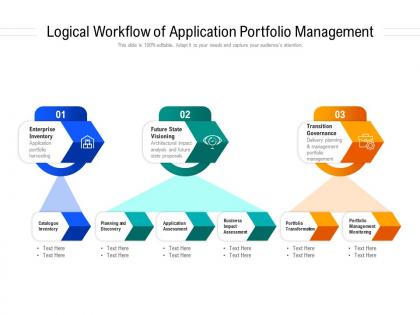
Logical workflow of application portfolio management




Try Before you Buy Download Free Sample Product
 Impress Your
 Audience
 100%
100% Editable
 Save Hours
 of Time


Insist on examining every facet of the issue with our Logical Workflow Of Application Portfolio Management. You will be declared a fair judge.
People who downloaded this PowerPoint presentation also viewed the following :
Logical workflow of application portfolio management with all 2 slides:
Earn fame as a good judge with our Logical Workflow Of Application Portfolio Management. Clearly demonstrate your insistence on fair play.

FAQs for Logical workflow of
So APM basically shows you what apps you're actually running and what they're costing. Most companies find a ton of duplicate stuff they didn't even know about - it's wild how much redundancy builds up over time. You'll spot security risks and apps that are just money pits. The real payoff? Cut licensing costs, clean up your tech mess, and figure out what's worth keeping versus what needs to go. Honestly, just start by making a list of everything you have. Sounds boring but you can't fix what you can't see, right?
First thing - map your apps against what the business actually needs and check if usage matches what you're spending. Look at technical debt and security risks too. Survey your users because they'll be brutally honest about which apps suck and which ones they'd miss. Honestly, skip the complicated scoring stuff at first. Just figure out your obvious wins and disasters. Short sentences work better for this kind of analysis anyway. Once you've got that foundation, then you can build a proper framework to decide what gets modernized, replaced, or thrown out completely.
So there are a few ways to tackle this. Business value scoring works well - just rate each app on stuff like revenue impact and how much users actually need it. The 2x2 matrix thing is honestly my favorite though, where you plot business value against technical quality. Super easy to show your boss later. You could also do technical health checks (security, performance, maintenance nightmares). Risk-based works too if you're in one of those heavily regulated industries. I'd probably start with whatever makes the most sense for your company's situation and go from there.
Dude, APM is a game-changer for cutting IT costs. You get this clear picture of which apps actually matter vs. the ones just eating budget for no reason. Most companies have SO much waste hiding in their app portfolios - like legacy stuff that costs more to maintain than it's worth. Once you map everything to actual business outcomes, you'll spot redundant systems pretty fast. Plus having solid usage data makes vendor negotiations way easier. Honestly, just start with auditing what you currently have. I bet you'll find some obvious cost cuts within a few weeks, maybe sooner.
Look, you can't do APM without getting the right people talking to you first. Business users will tell you what's actually broken or missing. IT knows where all the technical mess is hiding. Finance controls the money (obviously), so don't skip them. Executives have the big picture stuff about where the company's heading. Honestly, most people wait too long to involve stakeholders - like they want everything figured out before asking for input. That's backwards. Get them in early, ask the messy questions, then you'll actually know what apps are worth keeping versus which ones need to die.
Yeah totally, APM works great with Agile but ditch those massive yearly reviews. Set up shorter cycles that match your sprints or quarterly planning instead. Most teams mess up by cramming old-school APM into Agile - honestly it's way better to flip that around. Focus on checking app value continuously and get your product owners involved in prioritizing the portfolio. Your retrospectives are perfect for evaluating how apps are performing. Oh and here's a simple starter: just add "app health" conversations to quarterly business reviews. Makes a huge difference without overwhelming anyone.
Honestly, focus on business value vs what you're spending - that's where you'll find the real surprises about which apps are actually pulling their weight. Track revenue each app generates against maintenance costs. User satisfaction and technical debt matter too, obviously. Security compliance is non-negotiable these days. Pick maybe 3-5 metrics that align with your company's priorities. Don't overcomplicate it at first. Set up monthly dashboards to watch the trends. You'd be shocked how many "critical" applications turn out to be money pits when you actually run the numbers.
Honestly, start with mapping your dependencies and data flows - that's like step zero. APM tools will show you which apps have fewer integrations so you can kill those first. Makes way more sense than randomly picking stuff. I'd prioritize based on how much technical debt is driving you crazy, plus maintenance costs and business risk. Run systems in parallel during transitions (learned that one the hard way). Get stakeholders on board early but don't oversell the timeline. Oh and always have rollback plans ready. Seriously, I've watched teams rush this and it gets messy fast.
Look into ServiceNow IT Business Management, Planview, or LeanIX - they're decent for handling app inventories and roadmapping. Though honestly, I've seen teams get away with Lucidchart or even fancy SharePoint setups when money's an issue. Pick something that plays nice with your current ITSM tools. The real trick is finding one that pulls infrastructure data automatically instead of making people update everything by hand (because we both know how that goes). Oh, and definitely run a pilot first - don't go all-in right away.
Okay so APM is basically the translator between your business folks and IT people. It shows you which apps actually make money vs the ones just eating your budget alive (spoiler: way more budget eaters than you think). Here's the thing - it makes you judge apps based on real business results, not just tech stuff. Finally you can talk to stakeholders without all the nerdy jargon they hate. Just start mapping what apps you have to what they actually do for the business. Honestly, you're gonna find some wild stuff you forgot existed.
Honestly, the biggest pain points are gonna be messy data, people fighting you on changes, and executives who don't get it. Your app inventory is probably trash - mine was too. Get your stakeholders to help clean it up first. Business users will push back hard if you don't loop them in early and explain why their pet apps need to go. Frame everything for the C-suite in dollars and risk - they eat that stuff up. Oh, and don't try to boil the ocean right away. Pick one small area to pilot and show some wins before you go enterprise-wide.
Honestly, quarterly reviews are the sweet spot - gives you enough time to see real patterns but catches problems before they spiral. I do mine during budget season anyway, so it's not extra work. Fast-moving companies might need monthly check-ins though. The trick is just being consistent about it. Block 2 hours every quarter to look at performance, costs, and whether stuff still makes sense for your goals. Way better than those random deep dives when something's already broken. Trust me, future you will thank present you for staying on top of this stuff.
So here's what's worked for me - start by actually listening to your users instead of guessing what they need. I know, revolutionary concept, right? Get their feedback and look at real usage data to figure out which apps matter most. Run UX assessments regularly across everything you're managing. Trust me, catching problems early beats firefighting later. Set up performance benchmarks you can track consistently. Oh, and don't make this just an IT thing - get actual end users involved in evaluating stuff. Pick your most critical apps first, then work down from there.
So APM basically gives you one place to see all your apps and whether they're actually compliant or not. You can catch security holes, regulatory stuff, and those ancient components before they bite you. Trust me, audit season becomes way less stressful when you're not digging around for random documentation or panicking about what's still running on prehistoric frameworks. The cool part is it scores risks and shows business impact, so you know what to fix first. I'd start by mapping your most critical apps - that's where the biggest compliance headaches usually hide anyway.
Honestly, AI integration is huge right now - companies are automating their app assessments and risk scoring like crazy. Cloud-native APM tools are basically taking over because they give you real-time insights instead of static reports. The annual review thing is dying out too, which thank god because who has time for that anymore? Continuous monitoring makes way more sense. Oh, and weirdly enough, sustainability metrics are creeping into these decisions now since everyone's tracking carbon footprints. If you haven't checked out AI-powered APM tools yet, do it. They're legitimately game changers for big portfolios.
No Reviews