


Logistics Company Organization Chart Parcel Delivery Company Profile Ppt Icons




Try Before you Buy Download Free Sample Product
 Impress Your
 Audience
 100%
100% Editable
 Save Hours
 of Time


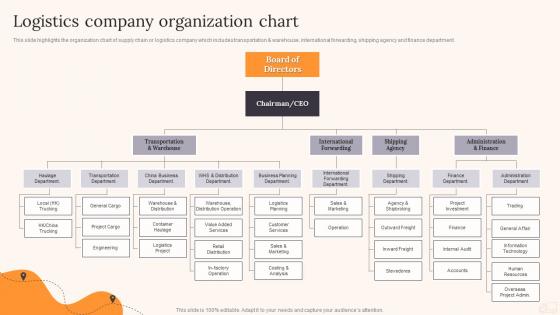
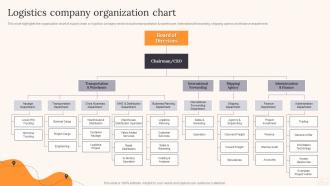
This slide highlights the organization chart of supply chain or logistics company which includes transportation and warehouse, international forwarding, shipping agency and finance department.
People who downloaded this PowerPoint presentation also viewed the following :
Logistics Company Organization Chart Parcel Delivery Company Profile Ppt Icons with all 6 slides:
Use our Logistics Company Organization Chart Parcel Delivery Company Profile Ppt Icons to effectively help you save your valuable time. They are readymade to fit into any presentation structure.





FAQs for Logistics Company Organization Chart Parcel Delivery Company
Dude, logistics is a mess right now. Can't find drivers anywhere, ports are backed up forever, and fuel costs are killing everyone. Everything's taking longer to ship and costing way more. Plus companies are scrambling to catch up with tracking tech - some are still stuck in the stone age honestly. Climate rules mean expensive truck upgrades too, which sucks but whatever. My take? Spread out your suppliers so you're not screwed when one fails. Get some decent visibility tools so you actually know where your stuff is instead of guessing.
Dude, you should totally look into AI and IoT for your supply chain stuff. Sensors can track your inventory and shipments automatically - no more guessing games. The AI part analyzes everything to predict what you'll need and finds the best routes. Pretty cool, right? It spots problems before they blow up too. You can set up automatic reordering and actually give customers delivery times that don't suck. I'd probably start with just tracking your biggest shipments first, then expand once you see how it works. My buddy did this last year and swears by it now.
Honestly, sustainability's kind of taking over logistics right now. Companies are switching to electric trucks, better route planning to cut emissions, all that stuff. The packaging game's changing too - way more recyclable materials. But here's the thing - it's not just about looking eco-friendly anymore. These changes actually save serious money on fuel and waste. Pretty smart if you ask me. When you're picking logistics partners, definitely check their carbon targets and sustainability numbers. Those stats usually show you how efficient they really are overall.
So logistics companies deal with crazy shipping costs a few ways. They use fuel surcharges that move up and down with gas prices automatically. Volume contracts with carriers help lock in better rates too. Honestly, the smart ones spread their bets across multiple carriers - nobody wants to get screwed by one company jacking up prices. They'll hedge fuel costs when they can and build some wiggle room into their pricing. Oh, and constant rate monitoring is huge. Route adjustments based on current costs make a real difference. My advice? Keep relationships with several carriers and always have backup plans ready.
Start with demand forecasting and ABC analysis - basically sort your stuff by value and how fast it moves. Focus on the expensive, high-turnover items first. Real-time tracking systems are honestly a lifesaver, you can see everything instantly instead of guessing. Set automated reorder points using your historical data and lead times. Cycle counting beats doing inventory once a year - you'll spot problems way faster. Oh, and don't underestimate good supplier relationships. Having flexibility there saves you when things go sideways. The just-in-time approach works great once you've got the basics down.
People expect their stuff basically instantly now - same-day delivery is becoming the norm, and some places are even doing 1-2 hour windows. Crazy, right? Companies are adapting with pickup lockers, curbside options, and letting you pick exact time slots. They're setting up these micro-warehouses closer to neighborhoods and using better routing software to make it all profitable. Some are even testing out autonomous delivery vehicles, though honestly I'm not sure how I feel about a robot dropping off my groceries. You should probably start experimenting with flexible delivery options now - maybe weekend or evening slots to test the waters.
Honestly, trade policy messes with everything - your routes, costs, timing, the whole deal. When tariffs hit, some shipping lanes become crazy expensive overnight. But trade agreements? They can open up faster customs or totally new routes. Brexit was insane - companies had to rethink their entire EU strategy basically overnight. You'll also need to think about where you store stuff since policy changes mean you might have to stockpile before new rules kick in, or maybe move warehouses to dodge tariff zones. My advice? Stay plugged into trade news and don't lock yourself into rigid logistics networks. Flexibility saves your butt when everything shifts.
Here's what worked for us - get GPS on everything first, then add RFID tags for your inventory. Connect all your systems through APIs so your warehouse actually talks to your shipping partners and customer portals. IoT sensors are honestly worth the investment for monitoring temps and humidity if that matters for your stuff. The biggest pain point is usually those data silos where nobody knows what's happening. Push your partners to use the same data formats - makes everything flow better. Set up alerts for delays and give customers their own tracking portal so they stop calling you.
Honestly, these systems are total game-changers for seeing what's happening with your shipments and inventory in real-time. No more manual data entry hell - everything gets automated which saves you tons of headaches. Route optimization cuts costs like crazy, and the reporting helps you catch problems early. Your customers can actually track their stuff properly too, which they love. One thing I'd do first is figure out where you're bleeding the most time/money, then test drive a couple systems. Some have weird interfaces that nobody wants to use, so make sure your team actually likes it before committing.
So regulatory stuff is basically the rulebook for moving and storing goods - can't really get around it. Customs, safety standards, environmental rules, industry compliance... all that jazz affects your route planning and carrier choices. Documentation, packaging specs, transit times, even which transport modes you can use - regulations touch everything. My advice? Build compliance checks into your processes from the start instead of panicking later (learned that one the hard way). It's honestly such a headache but you can't ignore it. Oh, and definitely stay on top of regulation changes in whatever markets you're working in.
Honestly, same-day delivery is what everyone expects now - it's crazy how spoiled we've all gotten. Companies are scrambling to build these micro-fulfillment centers everywhere just to keep up. The whole buy-online-pickup-in-store thing is actually genius because it cuts shipping costs while customers still get convenience. Plus there's this huge push for sustainability that's making logistics way more complicated. AI route optimization is helping, but still. Post-pandemic shopping habits just... stuck, you know? If you're dealing with this stuff, I'd say focus on making your supply chain flexible and get tech that won't become obsolete in two years.
Honestly, the visibility alone is worth it - you'll catch bottlenecks way before they blow up into major problems. Route optimization and demand forecasting become way more accurate than the old guessing game. The predictive analytics part is where it gets really cool though - automatic rerouting when delays pop up, right-sizing inventory levels. You can also compare carrier performance and use that data to negotiate better rates (saved us a ton last year). My advice? Don't go crazy trying to implement everything at once. Pick one thing like route optimization first, then expand from there.
Yeah, automation's changing logistics for sure, but it's not like robots are just taking over everything overnight. Warehouse jobs are shifting more toward managing the tech instead of pure manual labor. Drivers might end up supervising those self-driving trucks we keep hearing about. Honestly feels like every industry's dealing with this stuff now. New roles are popping up though - think automation techs, data people, that kind of thing. I'd start learning system monitoring or equipment maintenance if I were you. Better to get ahead of it than scramble later, you know?
Honestly, start by mapping out where everything could go wrong - supplier issues, weather disasters, the whole mess. Don't put all your eggs in one basket with suppliers, and keep extra stock of your critical stuff. Real-time tracking systems are a lifesaver when chaos hits (learned that one the hard way). Build backup plans for your most realistic scenarios and actually practice them. Communication is huge too - make sure everyone knows what to do when things fall apart. I'd tackle your biggest weak spots first since those'll bite you eventually anyway.
So basically, when you work closely with suppliers, you can see demand patterns and inventory way better before stuff goes sideways. You'll coordinate shipments more efficiently and cut down on all that extra safety stock sitting around. Shared data helps optimize routes too - it's honestly night and day compared to everyone doing their own thing. My old manager used to say it's like finally seeing the whole picture instead of just your corner. Start with regular check-ins with key partners and share some basic forecasting data. Quick wins there for sure.
-
Slideteam offers pocket-friendly products. As a college student this is a really necessary thing to look at while paying for something.
-
Very unique and reliable designs.