


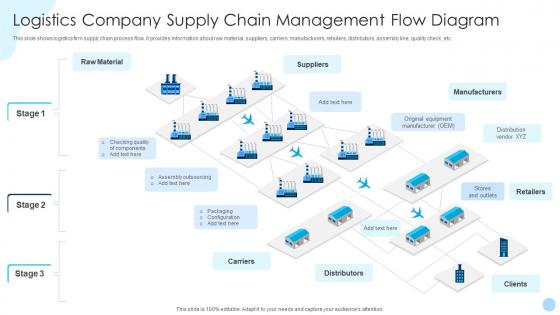
Logistics Company Supply Chain Management Flow Diagram




Try Before you Buy Download Free Sample Product
 Impress Your
 Audience
 100%
100% Editable
 Save Hours
 of Time


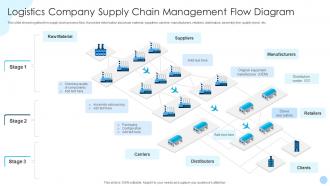
This slide shows logistics firm supply chain process flow. It provides information about raw material, suppliers, carriers, manufacturers, retailers, distributors, assembly line, quality check, etc.
People who downloaded this PowerPoint presentation also viewed the following :
Logistics Company Supply Chain Management Flow Diagram with all 6 slides:
Use our Logistics Company Supply Chain Management Flow Diagram to effectively help you save your valuable time. They are readymade to fit into any presentation structure.





FAQs for Logistics Company Supply Chain
So you'll need demand forecasting and solid inventory management - that's like the foundation. Strong supplier relationships matter too, plus transportation planning and warehouse ops. Honestly, most companies totally bomb on the data analytics part because they're basically operating blind without decent visibility into what's happening. Communication systems that actually connect all your partners are crucial. Real-time tracking helps a ton. Warehouses are where things usually go sideways, so don't underestimate that piece. I'd say map out what you're doing now first, figure out your biggest headache, then hit that hard.
Honestly, supply chain tech is a game changer. Real-time tracking means you'll know exactly where shipments are instead of playing guessing games. AI helps predict what customers actually want (which is harder than it sounds), and warehouse automation cuts way down on human screw-ups. Those IoT sensors are pretty slick - they monitor your inventory location and condition 24/7. The real win though? Everything connects so you can ditch those ancient Excel files. My cousin's company started with basic tracking software and built up from there. If you're still doing everything manually, definitely start somewhere soon.
So data analytics totally changes the game for supply chains - no more flying blind. You can predict demand, optimize inventory, spot bottlenecks before they wreck everything. Real-time tracking is clutch too. Honestly, once you dive into the numbers it's wild how much you'll discover. Trends become obvious, waste drops, delivery times improve, costs go down. Oh and clean data is everything - garbage in, garbage out, you know? Don't try to tackle everything at once though. Pick one thing to focus on first, then expand from there.
Ugh, where do I even start? Supply chain disruptions are the worst - one minute everything's fine, next minute your whole network's screwed because of some political mess or trade war. Then you've got transportation delays, demand forecasting that's always wrong, and crazy regulations in every country. Currency swings will kill your margins too. Oh, and good luck finding enough workers at ports these days. Honestly feels like chaos most of the time. But yeah, definitely get multiple suppliers so you're not stuck when one fails. Real-time tracking tools help you react faster when stuff inevitably goes wrong.
Honestly, it's all about being smart with where you spend vs. where you save. Save the premium shipping for your biggest customers or urgent stuff. Regular deliveries? Go cheaper. Good tracking software is a total game-changer - helps you plan better routes and catch problems early. I'd also try bundling shipments when you can and find solid carrier partners with decent rates. Don't do the same thing for everything though, that's where companies mess up. Map out what you're spending now against service levels first - you'll probably spot some easy fixes right away.
Dude, sustainability is totally changing supply chain management right now. Companies are scrambling to cut carbon emissions - optimizing delivery routes, going electric with vehicles, bundling shipments together. The packaging pressure is real too, everyone's ditching plastic for recyclable stuff. It's honestly pretty overwhelming at first. But here's the thing - it's actually becoming a competitive edge. Your customers expect it now, and regulations keep getting stricter. I'd say start with auditing your carbon footprint (sounds boring but it works), then just tackle whatever has the biggest impact first. Baby steps, you know?
Focus on three things: tech integration, data standards, and partner collaboration. IoT sensors and RFID tracking give you insane real-time visibility - seriously worth the investment. But here's the thing, if your systems can't communicate with each other, you're screwed. Cloud platforms work best since everyone accesses the same dashboard. Getting suppliers and logistics partners to share data transparently is huge. The hardest part? Actually convincing people to stop hoarding information and start collaborating. Once you break down those silos though, everything flows better.
Dude, external stuff can totally mess up your supply chain if you're not ready. Trade wars, natural disasters, political chaos - there's always something going crazy somewhere that hits your suppliers or shipping routes. Currency swings alone can kill your margins overnight. What saved us last year was having backup suppliers already lined up. Map out where you're vulnerable now and get alternative routes figured out before you actually need them. Trust me, scrambling during a crisis sucks. Building in that flexibility with multiple suppliers isn't sexy work, but it'll save your butt when things go sideways.
Honestly, start with demand forecasting and ABC analysis - that'll help you figure out which items actually matter. Cycle counting is a game changer instead of those brutal yearly inventory marathons. For predictable stuff, just-in-time ordering works pretty well, but definitely keep buffer stock for anything mission-critical. Your inventory system should track turnover rates so you can spot slow movers before they turn into expensive paperweights. Oh, and don't go crazy trying to fix everything at once - pick one problem area first and nail that down. Safety stock levels are huge too, can't forget those.
Dude, automation is a total game-changer for logistics. Start with something simple like automated inventory counts - you'll be shocked how much time it saves. Warehousing sees huge wins with sorting systems and RFID tracking, plus route optimization makes deliveries way smoother. Honestly, even boring stuff like order processing becomes painless once it's automated. The best part? You get real-time visibility so you can catch issues before they blow up. Don't go crazy at first though - pick one process, see the results, then expand from there.
Focus on four main areas: cost (total supply chain costs, cost per unit), time (order fulfillment, delivery performance), quality (defect rates, customer satisfaction), and flexibility (inventory turnover, supplier reliability). But here's the thing - most companies try measuring everything and just get buried in data. Pick 2-3 metrics that actually move the needle for your customers and revenue first. Like if you're retail, start with inventory turnover and on-time delivery. You can always add more later. Oh, and make sure your team can actually do something about whatever you're measuring, otherwise what's the point?
Honestly, good collaboration is a game-changer for your supply chain. When you share real-time data with suppliers and carriers, everything just flows better. Fewer stockouts, faster lead times, lower costs - the whole nine yards. Everyone can actually see what's coming instead of guessing. Your partners get visibility into demand forecasts, inventory levels, delivery schedules, all that stuff. Don't try to boil the ocean though - pick one major partner first and set up regular data sharing with them. Once you get that working smoothly, expand from there.
Honestly, AI and machine learning are crushing it right now for predicting demand and figuring out better routes. IoT sensors give you real-time tracking across everything, which is huge. Blockchain's solid for transparency too. Autonomous vehicles and drones are cool but ugh, the regulations are still all over the place. Warehouses are getting crazy smart with robotics that can actually predict problems before they blow up. Oh, and if you haven't done IoT tracking yet, start there - cheap way to instantly see what's happening with your stuff.
Honestly, don't put all your eggs in one basket - that's disaster waiting to happen. Get multiple suppliers spread across different areas so when one craps out, you're covered. Those real-time tracking tools? Total game changer for catching problems early. Keep some extra stock of the stuff you absolutely need, and try to get better at predicting demand (easier said than done, I know). Map out your whole supply chain - like, who supplies your suppliers too. Start with whatever would screw you over the most if it failed and build backup plans from there.
So reverse logistics is basically how you handle returns, repairs, all that stuff - and it's massive for saving money. You'll cut waste disposal costs and actually recover value from returned products. Customers are way happier when returns are smooth too. Honestly, people expect easy returns now or they just bounce to Amazon. The big wins? Smarter return routes save on shipping, you can refurbish stuff to resell, and it helps with sustainability goals. I'd start by just mapping out your current return process - you'll probably find products getting stuck in weird places that cost you money.
-
Amazing product with appealing content and design.
-
A library of engaging, customizable and content-ready templates.