


Supply Chain Management Outline Powerpoint Presentation Slides





Try Before you Buy Download Free Sample Product
 Impress Your
 Audience
 100%
100% Editable
 Save Hours
 of Time


Download Supply Chain Management Outline PowerPoint Presentation Slides for effective operational planning. The SCM overview PowerPoint complete deck includes various professional slides such as components of the supply chain, company timeline, SCM advantages, project management and communication, supply chain management goals and bifurcations, logistics, control tower, and more. All objects are fully customizable so that users can enter text in the placeholders, change colors if they wish to and present in the shortest possible time. Develop an effective supply chain management strategy using inventory management presentation design. It assists you to plan and analyze the SCM process with clear understanding. Demonstrate the high performance, efficient and effective solutions of logistics management. Use this Inventory control PPT visuals to represent the process of manufacturing, distribution and warehousing, supply and retail. Our experts have used appealing graphics along with editable charts, graphs and icons to make our supply chain management ppt more interactive.
People who downloaded this PowerPoint presentation also viewed the following :
Content of this Powerpoint Presentation
Slide 1: This slide presents a Supply Chain Management Outline. State the name of your company and proceed.
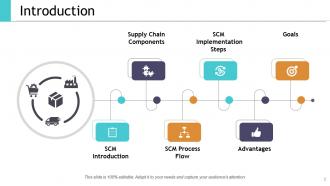
Slide 2: This is an Introduction slide showing- Supply Chain Components, SCM Implementation Steps, Goals, SCM Introduction, SCM Process Flow, Advantages.
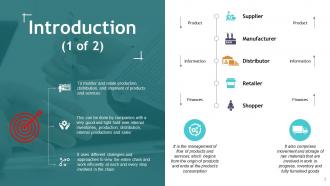
Slide 3: This is also an Introduction slide with points as mentioned by us.
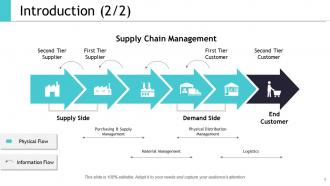
Slide 4: This is yet another Introduction slide showing Supply Chain Management stages.
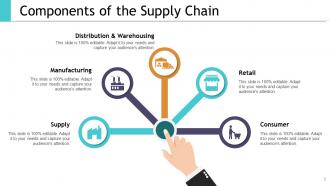
Slide 5: This slide shows the Components of the Supply Chain which involve- Distribution & Warehousing, Manufacturing, Retail, Supply, Consumer.
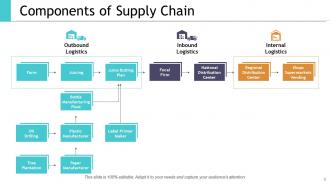
Slide 6: This slide also shows Components of Supply Chain divided into three types of logistics- Outbound Logistics, Inbound Logistics, Internal Logistics.
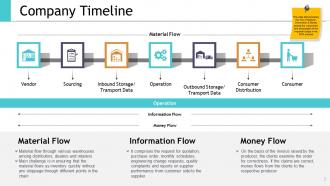
Slide 7: This slide shows the Company Timeline which demonstrates the flow of Material, Information & Money across the value chain and also shows all the important steps in the SCM process.
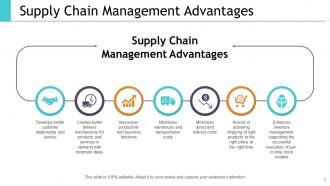
Slide 8: This slide shows Supply Chain Management Advantages such as- Develops better customer relationship and service, Creates better delivery mechanisms for products and services in demand with minimum delay, Improvises productivity and business functions, Minimizes warehouse and transportation costs, Minimizes direct and indirect costs, Assists in achieving shipping of right products to the right place at the right time, Enhances inventory management, supporting the successful execution of just-in-time stock models.
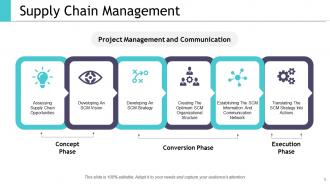
Slide 9: This slide shows Supply Chain Management with three main phases- Concept Phase, Conversion Phase, Execution Phase.
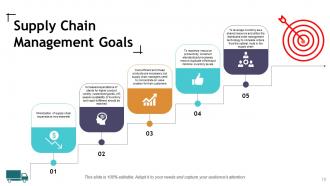
Slide 10: This slide showcases Supply Chain Management Goals.
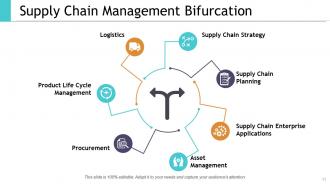
Slide 11: This slide shows Supply Chain Management Bifurcation into Supply Chain Strategy, Supply Chain Planning, Supply Chain Enterprise Applications, Asset Management, Procurement, Logistics, Product Life Cycle Management.
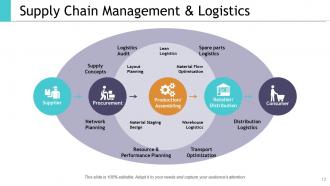
Slide 12: This slide shows Supply Chain Management & Logistics, Lean Logistics, Layout Planning, Material Flow Optimisation, Material Staging Design, Warehouse Logistics, Supply Concepts, Spare parts Logistics, Network Planning, Distribution Logistics, Transport Optimization, Resource & Performance Planning, Logistics Audit, Production/ Assembling, Procurement, Retailer/ Distribution, Supplier, Consumer.
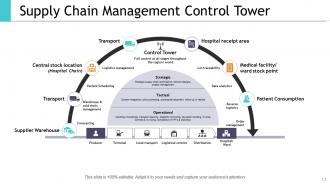
Slide 13: This slide shows Supply Chain Management Control Tower with some important areas as highlighted by us.
Slide 14: This is a Coffee Break slide with a coffee mug icon to take a break. You can alter the image as per your business requirement.
Slide 15: This slide is titled Additional Slides to move forward. You can change the slide content as per need.
Slide 16: This slide displays Supply Chain Management Outline Icons. Alter as per need. 16
Slide 17: This slide is titled Our Maps representing that the upcoming slides contain different maps which can be used as per your business need.
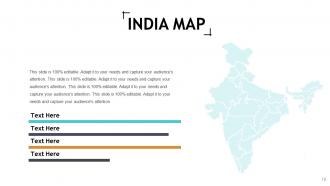
Slide 18: This slide displays Indian Map imagery. Add relevant text and use it.
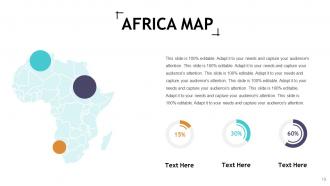
Slide 19: This slide displays African Map imagery. Use it as per your business needs to show growth, presence etc.
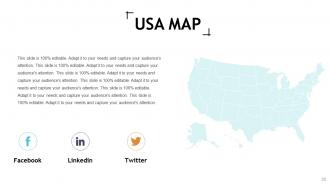
Slide 20: This slide displays USA Map imagery. Mark specific locations for company growth, market etc. here.
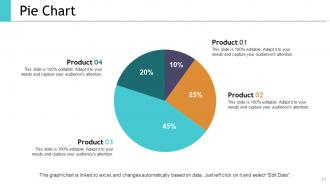
Slide 21: This is a Pie Chart slide to show product/ entity comparison, specifications etc.
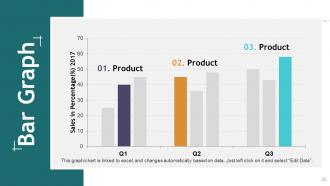
Slide 22: This is a Bar Graph image slide to show product comparison, growth etc.
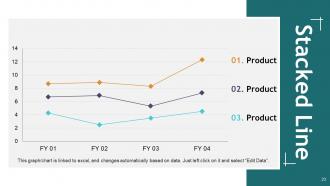
Slide 23: This is a Stacked Line Chart slide to show product/ entity comparison, specifications etc.
Slide 24: This is Our Mission slide. Show your company mission, vision and goals here.
Slide 25: This slide showcases Our Team with Name and Designation to fill.
Slide 26: This is an About Us slide showing Target Audiences, Valued Client, and Preferred By Many as examples.
Slide 27: This is an Our Goal slide. State them here.
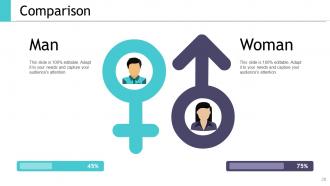
Slide 28: This slide displays Comparison on the basis of gender. It shows Man and Woman image compared in terms of percentages.
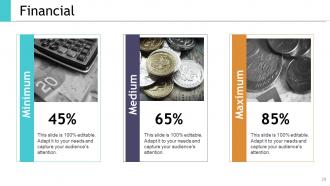
Slide 29: This slide showcases Financial score in terms of Minimum Medium Maximum.
Slide 30: This slide presents Quotes. State your inspirational quotes here.
Slide 31: This is a Puzzle image slide to highlight or present important information.
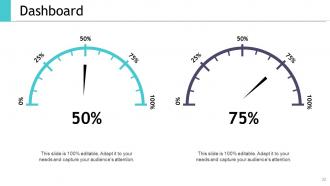
Slide 32: This is a Dashboard slide to show information in percentages etc.
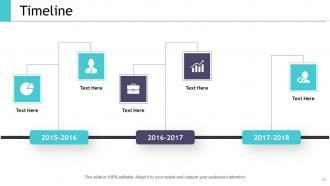
Slide 33: This slide presents a Timeline to show growth, milestones etc.
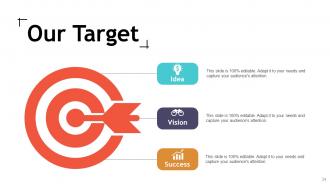
Slide 34: This slide shows Our Target along with Idea, Vision and Success.
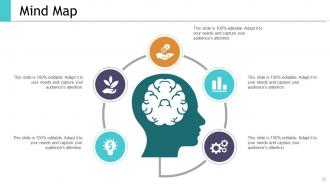
Slide 35: This is a Mind Map image slide to show behavioural segmentation, information or anything relative.
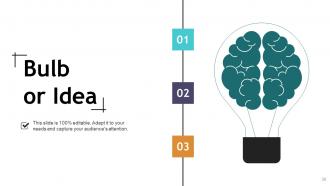
Slide 36: This is a Bulb or Idea slide to state a new idea or highlight specifications/ information etc.
Slide 37: This is a Thank You slide with Address# street number, city, state, Contact Number, Email Address.
Supply Chain Management Outline Powerpoint Presentation Slides with all 37 slides:
Angry feelings fade away with our Supply Chain Management Outline Powerpoint Presentation Slides. Assuage any folks feeling hurt.









FAQs for Supply Chain Management Outline
So you'll need demand forecasting, supplier relationships, inventory optimization, and logistics coordination. Most companies totally bomb the forecasting part though - that's honestly where it all falls apart. Get your tech systems talking to each other and make sure you can see what's happening in real time. Risk management is massive now too, especially after all the supply chain chaos we've seen. Oh, and map out your current suppliers first. Find your worst bottlenecks. That'll tell you exactly what needs fixing before you worry about anything fancy.
Dude, IoT sensors basically track everything for you - where stuff is, inventory levels, if your cold shipments are staying cold. Pretty neat actually. AI takes all that data and figures out demand patterns, finds better shipping routes, catches problems before they mess you up. Real-time visibility is a game changer, trust me. You'll cut waste, save money, customers stay happy. I'd say start with something simple like tracking inventory first, then build from there once you see how well it works. The combo is honestly like magic for logistics.
Honestly, data analytics is like having a crystal ball for your supply chain. You can actually predict when demand's gonna spike and catch bottlenecks before they screw you over. The inventory optimization part is huge - no more drowning in stock or frantically hunting for products. I've seen companies save crazy money just tracking supplier performance better. Predictive analytics sounds fancy but it's genuinely a game-changer once you get the hang of it. My advice? Don't try to do everything at once. Pick demand forecasting first, get that working, then expand from there.
Honestly, global disruptions are brutal because they hit every weak spot at once. Your supply chain looks solid until a pandemic or trade war exposes how much you rely on one supplier or region. Just-in-time delivery? Forget it when there's no backup plan. Companies that recover quickly have spread their suppliers around and built some cushion into the system - yeah it costs more but whatever. The smart ones also know their whole network, not just direct vendors. I'd start mapping who your critical suppliers actually are. Oh and definitely look beyond just your first-tier people because that's where surprises usually come from.
Honestly, stay on top of your suppliers before problems hit - regular check-ins are huge. Track their delivery times and quality stuff because the numbers don't lie. Don't rely on just one supplier either (learned that the hard way once). Having backups ready when your main guy screws up is a lifesaver. Treat them like actual partners instead of just another vendor. When you build those relationships early, they'll bail you out during crunch time. I'd start with quarterly sit-downs with your top three suppliers and see how it goes.
Focus on the basics first - cost reduction, inventory turnover, and delivery times. Customer satisfaction scores matter too, obviously. On-time delivery is probably what your customers actually notice most. Track supplier performance and quality issues while you're at it. Honestly, don't go crazy with too many metrics or you'll spend all day staring at spreadsheets instead of fixing problems. Pick maybe 4-5 that match what you're trying to accomplish. Monthly dashboard reviews work well - keeps you on top of trends without getting buried in the weeds. Cash flow improvements are worth watching if you've got working capital tied up everywhere.
Yeah, supply chains are environmental nightmares honestly – all that shipping, crazy amounts of packaging, plus resource extraction at every single step. The carbon footprint is wild when you think about it going from raw materials to someone's front door. But you don't have to tackle everything at once (that's how you burn out). Start with something manageable like finding local suppliers or switching to better packaging materials. Maybe optimize your shipping routes first? I'd pick one thing, track the results, then build from there. Green certifications for suppliers help too, though that might be a second-phase thing.
Look, inventory management might sound super dry, but it's actually what makes or breaks your whole operation. Bad inventory = angry customers when you're out of stock, plus all your cash gets stuck in products just sitting there. Your suppliers will thank you too since they'll know what to expect from you. Honestly, I've seen businesses tank because they couldn't figure this part out. Check your turnover rates first - that's where you'll spot if you're wasting money or missing sales. Get this right and everything else flows way smoother.
Dude, automation and AI are literally eating up all the boring repetitive stuff. Customers won't even look at you if you're not sustainable now - it's wild how fast that shifted. Supply chains are going super local after everything got messed up globally. Companies are obsessed with tracking everything in real-time too. Blockchain for traceability is actually happening way faster than I thought it would. Oh, and circular economy stuff is changing how people think about waste and returns completely. Honestly though? Just build flexibility into whatever you're doing now. Being agile trumps being efficient when the next curveball hits.
So basically, outsourcing lets you hand off stuff you're not great at to people who actually are. Manufacturing, logistics, warehousing - whatever's eating up your time and money. I'd start by looking at your biggest headaches first. Like, where are you bleeding cash or slowing things down? Find partners who crush those areas while you focus on your actual strengths. Just don't go radio silent on them - communication is everything. Oh, and map out what you're currently doing so you can see the mess clearly. It's honestly a game-changer when done right.
Ugh, compliance is honestly such a pain but you can't ignore it. Think of regulations as basically setting the rules for your whole supply chain - safety standards, labor stuff, environmental requirements, all of it. Every single supplier and partner has to meet these or you're screwed. Non-compliance means fines, delayed shipments, sometimes getting kicked out of markets entirely. I'd start by figuring out which regulations actually apply to your products and regions first. Then build compliance checks right into how you pick vendors. Regular audits are a must too, even though tracking everything across global operations is a total headache.
Dude, you've gotta get your departments talking to each other. Seriously, procurement and sales working in silos is just asking for disaster. Regular cross-functional meetings work wonders - have each team share what's coming up so nobody gets blindsided. Better demand forecasting happens naturally when everyone's in the loop. I've watched companies boost their fill rates by 15-20% just from this basic coordination. Those "oh crap we're out of stock" crises? Way less frequent when finance knows what operations is planning and vice versa. It's honestly wild how much smoother everything runs.
Honestly, the biggest pain is just how long everything takes - lead times are brutal. Communication gets messy with time zones, and don't get me started on trying to check quality when you can't just drive over to see the factory. Currency stuff will bite you when you least expect it (found that out the expensive way). Shipping delays happen constantly, plus every country has their own weird regulations that probably won't match what you're used to locally. Oh, and customs paperwork is its own special nightmare. My take? Stick with suppliers who actually respond to emails and always have a backup plan ready.
So you'll want to weave risk assessment into your planning from day one. Start by mapping out your suppliers and spotting the weak links - single-source stuff, politically unstable regions, or that one supplier everyone complains about but somehow still uses. Build your backup plans now: spread out your supplier base, keep safety stock for critical parts, map alternative shipping routes. Honestly, most companies only think about this after they're already screwed. Score your top 20 suppliers on risk factors first. Then create contingency plans for the sketchy ones.
So demand forecasting - honestly, don't put all your eggs in the historical sales basket. Pull in market trends, seasonality stuff, economic indicators, whatever you can get your hands on. Getting sales, marketing, and ops to actually talk to each other regularly is probably the biggest game changer though. They see things in the field you won't catch in spreadsheets. Machine learning is cool but the boring basics work fine if you stick with them. I'd start with cleaning up your data quality first, then set up regular forecast reviews where everyone can weigh in.
No Reviews