

Export Logistics Process Flow Diagram




Try Before you Buy Download Free Sample Product
 Impress Your
 Audience
 100%
100% Editable
 Save Hours
 of Time


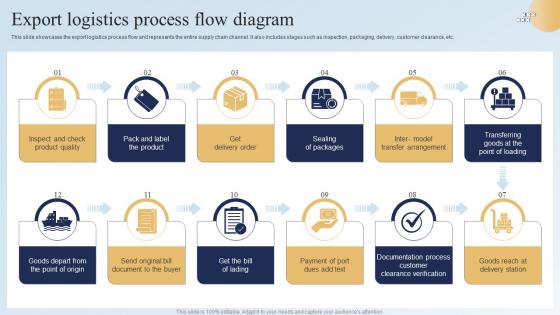
This slide showcases the export logistics process flow and represents the entire supply chain channel. It also includes stages such as inspection, packaging, delivery, customer clearance, etc.
People who downloaded this PowerPoint presentation also viewed the following :
Export Logistics Process Flow Diagram with all 6 slides:
Use our Export Logistics Process Flow Diagram to effectively help you save your valuable time. They are readymade to fit into any presentation structure.





FAQs for Export Logistics
Honestly, start by auditing what you've got now - that'll show you the biggest mess-ups to fix first. Transportation planning is huge, so map your routes and shipping modes. Documentation management will save your sanity (customs paperwork is brutal when it's disorganized). You need solid tracking systems too, otherwise you're flying blind on where everything is. Oh, and compliance stuff - make sure you're hitting all the trade regulations for wherever you're shipping. Communication systems matter too so customers aren't constantly bugging you about their orders.
Ugh, regulations control literally everything about your export timeline - it's such a headache. When you're planning shipments, you've gotta think about compliance stuff for routes, carriers, schedules, all of it. Every country wants different paperwork and has their own banned items list. Customs procedures? Total wildcard for timing and costs. I learned the hard way to always add extra buffer time because inspections and documentation screw-ups happen constantly. Start building your compliance checklist right away though. And seriously, pad those timelines by at least 20% - trust me on this one.
Honestly, tech just handles all that paperwork hell for you automatically. Digital platforms let you do customs docs, track shipments live, and coordinate with freight forwarders without juggling ten different systems. EDI is clutch - no more phone tag that drags on forever. Real-time visibility is where it gets good though. You'll spot delays early instead of scrambling when everything's already fucked. Oh, and if you don't have a decent freight management system yet, that's probably step one.
Honestly, there's three things you can't skimp on. First - get solid cargo insurance covering theft, damage, delays, all that stuff. Yeah it costs money upfront but trust me on this one. Your paperwork needs to be rock solid too - customs docs, bills of lading, certificates. Border delays are expensive nightmares. Oh and always have backup routes mapped out, plus alternative suppliers ready to go. Don't rely on just one shipping method or you're basically gambling with your business. I'd start by checking what gaps you have in coverage right now.
Ugh, where do I even start? Documentation screwups will kill you - seriously, one tiny mistake and your stuff sits in customs for weeks. Time zones are a pain when you're trying to track shipments too. Port delays happen constantly, and don't get me started on how freight rates just randomly spike when you're least prepared. Oh, and shipping coordination is basically herding cats. Honestly, I learned the hard way to always build in extra time for everything. Have backup shipping routes ready because something always goes wrong at the worst possible moment.
Look, packaging can make or break your export game. Get it right and your stuff moves fast through ports with way fewer damage claims. Screw it up? I've literally watched shipments sit for weeks over stupid packaging mistakes. Good packaging means everything fits better in containers too, so you're not paying extra freight costs. Customs inspectors are also less likely to flag well-packaged goods for inspection - though honestly that's kind of a crapshoot anyway. My advice? Talk to your freight forwarder before you even start packing. They'll know the weird requirements for wherever you're shipping.
Oh man, customs is such a pain - it can totally wreck your timeline if you're not careful. Could be hours, could be weeks depending where you're shipping and what you're sending. Missing docs or wrong product codes will definitely slow things down. Random inspections happen too, which is super annoying but whatever. I always tell people to pad their schedules with extra time because you never know. And seriously, check those commercial invoices twice before you submit - I've seen people get burned by simple mistakes that could've been avoided. Some countries are way easier than others to deal with.
Honestly, your freight forwarder can make or break everything. I've watched shipments just sit there for weeks because someone picked a crappy one with zero communication skills. They handle all the documentation, customs, route planning - basically your entire logistics chain. Good ones will save you cash and keep you out of regulatory trouble. Bad ones... yeah, you don't want that headache. Don't just grab the cheapest option either - that's rookie mistake territory. Find someone with solid connections in your markets and ask for references. Maybe test them out with smaller shipments first? Trust me on this one.
Honestly, start with tracking systems - customers will bug you nonstop about where their stuff is. Get tight with some solid freight forwarders and customs brokers who actually know what they're doing in your markets. Don't put all your eggs in one basket with shipping routes either. When something goes sideways (and it will), you'll want backup options. Regional distribution hubs are probably your biggest win if you can swing it. Oh, and map out your current lead times first - figure out where things are getting stuck before you start throwing money at solutions.
Honestly, nail down your demand forecasting first - track those export patterns so you're not guessing. Safety stock is huge for your main export products because shipping delays overseas will absolutely wreck you if you run out. Documentation is where people mess up though. Your inventory system needs to capture everything - country of origin, lot numbers, expiration dates, all the certifications. Trust me, when your shipment's stuck at customs and they want proof of something, you don't want to be that person frantically digging through files at 2am.
Honestly, trade agreements are a total game-changer for exports. They slash tariffs so your shipping costs drop, plus they standardize all that paperwork between countries - and trust me, export docs can get messy fast. You'll deal with the same customs processes across different markets instead of learning new rules everywhere. Most agreements also speed up customs clearance and let certifications transfer between countries. My advice? Always check what agreements exist between your origin and destination first. Could literally save you thousands and weeks of headaches.
Ok so track these main things: cost stuff like freight costs per unit, speed metrics (transit times, how long customs takes), reliability rates, and customer satisfaction. Transit time might seem boring but honestly it'll make or break your customer relationships. Documentation accuracy is huge too - customs screwups will tank everything else you're measuring. Pick maybe 2-3 metrics that hit your worst problems right now. Don't try to track everything at once, you'll just overwhelm yourself. Build from there once you've got those dialed in.
Packaging is everything - seriously, don't go cheap here because one destroyed shipment will cost you way more than just buying quality containers upfront. For anything temperature-sensitive, invest in proper climate control. Find freight forwarders with solid reputations who actually get what you're shipping. Always get insurance, no exceptions. Take photos of everything and keep detailed packing lists. GPS tracking's worth it for expensive stuff. Oh, and start by looking at your current process - figure out where things usually go wrong first. That'll save you tons of headache later.
Dude, e-commerce is totally flipping export logistics on its head. Companies are scrambling to do smaller, faster shipments instead of those massive bulk orders. Direct-to-consumer means everyone expects Amazon-level tracking and speed - which is honestly a nightmare for traditional exporters. Returns get super messy too when you're dealing with individual customers across different countries instead of just sending everything to one distributor. I swear the compliance stuff alone makes my head spin. But if you can nail the tech side - like real-time inventory tracking - and find logistics partners who actually get cross-border e-commerce, you'll be golden.
Honestly, start by looking at your current shipping spend - you'll probably spot some easy wins right there. Route optimization and consolidating shipments can cut 15-20% alone. Don't stick with one freight forwarder either (made that mistake myself). Shop around and negotiate with multiple ones. Better packaging helps too - lighter stuff that still protects your products. Off-peak shipping timing is huge for savings. Oh, and get tracking tech so you catch problems before they blow up into expensive disasters. I know it sounds like a lot but most of this stuff pays for itself pretty quick.
-
Informative design.
-
SlideTeam, Please don’t stop sharing discount coupons! I love your occasional discounts and tend to buy your products around that corner.