


Manual Vs Automation Testing ROI




Try Before you Buy Download Free Sample Product
 Impress Your
 Audience
 100%
100% Editable
 Save Hours
 of Time


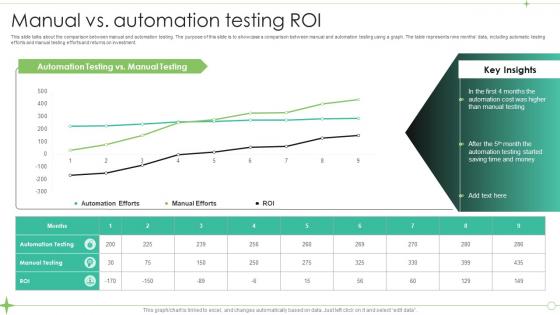
This slide talks about the comparison between manual and automation testing. The purpose of this slide is to showcase a comparison between manual and automation testing using a graph. The table represents nine months data, including automatic testing efforts and manual testing efforts and returns on investment.
People who downloaded this PowerPoint presentation also viewed the following :
Manual Vs Automation Testing ROI with all 7 slides:
Use our Manual Vs Automation Testing ROI to effectively help you save your valuable time. They are readymade to fit into any presentation structure.






FAQs for Manual Vs
Look at three main things: how much you save catching bugs early vs fixing them later, fewer production issues, and faster releases. The early bug detection thing is usually where you see the biggest return - way cheaper than dealing with angry customers and emergency fixes. Track support tickets going down too. Set up some basic monthly tracking so you can actually show leadership real numbers. The math gets weird sometimes but these metrics don't lie. Also, faster release cycles are valuable even if they're harder to put a dollar amount on. Simple dashboard works better than anything fancy.
Honestly, just track what bugs cost you early vs late - it's night and day. During testing phases, count how many defects you catch. Then think about what happens when customers find those same issues instead... support calls, rushed fixes, angry users, lost revenue. Production bugs usually cost like 10-100x more to fix, which sounds crazy but it's true. I'd start simple - grab a few examples from your recent releases where testing actually saved your ass, then throw together a basic spreadsheet. Track it over time and the ROI becomes pretty obvious. Way easier than you'd think.
Dude, automated testing saves you SO much money in the long run. Bugs caught early are dirt cheap to fix - wait until production and you're looking at 10x the cost, easy. Your releases get way faster too since nobody has to sit there manually clicking through the same boring tests for weeks (soul-crushing work, honestly). You'll spend less time debugging, deal with fewer angry customer tickets, and ship stuff more often. Just start with unit tests for your main business logic - nothing fancy. Once you see how much time it saves, you can expand from there.
A/B testing shows you what actually works instead of just guessing. Test different ad copy, landing pages, email subject lines - whatever. Then see which version makes more money per dollar you put in. Honestly, it's way better than throwing money at campaigns and crossing your fingers. Focus on revenue though, not just clicks (learned that one the hard way). Only change one thing at a time or you won't know what made the difference. Once you start doing this, budget decisions become so much clearer because you'll have real data backing up your choices.
Honestly, the worst part is watching your team turn into firefighters instead of actually building cool stuff. Customer churn hits hard when bugs keep slipping through. Emergency patches eat up way more resources than you'd expect - I've seen teams spend entire sprints just fixing production issues. Your support team gets absolutely buried too. And don't get me started on what happens when users start complaining on Twitter - that stuff spreads fast. The real kicker? Your devs could be working on new features instead of constantly playing whack-a-mole with bugs. Track those hidden costs against your testing budget and you'll see why investing upfront makes sense.
Honestly, testing frameworks are a game changer for ROI. Catching bugs early means you're fixing cheap problems instead of expensive production disasters later. Manual testing sucks - it's repetitive and boring. Automated tests free you up to build actual features people want. Plus you can deploy way faster when you trust your code won't break everything. I've worked with teams that went from monthly releases to weekly ones just because their test suite was solid. Oh, and maintenance gets easier since everyone writes tests the same way. Start with unit tests on your core stuff and expand from there.
Okay so here's the deal with testing coverage - there's this point where more isn't always better. Early on you'll catch those nasty bugs that would've been expensive disasters later. ROI is great at first. But pushing for 100% coverage? Total waste of money honestly. Around 70-80% is usually the sweet spot where you've hit your critical stuff and risky areas. I always tell people to focus on what actually matters to users instead of chasing some perfect number. Oh and prioritize based on business impact - sounds obvious but you'd be surprised how many teams forget that part.
Dude, continuous testing saves you SO much money in the long run. Bugs caught early? Maybe $100 to fix. Same bug hits production and you're looking at thousands - maybe tens of thousands once downtime kicks in. Your team can actually ship stuff faster too since they're not paranoid about breaking everything. The automation setup costs money upfront, sure, but it pays for itself fast. Way better than getting those fun 3 AM calls about everything being on fire. Trust me, shifting left on that cost curve is worth it.
Look, first thing - tie your tests directly to metrics leadership actually cares about. Revenue, conversions, that kind of stuff. Don't waste time testing random features just because they look shiny (guilty as charged on that one). Hit the high-impact spots where tiny changes create massive results - checkout pages are gold mines for this. You'll want solid success metrics planned upfront instead of scrambling to prove ROI later. Oh, and definitely loop stakeholders into your testing roadmap early. When they see how each experiment connects to business goals, getting budget becomes so much easier. Trust me on this.
Dude, stop throwing around "defect density" and "test coverage" - execs literally don't care. I made this mistake for years and watched their eyes glaze over. What works? Show them money saved. Like "our testing caught 47 bugs that would've cost $230K to fix later." That gets their attention real quick. Tell stories about disasters you prevented - they love that drama. Simple dashboards help too, just focus on cost avoidance and time saved. Oh, and send quick updates showing wins, always tie it back to stuff they actually track. Trust me on this one.
User feedback is your real proof that testing worked. It connects what you measured to actual business results. When people say your product feels easier or faster after improvements, that turns into higher conversions and fewer support tickets. Honestly, metrics are kinda pointless if users aren't actually happier - I've seen companies obsess over data while their product still sucked. The feedback shows you're fixing real problems, not just moving numbers around. Always grab that post-launch sentiment. That's where you'll find your ROI story.
Honestly, real-time metrics are a game changer because you can catch problems fast instead of bleeding money for weeks. Like if your campaign is bombing, you'll know in hours not weeks - way better than the old days when we'd just cross our fingers and wait. Kill the losers early, pour more budget into what's actually working. I probably check my conversion alerts way too much but whatever, at least I'm not throwing cash at dead campaigns. Set up automated alerts for your main metrics so you're not glued to dashboards 24/7. Quick pivots = way better ROI.
So basically you want to compare what UAT costs you vs what those bugs would've cost in production. Add up your testing expenses - team hours, tools, whatever delays you had. Then estimate what happens if users hit those bugs live: support chaos, lost sales, angry customers. The fuzzy stuff like better user satisfaction is honestly harder to measure but sometimes more valuable. I'd also track how many post-launch hotfixes you avoid. My advice? Start super simple. Just count the big bugs UAT caught and roughly estimate what they would've cost you. Don't overthink it at first - you can get fancy later once you have some baseline data.
Honestly, testing saves your butt in so many ways. Bugs caught early mean fewer angry customers blowing up your support team. Your reputation stays intact too - nobody wants those brutal one-star reviews. I've seen companies cut customer complaints by like 20-30% just from better testing. Here's the thing though - it's way cheaper fixing stuff before launch versus scrambling afterward when everything's on fire. Happy customers stick around longer and actually tell their friends about you. Track your defect escape rate next to satisfaction scores. You'll see the connection right away, trust me.
Honestly, regression testing is like insurance for your code. You run it after making changes so you don't accidentally break stuff that was already working. I've seen teams fix one bug and create five new ones - it's painful to watch. The real win is automating the whole thing instead of having someone manually click through everything each time. Otherwise you're just burning money on emergency fixes when things blow up in production. Set up good automation and you won't be constantly putting out fires. Way better than explaining to your boss why the app crashed again.
-
Unique design & color.
-
If you are looking for satisfactory PowerPoint services, SlideTeam is your go-to place. I am fully contented with their research and development team.