


Test Automation ROI Powerpoint Ppt Template Bundles





Try Before you Buy Download Free Sample Product
 Impress Your
 Audience
 100%
100% Editable
 Save Hours
 of Time


Our Test Automation ROI Powerpoint Ppt Template Bundles are topically designed to provide an attractive backdrop to any subject. Use them to look like a presentation pro.
People who downloaded this PowerPoint presentation also viewed the following :
Test Automation ROI Powerpoint Ppt Template Bundles with all 22 slides:
Use our Test Automation ROI Powerpoint Ppt Template Bundles to effectively help you save your valuable time. They are readymade to fit into any presentation structure.










FAQs for Test Automation ROI Powerpoint
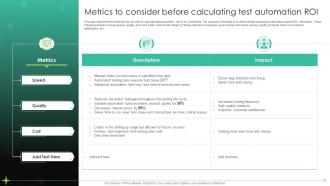
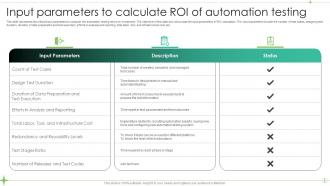
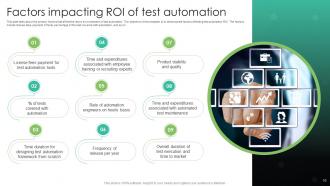
Track these main things: defect detection rate, how much faster tests run, and manual effort you're saving. Cost per test is actually the biggest one - what you used to spend on manual vs maintenance costs now. Oh and test coverage since you can suddenly run tons more scenarios. Honestly, most people screw this up by not getting baseline numbers first. Measure everything before you automate, then check quarterly. I'd start tracking now so you've got solid proof of impact in like 6 months when your boss asks if it was worth it.
Dude, test automation is seriously a lifesaver once you get past the initial setup headache. Catches bugs way earlier so you're not scrambling before releases. Your team stops wasting hours clicking through the same boring test cases - I swear, manual testing will drive you insane after a while. Developers get quick feedback when they break something, which means less "oh crap" moments later. Plus everyone can actually work on interesting stuff instead of repetitive checking. My advice? Pick your most important user flows first. Don't try to automate everything at once or you'll burn out.
Dude, biggest mistake? Automating flaky UI tests that break constantly. I've watched teams waste months babysitting tests that shouldn't exist. Don't automate stuff that changes all the time either - total waste. Most people expect instant results but automation takes like 6-12 months to actually pay off. Over-engineering your framework kills ROI too. Skip training your team and you're screwed. My advice? Start small with boring, stable tests first. Build up slowly. Way less painful than trying to automate everything at once and watching it all fall apart.
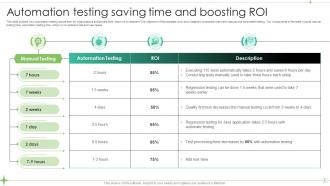
Honestly, just time everything before you start automating. See how long your manual test cycles take, then compare that to how fast the automated ones run - the difference is usually pretty dramatic. I'd grab one test suite first and track it for a couple sprints to get your baseline numbers. The big wins are in regression testing since those can run overnight without anyone babysitting them. Your team gets those hours back to do more interesting exploratory work instead of clicking through the same boring scenarios. Focus on execution time, how often you can run cycles, and freed-up developer hours.
Upfront you'll spend weeks or months on licenses, training, and setup - honestly feels brutal at first. Your stakeholders will push back hard on the costs. Track manual testing hours per release cycle, then show them the math. Most automation pays for itself in 6-12 months through faster releases and early bug catches. Start small though - pick your most repetitive, annoying test cases first. Oh, and document every time saving from day one. Trust me, you'll need that data later to prove it was worth it. The key is having concrete numbers when they inevitably question the investment again.
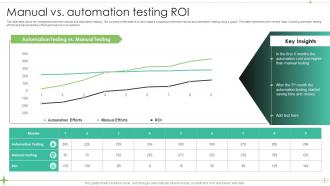
Honestly, automation usually pays off way better than manual testing after you get through the upfront pain. Yeah, you'll drop more cash initially on building frameworks and writing scripts. But then those tests just run forever without paying anyone extra. Manual testing? That's expensive every single time. I'd say you typically break even around 3-6 months, depends how much you're testing. Here's what I'd do - start with your most repetitive stuff that actually matters. That's where you'll see money back fastest. Don't try to automate everything at once though, you'll just burn out your team.
Dude, maintenance will absolutely kill your automation ROI if you're not careful. I've watched teams spend way more time fixing broken tests than actually running them - total nightmare. UI changes break everything, flaky tests drive you insane. Budget like 20-30% of your time just for upkeep. Start with stable locators and modular design so you're not constantly rebuilding from scratch. Also, regular refactoring saves your sanity later (learned that one the hard way). Your initial investment looks amazing on paper, but those ongoing costs add up quick if you don't plan for them.
So first thing - figure out what's repetitive, takes forever, or where people keep screwing up. That's your automation goldmine. Manual testing is still king for exploring the app and seeing if users will actually get it, you know? The 80/20 rule is decent to start with, but honestly every project is different. Do the math on how much time you'll save vs. building the automation - sometimes it's not worth it. Really depends on how often you're releasing and if requirements keep changing (ugh). I'd start small with the tests that'll actually save your sanity, then build from there.
Honestly? Start with **Selenium** for web stuff or **Cypress** if you're doing modern JS frameworks. **Playwright** rocks for cross-browser testing too. But here's the thing - the tool itself isn't gonna make or break you. Pick something your team can actually stick with long-term, you know? **TestComplete** and **Katalon** work great if you've got people who aren't super technical. Just don't let your tests get flaky or they'll drive everyone nuts. Focus on automating the boring repetitive stuff first. Oh, and make sure whatever you pick plays nice with your deployment pipeline - learned that one the hard way.
Look, your team's technical skills will literally make or break your automation ROI. Bad developers = broken tests everywhere, and you'll waste more time fixing scripts than actually testing anything useful. Good teams though? They build solid frameworks that save you tons of time down the road. I've seen this exact scenario play out so many times - less experienced folks create these fragile automation scripts that fall apart constantly. It's painful to watch honestly. First thing - be real about what your team can handle right now. Then either get them some decent training or bring in someone experienced who can actually mentor everyone.
Yeah, your industry totally changes the ROI game. Healthcare and finance companies kill it with automation because compliance is so strict - one bug costs them massive money. E-commerce? They need it during crazy seasons like Black Friday when there's no way to manually test everything. Manufacturing gets great returns since fixing hardware bugs later is ridiculously expensive. Gaming companies are obsessed with performance testing across all their different devices. Oh, and automotive too for embedded systems. Really just comes down to matching automation with whatever keeps your industry up at night.
Honestly, automated testing is a game changer for shipping faster. Your test suite catches bugs way before launch, so no more panic fixes at the last minute. Plus you can deploy whenever you want since everything gets validated automatically. The manual testing bottleneck? Gone. Your team stops wasting time on repetitive tests and can actually build cool stuff instead of putting out fires all day. ROI-wise, you'll save tons of hours pretty quickly. I'd start with just your most important user flows first - don't go crazy trying to test everything at once.
Honestly, automation catches way more bugs than manual testing ever could - and way earlier too. Fewer bugs make it to customers, which means less money spent on support tickets and emergency fixes. Those post-release disasters are the worst - they burn through your engineering budget like crazy. Track your current defect costs first, then watch them drop after you automate. Don't forget about the revenue you're not losing from angry customers jumping ship. The ROI becomes pretty obvious once you see those support numbers start falling.
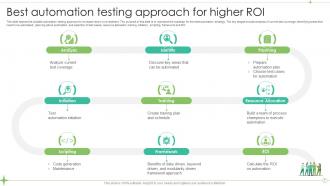
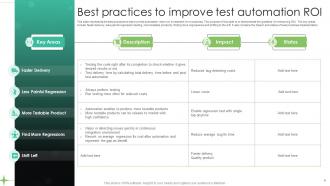
Start with your most repetitive, high-value tests - that's where the ROI really shows up. Smoke tests and critical user flows are perfect for this. Don't try automating everything right away though, I've watched teams crash and burn doing that. The maintenance becomes insane. Build a framework others can actually work with, so document it well and keep your code standards tight. Oh, and run tests in parallel - cuts down feedback time like crazy. Track your wins too: execution time saved, early bug catches. You'll need those numbers when someone questions the investment later.
Honestly, getting your teams to actually work together is a game-changer for test automation ROI. You'll stop building three different frameworks that basically do the same thing (happens more than you'd think). Dev can catch bugs earlier when they're part of test design, which saves you money down the line. Sharing test data and scripts between teams cuts costs big time. Your CI/CD pipeline gets better when everyone's coordinating instead of working in silos. The trick is regular meetings where people can align on goals and share what's actually working - not just complain about what isn't.
-
This PowerPoint layout is very helpful from a business point of view, and it's visually stunning too! I'm so happy with this product because it has helped me understand and deliver great presentations.
-
SlideTeam is my go-to resource for professional PPT templates. They have an exhaustive library, giving you the option to download the best slide!