Marketing Campaign Proposal Powerpoint Presentation Slides
Try Before you Buy Download Free Sample Product
Audience
Editable
of Time
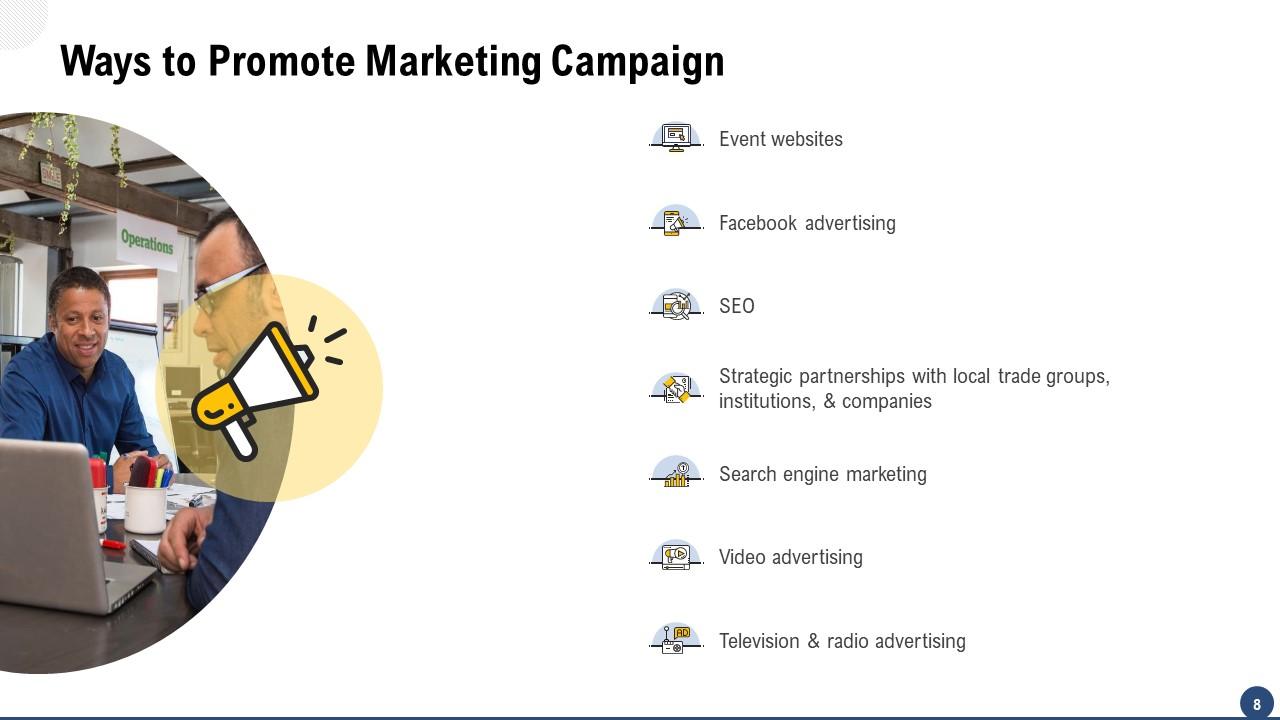
Marketing is a process that is done to promote the newly launched products through different events and campaigns. To advertise a product or service, it is important to increase marketing activity in local areas as well as on social media. The main objective of marketing is to spread brand awareness and message to the target audience. Many organizations undergo online and offline marketing campaigns to pitch their products and services effectively. Drive value to your client’s business by using our topic-specific Marketing Campaign Proposal PowerPoint Presentation Slides. With the help of this eye-catching marketing campaign proposal PPT layout, you can explain how your services can enhance the brand image of the client in the market industry. Use our visually-appealing marketing strategies proposal presentation template to describe in brief the benefits your clients will get after choosing your services. With the assistance of this campaign proposal PowerPoint theme, you can provide a clear description of your company that gains the confidence of your clients. You can highlight the strategic approach your company uses for implementing various marketing campaigns. You can also showcase your key initiative summary that enhances the client’s existing website, establishes a specific promotional plan, and media partnerships. In this proposal PPT slide, you can mention the ways you offer to your clients for promoting their marketing campaigns. These are event websites, SEO, Facebook advertising, search engine marketing, video advertising, strategic partnerships, and television & radio advertising. Employ this professionally designed marketing campaign proposal PowerPoint layout and talk about the timeframe your experts need to finish the project of your clients. Bring your client’s attention to the cost structure of your proposed services that gives them an idea of how much money they have to invest in the project. Optimize the SEO ranking of your client’s website by downloading our easy-to-customize marketing campaign proposal PowerPoint presentation template.
People who downloaded this PowerPoint presentation also viewed the following :
Content of this Powerpoint Presentation
Slide 1: This slide introduces Marketing Campaign Proposal. State Company name and begin.
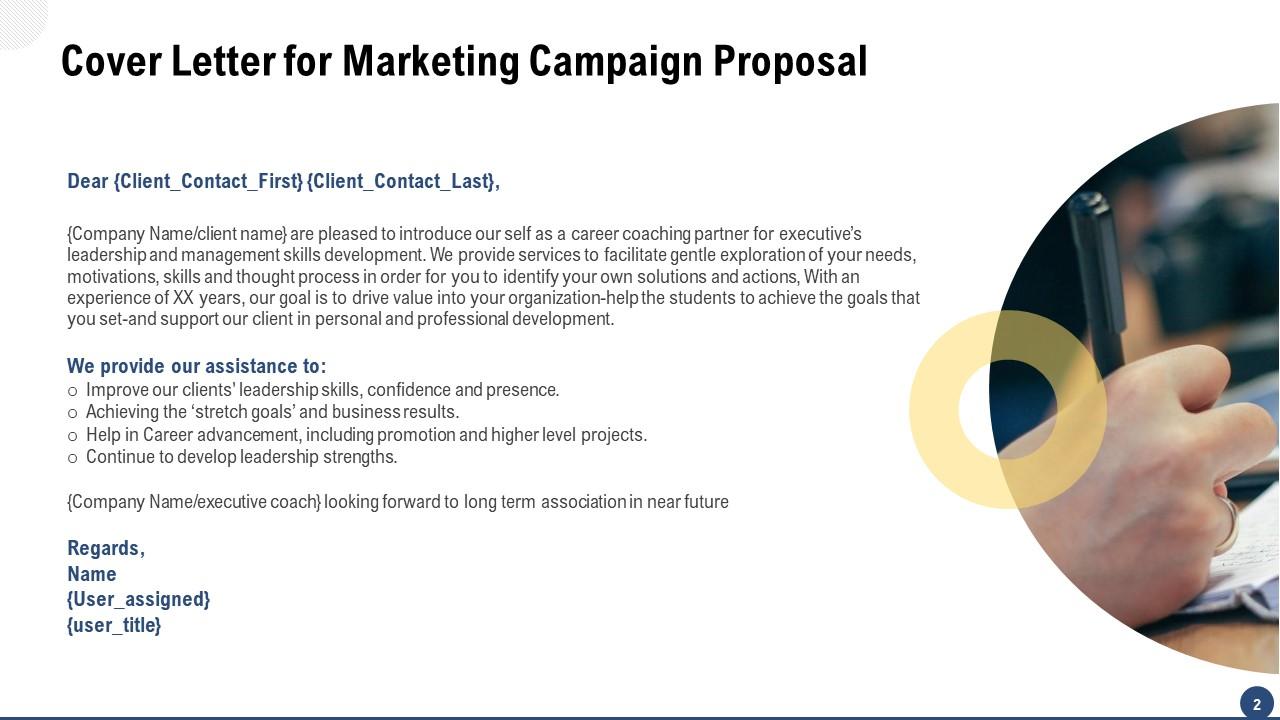
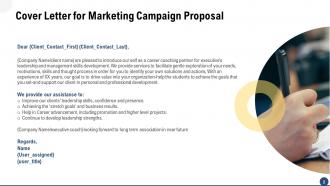
Slide 2: This slide displays Cover Letter for Marketing Campaign Proposal.
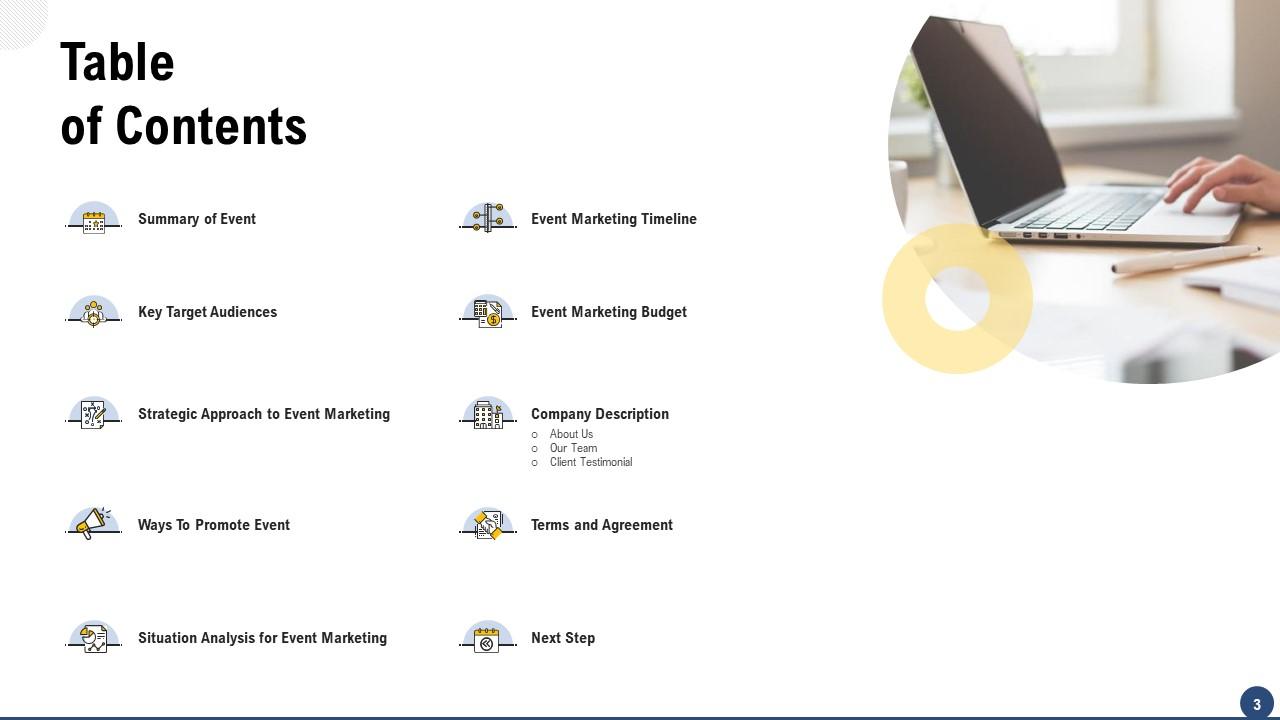
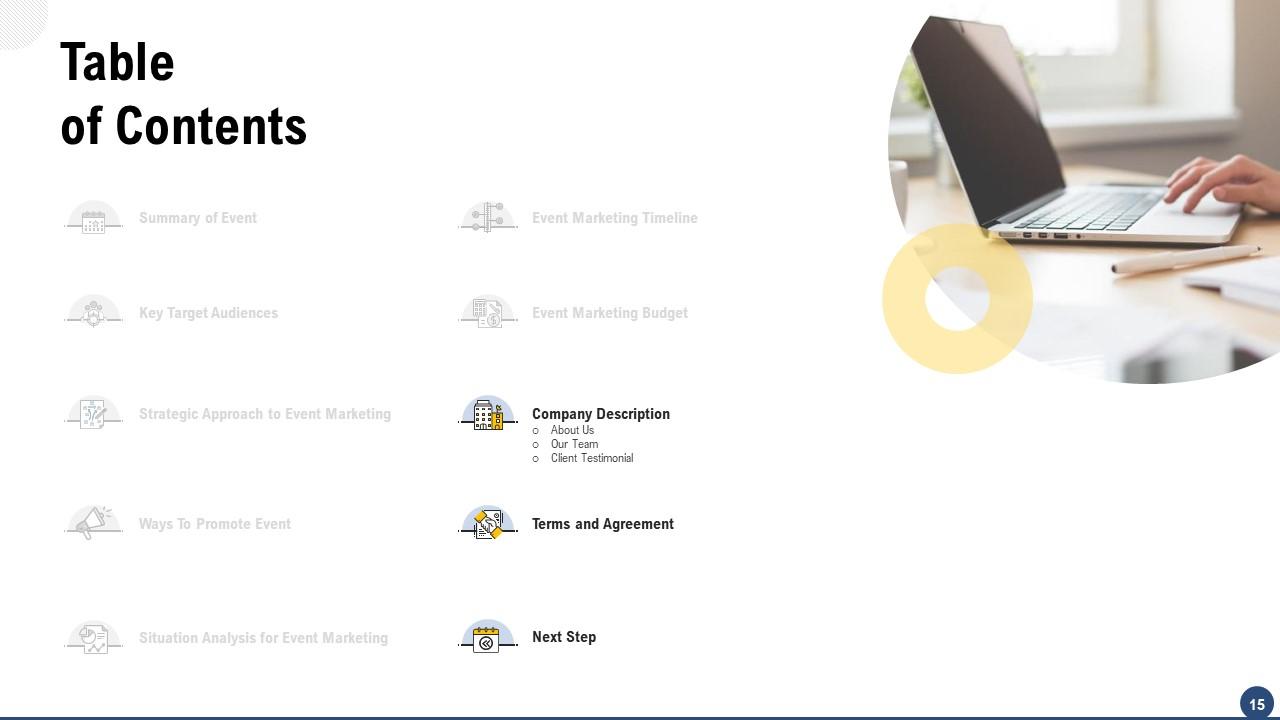
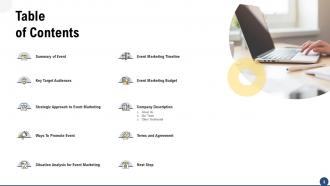
Slide 3: This slide displays Table of Contents of the presentation.
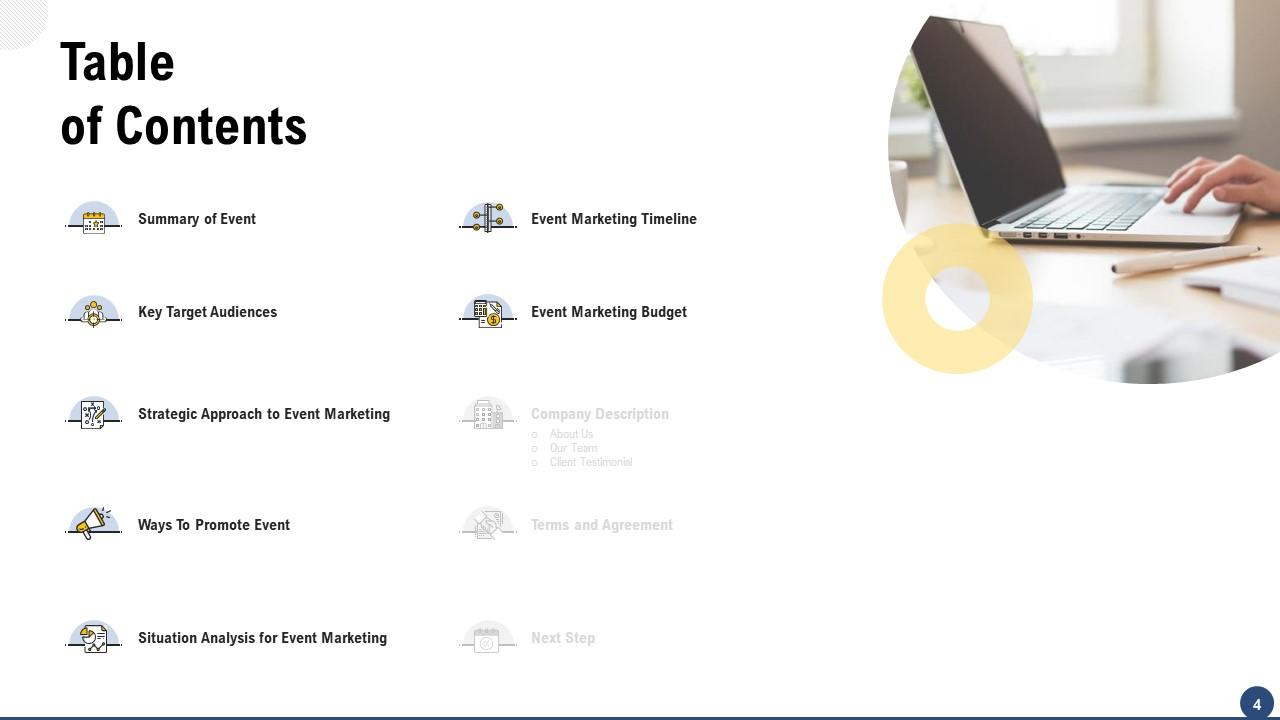
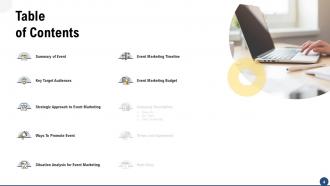
Slide 4: This slide depicts Table of Contents.
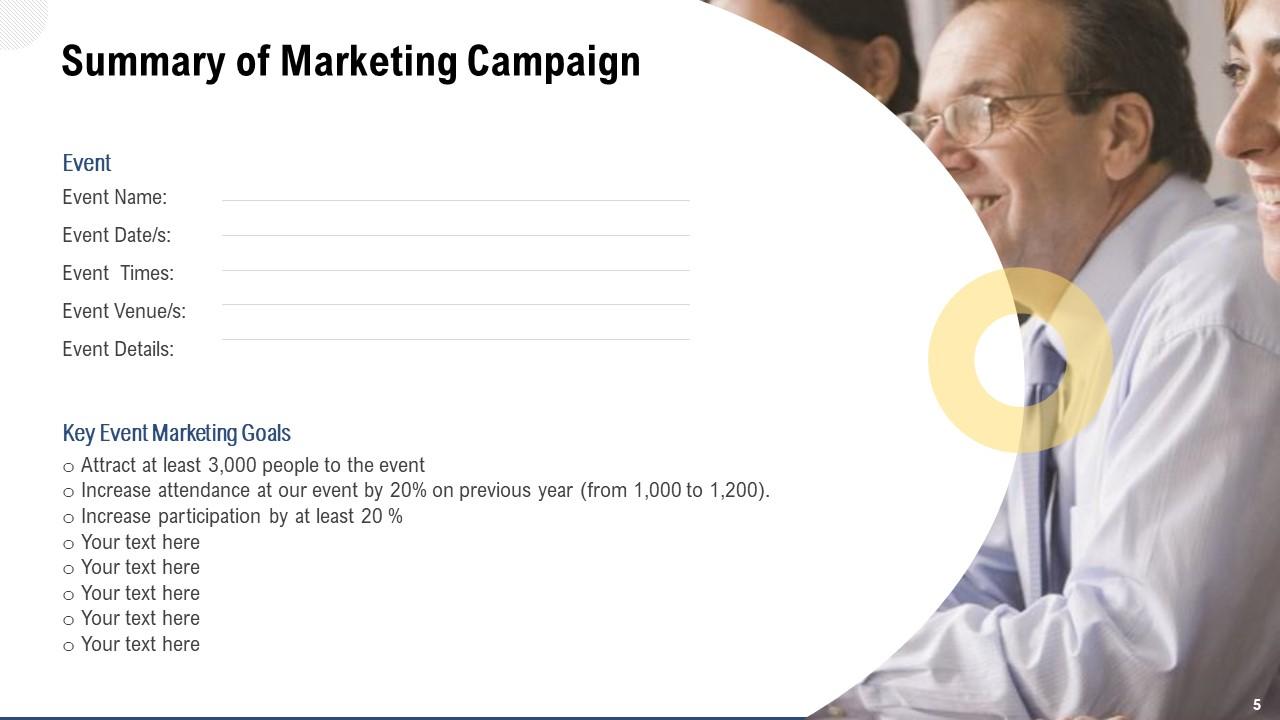
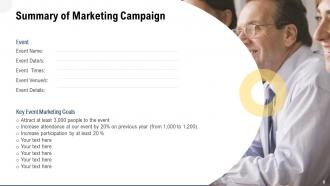
Slide 5: This slide showcases Summary of Marketing Campaign.
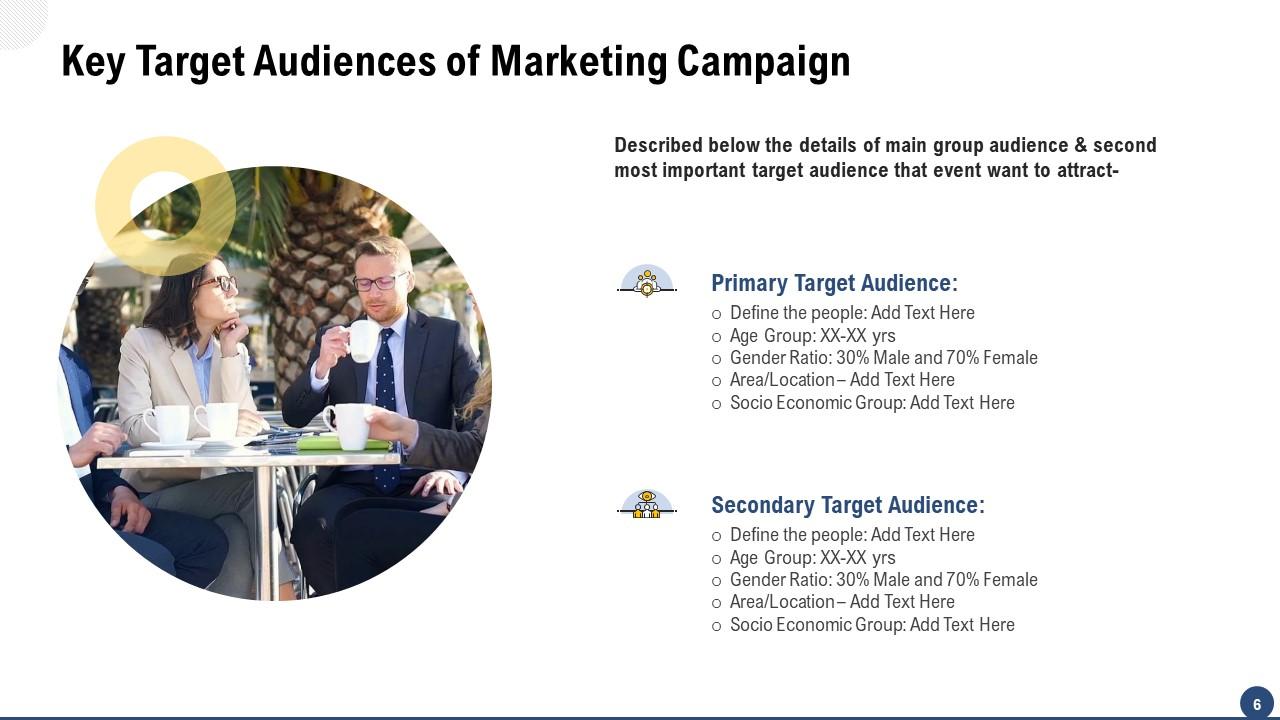
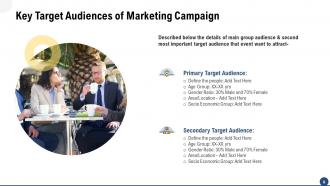
Slide 6: This slide shows Key Target Audiences of Marketing Campaign. Described below the details of main group audience & second most important target audience that event want to attract-Primary Target Audience.
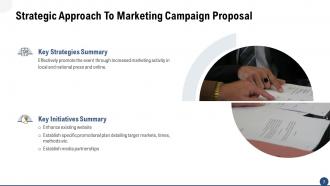
Slide 7: This slide describes Strategic Approach To Marketing Campaign Proposal.
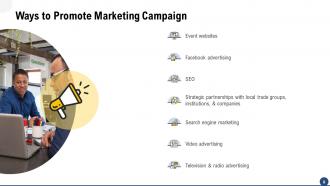
Slide 8: This slide displays Ways to Promote Marketing Campaign.
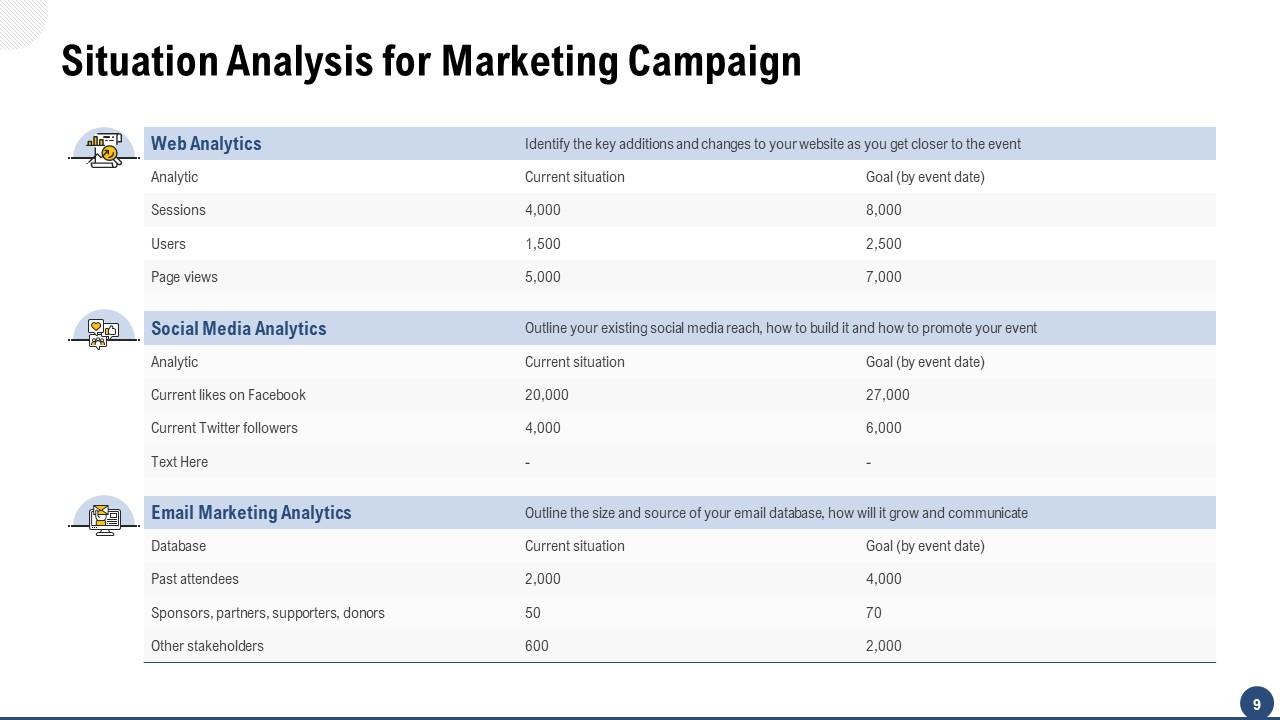
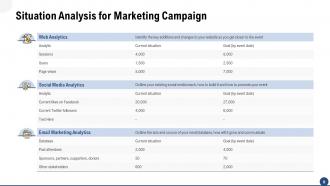
Slide 9: This slide showcases Situation Analysis for Marketing Campaign.
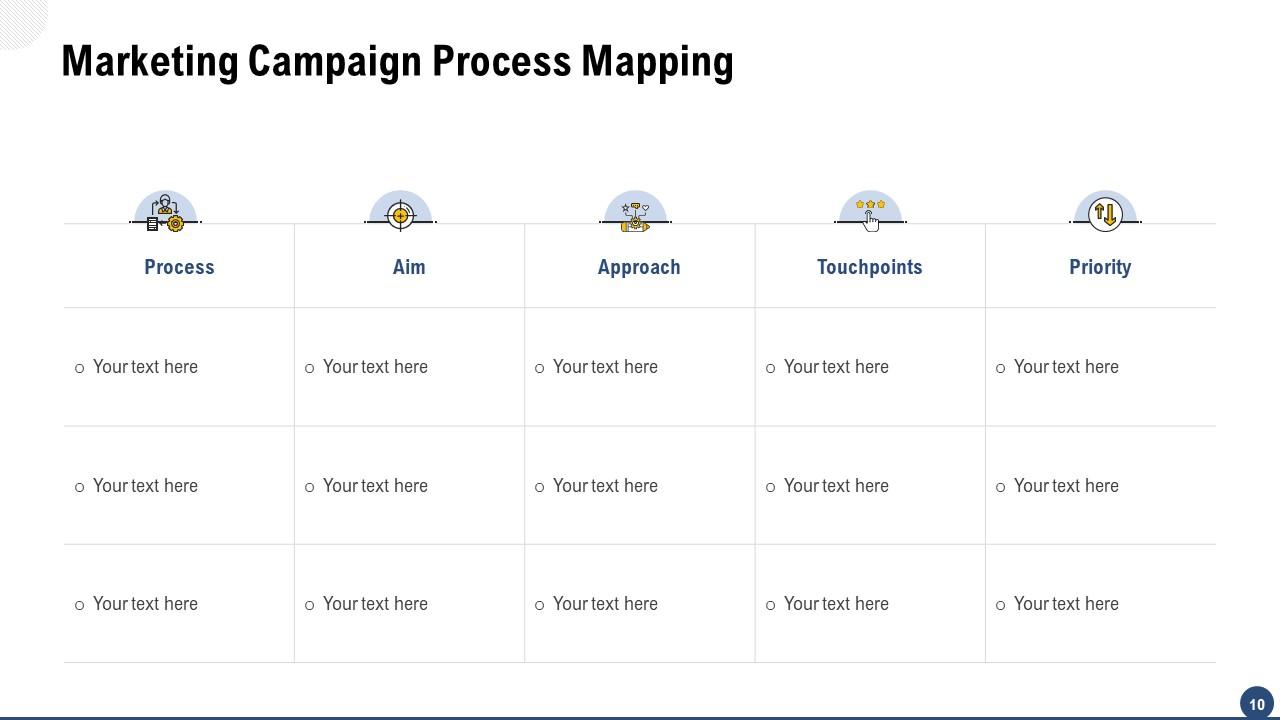
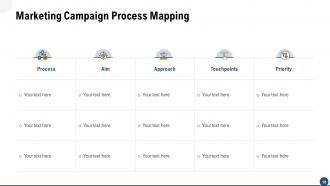
Slide 10: This slide presents Marketing Campaign Process Mapping.
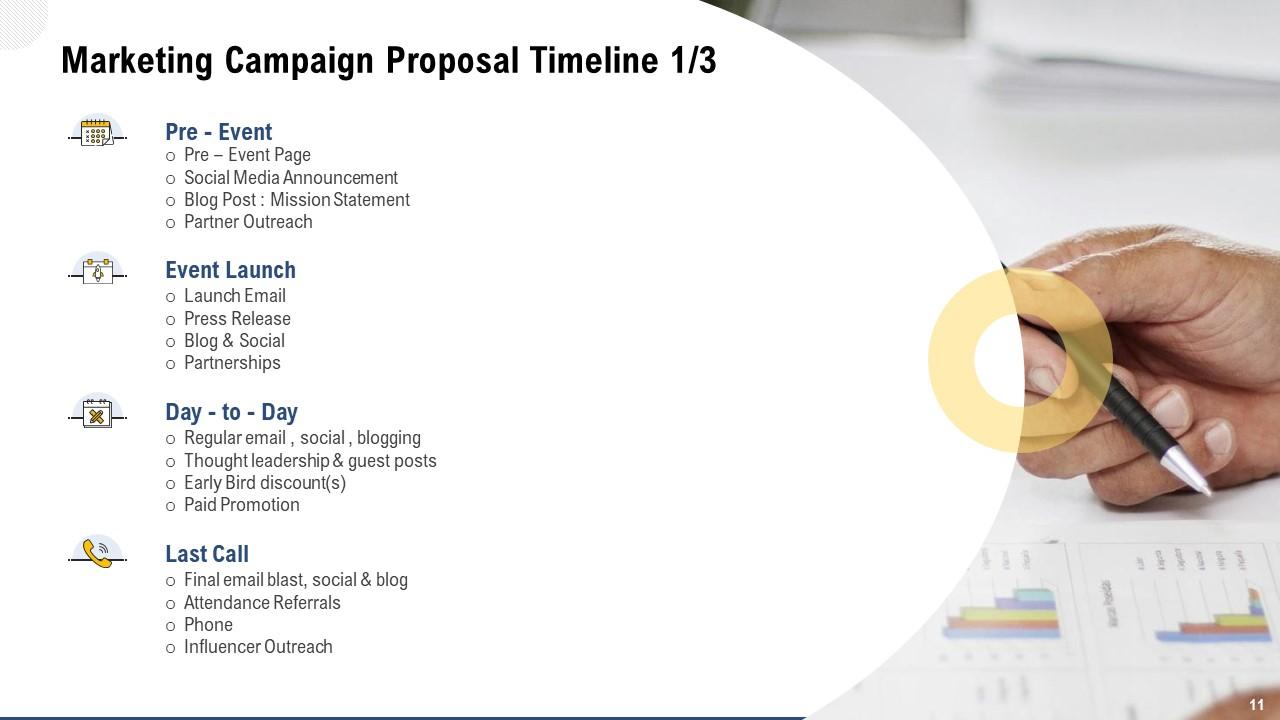
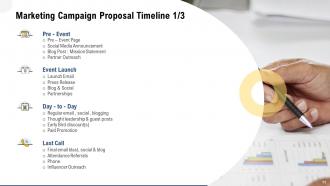
Slide 11: This slide depicts Marketing Campaign Proposal Timeline.
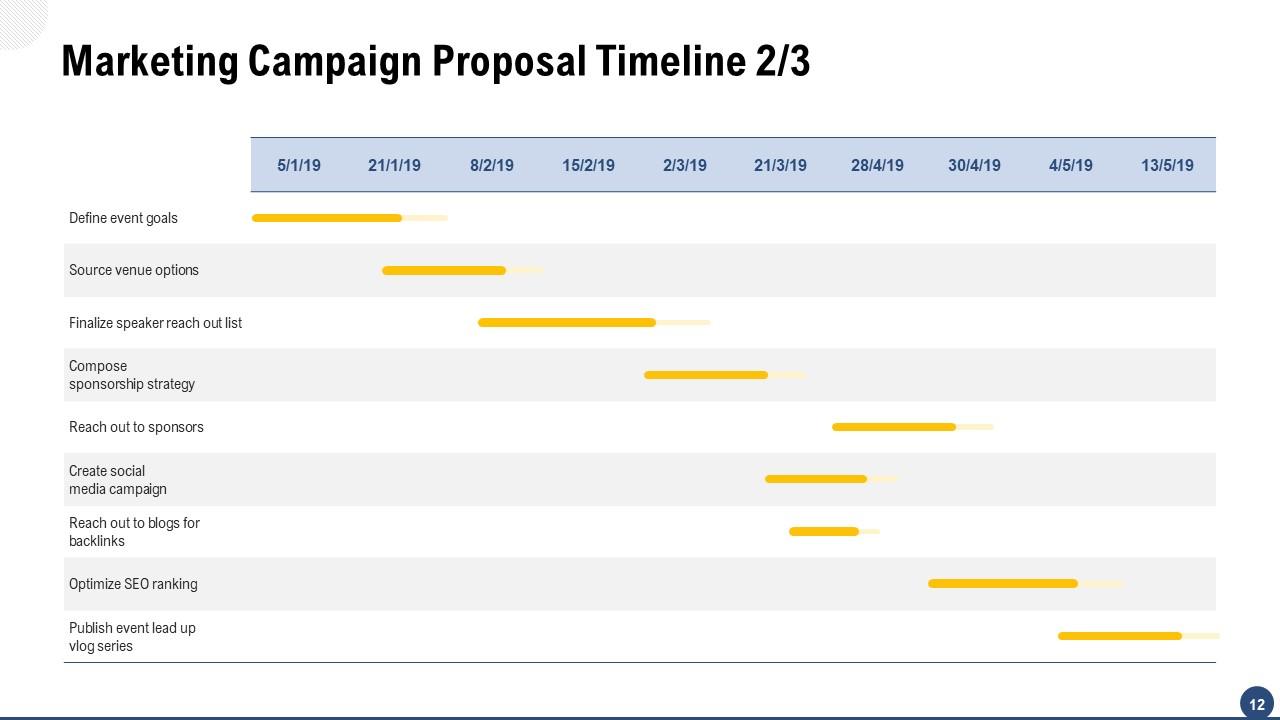
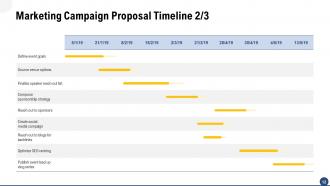
Slide 12: This slide represents Marketing Campaign Proposal Timeline.
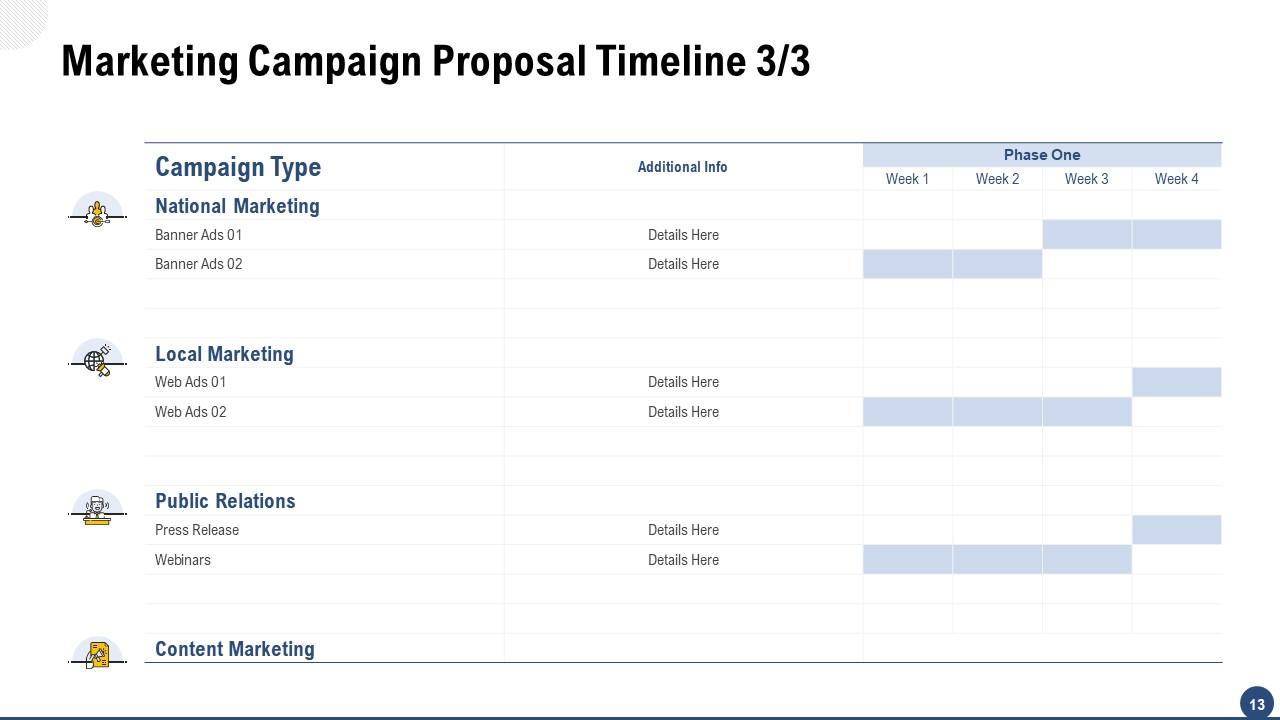
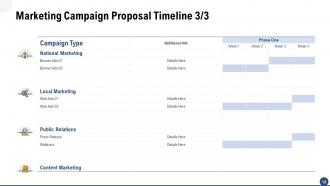
Slide 13: This slide showcases Marketing Campaign Proposal Timeline.
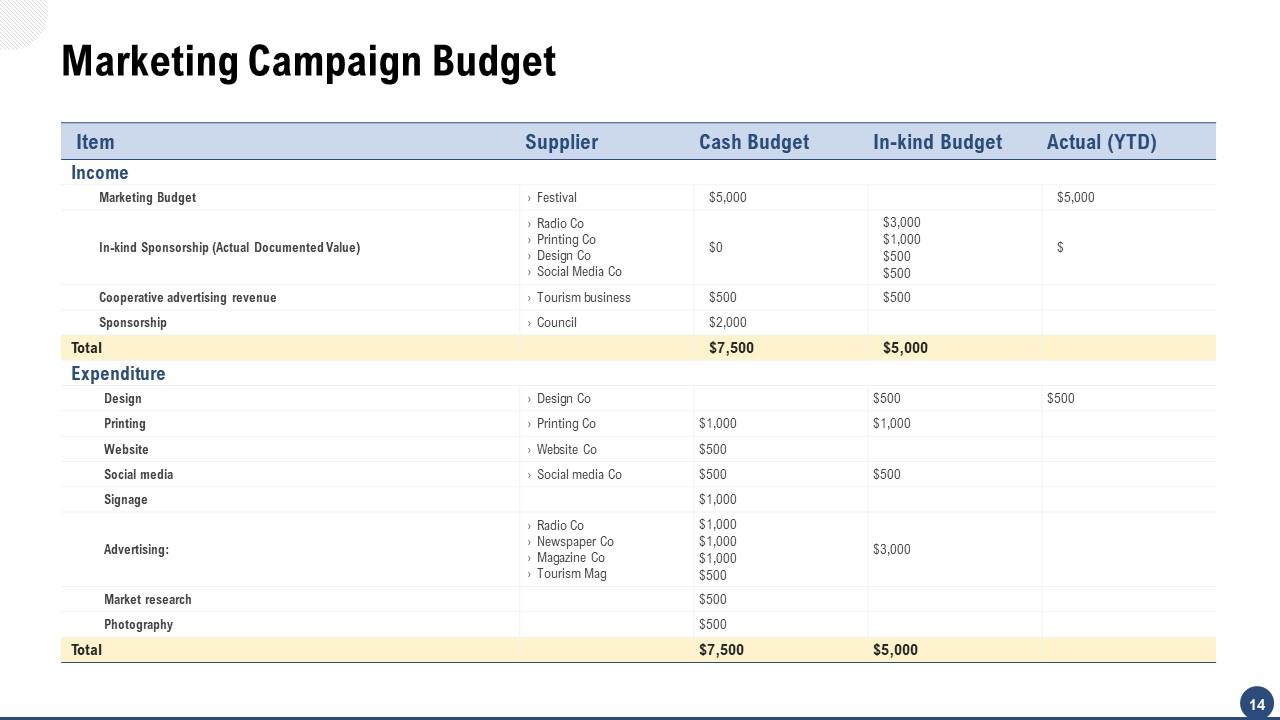
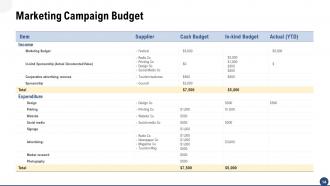
Slide 14: This slide showcases Marketing Campaign Budget.
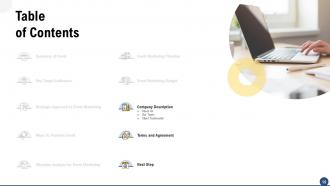
Slide 15: This slide displays Table of Contents.
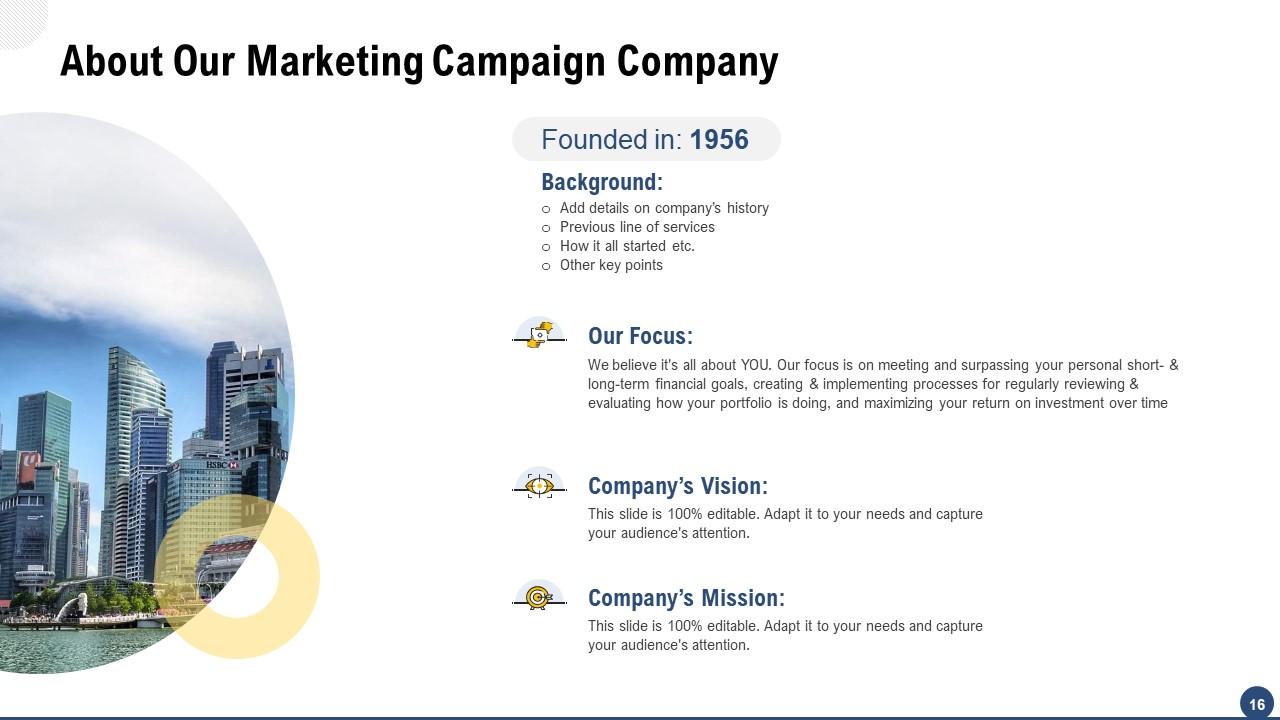
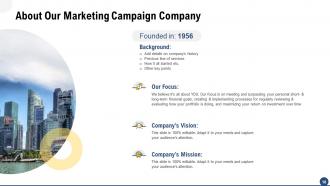
Slide 16: This is About us slide with Company's history, Vision, Mission and Background.
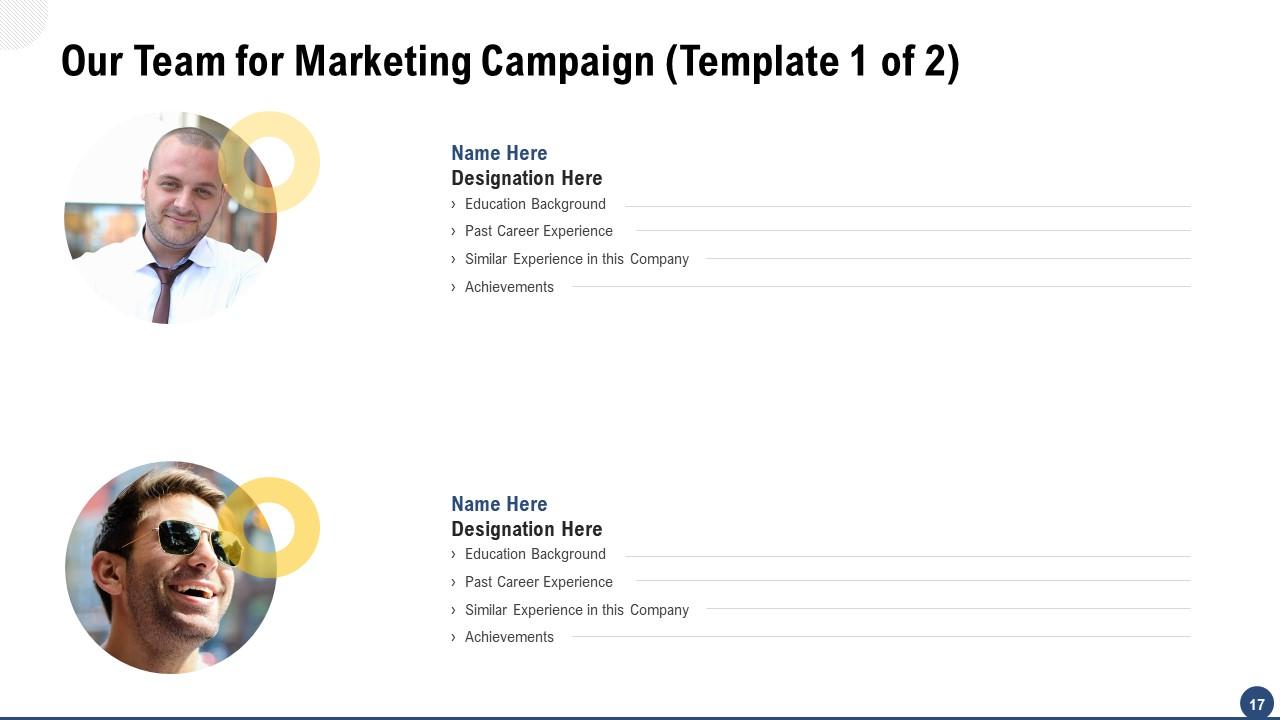
Slide 17: This is Our Team slide with Names and Designations.
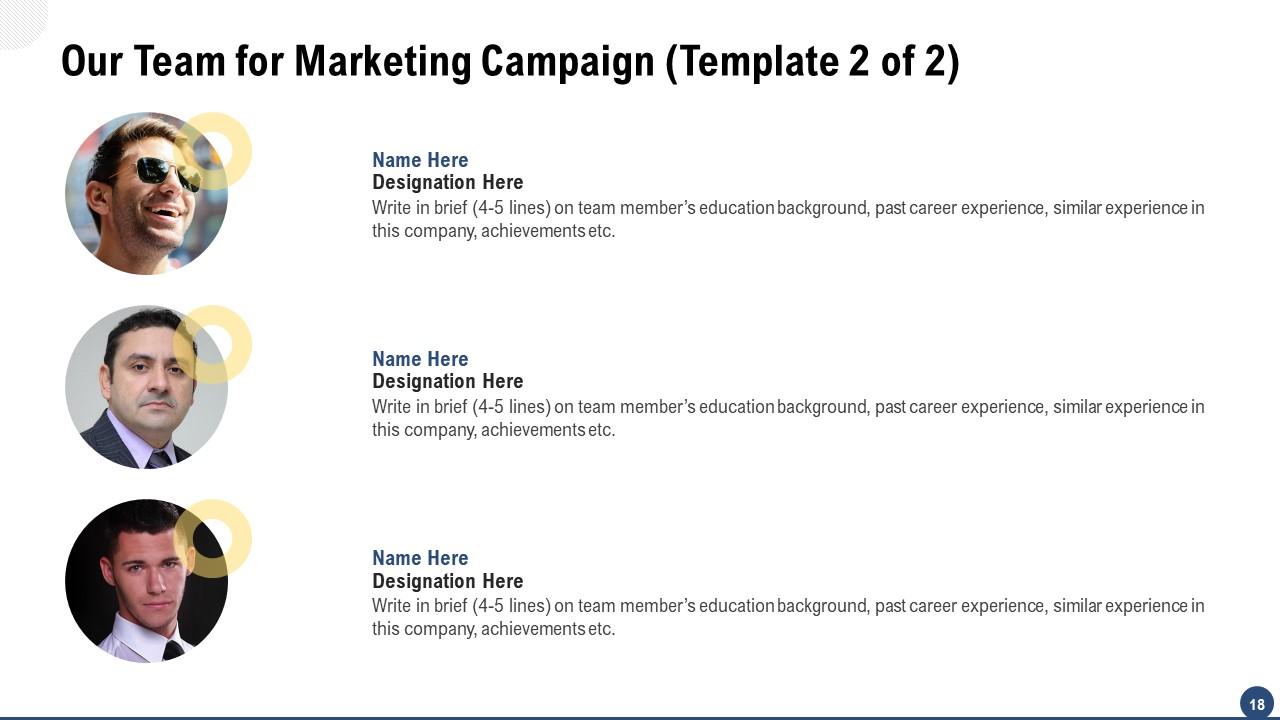
Slide 18: This is Our Team slide with Names and Designations. Write in brief (4-5 lines) on team member’s education background, past career experience, similar experience in this company, achievements etc.
Slide 19: This slide displays Client Testimonials for Marketing Campaign
Slide 20: This slide shows Next Steps for Marketing Campaign
Slide 21: This is Contact Us slide with Address, Email address and Contact number.
Slide 22: This is Icons Slide for Marketing Campaign Proposal.
Slide 23: This slide is titled as Additional Slides for moving forward.
Slide 24: This is Our Mission slide with Mission, Goal and Vision.
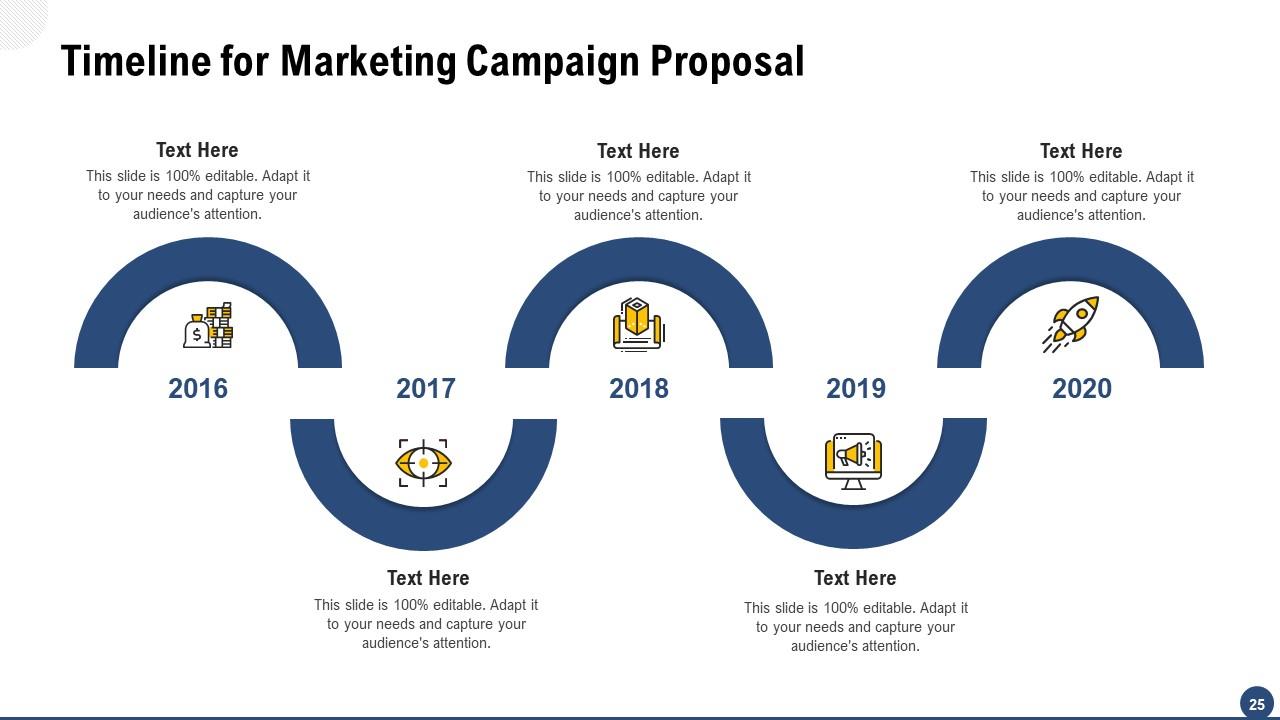
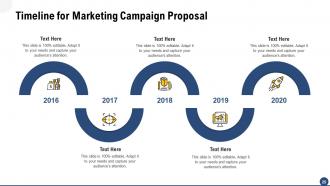
Slide 25: This slide depicts Timeline for Marketing Campaign Proposal.
Slide 26: This is 30 60 90 Days Plan slide.
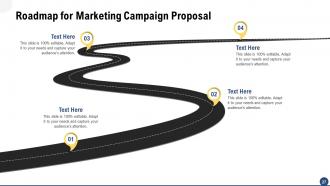
Slide 27: This slide displays Roadmap process.
Marketing Campaign Proposal Powerpoint Presentation Slides with all 27 slides:
Use our Marketing Campaign Proposal Powerpoint Presentation Slides to effectively help you save your valuable time. They are readymade to fit into any presentation structure.
FAQs for Marketing Campaign Proposal
Focus on 2-3 main goals max - awareness, engagement, or conversion stuff. Pick what matters most: brand recognition, website traffic, leads, whatever. Honestly, I've seen too many campaigns try to do everything and just end up being mediocre at all of it. Make sure you can actually measure each goal with real numbers like reach or click rates. Oh, and don't forget timelines - be realistic about what you can hit. Your creative budget will thank you for not spreading it too thin. Match everything back to your bigger business goals so it actually makes sense. Trust me, less is more here.
Look, market research is basically your way of not throwing money at random stuff hoping it works. You'll actually know what your audience cares about and where they spend their time online. Honestly, it's like cheating on a test but legally lol. Figure out which platforms work best, what problems people actually have, then create content that hits different. Your competitors are probably missing obvious opportunities too. I'd start with some quick surveys or maybe a focus group before you lock in your whole strategy. Way better than guessing and praying.
Track whatever matches your goals first - conversions and ROI for sales, reach and engagement for awareness stuff. Click-through rates and cost per acquisition are pretty standard. Website traffic too. Brand surveys are gold but honestly such a hassle to set up properly. Pick maybe 3-5 metrics tops or you'll drown in spreadsheets. Set your benchmarks before you launch anything. Check weekly, not daily - that's how you lose your mind. I learned that the hard way! Focus on what actually moves the needle for your business.
Break down your costs by channel first - paid ads, content creation, tools, staff time, contractors. The little stuff always gets me though, like stock photos and random software subscriptions that somehow eat up way more budget than expected. Separate one-time costs from monthly recurring ones, and honestly, add a 10-15% buffer because something will go over budget. Include your projected ROI so leadership sees the value. Oh, and present like 2-3 budget options - gives them choices instead of just yes/no.
Dude, visual storytelling is a game changer for proposals. Nobody wants to read endless bullet points about "brand awareness goals" - show them the customer journey with mockups and timelines instead. I've literally watched people zone out during chart-heavy presentations, it's painful. Concept boards work great, or even rough sketches of your campaign ideas. Makes everything feel real, you know? Pick 3-4 key moments in your strategy and build visuals around those. Way more engaging than walls of text.
So audience segmentation is just splitting up your target market into smaller chunks - think demographics, behaviors, interests, that kind of stuff. Way better than blasting the same generic message to everyone and crossing your fingers. A college kid isn't gonna respond to the same ad as someone's mom, you know? When you nail the segmentation, conversions actually improve because people think "oh hey, they get me." I'd honestly start small though - pick maybe 3 or 4 segments max for this campaign and write different messaging for each one. Don't overcomplicate it right off the bat.
Automation tools can totally save your ass here - they'll handle scheduling content and sending targeted messages based on what people actually do on your site. I'm lowkey obsessed with checking analytics dashboards because you get instant feedback on what's bombing vs. what's crushing it. Social media schedulers are clutch too. A/B testing shows you which version performs better without guessing. Don't go crazy though - pick maybe two tools that fix your biggest headaches first. CRM stuff helps keep everything organized, but honestly the real-time data is what lets you pivot fast when something isn't working.
Honestly, it's all about knowing where your people hang out. Gen Z and millennials? They're glued to TikTok, Instagram, and YouTube all day. Facebook and email still work great for older folks - plus traditional stuff like radio if that's your crowd. LinkedIn's obviously the go-to for B2B stuff. I'd probably start with just 2-3 channels where you know your audience actually spends time. Don't spread yourself too thin right away. Then you can expand based on what's actually working. Oh, and match how people consume media - like, don't try pushing TikTok content on LinkedIn, you know?
Okay so here's the thing - you've gotta tie everything back to your brand's actual personality and values. Show how your messaging matches what you stand for, not just what you're pushing. Channel choices, timing, creative stuff - it all needs to feel authentically "you." I'd add a whole section that literally maps each campaign piece to your brand guidelines. Honestly, I've seen so many proposals that could work for literally any company and they're just... boring? Don't be generic like that. You want people thinking "yeah, that's totally them" when they see your campaign.
Dude, the worst thing you can do is be super vague about who you're targeting. Like saying "increase brand awareness" means nothing - get specific with actual numbers and demographics. Don't cheap out on budget or timeline either, thinking it'll look better. It always bites you later. Research your competitors first (obvious but people skip it), and definitely factor in seasonal stuff that could mess things up. Oh and have a backup plan ready because something will go wrong. End with clear action items so everyone knows their role. Honestly, most proposals fail because they're just too generic.
Honestly, work backwards from your launch date - saves so much stress later. I'd do 2-3 weeks for strategy stuff, then 2-4 weeks for creative and getting approvals (this part always takes forever). After that, execution and monitoring. Build in extra time because someone's definitely gonna want changes at the last second. Set clear milestones like first draft reviews and final sign-offs. Oh, and don't skip the post-campaign analysis - put a shared doc together so everyone can see what's happening when. Makes the whole thing way less chaotic.
Honestly, just hit them with the hard numbers - ROI projections, customer acquisition costs, lifetime value stuff. That's what they actually care about. Show revenue increases you're expecting and tie every single expense to something you can measure later. I'd definitely throw in what your competitors are doing because executives eat that up for some reason. Make like 3 different budget scenarios so they feel in control of the decision. Oh, and have a backup plan ready because someone will definitely ask "what happens if this tanks?" Trust me on that one.
Look, competitive analysis is basically your cheat sheet for not reinventing the wheel. Check out what 3-5 competitors are doing with their campaigns - what messaging they're pushing, which channels they're obsessing over. You'll spot what's actually working vs. what's just noise. The real gold is finding those gaps they've missed. Maybe there's messaging territory nobody's claimed yet, or you'll notice weird patterns in how they're spending their budgets. I always find it funny how companies copy each other without thinking. Anyway, it keeps you from blending into the background and gives you actual direction for your own stuff.
Honestly, you need a brand playbook that keeps everyone on the same page with messaging and visuals. Set up guidelines for your colors, fonts, voice - the whole deal. Make sure all your teams can access the same asset library too. I can't tell you how many times I've seen campaigns look completely disjointed because someone was using last year's logo or whatever. Your social, email, and paid teams should be talking regularly. Oh, and definitely audit what you have now first - figure out where the biggest gaps are and tackle those. Trust me, it'll save you so much headache later.
Grab your data from the last 2-3 campaigns first - what crushed it and what totally flopped. I always throw a "lessons learned" bit right at the start because honestly, stakeholders eat that stuff up when they see you're actually tracking results. Weave those insights into your new strategy. Did social ads tank last time? Show how you're switching things up. Email open rates were fire? Double down there. Oh and make it super clear you're building off wins while fixing the stuff that didn't work - they need to see that connection or they'll think you're just throwing spaghetti at the wall again.
-
Well written clear to understand
-
Excellent template with unique design.
-
Easy to edit slides with easy to understand instructions.
-
The content is very helpful from business point of view.
-
Professional and unique presentations.