

Matrix To Identify Critical Job Positions In Organization Succession Planning Guide




Try Before you Buy Download Free Sample Product
 Impress Your
 Audience
 100%
100% Editable
 Save Hours
 of Time


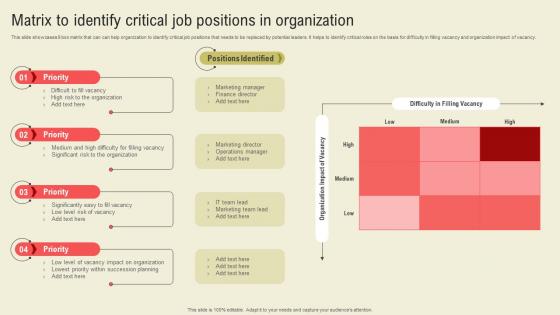
This slide showcases 9 box matrix that can can help organization to identify critical job positions that needs to be replaced by potential leaders. It helps to identify critical roles on the basis for difficulty in filling vacancy and organization impact of vacancy.
People who downloaded this PowerPoint presentation also viewed the following :
Matrix To Identify Critical Job Positions In Organization Succession Planning Guide with all 1 slides:
FAQs for Matrix To Identify Critical Job Positions In Organization
So it's basically a chart that shows your key positions and who could actually step into them if someone leaves. Think of it like having backup plans for your most important roles. You'll want to categorize people as "ready now," "ready in 1-2 years," or "ready in 3+ years." Honestly, most companies are terrible at this and only think about it when someone gives their two weeks notice - which is way too late. Start with your critical roles first. Then look around and ask yourself: who could realistically do this job with some training? It prevents those awful scrambles when good people quit unexpectedly.
Look, the matrix thing is basically like having a bird's-eye view of your whole company instead of just staring at one job at a time. You'll see all your key roles and who could step up laid out on one page - honestly blew my mind when I first tried it. Traditional planning is so clunky with all those binders nobody updates. With the matrix, patterns jump out immediately. Like if Dave's your backup for three different roles (yikes) or if accounting has zero bench strength. Way easier to spot the gaps. Just put your critical positions on one side and potential people on the other.
So for your succession planning matrix, start with who's in each role now and when they might leave or retire. Then map out potential replacements - like who's ready immediately, who needs 1-2 years, who's more of a long-term prospect. Critical skills for each position matter too, plus what development gaps you're dealing with. Honestly, some roles are just nightmares to fill, so rate the risk levels differently. Don't make it some elaborate thing that nobody looks at - keep it visual and actually useful. Include specific development actions and who's responsible. You can always add complexity later, but start simple or you'll never finish it.
So you take all your employees and plot them on this grid thing - performance on one side, potential on the other. Pretty simple actually. What's cool is you'll spot people who are doing okay now but could totally crush it in bigger roles later. Like, sometimes the obvious superstars aren't your best bet for leadership (learned that one the hard way at my last job). Short sentences make patterns jump out fast. You can see who's plateauing versus who's ready to grow. Then you don't waste training budget on the wrong people and actually build real career paths for future leaders.
Look at three things: how they're doing now (just use their latest performance reviews), their potential for leadership stuff like strategic thinking and managing people, and when they'd actually be ready to move up. Most places do 1-3 or 1-5 scales for each. The timing part is honestly a pain because it's so subjective - like, who really knows if someone's ready in 6 months vs 2 years? What works well is putting everyone on one of those 9-box grids with performance on one axis, potential on the other. Then just add little notes about timing. Makes the whole conversation way easier when you're sitting with leadership trying to figure out who's next in line.
Honestly, I'd do it every six months if possible. Annual is the bare minimum but things change so fast these days. Career goals shift, people quit out of nowhere, new talent pops up. Organizational stuff changes too - suddenly that random role becomes super critical. The whole thing falls apart if your data's stale, you know? Like when someone drops their two weeks and you're scrambling to figure out who can even handle their stuff. I always tell people to just put it on the calendar like any other review. Makes it way less painful than trying to remember when you last updated it.
Honestly, your succession planning matrix is pretty useless without proper development backing it up. You're just making a fancy chart of people who aren't actually ready yet. The matrix shows you the gaps, sure, but you've got to fill them with real training, mentoring, and stretch assignments. I've watched companies skip this part and then act shocked when their "high potential" employees totally flop after getting promoted. Makes no sense to me. Map out specific development paths for each successor - figure out what skills they're missing and actually work on those areas. Otherwise you're setting everyone up to fail.
Honestly, ditch those spreadsheets - they're dead the second you save them. Get an HR platform that syncs with your current systems and pulls live performance data. It'll track who's developing which skills and ping you when someone hits key milestones. The AI stuff is actually pretty neat - it spots potential successors you might miss. Plus automated alerts when roles open up or someone's about to bail. Everything stays in one place so leadership can check whenever. I'd start by looking at integrated talent management platforms, though the research part is kind of a pain.
Honestly, getting leadership to actually care is the worst part - they say it matters but then never make time for it. You'll also find it's super hard to spot talent objectively instead of just picking favorites. Oh and companies hate being transparent about career paths because they think people will expect too much. The matrix gets stale fast too if you're not updating it regularly. I'd start with just your most critical roles first. Set a quarterly reminder or you'll totally forget about it - trust me on this one.
Start by figuring out which roles actually matter for your 3-year goals - don't waste time on every position. Map those critical spots to the skills you'll need down the road, not just today's requirements. Most companies screw this up by focusing on current needs only. Your succession planning should zero in on revenue-driving roles and innovation positions first. Those are your money makers. Keep reviewing this stuff regularly too since strategies shift all the time. I'd honestly just ask yourself with each decision: "Will this person help us execute better?" If it's not a clear yes, keep looking.
First thing - map out your key roles and see who you've got ready now, ready in 1-2 years, and ready way down the road. Don't just go with whoever's been there forever (biggest mistake I see). Look at actual performance AND potential. Throw in some diverse candidates and external hires too. Be upfront with your team about what you're doing - nobody likes surprises. Oh, and review this stuff every quarter because honestly, things shift so fast these days. The real kicker though? Actually create development plans for the gaps you find, otherwise you're just making fancy charts nobody will look at.
Honestly, most companies just keep promoting people who remind them of themselves - it's wild how obvious it gets. First thing? Audit your current pipeline and see if it's all carbon copies of existing leadership. Partner with employee resource groups and mentorship programs to find candidates you're probably missing. I'd set actual diversity targets for succession pools (controversial but necessary). The big one though - examine what you consider "high potential." That's where bias sneaks in most. Skills-based assessments beat gut feelings every time, even when someone doesn't "fit the culture" perfectly.
Honestly, getting employee feedback will totally change your succession planning game. Ask people about their career goals and what they're actually good at - you'll get way better info than just guessing from the top. Your employees see stuff leadership doesn't, like who everyone goes to when there's a crisis or who's been learning new things on the side. I've seen this catch so many overlooked high-performers it's crazy. The feedback also shows you where your development programs aren't working. Start with surveys about what people want career-wise, then do 360 reviews for important positions.
Okay so cultural stuff really matters here. If you're dealing with a hierarchical culture, build in formal approval steps and clear reporting chains. Flatter cultures? Go for peer feedback and cross-functional paths instead. Family-oriented places get weird though - they value loyalty and how long someone's been around over actual performance. Makes things complicated honestly. Don't forget communication styles when you're setting up feedback and development talks. Short version: adapt your matrix to what actually motivates people in YOUR culture, not some generic template you found online.
Be super transparent about it - tie everything to their actual career growth. Explain how the matrix shows career paths and development opportunities, not just "who's getting replaced." Town halls help too. Have leadership share real examples of people who've advanced internally because of it. Too many companies treat this stuff like some secret club meeting, which is honestly just stupid. Make the criteria crystal clear - what skills and experiences actually matter for moving up? Give regular feedback on where people stand. Show them concrete steps to get there. Oh, and definitely don't call it "succession planning" - that sounds like you're planning their funeral or something. Frame it as building their future instead.
-
“Excellent service from the customer support team when I wanted a slide that was a bit different from those on their standard menu. Super helpful.”
-
SlideTeam has helped me take my presentation to the next level. Everyone at the office is impressed! I’ll be using their designs for a long-long time.