


Gap Selling Problem Identification Chart Of Company




Try Before you Buy Download Free Sample Product
 Impress Your
 Audience
 100%
100% Editable
 Save Hours
 of Time


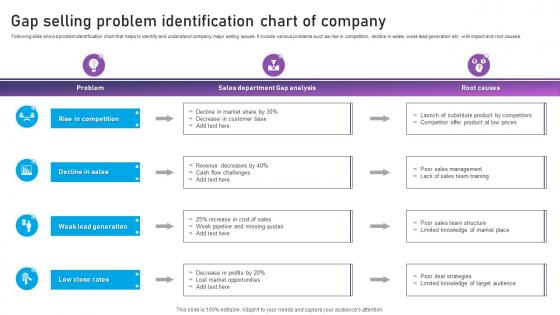
Following slide shows problem identification chart that helps to identify and understand company major selling issues. It include various problems such as rise in competition, decline in sales, weak lead generation etc. with impact and root causes.
People who downloaded this PowerPoint presentation also viewed the following :
Gap Selling Problem Identification Chart Of Company with all 6 slides:
Use our Gap Selling Problem Identification Chart Of Company to effectively help you save your valuable time. They are readymade to fit into any presentation structure.





FAQs for Gap Selling Problem Identification
So Gap Selling breaks down into three things you gotta nail. Figure out where your prospect actually is right now - not where they think they are, which honestly can be pretty different. Then dig into where they want to be. That gap between those two points? That's your goldmine. Your job is positioning whatever you're selling as the thing that gets them across that divide. Most people mess this up by jumping straight into their pitch - I've done it too. But you really can't sell anything until you've mapped out both sides first. Always start with their current situation.
So basically, when you spot that gap between where they are now and where they want to be, you've hit the jackpot. That's their pain point AND their motivation all wrapped up together. Now you can actually connect your solution to closing that specific gap instead of just throwing random features at them (been there, done that lol). The bigger the gap feels to them, the stronger your position gets. You'll naturally ask way better questions and present stuff that actually matters to them. Honestly, it makes you sound like you actually get their business instead of being another pushy salesperson. Always start discovery calls by figuring out their current headaches versus their 6-12 month goals.
Gap Selling basically does the opposite of what most salespeople do. Instead of jumping into your pitch right away, you become like a detective first. Figure out where they are now vs where they actually want to be - that's the "gap." Most reps mess this up and start rattling off features immediately. With this approach, you're selling the problem and showing them how big that gap really is before you even mention your solution. Way less pushy, honestly. Oh and here's the thing - people buy when they feel the pain of staying where they are. So next time, ask about their current headaches first, not what you're offering.
Dude, questions are like the whole foundation of Gap Selling. You're trying to find that space between where they are now and where they actually want to be. Don't just ask random stuff though - I learned that the hard way. The good questions dig into consequences and what happens if they do nothing. Like "what's the real cost if this problem keeps going?" That hits way harder than asking about features. Start collecting questions that relate to whatever problems your thing actually solves. Surface-level pain points won't cut it.
Start with SPIN Selling or BANT - they're solid frameworks for digging into what your prospects actually need. Ask "what happens if you don't solve this?" That's where the money question lives. I swear by simple gap analysis worksheets too - current state on one side, future state on the other. Makes everything crystal clear visually. Don't forget stakeholder mapping either (boring name, but super helpful). Once you can slap a dollar amount on their problem, you're golden. Honestly, just pick one method and get really good at it before jumping around to others.
Gap Selling works everywhere because you're hunting for the same thing - where they are vs where they want to be. The questions change though. Software sales? You're asking about workflow headaches and efficiency problems. Medical devices? Patient outcomes and compliance stuff matters way more. Honestly, the hardest part is learning to speak their language. I'd start by figuring out the top 3-5 pain points your industry actually deals with - not what you think they should care about. Then build your discovery around those specific gaps. Same framework, totally different execution.
Dude, the biggest mistake is thinking Gap Selling just means "find problem, pitch solution." Wrong! You've gotta understand where they are NOW and where they want to be - way before you even mention your product. Also, finding just any gap won't cut it. Has to be something they're genuinely desperate to fix. I learned this the hard way honestly. Most salespeople assume they get someone's priorities after hearing basic complaints, but you need to keep digging with follow-ups. What's the real cost of staying stuck? That's where the magic happens.
Honestly, your sales enablement team is gonna be key here. Start with discovery question frameworks - help reps dig into that current vs future state stuff. Training's probably the biggest thing though. Most reps suck at spotting emotional gaps until they've practiced it a bunch. Build some battle cards mapping problems to solutions, maybe throw in role-play scenarios for different verticals. Oh and don't try to train everyone at once - that's a nightmare. Pick a pilot group first, see what actually works, then roll it out. The talk tracks for different buyer personas are clutch too.
Dude, empathy is everything in Gap Selling. Customers can spot BS concern instantly - like, they just know when you're faking it. You've got to genuinely care about their pain points first, not your commission check. Put yourself in their position and dig into how problems actually mess with their daily routine. What's keeping them up at night? The emotional stuff matters as much as the business impact. When you really get their world, your discovery questions become way sharper. Plus you'll naturally position your solution as the fix they desperately need. Always lead with caring about their situation before anything else.
Gap Selling totally changes what you track. Forget counting calls and demos - now you're measuring how well you find the gap between where prospects are vs where they want to be. Quality over quantity becomes your thing. How good are you at mapping their actual pain points? Can you put a dollar amount on what happens if they do nothing? That stuff matters way more than activity numbers, tbh. Your conversion rates usually get better too since you're having real conversations upfront instead of surface-level pitches. Start tracking your discovery call wins and how accurately you identify their gaps.
Yeah, they're actually a perfect match. Gap Selling helps you dig into real problems instead of just throwing generic pitches at people. When you're doing ABM research, look for signs of those specific gaps rather than just basic company stuff. The personalization gets so much better - you can map different problems to different people in the account and tailor everything. Honestly beats the usual "spray and pray" approach by miles. I'd start small though. Pick maybe 2-3 gaps you see a lot in your space and build your ABM content around those first.
Getting your team to actually ask discovery questions instead of jumping straight into product pitch mode? That's the real nightmare. Most reps feel super awkward with all the silence and deep probing - they just want to talk features like they always have. Plus Gap Selling means doing way more homework upfront, which honestly some people will just fight you on. Role-play those discovery conversations in team meetings first so they don't completely bomb their first real attempts. Trust me, the prep work is annoying but it's what separates this from regular sales approaches.
Get your team doing role-plays first - that's where they'll actually learn to spot the gap between where prospects are now versus where they want to be. Most reps get stuck asking surface-level stuff instead of digging into real problems. Teach them to listen better and push deeper into the emotional side of things. What happens if they don't change anything? Build a simple framework they can use on calls. Honestly, reviewing actual call recordings together works way better than just talking about it. You'll catch so many missed opportunities that way. Practice beats theory every time.
Dude, Gap Selling is actually perfect for building long-term relationships. Instead of just throwing features at people, you're digging into their real problems first. Most sales reps are so annoying with their pitch-heavy approach - customers get tired of that fast. But when you focus on understanding where they are now vs where they want to be, you become their trusted advisor. They'll actually start coming to you for advice because you get their business challenges. The trust factor is huge here. Always explore their current situation before you even think about your solution. Way more effective than the old-school pushy stuff.
Dude, client feedback is seriously the best way to get better at Gap Selling. Shows you if you actually nailed their real problems or just scratched the surface. Half the time I thought I found their main issue, but they'd tell me later it was something totally different. Ask them what clicked during your discovery calls - were you digging deep enough or just hitting symptoms? You start seeing patterns too, like which gaps actually matter to people. Oh and definitely follow up after deals close to see what parts of your process they found useful. That's where the real learning happens.
-
The Designed Graphic are very professional and classic.
-
If you have visited their site and failed to find the products, try reaching the customer service because it will be the case that you didn't use the search bar well.