


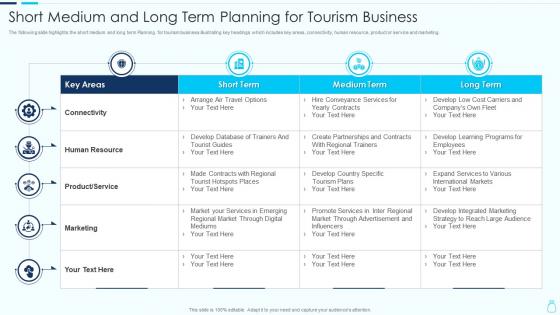
Short medium and long term planning for tourism business




Try Before you Buy Download Free Sample Product
 Impress Your
 Audience
 100%
100% Editable
 Save Hours
 of Time


Our Short Medium And Long Term Planning For Tourism Business are topically designed to provide an attractive backdrop to any subject. Use them to look like a presentation pro.
People who downloaded this PowerPoint presentation also viewed the following :
Short medium and long term planning for tourism business with all 6 slides:
Use our Short Medium And Long Term Planning For Tourism Business to effectively help you save your valuable time. They are readymade to fit into any presentation structure.





FAQs for Short medium and long term planning
Start with market research and figure out who you're actually targeting. Your financial projections matter most to investors, honestly. Cover your marketing approach, staffing needs, and how you'll handle logistics. Pricing strategy is huge - tourism businesses always mess this up by ignoring seasonal swings and startup costs. Don't skip the competitive analysis or your unique selling point. Risk planning is critical since tourism gets hit hard by random events (hello, pandemic). Oh, and write a killer executive summary first. Distribution channels and success metrics round it out, but keep everything realistic timeline-wise.
Honestly, market trends are everything for your tourism business plan. They show you what travelers actually want and where things are headed. Look at booking patterns, where people want to go, how much they're spending - that kind of stuff. Like, who predicted glamping would blow up the way it did? Anyway, these trends affect literally everything - your target customers, pricing, marketing, what services you offer. Start tracking this stuff from the beginning and keep updating it. You'll get crushed if you don't stay on top of what's changing.
Honestly, big chains can't touch the personal stuff you can do. Focus on what makes you super local - maybe you know all the hidden spots tourists never find? Partner up with other small businesses for cool packages. Social media is huge for you - people love seeing the real behind-the-scenes stuff, not polished corporate posts. Guest stories are pure gold for marketing. The personal connections you build? That's something Marriott will never have. Reviews and word-of-mouth still matter more than fancy ads. Pick the ONE thing you absolutely crush compared to everyone else in town and go all-in on that.
Don't just slap sustainability on at the end - build it right into your business plan from the start. Figure out your environmental impact first: energy, waste, water, local sourcing options. Set actual numbers you can track, like cutting carbon by X% or getting 80% of supplies locally. Plus tourists are demanding this stuff now anyway, so you're kinda shooting yourself in the foot if you ignore it. Partner with local communities and eco suppliers. Budget for green practices upfront - yeah they cost more initially but you'll save money later. Oh and definitely document everything so investors see you're serious about it.
Honestly, tech isn't optional anymore if you're in tourism. COVID flipped everything - suddenly everyone expected contactless everything, which was wild to watch happen so fast. Your customers are used to Airbnb's slick booking flow and Booking.com's filters, so you can't just wing it with a basic website. Mobile apps, social media ads, data tracking - that's your baseline now. Short story: stalk your competitors online and see what digital stuff they're using that you're not. The gaps will be pretty obvious once you start looking.
Honestly, start with online surveys and social media polls - that's the easiest way to see what travelers actually want from your area. Google Analytics is pure gold for booking patterns too. I'd also stalk your competitors a bit (in a professional way lol) to see what's working for them. But don't ignore the old-school stuff - actually talk to guests and local hotels. Tourism boards usually have insider info you can't find online. Those simple feedback forms? Read them. People leave surprisingly good insights there. Pick one method this week instead of overwhelming yourself with everything at once.
You'll want at least 3-5 years of projections covering revenue, expenses, cash flow, and break-even stuff. Tourism is brutally seasonal - like you might pull in 70% of your money in summer alone, so cash flow planning is everything. Include all your revenue streams (tours, merch, whatever). Operating costs get crazy with seasonal staff, equipment upkeep, insurance. Don't skip startup costs either. Here's the thing though - investors want to see you've considered the risks, so throw in both optimistic and conservative scenarios. Oh, and make sure those projections actually reflect tourism's weird seasonal patterns.
Oh totally, partnerships can save your butt in tourism. Find hotels, restaurants, transport companies - anyone whose stuff naturally fits with yours (not competitors obviously). Package deals are where it's at because you're splitting marketing costs and borrowing each other's customers. Honestly way better than trying to do everything solo. Map out what your customers actually need during their trip and see where you're missing pieces. That's where good partners come in. Way cheaper than hiring more people too, which - let's be real - most small tourism businesses can't afford anyway.
Oh man, the legal stuff is kind of a nightmare tbh. Business registration is obvious, but tourism licenses are all over the place depending on where you are. Insurance is huge - liability especially since you're responsible for people's safety. Consumer protection laws, data privacy if you're collecting info online, tour guide certs if that's your thing. The regulations honestly made my head spin at first. Getting a tourism lawyer involved early saved me so much hassle later. Way better than trying to figure it out yourself and screwing something up.
Look at your monthly numbers over a few years - annual totals won't show you the real patterns. Check occupancy rates and booking trends by season, plus who's actually staying with you. Local events can totally mess with your data though, so watch for those. Your costs change too - staffing and supplies cost way more during busy times. Honestly, once you map out your slow months vs crazy busy ones, planning becomes so much easier. You'll know when to save cash, when to hire extra help, and when to push marketing harder.
So honestly, Instagram and TikTok are where it's at for tourism marketing - people want to see those gorgeous visuals before they book anything. Google Ads work well too, but don't sleep on email campaigns for getting repeat visitors back. Local partnerships are clutch, especially with tourism boards since they actually know the area. TripAdvisor reviews matter more than people think. Influencers can be worth it but honestly depends on what you're willing to spend. Oh, and figure out where your ideal tourists are hanging out online first - no point posting beach photos if your audience is on LinkedIn, you know?
Look, feedback is literally your cheat sheet for figuring out what's working. Surveys and reviews are obvious, but don't sleep on just talking to people directly. Multiple guests complaining about breakfast timing? That's a pattern worth fixing. I swear, customers notice stuff you'd never think of. The real trick isn't collecting feedback though - it's actually doing something with it. Set up some monthly check-in to review everything, then pick at least one thing to improve each quarter. Otherwise you're just hoarding complaints for no reason.
Track your revenue per customer and occupancy rates first - those are the basics. But customer satisfaction scores matter just as much, maybe more? Happy customers come back and bring friends. Also watch your booking conversion rates and how long people stay. Tourism is super seasonal, so you'll need a full year of data before you can really tell what's working. I'd honestly start measuring everything from day one. That way if something feels off, you can adjust quickly instead of waiting months to figure out why bookings are tanking.
Look, you really need a solid risk section in that business plan. Identify the big stuff - seasonal dips, economic crashes, weather disasters, new regulations. Then map out backup plans for each one. Diversify your markets, keep cash reserves for slow months. Weather's honestly brutal for outdoor ops, so definitely have indoor alternatives ready. I'd also throw in some scenario planning - show how you'd pivot if things go sideways. Banks and investors want proof you've actually thought this through beforehand, not just winging it when problems hit.
Honestly, three things are totally reshaping travel right now. AI personalization is huge - companies are building custom itineraries that actually match what you want, not just generic suggestions. Sustainability has moved way beyond just being trendy too. People genuinely care about booking eco-friendly stuff now. Oh, and everything went contactless after COVID (obviously). VR previews let you scope out destinations beforehand, which is pretty cool. Digital check-ins, app payments - that's all standard now. If you're planning anything, definitely focus on personalization and the green angle. Those aren't fading anytime soon.
-
Appreciate the research and its presentable format.
-
Easily Editable.