


Travel and tourism business swot analysis
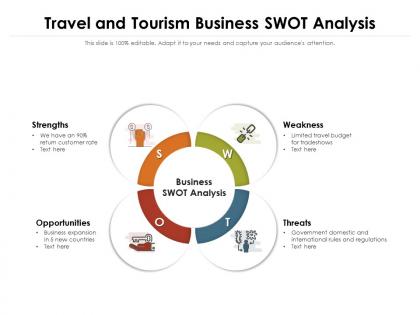




Try Before you Buy Download Free Sample Product
 Impress Your
 Audience
 100%
100% Editable
 Save Hours
 of Time


Our Travel And Tourism Business Swot Analysis are topically designed to provide an attractive backdrop to any subject. Use them to look like a presentation pro.
People who downloaded this PowerPoint presentation also viewed the following :
Travel and tourism business swot analysis with all 2 slides:
Use our Travel And Tourism Business Swot Analysis to effectively help you save your valuable time. They are readymade to fit into any presentation structure.
FAQs for Travel and tourism
Honestly, the travel industry is crushing it right now. You've got insane variety - budget hostels to fancy resorts, something for everyone. Apps and booking sites made everything way easier too. Job creation is massive across all skill levels, which is why governments back it so hard. Post-pandemic? People are absolutely obsessed with experiences over buying random stuff. That pent-up demand is still going strong. The whole sector just adapted so well - like, they had to completely reinvent themselves and actually pulled it off. If you're looking at this industry, focus on how experience-driven everything's become.
Yeah totally! First thing - figure out what you're crushing vs what's making you want to hide under a rock. Like if your customer service is fire but your booking system is trash, just have your team call people and walk them through it personally. I do this kind of thing all the time honestly. Strong local connections but marketing makes you cringe? Get those partners to hype you up instead of trying to become a social media guru overnight. Sometimes the obvious move is right there - you just gotta connect the dots differently instead of spending money you probably don't have.
Honestly, climate change is the big scary one - sea levels rising, crazy weather patterns messing with travel seasons. Geopolitical stuff creates no-go zones basically overnight. Economic crashes? Travel's always first to get axed from people's budgets, which sucks but makes sense. Pandemics can shut everything down fast (thanks COVID for that lesson). Plus you've got new regulations around carbon footprints and overtourism that'll keep getting stricter. My advice? Build flexibility into everything you do and don't put all your eggs in one destination basket. Multiple revenue streams are your friend here.
Honestly, just focus on making your eco-tourism actually sustainable instead of just saying it is. People are smart about greenwashing now - they'll call you out. Start by partnering with local conservation groups and offering carbon-neutral packages. Get certified through Green Key or work with indigenous communities for cultural stuff. Quick wins? Audit what you're doing now and find easy changes you can brag about right away. Oh, and when you market it, talk about the good impact visitors have, not just the cool animals they'll see. Authenticity sells way better than fake green marketing these days.
Dude, it's crazy how tech turned everything upside down in travel. Regular people can now list their apartments on Airbnb and compete with actual hotels. Booking sites let travelers compare prices instantly - no more calling around or relying on travel agents who used to control all the info. Mobile apps mean people book trips literally last-minute, and honestly? Social media influences where people go way more than fancy brochures ever did. Even customer service runs on chatbots now (though some are pretty terrible). Bottom line: companies that aren't investing in tech and data are getting crushed by competitors who are.
Dude, customer service will literally make or break you. Travelers run into issues constantly - that's just how it goes. The difference is whether you turn their delayed flight into a "wow, these guys really took care of me" story or let it become a one-star review nightmare. Bad service makes every tiny problem explode on social media. Good service? People actually defend your brand when others complain online. Here's the thing though - don't make your staff transfer customers between five different departments. Let them fix stuff right away. Give them actual power to solve problems instead of just apologizing and escalating everything up the chain.
Don't put everything into just one type of tourism - that's asking for trouble. Mix it up with adventure stuff, cultural tours, business travelers, wellness retreats, food experiences. I watched this beach town completely tank when COVID hit because they had literally nothing else going for them. Figure out what makes your area special for different kinds of visitors first. Then market to each group separately. If you're busy in summer, add winter activities. Beach town in winter? Maybe focus on conferences or food festivals. Build like 3-4 solid tourism types so when one takes a hit, you're not scrambling.
Honestly, it's mostly inflation screwing with everything - flights, hotels, you name it. Higher interest rates aren't helping either since people are way more careful about fun spending now. There's this whole "revenge travel" thing happening where folks are prioritizing experiences, but they're definitely shopping around more for deals. Remote work is kinda interesting though - people can take longer trips but stretch their budgets since they're not cramming everything into a week. Fuel costs are the real wildcard here, they mess with airfare pricing constantly. Oh, and consumer confidence data is pretty solid for predicting booking trends like 3-6 months ahead if you're into that nerdy stuff.
Look, cultural heritage is basically what sets your destination apart from every other random beach town. Got cool historical sites or local traditions? Perfect - you can charge way more because travelers are obsessed with "authentic experiences" these days. Honestly, the marketing almost does itself. People eat up that stuff about discovering something real and meaningful. Partner with local cultural groups to build stories around what makes you special. Oh, and definitely involve the actual community in your plans - nobody wants to be that place that just exploits culture for social media clout. That always backfires eventually.
Look, diversification is everything - you need multiple income streams so when one tanks, you're not screwed. Build up your domestic market since that's way more reliable than international stuff. Health protocols matter, but make them actually reassuring, not just performative BS. Digital infrastructure is huge too - virtual tours, contactless everything. Honestly? The survivors already had this figured out before COVID hit. Partner up with local governments and communities, keep flexible booking policies, and for the love of god, maintain cash reserves. Next crisis is always coming. I'd start with the domestic market piece first - seems like the easiest win.
Look, environmental regs will totally flip your tourism plans upside down. Flight restrictions bump up costs. New protected areas? Yeah, that beachfront resort idea might be dead. But here's the thing - eco-tourism is huge right now. People actually want sustainable experiences, so there's money in going green. Build compliance costs into your budget from the start, trust me on this. Oh, and keep tabs on policy changes in wherever you're planning to develop. Way better to adjust early than panic when new rules drop. The regulatory stuff moves fast these days.
Dude, social media has totally flipped travel planning on its head. Most people don't even use travel agents anymore - they're scrolling Instagram for destination inspo and booking based on what looks cool. TripAdvisor reviews matter way more than brochures now. FOMO is real too - when your friends are posting beach pics, you're not gonna sit there "thinking about it" for weeks. You'll book that trip fast. Honestly, travelers are picking places just because they're photogenic now, which is kinda wild but whatever. If you're in travel and not pushing social content, you're basically leaving money on the table.
Look, safety perception totally makes or breaks travel plans. People won't even consider visiting if they think it's sketchy - doesn't matter if the actual risk is tiny. Crime, politics, health stuff, natural disasters - all of it matters. What's wild is that perceived danger drives decisions way more than real statistics do. Destinations can have amazing safety records but still struggle because of outdated reputation issues. You've gotta actively work on changing that narrative though. Show off your safety measures, be transparent about improvements, communicate directly with potential visitors. Can't just sit back and hope people figure it out themselves.
So you've got three major groups to think about. Baby boomers are hitting retirement with serious cash - they want luxury and comfort, no compromises. Millennials? Totally different story. They'd rather spend on authentic local stuff than buy things. Gen Z is where it gets interesting though - they're obsessed with sustainability and everything needs to work perfectly on their phones. Oh, and Asia's middle class explosion is insane right now. We're talking millions of new travelers with money to burn. Honestly, the generational gaps are pretty crazy when you look at the actual numbers. You'll want to segment your approach around these groups sooner rather than later.
Set up quarterly customer surveys and monthly competitor checks - that's your baseline. Google Analytics handles web stuff, social media gives you brand vibes, and grab employee feedback for internal intel. Honestly? Making it routine beats doing some massive annual deep-dive that everyone dreads. Dashboards are your friend here - they pull data automatically so you're not panicking last minute. I'd start with maybe 3-4 key metrics per category, then expand. The real insights come from watching trends develop over months, not just random snapshots. Way more useful that way.
-
Professional and unique presentations.
-
Attractive design and informative presentation.
-
Very well designed and informative templates.