


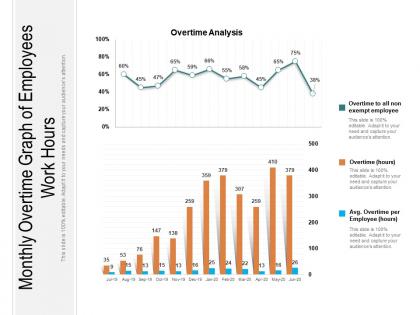
Monthly overtime graph of employees work hours




Try Before you Buy Download Free Sample Product
 Impress Your
 Audience
 100%
100% Editable
 Save Hours
 of Time


Our Monthly Overtime Graph Of Employees Work Hours are topically designed to provide an attractive backdrop to any subject. Use them to look like a presentation pro.
People who downloaded this PowerPoint presentation also viewed the following :
Monthly overtime graph of employees work hours with all 2 slides:
Use our Monthly Overtime Graph Of Employees Work Hours to effectively help you save your valuable time. They are readymade to fit into any presentation structure.

FAQs for Monthly overtime graph of
Honestly, it's mostly staffing problems and bad planning. Healthcare gets slammed with patient surges, retail during holidays (Black Friday is brutal), and construction with impossible deadlines. Manufacturing deals with broken equipment or surprise rush orders. Tech companies? Don't even get me started on their "we need this yesterday" mentality. Look at when your overtime spikes happen - are they predictable? Holiday seasons, end of quarter, whatever. If you can see the pattern coming, it's probably a planning issue. Random spikes might mean you're just understaffed for the actual workload. Map it out and you'll figure out if it's fixable or if you genuinely need more people.
Get a decent time tracking system that catches regular and OT hours automatically - trust me, manual tracking is a total mess. Run reports from your HR system to see overtime by department or employee. Honestly, the patterns matter way more than just raw hours. Which teams always go over? Do specific projects constantly cause spikes? Check in weekly or monthly so you can catch problems early. Otherwise your labor costs will blow up before you even realize what happened. Make it routine and you'll actually spot the issues in time to fix them.
Look at your hourly output, error rates, and quality scores - compare normal weeks to those crazy overtime periods. People usually tank after 50+ hours, it's just how we're wired. Check absenteeism and turnover too since burned out people call in sick constantly and bail faster. Project timelines and customer satisfaction matter because tired teams rush stuff and create headaches later. Honestly, pulling this data monthly is probably your best bet. Then you can actually see if those extra hours are doing anything useful or just making everyone miserable for no reason.
Yeah, overtime's tricky. At first people love the extra money - who doesn't want a fatter paycheck, right? But if it keeps happening, they start getting burned out fast. Work-life balance goes out the window, everyone's exhausted, and suddenly they're pissed about working late again. I'd say the trick is keeping it occasional and voluntary when possible. Most folks would honestly rather know their schedule ahead of time than deal with constant overtime, even for more cash. Just watch how often your team's staying late and ask them how they're feeling about workload before it becomes a bigger problem.
Dude, overtime rules are a total mess when you're dealing with different countries. The EU caps you at 48 hours with mandatory premium pay, while here in the US it's that classic 40-hour mark with time-and-a-half. Germany throws daily limits on top of weekly ones because why not make it more complicated? Australia's award system is honestly bonkers - I still don't fully get it. Getting this stuff wrong isn't just embarrassing either, you're looking at fines or employees taking you to court. Definitely worth checking local labor laws before you expand anywhere.
Here's my take: pull your last 6 months of overtime data first. Look for patterns by department and timing - like does accounting always go crazy during month-end? Seasonal rushes? That stuff's pure gold for planning ahead. You can hire temps or shuffle people around before you're drowning. Honestly, the budgeting angle is huge too since you'll see exactly when labor costs explode. Oh, and watch for people hitting too much OT consistently - nobody wants good employees burning out and bailing. It's basically your roadmap for smarter staffing decisions.
Ugh, the worst thing companies do is just react to everything instead of planning ahead. You're always putting out fires and bleeding cash. Also, different departments having their own random rules creates total chaos. Poor tracking kills budgets too - I've watched places throw money away because nobody's paying attention to patterns. Oh, and managers who play favorites with OT? That's asking for drama and lawsuits. Most places forget to build overtime into their forecasts, which is honestly just dumb. Set up clear approval steps and check your data monthly. Trust me, catching trends early saves you from major headaches later.
Honestly, get some software for this - it'll save you so much headache. You can ditch those messy spreadsheets and actually see which departments are going crazy with overtime. The dashboards show you patterns in real time, plus some can even predict when you'll need extra coverage based on past data. Pretty cool, right? They'll catch compliance stuff before it bites you too. Oh, and set up alerts when overtime hits your budget limits - trust me on that one. Just figure out what's driving you nuts first, then find something that fixes those specific problems.
Look, first thing is figuring out why you're bleeding overtime hours - bad scheduling? Not enough people? Crappy processes that waste time? Cross-train your team so you're not screwed when someone calls out. I'd also take a hard look at those deadlines... are they actually doable or just wishful thinking? Half the time we dig our own graves with unrealistic expectations, honestly. The trick is spreading work around better and having backup plans. Oh, and track the patterns - you might be surprised what's really causing it.
Dude, working crazy overtime will literally wreck your body - heart problems, depression, the whole mess. Your relationships suffer because you're never around, and forget about eating decent food or hitting the gym. I mean, people think they're being these amazing employees but honestly? Studies show you actually get less done and make more mistakes when you're constantly exhausted. Sleep deprivation is no joke. Track how many hours you're really putting in this week, then talk to your boss about redistributing some of that workload. You can't keep this pace forever.
Honestly, talk to your team more - like, actually check in with them. Most people won't say anything until they're already completely fried, which sucks for everyone. I've watched whole teams quietly drowning while their boss had no clue anything was wrong. Maybe do regular one-on-ones? That way you can catch the crazy workload stuff early. And be real about deadlines - if someone says a timeline is impossible, actually listen to them. The goal is fixing this before working late becomes the norm, because once that happens... good luck digging out of it.
Look at your overtime data from the past year - you'll see patterns jump out pretty quickly. Maybe your team always goes crazy during month-end or busy seasons. Those 1.5x rates add up fast! Once you know when the spikes happen, you can actually budget for them instead of just crossing your fingers. Check which departments burn the most OT hours too. Sometimes it's honestly cheaper to just hire another person than keep paying premium rates every single week. I learned this the hard way at my last job. Pull those reports and see what story your data tells.
Honestly, start by actually tracking when your teams are swamped instead of just winging it. Most places think overtime is just "how business works" which is kinda insane if you think about it. Staff up during busy periods instead of burning people out. Celebrate the teams hitting deadlines without working crazy hours - not the martyrs pulling all-nighters. Leadership needs to model good boundaries too, like not texting at 9pm. But here's the thing - half the time it's just unrealistic deadlines causing the whole mess. Review those timelines and you'll probably find the real problem.
Set up dashboards that automatically flag overtime - like 10+ hours weekly or constant weekend shifts. Your time tracking system can send managers alerts when their people hit these limits. Honestly, this catches burnout way before anyone notices manually. Monthly reports showing patterns by department help too. Make everything visual - charts and heat maps are obvious red flags managers can't ignore. We had one guy working every Saturday for two months before anyone realized. Get these alerts running now instead of dealing with bigger problems later when people start quitting.
Honestly, turning those endless overtime spreadsheets into charts is a game changer. You'll actually see what's happening instead of drowning in numbers. Like, maybe accounting goes crazy every Friday or your warehouse team gets slammed during holidays - stuff that's totally invisible in raw data. Bar charts by department and time period are perfect to start with. Then you can dig deeper once you spot the weird patterns. Oh, and executives eat this visual stuff up, so it makes selling your ideas way easier in meetings. Charts also show if whatever fixes you tried actually worked or not.
No Reviews