

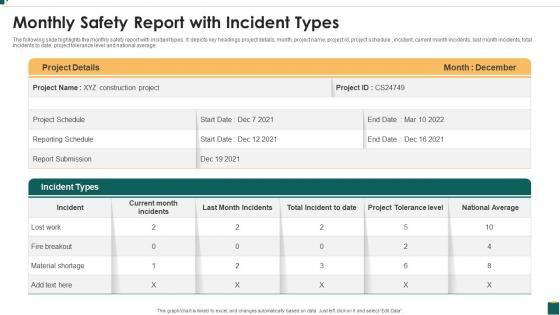
Monthly Safety Report With Incident Types




Try Before you Buy Download Free Sample Product
 Impress Your
 Audience
 100%
100% Editable
 Save Hours
 of Time


Our Monthly Safety Report With Incident Types are topically designed to provide an attractive backdrop to any subject. Use them to look like a presentation pro.
People who downloaded this PowerPoint presentation also viewed the following :
Monthly Safety Report With Incident Types with all 6 slides:
Use our Monthly Safety Report With Incident Types to effectively help you save your valuable time. They are readymade to fit into any presentation structure.





FAQs for Monthly Safety Report
You need dead simple reporting - like embarrassingly easy. Anonymous options are huge. People won't speak up if they think they'll get screwed over later, so leadership has to actually back this stuff up. Clear investigation process matters too, plus giving feedback to whoever reported so they know something happened. Training helps everyone understand what's worth reporting (honestly, most people have no clue). I'd start by asking your team what stops them from reporting things now - they'll tell you exactly where the system's broken. Culture beats fancy processes every time.
Honestly, just strip out the personal stuff but keep the good lessons. Remove names, locations, anything that identifies people - but don't lose the actual safety insights. I've seen companies do this really well with incident reports that focus on what went wrong and how to prevent it, rather than calling anyone out. Your transparency comes from being open about the failure and your fixes, not throwing people under the bus. Set up some basic rules for what gets redacted vs. what stays. Always protect your people first, but make sure everyone else can still learn from it.
Dude, mobile apps changed everything for safety reporting. No more paper forms cluttering your truck! Just snap photos and file reports straight from wherever you are. The system automatically sends it to whoever needs to see it, which honestly beats playing phone tag with managers. AI even catches patterns you'd miss - pretty cool actually. Real-time dashboards show what's happening instantly instead of waiting forever for updates. Oh, and check if your company already has an app set up. Mine took like two weeks to find theirs buried in the employee portal, but it's saved me hours since.
Track it through leading and lagging indicators - report volumes, response times, whether incidents drop over time. Most important metrics? Reporting rates (people actually using it?), how fast you close cases, and repeat incidents going down. Honestly, the best sign is when near-miss reports spike while real incidents tank - means folks trust speaking up early. Response times matter too, obviously. Do quarterly reviews of the trends and tweak your approach based on what you're seeing in the data.
Honestly, the hardest part is just getting people to speak up. Everyone's scared they'll get blamed or thinks management won't do anything anyway. Leadership has to be all-in though - if your managers aren't backing it publicly, you're toast. Data quality becomes a mess too because reports come in super vague. Then there's picking software that doesn't suck (trust me, most of them do). Oh, and someone actually needs time to investigate everything that comes in. I'd tackle the blame culture first - once people feel safe reporting, everything else gets way easier.
Here's what I've learned from doing this: thank people when they report stuff instead of getting mad at them. Seriously makes all the difference. Your team needs to see that you actually want them speaking up, not just staying quiet to avoid trouble. It's honestly like any relationship - trust builds slowly but it's worth it. The whole point is making reports feel normal, not terrifying. That way you catch problems early before they blow up into major disasters. Oh, and try celebrating near-misses in meetings. You'll be shocked how fast reporting goes up.
So it really depends on what industry you're in. Healthcare deals with FDA adverse event stuff and Joint Commission rules. Manufacturing? That's OSHA recordkeeping plus EPA reports if chemicals are involved. Aviation has FAA requirements. Pharmaceuticals are honestly the worst - some serious events need reporting in 24 hours, which is insane when you're trying to get all your facts straight. Financial services has their own consumer protection thing going on. You'll want to figure out which agencies actually regulate your sector first, then map out their deadlines and what documentation they want so you don't get blindsided.
Honestly, make reporting feel like helping the team instead of snitching. Anonymous systems work great, and don't punish people for honest mistakes - that kills trust fast. When someone does speak up, thank them publicly and actually show what you're doing about it. I've watched too many workplaces turn toxic because management throws people under the bus. Your managers need training on how to respond without getting defensive (this is huge). Oh, and always circle back with whoever reported it. People need to see their voice mattered and something actually changed.
Honestly, ditch the PowerPoint approach - people learn way better when they're actually practicing with real scenarios. Cover the technical stuff (forms, systems) but don't forget the why behind it all. Too many companies skip explaining that reporting helps everyone stay safer, not just creates paperwork. Role-play everything from small near-misses to major incidents. Your managers need to be in there too, sharing their own stories - that credibility matters more than you'd think. Oh, and definitely do refreshers every few months. Track who's showing up so you can catch any gaps.
Start by pulling your last six months of incident reports - trust me, you need that much data to see real patterns. Sort everything by type, location, time, and what went wrong. Monthly reports work best, though quarterly's fine if you're swamped. Don't ignore near-misses either; those are honestly more valuable than actual incidents sometimes. Look for weird stuff like "why do we always have equipment problems on Fridays?" or "that same damn hallway again." Once you spot the trends, you can actually focus your prevention efforts where they'll matter instead of just throwing solutions at everything.
Honestly, leadership commitment makes or breaks these programs. If your bosses actually respond to reports and show they care, people will keep reporting stuff. But when they just ignore feedback or - even worse - go after whoever reported something? Yeah, that kills participation fast. I've watched programs completely tank because executives treated safety reports like busy work instead of real chances to fix things. Oh, and here's the thing - leaders need to circle back with staff about what actually changed because of their reports. People want to see their input mattered, you know?
Don't just file those reports and forget about them - actually dig into what they're telling you. Pull your last six months of data and map it out by location, time, and incident type. You'll probably find patterns you never noticed before. Are injuries happening more on certain shifts? Around specific equipment? That's where the real insights are hiding. I've seen so many companies collect this stuff religiously but never connect the dots. Honestly, it drives me crazy. Create monthly summaries and share them with your teams so everyone can see the bigger picture. The patterns between seemingly random incidents? That's pure gold.
So external audits are basically like getting a second opinion on your safety system. Fresh eyes catch stuff your team probably missed after staring at the same processes forever. They'll dig into your reporting, data quality, how you handle investigations - the whole thing. Plus they compare you to industry standards, which can be eye-opening (and sometimes brutal honestly). The best part? You get actual recommendations you can act on. Just make sure your team's ready for it beforehand. Don't treat it like some annoying compliance thing - you'll actually learn something useful.
So basically you want your safety and quality systems talking to each other - when there's a safety incident, it should automatically flag if you need a quality review. Setting up shared dashboards is clutch here, both teams can see the same data and spot patterns. The trick is getting everyone using the same terms and processes. That way safety reports flow straight into your corrective actions and audits without extra work. I'd start by figuring out where your current systems already overlap (there's probably more than you think), then automate those connections. Way less painful than doing everything manually.
So many options to choose from! Incident IQ and SafetyCulture are solid picks if you want the full package - reporting, analytics, all that stuff. EHS Insight's pretty good too. Honestly though, if your team's not super tech-savvy, even Google Forms works fine. You won't get the automated workflows but it gets the job done. I'd probably try SafetyCulture first since it's not overwhelming and covers most of what you need. They usually have free trials which is nice.
-
Illustrative design with editable content. Exceptional value for money. Highly pleased with the product.
-
Satisfied with the way SlideTeam resolved my query regarding the right business PPTs that I was having difficulty finding. I found the perfect match with their assistance.