

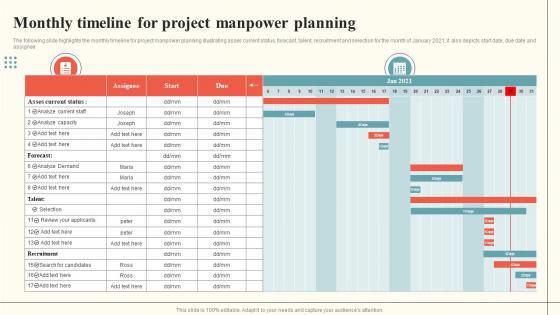
Monthly Timeline For Project Manpower Planning




Try Before you Buy Download Free Sample Product
 Impress Your
 Audience
 100%
100% Editable
 Save Hours
 of Time


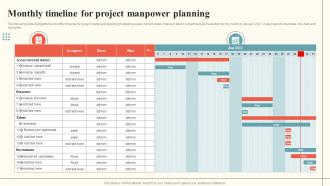
The following slide highlights the monthly timeline for project manpower planning illustrating asses current status, forecast, talent, recruitment and selection for the month of January 2021, it also depicts start date, due date and assignee.
People who downloaded this PowerPoint presentation also viewed the following :
Monthly Timeline For Project Manpower Planning with all 6 slides:
Use our Monthly Timeline For Project Manpower Planning to effectively help you save your valuable time. They are readymade to fit into any presentation structure.





FAQs for Monthly Timeline For
You'll want to start with a skills audit - figure out what your team can actually do vs what the project needs. That's where everyone screws up tbh. Map out your timeline and when different people jump in or out of phases. Resource forecasting is huge too - factor in vacations, other projects, plus realistic work rates (not the fantasy ones we all love). Oh and definitely plan for the unexpected stuff. People get sick, quit, whatever. I learned this the hard way on my last project when our lead dev bounced right before launch. Start with that skills gap analysis though - it'll show you exactly what you're missing.
Break your project down into specific tasks first, then estimate hours based on how complex each one is. Start with a work breakdown structure - yeah it's boring as hell but totally worth doing. Match tasks to the right skills on your team and think about everyone's experience level. Buffer time is crucial for dependencies and random stuff that goes wrong. If you've done similar projects before, compare your estimates to those. The trick is being detailed enough to catch resource problems early without getting lost in endless spreadsheets. Trust me on the buffer time thing.
So basically you're doing inventory on your team's skills before diving into a project. Map out what talents each phase actually needs, then see what your people can already do. The gaps become pretty obvious once you lay it all out - kinda like realizing you forgot eggs when you're already making dinner. From there, you can train folks up, hire someone new, or grab a contractor for the weird specialized stuff. Trust me, way better than getting three weeks in and panicking because nobody knows how to code. Do this homework early and you'll thank yourself later.
Start by mapping out what skills you'll actually need for each phase - like a skills matrix but less fancy sounding. Compare that to who's available on your team right now. Then play the "what if" game: what happens if Sarah gets pulled to another project or Mike takes that vacation he's been threatening to take? I always create buffer time because something will go wrong. Cross-train people early, get your contractor contacts ready, or push for temp hire budget now. The worst feeling is scrambling for resources when you're already behind. Flag these gaps months out, not when you're panicking at 2am.
Okay so skills matrices are your friend here - map out what people can actually do, not just their titles. Gantt charts help visualize who's swamped vs sitting around. Critical path analysis is honestly clutch for catching bottlenecks early. Cross-train a few key people too because Murphy's Law always strikes at the worst moment. Run different scenarios before you commit to anything - swap assignments around and see what works for your timeline and budget. The whole thing's basically balancing who knows what with who's available when. Oh, and resource histograms are super helpful for the visual stuff if you're into that.
Honestly, the right software makes manpower planning so much less stressful. I've been using tools like Microsoft Project and Smartsheet - you can drag people around timelines and it actually shows you conflicts before they blow up. Real-time tracking means you'll spot bottlenecks early instead of that panic when someone's triple-booked. Some AI platforms even predict what skills you'll need based on past projects, which is pretty cool. My advice? Start simple with whatever your team knows already. You can always get fancier later once everyone's comfortable with the basics.
Oh man, you're asking for trouble if you lowball your team size. Here's what happens - deadlines start slipping because there's just not enough people to handle the workload. Then your budget explodes from overtime and panic hiring. I've seen it so many times - you end up desperately hunting for contractors mid-project, paying way more than you should. Your existing team burns out hard. Quality goes down the drain. Stakeholders get pissed. It's honestly a nightmare scenario. Always bump your initial headcount estimates up like 15-20% and keep checking as things change.
Honestly, just bake in extra buffer from day one - like 15-20% more budget and people than you think you need. Cross-training is huge too, so your team isn't stuck doing just one thing when everything inevitably shifts. I learned this the hard way watching projects completely fall apart because everyone was too specialized. Monthly check-ins work way better than quarterly ones since you can actually fix stuff before it's too late. Oh, and keep a list of freelancers or contractors you can call up quickly. The whole point is accepting that change will happen instead of pretending it won't.
Honestly, just focus on productivity rate first - like actual output versus what you planned. Schedule adherence is huge too. Quality scores matter but don't get crazy tracking every little thing or you'll lose your mind. For agile stuff, story points per sprint work well. Traditional projects? Earned value metrics are solid. Utilization rates help you see if your team's stretched too thin or sitting around. But seriously, pick maybe 3-4 key things max. I always start with productivity and schedule variance since those scream "trouble ahead" way before other stuff does.
Honestly, regular stakeholder check-ins are a game changer for resource planning. You'll catch scope changes way earlier instead of scrambling later. Department heads and project sponsors usually know about competing priorities or new initiatives coming down the pipeline - stuff that'll totally mess with your staffing if you're blindsided. I learned this the hard way last year! The trick is making it structured, not just random conversations. Try 15-minute weekly syncs with your key people. They'll give you the real scoop on skill requirements and timing constraints, which beats guessing every time.
Start recruiting way earlier than you think you need to - seriously, good people get snatched up fast. Be ruthless about what skills actually matter vs. the wishlist stuff. Your job descriptions should spell out project timelines, what they'll be delivering, and team vibe. Onboarding is where most teams totally blow it though. Set up proper knowledge dumps with current team members, dump all the project docs on them day one, and pair them with someone for their first couple weeks. You want them contributing ASAP but also not completely lost on context. Oh, and don't skip the 30-day check-in - catches problems before they get messy.
Oh man, cultural stuff will mess with your planning way more than you think. Different holiday schedules are obvious, but wait until you deal with cultures that need three meetings to decide what others choose in five minutes. Some places love hierarchy, others hate it. Time zones suck but honestly? The communication styles will kill you more. Japanese teams might take forever to give feedback while Americans just blurt everything out immediately. You absolutely need local team leads who get both sides - they're worth their weight in gold. Also budget extra time for everything because cross-cultural stuff always takes longer than expected.
Dude, cross-functional teams are seriously a lifesaver for workforce planning. You get HR, project managers, and department heads all talking in one room instead of those endless email threads that go nowhere. Weekly meetings with your key people will show you resource conflicts way earlier - like before they become actual fires you have to put out. Plus you'll spot who can jump between projects and make smarter calls on hiring vs. moving people around. Honestly, the bottlenecks just start melting away once everyone's actually communicating. Way better than the old-school silo approach we used to do.
Just pull up data from your last 6-12 months of projects and look for patterns. Seasonal rushes, how complex projects actually played out, whether certain roles took forever to hire for. The projects that completely fell apart? Those are goldmines for learning what not to do again. I always check actual hours vs what we planned, plus which skill gaps screwed us over. Turnover by project type is huge too - some projects just burn people out faster. Once you spot the patterns, make templates based on similar scope and complexity. Way easier than guessing every time.
You'll need to communicate way more than feels normal - like, annoyingly much at first. Map out everyone's time zones and block those overlap hours for actual teamwork. Tools like Slack or Asana help keep people accountable when you can't see them working. I always build extra buffer time into everything because remote stuff just takes longer, period. Regular check-ins are clutch, but make them about real problems and workload, not just "how's it going?" Set super clear expectations upfront about when people should respond and what they're delivering. Trust me, the over-communication thing gets easier.
-
Keep doing the good work guys. Surpass the needs and expectations always!!
-
Great product with highly impressive and engaging designs.