

Nine Box Grid Matrix Tool For Project Manpower Planning




Try Before you Buy Download Free Sample Product
 Impress Your
 Audience
 100%
100% Editable
 Save Hours
 of Time


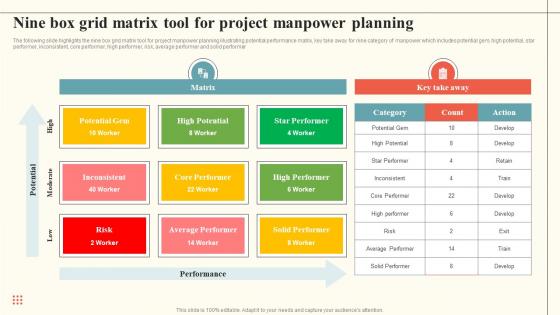
The following slide highlights the nine box grid matrix tool for project manpower planning illustrating potential performance matrix, key take away for nine category of manpower which includes potential gem, high potential, star performer, inconsistent, core performer, high performer, risk, average performer and solid performer.
People who downloaded this PowerPoint presentation also viewed the following :
Nine Box Grid Matrix Tool For Project Manpower Planning with all 6 slides:
Use our Nine Box Grid Matrix Tool For Project Manpower Planning to effectively help you save your valuable time. They are readymade to fit into any presentation structure.





FAQs for Nine Box Grid Matrix Tool For
So basically, the Nine Box Grid helps you map out where your team stands on performance vs potential. You plot everyone on this 3x3 chart - performance on one side, potential on the other. Makes succession planning discussions way easier since you can instantly see who's crushing it, who's promotion-ready, and who needs more support. Honestly, the best part is it forces those tough talent conversations you'd probably avoid otherwise. Plus resource decisions become crystal clear when you can actually visualize everything. Try it in your next talent review - game changer.
So the Nine Box Grid basically maps your people on performance vs potential - super helpful for spotting who's ready to move up. Obviously your top-right corner folks are your next leaders. But honestly? Don't ignore the high-potential people who might just be stuck in tough roles or need better coaching. You'll also catch your reliable performers who could grow more and figure out who's at risk of leaving (talented but underperforming). The best part is you can build specific development plans for each group instead of doing the same training for everyone.
So the Nine Box Grid maps performance against potential - those are your main axes. Performance is how well they're crushing their current job. Potential? That's whether they can handle bigger stuff down the road. Most companies stick with these labels, though some try to get creative with it. You plot everyone across both to get nine different buckets. Helps you spot your rockstars, your steady performers, and honestly, the people who might need a career pivot. The whole point is making those talent conversations way less awkward and more strategic.
So the Nine Box Grid is basically like having a cheat sheet for succession planning. You can instantly see who your star players are - the high performers with serious potential who should be first in line for promotions. It also shows you which people need more development time before they're ready to move up. Here's the thing though - you'll spot your flight risks too (those high performers who might bail if they don't see advancement). Makes those awkward leadership meetings so much smoother when you've got everything mapped out visually. Just use it to build development plans and set realistic timelines based on where everyone actually lands.
So basically they use this 3x3 grid thing - performance on one side (low to high) and growth potential on the other. Creates nine boxes total. Top right corner? That's your golden employees - high performers who can handle bigger roles. Bottom left is where the people who might get fired end up, honestly. The middle boxes are trickier though - could be someone who's solid but stuck, or maybe someone with tons of potential who just needs the right training. Most places do this once a year when they're figuring out promotions and who gets developed next. Pretty standard HR stuff.
Honestly, most people rush through the ratings and that's where things go sideways. Don't just look at what happened last month - recency bias is real and it'll mess up your whole assessment. Managers love dumping everyone in the middle because confrontation is scary, but that defeats the purpose entirely. Keep your criteria consistent across teams or the exercise becomes pointless. Oh, and this isn't something you do once and forget about it. People change, performance shifts. Regular calibration sessions with leadership help keep everything fair - otherwise you're just playing favorites without realizing it.
Oh yeah, the Nine Box thing works great for development stuff too! Instead of just performance reviews, flip those axes to something like "current skills" vs "how fast they learn" or "ready for promotion" vs "actually wants to grow." Way more useful honestly. My old team used it to spot people who needed bigger challenges versus the steady performers who'd crush a sideways move. Each box tells you what someone needs - mentoring, training, special projects, whatever. The trick is picking axes that actually matter for what you're trying to figure out. Makes the whole process way less generic.
Look, you really need that employee feedback before finalizing your Nine Box Grid placements. Get 360 reviews, peer input, self-assessments - the whole deal. Managers have blind spots (trust me on this one). You might think Sarah's crushing it when she's actually struggling, or miss that Tom's got serious leadership chops behind his quiet vibe. Don't just casually ask around though - make it structured so you're getting useful data. Otherwise you'll end up with a grid that looks good on paper but doesn't reflect reality. Been there!
Honestly, the Nine Box Grid is pretty smart because it makes you look at both how someone's performing now AND their growth potential - not just one or the other. So you're spotting people who can actually fill those leadership gaps down the road, not just your current rock stars. Performance matters, but so does whether they fit your company culture and can handle bigger challenges. I mean, what's the point of promoting someone who burns out in six months? Use it when you're planning succession stuff - it's like having a decent roadmap instead of just winging it and hoping for the best.
Totally works for remote teams! Actually might be even better in some ways. Performance data and potential assessments come through just fine via video one-on-ones and digital reviews. You do miss those random hallway moments where someone's leadership skills shine through - but honestly, scheduled check-ins can cover that gap pretty well. The main thing is being more deliberate about writing down what you notice since you're not watching people work up close every day. Perfect for virtual leadership meetings too when you're discussing where everyone lands on the grid and what development they need.
Big companies with clear promotion paths get the most out of Nine Box Grids. Consulting, tech, healthcare, finance - they all use them heavily. Works great when you've got structured ways people can move up. Retail chains are obsessed with these things too, which makes sense I guess. The whole point is spotting your top performers and future leaders across different teams or offices. Short sentences work. If you're constantly promoting from within or dealing with succession planning, the visual layout helps you avoid promoting someone who's terrible at managing people. Makes talent decisions way less messy.
Okay so for the Nine Box Grid to actually work, you need real data - not just manager opinions. Performance is easier: sales figures, project completion rates, goal achievement percentages. That stuff's black and white. Potential gets messier though. Look for leadership behaviors, how they adapt to change, learning speed, growth patterns over time. Don't fall into the trap most managers do - relying on gut feelings or whatever happened last week. Pull info from different sources and timeframes. Otherwise you're just guessing at people's careers, which is kinda scary when you think about it.
Honestly, the Nine Box Grid is a game changer for those awkward performance talks. You can literally point to where someone sits on the grid instead of giving vague "you're doing okay" feedback. Way less dancing around issues. It shows concrete next steps too - like whether they need to nail their current role first or if they're ready for bigger challenges. Makes career conversations feel less abstract, you know? I've seen managers struggle with this stuff for years, but having that visual framework just makes everything more straightforward. Both of you can actually see the path forward.
BambooHR and Workday are solid picks - they've got nine box templates that sync with your performance data automatically. Makes the whole plotting thing way less painful. 15Five's another good one. Honestly though? If you're just testing the waters, Excel works fine too. I mean, it's not fancy but it gets the job done. The fancy HR tools really pay off when you need historical tracking and automated review reminders. Some even do employee self-assessments which is pretty neat. Just pick whatever plays nice with your current review setup. You can always upgrade later once you figure out what you actually need.
Honestly, most places do it once a year during performance reviews and that works fine. But if you're dealing with major stuff - restructuring, new leadership, crazy growth - bump it up to every 6 months. I've watched companies use totally stale grids that made zero sense anymore, which is just pointless. You want these talent conversations based on what's happening now, not ancient history from last year's reviews. Short sentences work better anyway. Set a calendar reminder though - this stuff always gets forgotten otherwise.
-
What a stunning collection of customizable templates! Really a time-saver..
-
Excellent Designs.