


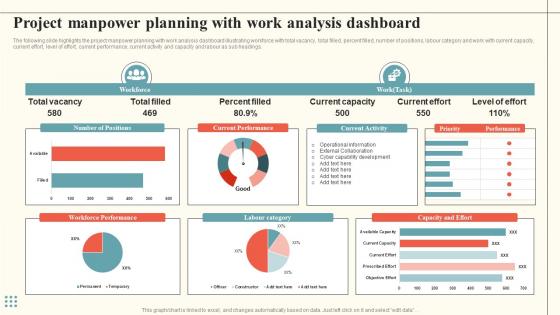
Project Manpower Planning With Work Analysis Dashboard




Try Before you Buy Download Free Sample Product
 Impress Your
 Audience
 100%
100% Editable
 Save Hours
 of Time


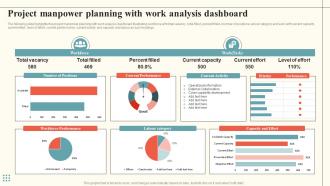
The following slide highlights the project manpower planning with work analysis dashboard illustrating workforce with total vacancy, total filled, percent filled, number of positions, labour category and work with current capacity, current effort, level of effort, current performance, current activity and capacity and labour as sub headings.
People who downloaded this PowerPoint presentation also viewed the following :
Project Manpower Planning With Work Analysis Dashboard with all 7 slides:
Use our Project Manpower Planning With Work Analysis Dashboard to effectively help you save your valuable time. They are readymade to fit into any presentation structure.





FAQs for Project Manpower Planning With
Start with workforce planning and performance management - you need the right people in the right spots. Skills development is massive too. Analytics will help you track productivity and spot gaps (which honestly happens more than you'd think). Employee engagement can't be ignored either - disengaged teams will tank your efforts fast. Technology integration matters for scheduling, communication, all that stuff. Oh, and automation tools can be game changers. I'd audit your current workforce data first, find your biggest headaches, then work from there. Much easier than trying to fix everything at once.
Honestly, the data will blow your mind when you see how your team actually works vs what you assumed. You'll catch bottlenecks you never noticed and figure out when people are actually productive (spoiler: it's probably not when you think). I'd start super simple though - maybe just track how long projects take or response times for like a month. The patterns that pop up help you predict when you'll need more people and spot skill gaps before they bite you. Plus you can optimize schedules based on real behavior instead of guessing. It's weirdly addictive once you start seeing the insights.
Honestly, engaged employees are like the secret sauce for everything else. You can't really optimize a workforce if people don't give a damn about being there. Think about it - engaged teams stick around longer, hit their targets, and actually want to be productive instead of just going through the motions. Plus they'll tell you what's really broken versus what management thinks is working. I learned this the hard way at my last job - we had all these fancy metrics and scheduling tools, but half the team was mentally checked out. Made everything pointless. Get your people invested first, then worry about the rest.
Dude, start with whatever's driving you crazy first - like if scheduling is a nightmare, get software that handles shifts automatically. Time-tracking apps will save you from dealing with those messy paper timesheets (seriously, who has time for that?). Analytics platforms are pretty cool too - they'll show you weird patterns in how your team works or when people call out sick. HR systems make onboarding way less painful. Just don't go crazy buying a bunch of random tools that don't talk to each other. That'll create more headaches than you started with.
Look, you need both productivity and people stuff or you'll miss half the story. Revenue per employee and productivity ratios are obvious ones. Time-to-fill for hiring too. But here's the thing - if everyone's burnt out and quitting, those numbers don't mean much. So track satisfaction scores, retention rates, how people move internally. Training ROI matters if you're actually trying to build skills (not just checking boxes). I'd say pick maybe 5-7 metrics tops. Check them monthly. Just make sure they're not pushing people in weird directions you didn't intend.
Honestly, good training makes such a huge difference for efficiency. Your team gets way better at their jobs, makes fewer mistakes, and finishes stuff faster. I've seen it firsthand - when people know what they're doing, they don't need you hovering over them constantly. They can handle the tricky projects too. Here's the thing though: it has to actually match what they do day-to-day, not just some generic corporate module. People also stick around longer when you invest in them (shocking, right?). Confidence goes up, errors go down. It's pretty straightforward math.
Honestly, flexible work stuff usually works out pretty well. People are way more productive when they can work during their actual good hours instead of forcing the 9-to-5 thing. Retention goes up too - makes sense since nobody wants to deal with commuting every single day if they don't have to. Your team will probably feel more trusted, which is huge for morale. The trick is being super clear about expectations upfront. Don't go crazy right away though - maybe start with flexible hours before you do the whole remote thing. Communication becomes even more important but it's totally doable.
Honestly, the trickiest part is getting people to actually trust the process. Your teams will freak out thinking it means cuts or someone breathing down their necks - can't really blame them there. Leadership often won't back you up either, which is brutal. Data's another nightmare since workforce analytics only work if your numbers aren't complete garbage (spoiler: they usually are). Communication fails constantly too. People don't get why you're changing things. My advice? Start ridiculously small with pilot stuff and explain everything twice. Maybe three times.
Honestly, these tools are such a lifesaver because you can actually see who's swamped and who's got bandwidth. No more of those ridiculous email threads where everyone's like "I think Sarah might be free?" You'll spot bottlenecks right away and can shuffle work around to match people's skills and availability. The visibility is huge - stops you from burning out your star players while other people are sitting around. Oh, and definitely get everyone using a shared dashboard where they update their status. Trust me, you'll immediately see where things could run smoother.
Honestly, I'd start with just asking your current team what would make them want to stick around - then actually do something about it fast. Pay matters obviously, but clear growth paths are huge too. Skip the exit interviews (people are already checked out by then) and do regular check-ins instead. Promote internally when you can, give people real development opportunities, not just busy work. Oh and flexible work stuff - that's becoming non-negotiable for most people now. The whole "butts in seats" mentality is so outdated. One-on-ones work way better than those formal stay interviews everyone talks about.
Look, this is make-or-break stuff. If you don't connect your workforce strategy to actual business goals, you're basically setting money on fire. Leadership will axe the whole thing in six months when they don't see results. First step? Figure out your top 2-3 business priorities this quarter - cost reduction, better customer satisfaction, whatever. Then make sure every workforce decision you make actually supports those goals. I've seen too many teams optimize for random metrics that sound good but don't actually move revenue or profit. It's frustrating as hell when that happens.
Honestly, having different types of people on your team is like a cheat code for solving problems. Everyone attacks challenges differently based on their background - way more creative than when everyone thinks the same. Teams with variety catch stuff that others totally miss, both problems and opportunities. Oh, and it helps when you're trying to reach different customer groups too, obviously. The trick is actually using those different perspectives when you're planning, not just having them sit there. Sometimes I think companies forget that part. Different viewpoints really do make your whole optimization game stronger.
Honestly, just start by figuring out what skills each role actually needs vs what people have now. Surveys work great for this - most folks know their own weak spots if you ask directly. Manager feedback during reviews is clutch too. I'd probably tackle one department first instead of trying to do everything at once (learned that the hard way). Performance data tells you a lot. Don't just focus on today's needs though - think about where the business is heading in the next year or two. Way better than just winging it and hoping for the best.
Honestly, your leaders make or break this whole thing. If they're not actually using data to make decisions, why would anyone else? The good ones celebrate when someone finds a better way to do stuff, even tiny improvements. They also don't freak out when you question the current process - that psychological safety thing is huge. But here's what kills me - so many leaders say they want innovation then micromanage every single step. You can't have both! Give people clear goals and let them figure out smarter ways to get there. Ask your leadership: do we reward efficiency as much as hitting our numbers?
So basically AI digs through all your workforce data and figures out staffing patterns - like when you'll need more people, who's got the right skills for what projects, that kind of thing. Pretty neat actually, since manually tracking all those seasonal trends and performance metrics would take forever. It can spot skill gaps way before they bite you and suggest whether you should train people up or hire new folks. Oh, and the real-time schedule optimization is honestly a game changer. You'd start by feeding it solid data about your current team and just let it learn your company's rhythms for a few months.
-
SlideTeam is a great place for PPT templates. They have many templates on a single topic. It has made my life a lot easier.
-
I can say with full confidence that all your business, academic, or professional work requirements will be sufficed with SlideTeam. Their gallery is as rich as 2Million+!!