

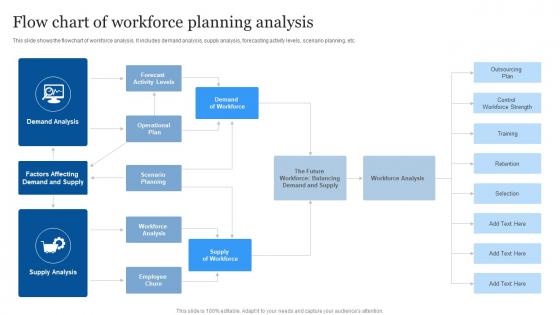
Flow Chart Of Workforce Planning Analysis




Try Before you Buy Download Free Sample Product
 Impress Your
 Audience
 100%
100% Editable
 Save Hours
 of Time


This slide shows the flowchart of workforce analysis. It includes demand analysis, supply analysis, forecasting activity levels, scenario planning, etc.
People who downloaded this PowerPoint presentation also viewed the following :
Flow Chart Of Workforce Planning Analysis with all 6 slides:
Use our Flow Chart Of Workforce Planning Analysis to effectively help you save your valuable time. They are readymade to fit into any presentation structure.





FAQs for Flow Chart Of
So you'll want to start with workforce analysis - check out your current team's skills, ages, how they're performing. After that, try forecasting what you'll need based on where the business is heading. Fair warning though, this feels like total guesswork half the time! Gap identification comes next - basically what's missing between now and later. Then build plans for hiring, training, keeping people around. Oh, and succession planning too. The whole thing only works if it actually connects to business goals, otherwise you're just playing with spreadsheets for fun. Honestly? Start with one department first.
Honestly, data analytics is a game-changer for workforce stuff. You'll finally see actual patterns instead of just guessing - like when people usually quit, what skills you're missing, when to start hiring. My old boss used to just wing it with Excel sheets from 2019 (nightmare). But when you track the right metrics consistently, even basic ones, trends pop up that you totally missed before. The best part? You can break it down by team or location to get super specific. Short version: ditch the gut feelings, trust what your numbers are actually showing you.
Honestly, tech is a game-changer for workforce planning stuff. AI tools can predict staffing needs and spot skill gaps way faster than doing it by hand. Some platforms are crazy accurate now - they'll analyze your historical data, market trends, performance metrics, all that. Plus they can even flag who might quit soon, which is wild. Start with whatever data you've got already, then find analytics platforms that play nice with your current HR systems. The predictions alone will save you so much headache down the road.
Start with your big picture goals and work backwards - where do you want the company in 3-5 years? Then figure out what talent gaps exist between now and then. Most companies totally skip this part and just hire when they're desperate, which gets expensive fast. Build out a few different scenarios based on possible outcomes, like expanding internationally or whatever. Oh, and make sure HR and leadership actually talk about this regularly. I've seen too many places treat it like some annual checklist item they forget about until next year.
Track both leading and lagging stuff to get the whole picture. Time-to-fill, retention by department, internal mobility rates - that kind of thing. Oh, and skill gap assessments are huge. I'd definitely measure succession planning coverage too, like what percentage of critical roles have people ready to step up. Don't get obsessed with just headcount though. Quality matters way more than quantity, so track engagement scores and how new hires are actually performing. Honestly, start with maybe 3-4 metrics that actually tie to your business goals, then build from there once you've got those dialed in.
Look, workforce planning basically lets you see turnover coming before it hits. Track your exit data and you'll start noticing patterns - like which departments are bleeding people or what roles are constantly turning over. Most managers have zero clue how screwed they'd be if key people bounced tomorrow (seriously, ask yours). So start building succession plans now. Cross-train your team, keep potential hires warm, and actually know who could step up if someone leaves. My advice? Begin tracking turnover by department and role. Way better than scrambling every time someone puts in notice.
Honestly, data gaps are your biggest nightmare - half the departments don't track what they should. Then executives decide to pivot strategy like every month, which makes forecasting feel pointless sometimes. Budget cuts always hit at the worst times too. What's helped me: get tight with department heads so you hear about changes before they're "official." Multiple scenarios are a lifesaver - I do optimistic, realistic, and "oh crap" versions. Better tracking tools are worth fighting for in the budget. Keep your hiring timelines loose because you'll need to adjust constantly. Communication is everything when things shift.
Yeah, so workforce planning is totally different depending on your industry. Tech moves crazy fast - skills become outdated like every two years, and everyone's fighting over the same developers. You've gotta constantly retrain people or you're screwed. Healthcare is the opposite though. Takes forever to train a nurse, so they're planning way ahead. Can't just suddenly decide you need more doctors next month, you know? Manufacturing is all about having backup people ready for those super specialized jobs. Retail's just trying to figure out how many bodies they need for Black Friday. Honestly, just look at how long it takes to get someone job-ready in your field and work backwards.
So talent acquisition is basically how you execute your workforce planning. You're identifying skill gaps and headcount needs during planning, but TA actually fills those spots with real people. Here's the thing though - if your TA process sucks or moves too slowly, your whole workforce plan falls apart. Projects get delayed, you miss deadlines, and all those hiring timelines you mapped out? Totally useless. Bad hires make it even worse later on. My advice: get your TA team involved early in workforce planning. They can start building candidate pipelines before you're desperately scrambling to fill roles.
Honestly, you've gotta bake diversity into your hiring plans from day one - not tack it on later. Set actual targets for each department and track them like revenue or whatever else you obsess over. Most teams I know treat D&I like some nice-to-have thing, then act shocked when nothing changes. Partner up with diverse professional groups and universities to widen your talent pool. Don't forget about prepping diverse internal people for leadership roles too. Oh, and make it systematic with real numbers. Otherwise you're just crossing your fingers and hoping.
Honestly, cross-training is your best friend here - get people comfortable jumping between 2-3 roles with just basic training. Mix up your workforce too - don't rely only on full-time staff. Contractors and temps give you way more flexibility when things get crazy. Data skills are absolutely everywhere right now, so definitely prioritize those in your learning programs. Oh, and succession planning for key positions is clutch. I'd also build solid relationships with recruiting agencies for when you need to scale fast. The whole trick is anticipating skill gaps instead of scrambling later. Way less stressful that way.
First thing - dig into your current workforce data. Skills, ages, when people quit, retirement dates, all that stuff. Then match it up with where your business is heading over the next few years. Market trends matter too since external stuff can totally wreck your internal plans (learned that the hard way). Statistical modeling helps, but honestly? Talk to department heads who actually know where things break down. They'll give you the real story. Factor in automation and how skill needs are shifting. Oh, and don't try to boil the ocean - pick one department first, test your model, then expand once you've figured out what works.
Look, training your current people instead of always hiring from outside just makes sense. You save money and stop good employees from leaving for better opportunities elsewhere. Map out what skills you'll need in the next few years, then figure out how to get your team there. Start with a skills audit - see what everyone can do now vs what you'll actually need down the road. Honestly, most people are dying for chances to grow anyway, so you're killing two birds with one stone. Build programs around those future gaps before they become real problems.
So basically you want to build succession planning right into your regular workforce stuff. Map out which roles would totally screw you over if someone left tomorrow - we've all been there when the only person who knows the system quits! Then figure out who internally could potentially step up. I'd make it part of your yearly planning cycle so you're always developing people instead of panicking later. The whole point is treating it like ongoing talent development rather than just "oh crap, we need a replacement." Honestly, most companies wait until it's too late.
Start with getting leadership on board first - that's crucial. Then have managers explain it to their teams since they know how to frame it best. Be super clear about WHY you're doing workforce planning and how it ties to business goals. People hate being kept in the dark, honestly. Mix up your communication too - town halls, team meetings, emails, whatever works. Tell them what's changing, when it happens, and how it hits them personally. Oh and definitely make room for questions! The rumor mill's gonna run wild if you don't, so treat this like an ongoing conversation instead of just dumping info on people.
-
SlideTeam was so customer-centric and quick service-provider that I doubted the amount I was paying and literally re-checked the transaction.
-
The service is fast, and I could access any presentation after buying the subscription. I don’t think I’ll ever have to worry about a presentation in my life.