


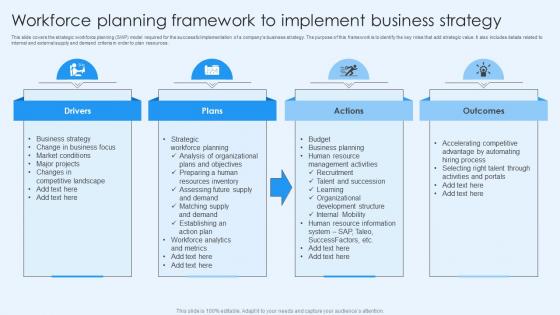
Workforce Planning Framework To Implement Business Strategy




Try Before you Buy Download Free Sample Product
 Impress Your
 Audience
 100%
100% Editable
 Save Hours
 of Time


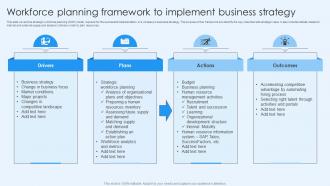
This slide covers the strategic workforce planning SWP model required for the successful implementation of a companys business strategy. The purpose of this framework is to identify the key roles that add strategic value. It also includes details related to internal and external supply and demand criteria in order to plan resources.
People who downloaded this PowerPoint presentation also viewed the following :
Workforce Planning Framework To Implement Business Strategy with all 6 slides:
Use our Workforce Planning Framework To Implement Business Strategy to effectively help you save your valuable time. They are readymade to fit into any presentation structure.





FAQs for Workforce Planning Framework To
Honestly, break it down into four chunks: figure out what roles you'll need (demand forecasting), see where your current talent gaps are, do some scenario planning, and map out succession for key people. The forecasting bit is a total pain because everything changes so quickly now. I'd start by looking at your current team against where the business is heading, then spot the skill gaps and hiring needs. Oh, and definitely don't skip succession planning - learned that the hard way when our VP quit with zero notice last year. Maybe test it out with just one department first? Way easier than trying to do everything at once.
Honestly, data analytics is a game-changer for workforce planning. Instead of guessing when you'll need more people, you can actually look at hiring patterns and turnover rates from the past. Seasonal stuff becomes super obvious too. The coolest part? Predictive modeling helps you see resignations coming before they happen. You can spot skills gaps early by tracking performance and project demands - way better than flying blind. I'd start simple though, just collect basic headcount and turnover data first. Once you see those trends, everything clicks into place and planning gets so much easier.
Honestly, tech has completely changed how companies plan their workforce these days. Analytics tools can predict staffing needs and spot skill gaps before they become problems. Your HR platform probably already does scenario planning - like "what happens if we open that new office?" or tracking upcoming retirements. I mean, it beats the old days of just winging it with spreadsheets. The turnover forecasting stuff is pretty wild too. You'd be surprised what insights your current system might already have buried in there. Data-driven beats guesswork every time.
Honestly, most people tackle this completely wrong - they just look at current gaps instead of thinking ahead. Start with where your company's actually going in the next few years, then figure out what skills and roles you'll need to get there. Like, if you're doing digital transformation, you probably need more tech people. Expanding into new markets? Different leadership skills. Map that stuff out first. Build your hiring and training plans around those specific needs. Oh, and definitely review this every quarter because priorities change way faster than anyone expects. Trust me on that one.
Honestly, I'd start by digging into your past hiring data - when did you hire most? What's your turnover looking like? Seasonal stuff too. Chat with department heads about what's coming down the pipeline - new projects, expansions, whatever. Skills gaps are really where you'll find the gold though. Map what you have now against what you'll actually need. Oh, and definitely do some scenario planning because let's be real, nothing ever goes according to plan! Best case, worst case, the usual drill. A basic spreadsheet tracking this quarterly will get you going - no need for anything fancy at first.
Skill mapping shows you what talent you've got vs what you actually need - super helpful for workforce planning. You'll spot skill gaps early, find people ready for promotions, and know where training money should go. Think of it like a GPS for your team's abilities. Honestly beats the hell out of guessing! Otherwise you're planning blind and scrambling later when critical roles open up. Oh, and you might miss good growth opportunities too. Start by checking what skills your current team has, then compare that against where you want to go strategically.
Honestly, the worst part is demand forecasting - it's like throwing darts blindfolded half the time. Skills gaps will kill you too, plus there's never enough budget for what you actually need. Turnover prediction? Good luck with that mess. What's saved me though: pull data from everywhere instead of just winging it. Upskill people you already have rather than hiring constantly. Oh, and build wiggle room into your headcount plans because things change fast. Start planning way earlier than feels necessary - most people wait until they're already behind and then it's just chaos mode.
Look, workforce planning is like having a heads up for staffing issues before they smack you in the face. You analyze your current team against where the business is heading, right? That way you spot gaps early and can start hiring or training people ahead of time. Same thing with having too many people - you'll see it coming and can move folks around or pump the brakes on recruiting. Way less stressful than that "oh shit we're drowning" moment when you're already short-staffed. Just gotta actually do the analysis regularly instead of winging it.
Honestly, the gig economy throws your whole workforce planning out the window. You can't just count on full-timers anymore – now you're juggling permanent staff, contractors, freelancers, all sorts of different arrangements. Makes forecasting a total nightmare compared to before. Traditional models assume people stick around, but these days talent flows in and out based on whatever project you've got going. You'll need better tracking systems for different worker types and their costs. Plus planning for when you suddenly need specific skills fast. First step though – actually audit how much of your team is already non-traditional. Bet it's more than you think.
Look, you gotta bake those diversity targets right into your workforce planning from day one. Audit where you're at now, then set real goals for each department and level. Partner with HBCUs and women's groups to build your pipeline – I've watched too many companies just wing it and fail miserably. Review your promotion criteria too because unconscious bias is probably lurking there. Track everything like you would any other metric. Oh, and don't treat D&I like some side project you'll get to later. That approach literally never works.
Okay so you definitely want a mix of the predictive stuff and the after-the-fact numbers. Time-to-fill is huge - tells you if your pipeline's working. Then track retention rates, internal mobility, and skills gap assessments. Bench strength matters too (how many people are actually ready for promotions). But honestly? Employee engagement scores are probably the most valuable thing you can measure. They're like a crystal ball for turnover. Oh, and don't go crazy with metrics - pick 3-4 that match your biggest headaches and check them quarterly. That's enough to catch problems before they blow up.
Honestly, succession planning should just be baked into how you look at your talent pipeline. Map out who's retiring when and which roles are make-or-break for your company. Then figure out who internally could handle those jobs. Cross-training and stretch assignments are your best friends here - gives people real experience before they need it. Don't wait until someone drops a resignation letter on your desk (learned that one the hard way). If you spot gaps early, you can either start recruiting or fast-track someone's development. Make it ongoing, not some annual panic session.
Honestly, agile workforce planning is a game-changer when everything's shifting constantly. Instead of those rigid headcount plans that become totally useless after six months, you can actually pivot fast. Market changes? New opportunities? You won't get stuck in bureaucratic hell trying to adjust. Short planning cycles beat those marathon year-long ones any day. The trick is building flexibility right into your strategy - scale up, down, whatever you need. Oh, and definitely start with your most business-critical roles first. That's where you'll see the biggest impact. Makes way more sense than trying to overhaul everything at once.
Be upfront about why you're making these decisions - employees want to know how it affects their careers and job security. Show them actual paths for moving up and learning new skills. Town halls are fine, but honestly? Small team meetings work way better because people actually speak up and ask real questions. Your managers need to know how to have these conversations too - that's where trust really happens. Oh, and this is crucial - if you promise training or new positions, you better deliver on schedule. Nothing kills credibility faster than missed commitments around people's careers.
Get stakeholders involved from day one - waiting for a perfect plan is pointless. Map out who really matters: department heads, HR, finance, plus those frontline managers who actually know what's happening daily. Regular check-ins beat one-off meetings since workforce needs shift constantly. Share your data openly, but honestly? Half the magic happens when you just get everyone together talking about what's coming. Ask for their input on priorities instead of dumping conclusions on them. Oh, and give them specific tasks between meetings so they stay engaged.
-
The team is highly dedicated and professional. They deliver their work on time and with perfection.
-
Enough space for editing and adding your own content.