


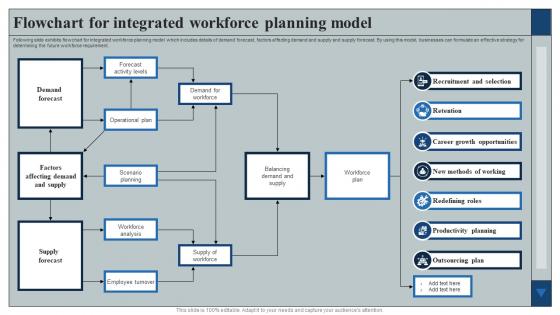
Flowchart For Integrated Workforce Planning Model




Try Before you Buy Download Free Sample Product
 Impress Your
 Audience
 100%
100% Editable
 Save Hours
 of Time


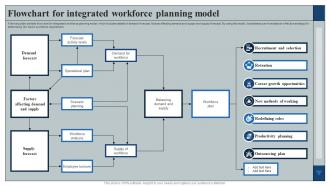
Following slide exhibits flowchart for integrated workforce planning model which includes details of demand forecast, factors affecting demand and supply and supply forecast. By using this model, businesses can formulate an effective strategy for determining the future workforce requirement.
People who downloaded this PowerPoint presentation also viewed the following :
Flowchart For Integrated Workforce Planning Model with all 6 slides:
Use our Flowchart For Integrated Workforce Planning Model to effectively help you save your valuable time. They are readymade to fit into any presentation structure.





FAQs for Flowchart For Integrated
So workforce planning is basically four main things: aligning with business goals, forecasting what talent you'll need, analyzing what you currently have, and figuring out the gaps. Honestly, it's like chess but with people instead of pieces! Map your current team against upcoming projects first - that shows you exactly where you're short. Then do some scenario planning for different business outcomes. I always think the forecasting part is the trickiest because who really knows what's happening six months out? But yeah, once you spot the gaps you can plan for hiring, training, or reshuffling people around.
So basically all that tedious number crunching gets automated, which is honestly a lifesaver. You'll get real-time insights into where your workforce gaps are - way better than drowning in Excel spreadsheets. Predictive analytics helps forecast what skills you'll need down the road. AI can actually spot internal people who'd be good fits for roles. The dashboards these days are pretty sleek too. Machine learning catches patterns you'd miss, like which positions always become bottlenecks or where succession planning sucks. I'd start by checking your current tech stack first - see where your biggest data silos are hiding.
Start with your big picture business goals and figure out what people you'll actually need to hit them. Like if you're expanding into new markets, what skills does that require? How many bodies? Don't let HR handle this in isolation - that's where companies mess up. Get leadership and department heads in the same room regularly. Look at your 3-5 year plan and work backwards from there. What talent gaps do you have? When do you need to hire or train people? I know it sounds obvious, but most places treat their workforce like a reactive expense instead of actually planning for it strategically.
So basically, data analytics takes workforce planning from wild guessing to actually knowing what you're doing. Historical data shows you turnover patterns and where skill gaps are forming - super helpful for predicting hiring needs based on growth. Honestly, you probably have tons of useful info just sitting in your payroll and HR systems already (most companies do and don't even realize it). Analytics tells you if your strategies are working or if you're wasting money. I'd start simple: grab headcount, turnover, and performance data first. That alone will show you what's really happening with your team.
So workforce planning is like having a heads up on what talent you'll need down the road. You can spot skill gaps early instead of panicking when Bob from accounting suddenly quits. Map out where your business is going in 2-3 years, then figure out what roles you'll actually need to get there. Build development programs around those gaps. Time your hiring better too - no more desperate job postings at 11pm (been there). It shifts everything from reactive scrambling to actually having a plan. Way less stressful honestly.
Data silos are gonna be your biggest headache - HR, finance, and ops all use different systems and speak different languages basically. Getting clean data that actually aligns? Good luck. Then there's the political mess of managers who don't want to share their precious workforce insights. Classic corporate turf protection, which honestly never gets old. Most places also don't have people who can actually make sense of integrated workforce data once you get it. Start with just one department though. Prove it works there first, then slowly expand while you're building those cross-department relationships. Way less painful that way.
Honestly, demographic shifts mess with your entire talent strategy. You'll be scrambling when half your team retires and you haven't planned replacements. Different generations want completely different things too - boomers vs Gen Z expectations are night and day. The work-life balance thing alone is crazy different between age groups. Start mapping out who's retiring when, then figure out what skills you're losing. Your recruiting needs to shift based on this data. Oh, and don't forget training programs - younger hires often need different development paths than what worked before. It's basically rebuilding your people strategy from scratch.
Track leading and lagging indicators to get the full picture. Start with time-to-fill, internal mobility rates, and succession pipeline strength. Employee turnover's obvious but also look at talent bench strength - how many people you've got ready for key roles. Skills gap analysis is huge too. Honestly, workforce cost per employee matters more than people think. Don't just focus on effectiveness without watching efficiency. I'd pick maybe 3-4 metrics that match your biggest headaches first, then add more later. Oh, and productivity metrics help tie everything back to actual business impact.
Look, you've gotta stop treating HR, finance, and operations like separate kingdoms - they need to share data and actually talk to each other. Map out what skills you have now versus what you'll need down the road. Invest in some decent analytics tools so you can spot talent gaps before they bite you. Cross-functional teams should meet regularly to plan this stuff out together. Honestly, most companies are terrible at this because everyone's protecting their turf. Build talent pipelines that can flex when business changes. Real-time visibility into market shifts is crucial - you can't pivot if you're flying blind.
Honestly, you can't plan workforce stuff in silos anymore - it's a mess waiting to happen. I've seen finance planning cuts while operations thinks they're scaling up. Total disaster. Get HR, finance, and ops talking to each other regularly so everyone knows what's actually happening. Regular cross-functional meetings are your best bet here. Each department needs to share their goals and constraints upfront, not as an afterthought. Otherwise you're missing huge pieces of the puzzle and making decisions with incomplete info. It sounds boring but those planning sessions will save you so much headache later.
So basically, workforce planning lets you compare what skills your team has now against what you'll need down the road - like 6-18 months out. Think of it as spotting problems before they bite you. When you map everything out, the gaps become super obvious. Then you've got options: train your current people, hire new ones, or honestly sometimes just rearrange roles completely. Way better than panicking when someone quits right before a big project launches (been there!). The whole point is getting ahead of it instead of always playing catch-up.
Honestly, getting HR and finance to actually collaborate is step one - way harder than it sounds though. Use real data for workforce predictions instead of just winging it. Connect everything back to business strategy so the C-suite gets why this matters. I'd probably start with scenario planning too, like what happens if we grow 20% vs stay flat? Build in review cycles every quarter or so. The trick is making this cross-departmental, not just HR doing their own thing. Oh and definitely pilot with one team first - less messy that way. Once you've got some wins, rolling it out company-wide becomes way easier.
Look at your current team data first - skills gaps, who's retiring when, where you're growing. Most people totally ignore turnover patterns but they're super helpful. Map out future roles against tech changes and market shifts that could kill jobs or create new ones. Economic stuff and industry disruptions matter too, obviously. Here's the thing though - don't build just one forecast. Create different scenarios: best case, worst case, realistic case. When things go sideways (and they will), you'll actually be ready. Oh, and update everything quarterly or you'll be working with garbage data.
Honestly, diversity makes workforce planning so much messier - but in the best way possible. Different groups have totally different career paths and retention rates, so your old models basically become useless. I remember when our team first started segmenting data by demographics... mind blown by the patterns we found. You can't just assume everyone wants the same advancement timeline or mentoring style. Some people need way more support early on. Others take longer to hit their stride but stick around forever. The trick is building in flexibility from the start instead of trying to force everyone into the same box.
Honestly, integrated workforce planning is a game-changer for keeping people around. You're basically showing employees you actually care about their career growth instead of just plugging holes when someone quits. Map out where your team wants to be in a few years, then figure out what skills they'll need to get there. This way you can create real development opportunities before people start updating their LinkedIn profiles (which we all know is a bad sign). The whole thing works backwards from their goals - super simple but makes such a difference for retention.
-
“Immediate response, professional support, and effective solutions that were customized and immediately provided. Well done- Thank you!”
-
SlideTeam is my one-stop destination for templates. Highly recommended!