


Nestle Organization Structure With Reporting Nestle Strategic Management Report Strategy SS





Try Before you Buy Download Free Sample Product
 Impress Your
 Audience
 100%
100% Editable
 Save Hours
 of Time


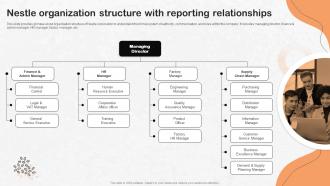
This slide provides glimpse about organization structure of Nestle corporation to understand the formal system of authority, communication, and roles within the company. It includes managing director, finance and admin manager, HR manager, factory manager, etc.
People who downloaded this PowerPoint presentation also viewed the following :
Nestle Organization Structure With Reporting Nestle Strategic Management Report Strategy SS with all 6 slides:
Use our Nestle Organization Structure With Reporting Nestle Strategic Management Report Strategy SS to effectively help you save your valuable time. They are readymade to fit into any presentation structure.





FAQs for Nestle Organization Structure With Reporting Nestle Strategic Management
So Nestlé basically works in three layers. Global HQ in Switzerland does the big picture stuff and strategy calls. Below that are regional zones - Americas, Europe, Asia Pacific, etc. Makes total sense honestly since managing everything from one spot would be chaos. Each zone handles the actual country operations where the real work happens daily. Oh and they split things by product lines too - coffee, nutrition, pet food, whatever. My advice? Figure out which zone AND product category you need before reaching out. Trust me, it'll prevent you from getting bounced around between departments forever.
Basically Nestlé groups all the marketing people together, R&D folks together, etc. Works pretty well actually - everyone gets super specialized at their thing without random distractions. Kinda like having pit crews but for business functions, which sounds weird when I say it out loud lol. No duplicate work since each team owns their slice. Decisions happen faster within departments too. Resource allocation gets cleaner. Honestly if you're thinking about restructuring your team, those clear functional boundaries could really help streamline things. Just something to consider!
So Nestlé splits into regional divisions to stay relevant locally while keeping that massive global reach. Each region gets to make their own calls on products, marketing, partnerships - but they still answer to corporate for the big picture stuff. Think about it - KitKat tastes completely different in Japan than here, right? That's because their regional teams actually understand what people want. Smart move honestly, since they can jump on local trends fast but still use the company's huge supply chain. Oh and if you're ever dealing with them, figure out which regional division first - saves you headaches later.
So Nestlé actually restructured their whole setup for this - they've got a Chief Sustainability Officer who reports straight to the CEO. Plus every business unit has their own sustainability teams now. What's smart is they tied executive pay to environmental goals, so people actually care. Each region has sustainability leads too. Honestly, it's way better than the old days when companies just had some random green department tucked away somewhere. Now it's built into manager performance reviews and everything. If you're dealing with them, just heads up - sustainability stuff will definitely come up in regular meetings. They treat it like any other core business thing.
So Nestlé's got this decentralized thing going that actually works pretty well for innovation. Local teams can pivot fast when they need to adapt stuff for different markets. Meanwhile their big R&D centers handle the heavy-duty tech breakthroughs. They're also doing the startup partnership thing and running those accelerator programs - which honestly feels like everyone's playbook now but whatever. The matrix setup lets divisions share knowledge without getting bogged down in bureaucracy. Short version: they balance local freedom with centralized innovation support, and it's a solid model if you're studying org design.
So Nestlé basically keeps everyone connected through their internal platforms and tons of video calls between regional managers. They've got these shared workspaces where teams can collaborate on stuff. What's actually clever is how they rotate executives between different markets - gives leaders real experience in various regions instead of just reading reports. Quarterly business reviews are where all the major markets get together and sync up. Oh, and they're pretty structured with their communication flows, though you can still reach regional experts directly when needed. Works well for a company that massive, honestly.
Oh yeah, Nestlé's matrix thing definitely boosts cross-team work since you're juggling both product lines and regions at once. Like a KitKat manager in the US suddenly finds themselves on calls with European supply chain people - wild, right? Multiple bosses can be confusing as hell though. The cool part is you get way more perspectives than usual. Projects end up being more interesting because you're grabbing insights from different markets and functions. Pro tip: sort out who's doing what upfront or it'll be chaos.
So Nestlé gives their regional teams tons of freedom for day-to-day stuff - marketing campaigns, tweaking products for local markets, that kind of thing. Regional managers can act fast without calling Switzerland every time (thank god, right?). But the heavy-hitter decisions? Acquisitions, major brand moves, financial goals - that's all corporate. Working with them means quick turnarounds on smaller projects. Just don't expect the same speed when headquarters needs to sign off. Oh, and their size actually works in their favor here since they can't micromanage everything anyway.
Honestly, Nestlé's main problem is just being way too huge - like, they're in 180+ countries which sounds impressive but creates a nightmare for getting stuff done. Communication takes forever, cultural differences mess up product launches, and don't even get me started on how slow decisions become with all those management layers. They're always caught between keeping things consistent globally vs. what local markets actually want. Quality control becomes a joke when you're spread that thin, and sharing knowledge between regions? Good luck with that. The whole thing's a constant balancing act - restructuring every few years trying to stay big but not sluggish.
So Nestlé basically lets their local teams run the show instead of micromanaging from corporate. Regional leaders get way more freedom than you'd expect - honestly feels rare for such a huge company. Local teams can pivot fast without waiting months for approval from Switzerland, which breeds this entrepreneurial vibe. The trade-off though? Getting everyone aligned across different markets becomes a nightmare sometimes. If you're thinking about copying their approach, the real trick is letting people make decisions locally while still keeping your brand consistent globally. Takes some finesse but works.
So Nestlé's really good at growing people internally - they've got this whole cross-functional rotation thing going where you bounce between different markets and divisions. Pretty cool setup honestly. Their mentorship networks are solid too, connecting people across regions which is huge for a company that size. Each market gets its own leadership development programs but everyone still follows the same core values. Oh and their internal job portal is actually worth checking out (rare for big companies lol). I'd definitely reach out to people in different divisions early if you're thinking about it.
So Nestlé basically lets their regional managers make decisions without waiting for headquarters approval - which is genius honestly. Different markets get different product tweaks and pricing based on what people actually want locally. Way better than those slow corporate giants that need 6 months to change anything. Their teams can pivot in weeks when competitors do something or regulations shift. Oh and they still keep the brand consistent globally somehow, which seems tricky but whatever. It's a solid case study if you're looking at how companies stay flexible while being massive.
So Nestlé breaks into product divisions - beverages, dairy, pet care, all that stuff. Smart move honestly because each team can focus on their own market without getting bogged down by other departments. The coffee people don't have to wait around for baby food approval, you know? Decision-making stays quick that way. They can customize pricing and strategies for each category but still benefit from being part of a huge company. Oh and if you're dealing with them, figure out which division first - they're pretty independent from each other so it matters.
So Nestlé doesn't treat tech as this separate IT department thing - they weave it into everything. Each business unit and region has their own digital teams working right alongside operations and marketing. They call it "digital acceleration" or whatever, but basically tech drives all their big decisions now. Supply chain, consumer research, product dev - it's all tech-heavy. What's smart though is they don't just force global solutions everywhere. Local markets get their own tech budgets to customize stuff for their specific needs. Pretty solid approach honestly - global standards but with room to adapt locally.
Nestlé's "glocalization" approach is actually pretty brilliant - they let regional teams tweak products for local markets while keeping the brand consistent worldwide. Their matrix setup works well for this. They also rotate managers between different countries and use lots of cross-functional teams, which honestly seems like a pain but builds up that institutional knowledge. The trick for you guys would be figuring out what decisions really need to go through corporate versus what your local people can just handle themselves. Start there and see how it goes.
-
The PPT layout is great and it has an effective design that helps in presenting corporate presentations. It's easy to edit and the stunning visuals make it an absolute steal!
-
You know what? I'm so glad I opted for this PPT design. It has been a total game-changer for me and my presentations. Thank you!