

Netflix Blue Ocean Strategy Powerpoint Presentation Slides Strategy CD V





Try Before you Buy Download Free Sample Product
 Impress Your
Audience
 100%
Editable
 Save Hours
of Time


The blue ocean strategy is a business strategy that assists organizations in creating new market spaces blue oceans rather than competing in existing ones red oceans. Grab our well thought out Netflix Blue Ocean Strategy template. It focuses on value innovation principles that emphasize the creation of unique value propositions and accomplishes this by combining and optimizing the value and differentiation factors. Our Blue Ocean Shift tool and framework deck assist firms in comprehending and navigating the transition from red to blue oceans. The strategy canvas and PMS map help organizations visualize and analyze their current strategy. The Buyer Utility Map and Four Action Framework aid in identifying value innovation opportunities. Additionally, The ERRC grid and Value Proposition Canvas aid businesses in understanding and communicating their distinct value proposition. Our Blue Ocean PPT contains The Sequence of Creation, which outlines the steps in creating a blue ocean. It also promotes the Strategy Fair and encourages collaboration and experimentation. Furthermore, our Blue Ocean leadership styles module incorporates Mind Map techniques for successful implementation. Finally, the Blue Ocean SWOT and Blue Ocean Balanced Scorecard evaluate a companys blue ocean strategy in depth. Get immediate access.
People who downloaded this PowerPoint presentation also viewed the following :
Content of this Powerpoint Presentation
Slide 1: This slide introduces Netflix Blue Ocean Strategy. State your company name and begin.
Slide 2: This slide depicts the Agenda of the presentation.
Slide 3: This slide shows Table of Content for the presentation.
Slide 4: This slide highlights the Title for the Topics to be covered further.
Slide 5: This template covers introduction of blue ocean strategy.
Slide 6: This template showcases the comparison between red ocean strategy and blue ocean strategy.
Slide 7: This template covers 8 principles of blue ocean strategy for minimizing risks and maximizing opportunities.
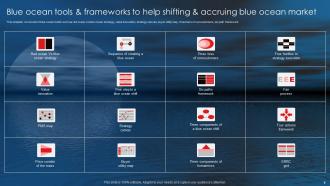
Slide 8: This template contains a list of blue ocean toolkit such as red ocean vs blue ocean strategy, value innovation, strategy canvas, etc.
Slide 9: This slide presents the Heading for the Contents to be discussed next.
Slide 10: This template reveals the reason to shift from market competition to market creation.
Slide 11: This slide delas with the Strategic benefits of shifting towards blue ocean market.
Slide 12: This slide lists the Five steps of making blue ocean shift.
Slide 13: This slide highlights the Three key components of a successful blue ocean shift.
Slide 14: This slide mentions the Three components of humanness.
Slide 15: This slide focuses on the Key challenges that can occur while shifting towards blue ocean.
Slide 16: This slide represents the Title for the Ideas to be covered in the upcoming template.
Slide 17: This template covers the blue ocean strategic framework for the company.
Slide 18: This slide Underlines the core values, features or utility of products or services deliver to the buyer.
Slide 19: This template exhibits the strategy canvas framework.
Slide 20: This template illustrates the PMS map for corporate management team pursuing profitable growth and to plot the company’s current and planned portfolios.
Slide 21: This template incorporates the six stages of the buyer utility map with utility levers.
Slide 22: This slide reveals the Heading for the Ideas to be discussed next.
Slide 23: This template summarizes the distinct characteristics of competing in red oceans (Red Ocean Strategy) versus creating a blue ocean (Blue Ocean Strategy) based on industry, strategic group, buyer group/ target segments, etc.
Slide 24: This slide highlights the Title for the Components to be discussed next.
Slide 25: This template illustrates the ERRC grid framework.
Slide 26: This template shows details on Netflix company that created an uncontested marketplace using blue ocean strategy.
Slide 27: This template details on Uber company that created an uncontested marketplace using blue ocean strategy.
Slide 28: This template covers details on Airbnb company that created an uncontested marketplace using blue ocean strategy.
Slide 29: This template presents analytic framework such as three tiers of noncustomers.
Slide 30: This template focuses on the price corridor tool that can be used by managers to determine the right price to unlock the mass of target buyers.
Slide 31: This template displays the Profit model for blue ocean strategy.
Slide 32: This slide incorporates the Heading for the Topics to be discussed next.
Slide 33: This template states the Sequence of creating blue ocean flowchart.
Slide 34: This template indicates E’s fair process is a concept that builds execution into strategy by creating people’s buy-in up front.
Slide 35: This slide shows the Title for the Topics to be covered further.
Slide 36: This template deals with the Tipping point leadership in blue ocean strategy.
Slide 37: This template covers a tipping point leadership mind map.
Slide 38: This slide focuses on Using blue ocean leadership to connect the market.
Slide 39: This template incorporates blue ocean leadership that involves a four-step process.
Slide 40: This template shows the leadership ERRC analytic tool.
Slide 41: This slide elucidates the Heading for the Components to be covered in the following template.
Slide 42: This template contains the As-Is Leadership Canvas.
Slide 43: This slidee illustrates the As-Is-To-Be Leadership framework.
Slide 44: This slide exhibits the Title for the Topics to be discussed next.
Slide 45: This template elucidates a tool to estimate the cost of disengaged employees in your organization.
Slide 46: This slide focuses on the Four hurdles to strategy execution.
Slide 47: This slide highlights the Heading for the Ideas to be covered in the forth-coming template.
Slide 48: This slide deals with Using blue ocean with existing strategic planning model.
Slide 49: This template covers company’s strategic SWOT (strengths, weaknesses, opportunities, and threats) analysis to identify and analyze company's competitive position and to develop strategic planning.
Slide 50: This slide provides information on Using blue ocean + balanced scorecard with existing strategic planning model.
Slide 51: This slide contains the Title for the Ideas to be discussed further.
Slide 52: This slide illustrates the Blue ocean strategy flowchart for the organization.
Slide 53: This template covers summary of blue ocean strategy for company.
Slide 54: This slide contains all the icons used in this presentation.
Slide 55: This slide is titled as Additional Slides for moving forward.
Slide 56: This slide describes Line chart with two products comparison.
Slide 57: This is Our Mission slide with related imagery and text.
Slide 58: This is Our Target slide. State your targets here.
Slide 59: This slide contains Puzzle with related icons and text.
Slide 60: This is a Timeline slide. Show data related to time intervals here.
Slide 61: This is an Idea Generation slide to state a new idea or highlight information, specifications etc.
Slide 62: This slide shows Post It Notes. Post your important notes here.
Slide 63: This slide shows Circular Diagram with additional textboxes.
Slide 64: This is a Thank You slide with address, contact numbers and email address.
Netflix Blue Ocean Strategy Powerpoint Presentation Slides Strategy CD V with all 69 slides:
Use our Netflix Blue Ocean Strategy Powerpoint Presentation Slides Strategy CD to effectively help you save your valuable time. They are readymade to fit into any presentation structure.










FAQs for Netflix Blue Ocean Strategy Powerpoint Presentation Slides
Netflix nailed it by ditching everything annoying about Blockbuster - late fees, driving to stores, movies being out of stock. Going digital slashed their costs big time. But here's where it gets smart: they didn't just copy the old model. Binge-watching became this whole cultural thing (honestly still can't believe how addictive that autoplay button is). Their algorithm actually knows what you want to watch, plus they've got exclusives you can't stream anywhere else. If you're doing any subscription business, don't try beating competitors at their own game. Make them irrelevant instead.
Netflix got smart and basically said "screw licensing other people's shows" - they started making their own stuff like House of Cards and Stranger Things. That was genius because now they're not just a platform, they're a whole studio. The other big thing? They use all your viewing data to recommend shows that'll actually hook you. Traditional TV can't do that personalized stuff at all. Oh and they went global with local content in different countries, which gave them this huge diverse library. Instead of just competing with cable companies, they completely changed what streaming could be by mixing tech with original content creation.
So Netflix basically said "screw competing with regular TV" and made their own game instead. They dumped billions into exclusive shows you can't get anywhere else - pretty ballsy move honestly. While other companies were fighting over the same content and jacking up prices, Netflix just... opted out of that whole mess. Their data lets them create super targeted stuff too, which cable could never pull off. Now they're not just distributing content, they're making it. Smart because it makes traditional competition kinda irrelevant. For your business, think about creating something so unique that competing becomes pointless.
So Netflix basically stalks our viewing habits - they track when you pause, binge, or bail on shows halfway through. Wild, right? All that data helps them predict what we'll want next and what shows to actually make. That's how they knew "Stranger Things" would be huge before filming even started. For your content stuff, just start tracking how your audience engages with what you put out. Even simple metrics can guide your next moves way better than guessing. Oh, and apparently they even know when you rewind scenes - kinda creepy but brilliant.
Dude, Netflix used to have the streaming game to themselves, but now everyone's jumped in. Disney+, HBO Max, Apple TV+ - they're all doing the exact same thing with exclusive shows and monthly subscriptions. It's getting brutal out there. Content costs are going crazy while Netflix is losing subscribers to these new players who keep stealing their shows. Honestly, the whole "streaming wars" thing is pretty wild to watch unfold. They're scrambling now, betting big on international stuff and those weird interactive episodes. Smart move though - gotta find new territory before this turns into a total bloodbath.
Netflix basically pulled a genius move with their global expansion. Instead of trying to beat local TV stations at their own game, they created something completely different - personalized streaming that traditional broadcasters couldn't touch. The really smart part? They didn't just dump American content everywhere. Each region got heavy investment in local originals while keeping that tech edge. Honestly, it's like they made competition irrelevant instead of fighting it head-on. That's the playbook right there - find uncontested space rather than slugging it out in crowded markets.
Netflix basically lives or dies by innovation - the streaming wars are brutal. Their recommendation algorithm is honestly creepy good at knowing what you'll watch next, which keeps people from canceling. They're always experimenting too - new content types, features, even tweaking their whole business model. What's smart is they never stop. Most companies innovate once then get comfortable, but Netflix treats it like their daily routine. Oh, and their original content strategy was genius - suddenly they weren't just licensing shows, they were creating must-watch stuff. For your strategy stuff, make innovation a regular thing, not some quarterly project.
Netflix basically locks down creators like Shonda Rhimes and Ryan Murphy so you can't watch their stuff anywhere else. Smart move, right? Instead of just buying old shows, they're making it harder for you to cancel because where else are you gonna get that content? HBO Max sure doesn't have it. The whole thing turns famous directors into business weapons against competitors. For your own company - think about what exclusive partnerships would make customers stick around. Though honestly, I'm still mad they lost The Office to Peacock.
Honestly, Netflix should get way more creative with their pricing instead of just those three boring tiers they have now. Think content-specific bundles or family plans that actually make sense. Usage-based pricing for people who barely watch? Yes please. Regional pricing could work too - or maybe combo deals with other services. The whole point is making customers feel like they're getting something cable can't touch. I mean, nobody wants to feel like they're just picking the cheapest option, right? They want something that feels designed for them specifically.
Netflix basically said "screw competing with Blockbuster" and built something totally different. While Blockbuster was obsessing over store locations and late fees, Netflix focused on convenience and letting people binge-watch from home. Smart move, honestly. You should think about what annoys everyone in your industry - then just eliminate that problem completely. Don't try beating competitors at what they're already good at. Create something new that makes the old way look stupid. It's way more effective than price wars or whatever.
Dude, Netflix is scary good at reading you. They track literally everything - when you pause, what time you binge, your weird viewing habits. It's kinda creepy but also impressive? The way you can seamlessly switch between devices is clutch though. Start something on your laptop, finish on the couch without losing your spot. No ads to kill the vibe, episodes autoplay, you can even skip intros. They've basically removed every excuse to stop watching. It's designed to be addictive and honestly... it works way too well.
So Netflix is basically genius at this - they turned all of us into their free marketing team without us even realizing it. Every time you post about a show or share those memes, you're doing their promotion work for them. Remember when Wednesday had everyone doing that dance? That wasn't paid advertising, just people going crazy on social media. Netflix watches what we talk about online and uses it like market research to figure out what shows to make next. Pretty smart honestly - they get buzz, data, and content ideas all from our conversations. Way cheaper than traditional ads too.
Netflix has to dig deeper into weird niches and global content while getting even better with their personalization stuff. Look at how Squid Game blew up - that's them nailing hyperlocal content that somehow hits worldwide. Their algorithm is already pretty good at finding underserved audiences, then creating shows just for them. Interactive content is where they should go harder too, since traditional studios are still scared of that format. Oh, and watch their gaming push - honestly think that's their real test run for whatever's next before Disney and everyone else figures it out.
So Netflix is doing some pretty smart stuff right now. They're going heavy into interactive content - remember *Black Mirror: Bandersnatch*? That blew my mind. Gaming's another big push, plus they're trying live programming to steal viewers from regular TV. But honestly, the smartest move is their global approach. Shows like *Squid Game* and *Money Heist* prove you can make super local content that somehow works everywhere. They're not just fighting other streaming services anymore. It's more about inventing completely new ways to watch stuff. Pretty genius if you ask me.
Netflix basically said "screw competing with cable networks for the same shows" and went after stuff nobody else cared about. They grabbed international rights and global licensing deals while everyone was focused elsewhere. Smart move, honestly. Plus they used actual data to pick content instead of just guessing what people wanted - revolutionary concept, right? Look at how they snagged "Peaky Blinders" internationally. They built their library without getting into expensive bidding wars. It's textbook Blue Ocean strategy but actually executed well for once.
-
Eye-catching PPT designs, outstanding team, and best customer service. I’m a super satisfied customer here!
-
I was confident and well prepared for my presentation for the first time ever. With SlideTeam’s templates, I could deliver one of my best presentations. Will be coming back for more!