


Innovative Marketing Strategies For Tech Startup Powerpoint Presentation Slides Strategy CD V
Every marketer needs a set of both digital and traditional strategies to promote their startup. A marketing plan is an advertising strategy used by startups to sell their products or services to a target audience. Check out our professionally designed Innovative Marketing Strategies for Tech Startup template. Through it, businesses can increase brand awareness, boost web traffic, improve customer retention rate, and enhance sales. Our startup marketing agency deck initially shows an overview section covering vital components such as trends, statistics, challenges, and solutions. It then highlights the target market analysis section startups can successfully develop marketing communication strategies. Afterwards, our digital marketing for startups PPT caters to digital marketing, like influencer marketing, social media marketing, email marketing and search engine optimization SEO, etc. Following that, through the cost effective traditional marketing strategies section, new businesses can contact local communities and target specific customers. Lastly, through key performance indicators KPIs and analytics dashboards, startups can measure the impact of marketing strategies on business performance. Download our 100 percentage editable and customizable template, which is also compatible with Google Slides.















































You must be logged in to download this presentation.


Do you want to remove this product from your favourites?
 Impress your
 audience
 100%
100% Editable
 Save Hours
 of Time
PowerPoint presentation slides
Deliver this complete deck to your team members and other collaborators. Encompassed with stylized slides presenting various concepts, this Innovative Marketing Strategies For Tech Startup Powerpoint Presentation Slides Strategy CD V is the best tool you can utilize. Personalize its content and graphics to make it unique and thought-provoking. All the seventy nine slides are editable and modifiable, so feel free to adjust them to your business setting. The font, color, and other components also come in an editable format making this PPT design the best choice for your next presentation. So, download now.

People who downloaded this PowerPoint presentation also viewed the following :
Content of this Powerpoint Presentation
Slide 1: This slide introduces Innovative Marketing Strategies for Tech Startup. Commence by stating Your Company Name.
Slide 2: This slide depicts the Agenda of the presentation.
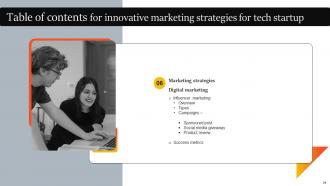
Slide 3: This slide includes the Table of contents.
Slide 4: This is yet another slide continuing the Table of contents.
Slide 5: This slide highlights the Title for the Topics to be discussed further.
Slide 6: This slide portrays the Overview and benefits of using marketing for startup.
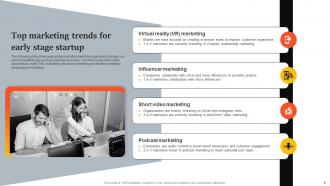
Slide 7: This slide showcases global marketing trends through which startups can gain competitive edge and upscale their business.
Slide 8: This slide displays the Latest statistics associated with startup marketing.
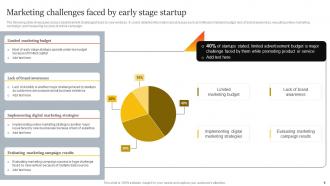
Slide 9: The following slide showcases various advertisement challenges faced by new ventures.
Slide 10: This slide reveals the multiple solutions to address different issues faced by early-stage startups.
Slide 11: This slide includes the Heading for the Contents to be covered in the forthcoming template.
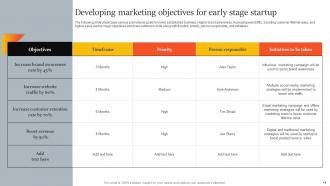
Slide 12: This slide deals with Developing marketing objectives for early stage startup.
Slide 13: This slide contains the Title for the Ideas to be discussed in the upcoming template.
Slide 14: The following slide showcases five-step process to successfully create target market for early-stage startups.
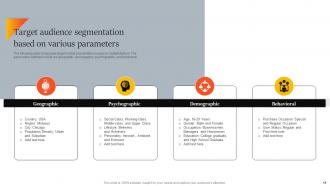
Slide 15: This slide states the target market segmentation based on multiple factors.
Slide 16: This slide displays the Semi fictional representation of customer persona for startups.
Slide 17: This slide depicts the Heading for the Ideas to be covered in the following template.
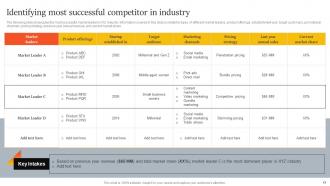
Slide 18: The following slide showcases the most successful market leader in XYZ industry.
Slide 19: This slide focuses on Analyzing market leader website to understand web traffic.
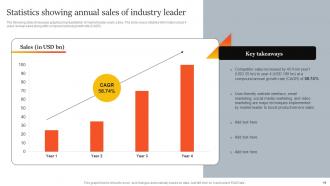
Slide 20: The following slide showcases graphical representation of market leader yearly sales.
Slide 21: This slide reveals the Title for the Contents to be further discussed.
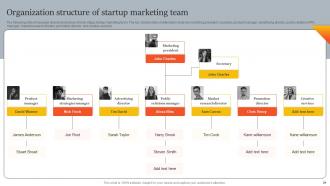
Slide 22: The following slide highlights the divisional structure of early-stage startup marketing team.
Slide 23: This slide showcases responsible, accountable, consulted, and informed (RACI) framework outlining major roles and responsibilities of marketing ream.
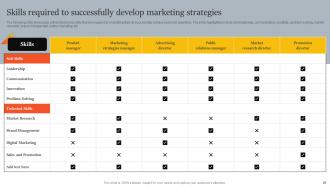
Slide 24: This sldie displays the showcases soft and technical skills that are required by marketing team to successfully achieve business objectives.
Slide 25: This slide states the Heading for the Topics to be covered in the next template.
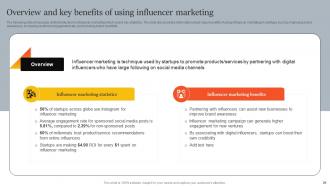
Slide 26: This slide portrays the Overview and key benefits of using influencer marketing.
Slide 27: The following slide showcases comparative analysis of various digital influencers such as nano, micro, macro, and mega.
Slide 28: This slide presents the Introduction to various influencer marketing campaigns.
Slide 29: The following slide showcases sponsored post-campaign through which marketers can increase customer engagement rate and boost conversions.
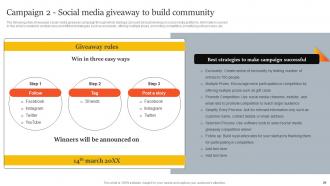
Slide 30: This slide covers social media giveaway campaign through which startups can build strong following on social media platforms.
Slide 31: This slide outlines the product review campaign that can assist new ventures to boost customer trust and strengthen brand credibility.
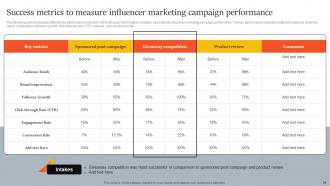
Slide 32: This slide shows the Success metrics to measure influencer marketing campaign performance.
Slide 33: This slide displays the Title for the Topics to be discussed in the following template.
Slide 34: This slide highlights the Overview and key benefits of using social media marketing.
Slide 35: This slide deals with Selecting the most popular social media channels for startups.
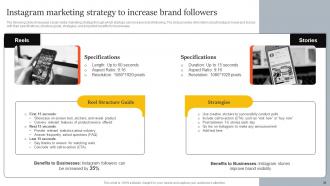
Slide 36: The following slide showcases social media marketing strategy through which startups can increase brand following.
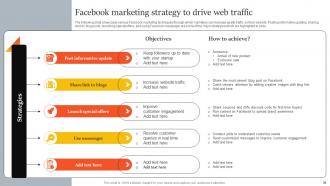
Slide 37: This slide talks about the Facebook marketing strategy to drive web traffic.
Slide 38: The following slide states YouTube marketing techniques that can assist new firms in improving their digital presence.
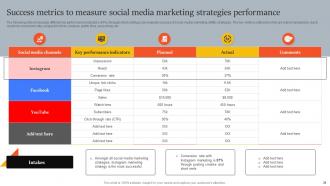
Slide 39: This slide highlights the Success metrics to measure social media marketing strategies performance.
Slide 40: This slide exhibits the Heading for the Contents to be covered next.
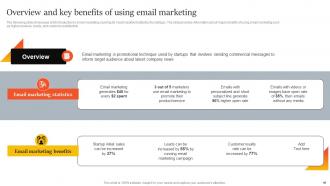
Slide 41: The following slide showcases brief introduction to email marketing covering its most important statistics for startups.
Slide 42: This slide displays the Email marketing strategies for higher open rate.
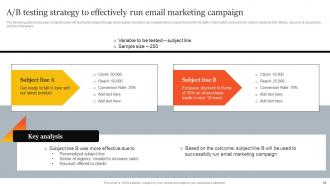
Slide 43: This slide talks about A/B testing strategy to effectively run email marketing campaign.
Slide 44: The following slide showcases ideal day and time to successfully run email marketing campaign to generate higher return on investment (ROI).
Slide 45: This slide reveals the Email marketing campaign to maximize leads.
Slide 46: This slide exhibits the Success metrics to measure email marketing campaign performance.
Slide 47: This slide highlights the Title for the Ideas to be discussed in the upcoming template.
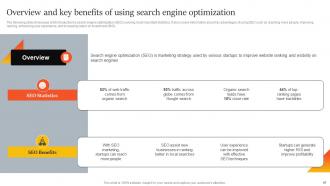
Slide 48: This slide portrays the Overview and key benefits of using search engine optimization.
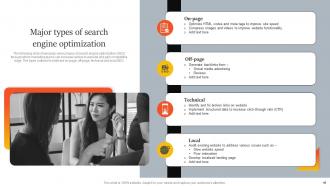
Slide 49: This slide states the Major types of search engine optimization.
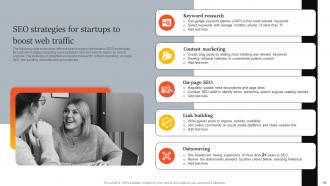
Slide 50: This slide depicts the SEO strategies for startups to boost web traffic.
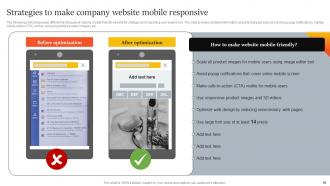
Slide 51: This slide presents the Strategies to make company website mobile responsive.
Slide 52: This slide displays the Success metrics to measure SEO marketing strategies performance.
Slide 53: This slide incorporates the Heading for the Ideas to be covered next.
Slide 54: This slide shows the Overview and key benefits of using traditional marketing strategies.
Slide 55: This slide talks about the Guerilla marketing campaign for startup growth.
Slide 56: This slide deals with Implementing flash sale strategy to gain new customers.
Slide 57: This slide depicts the Loyalty program to improve customer engagement.
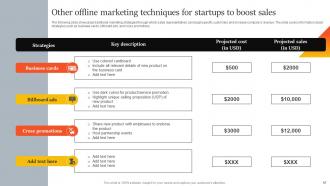
Slide 58: This slide states the Other offline marketing techniques for startups to boost sales.
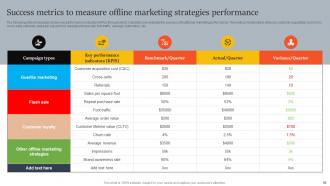
Slide 59: This slide exhibits the Success metrics to measure offline marketing strategies performance.
Slide 60: This slide includes the Title for the Contents to be discussed in the following template.
Slide 61: The following slide showcases monthly roadmap to successfully develop online and offline marketing strategies for new businesses.
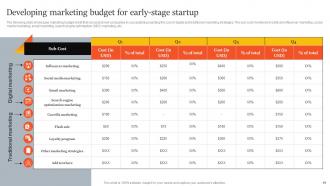
Slide 62: This slide focuses on Developing marketing budget for early-stage startup.
Slide 63: This slide exhibits the Heading for the Topics to be covered in the following template.
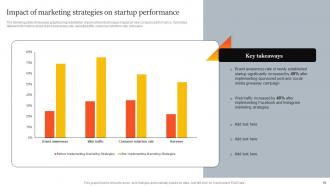
Slide 64: This slide highlights the Impact of marketing strategies on startup performance.
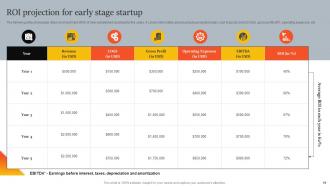
Slide 65: The following slide showcases return on investment (ROI) of new established business for five years.
Slide 66: This slide indicates the Title for the Topics to be discussed next.
Slide 67: This slide shows the Digital marketing dashboard with customer acquisition cost.
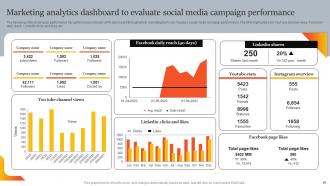
Slide 68: This slide displays the Marketing analytics dashboard to evaluate social media campaign performance.
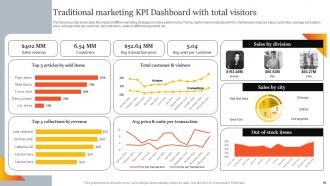
Slide 69: This slide exhibits the impact of offline marketing strategies on store performance.
Slide 70: This is the Icons slide containing all the Icons used in the plan.
Slide 71: This slide is used for depicting some Additional information.
Slide 72: This slide elucidates information related to the Financial topic.
Slide 73: This is the Quote slide for motivation.
Slide 74: This is the Idea generation slide for encouraging fresh ideas.
Slide 75: This is the 30,60,90 days plan slide for effective planning.
Slide 76: This is the Magnifying glass for minute details.
Slide 77: This slide represents the organization's Roadmap.
Slide 78: This is the Venn diagram slide.
Slide 79: This slide portrays the firm's mission, Vision, and Goal.
Slide 80: This is the Thank You slide for acknowledgement.
Innovative Marketing Strategies For Tech Startup Powerpoint Presentation Slides Strategy CD V with all 84 slides:
Use our Innovative Marketing Strategies For Tech Startup Powerpoint Presentation Slides Strategy CD V to effectively help you save your valuable time. They are readymade to fit into any presentation structure.
-
The visual appeal of the templates is just unparalleled! I was so worried about the design of my presentation but SlideTeam made it all so easy.
-
“Thank you to the SlideTeam. Your presentations look really skillful and have made my life so much easier.”
