


Nonverbal Communication Types And Activity Training Ppt




Try Before you Buy Download Free Sample Product
 Impress Your
 Audience
 100%
100% Editable
 Save Hours
 of Time


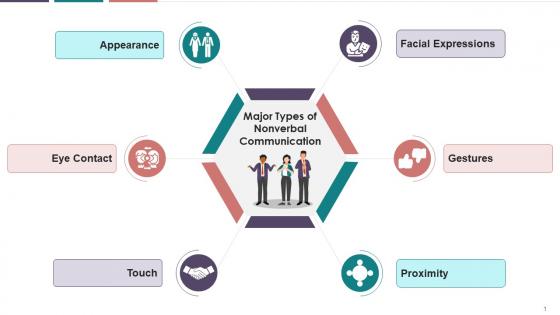
These slides in-depth cover the major types of nonverbal communication such as facial expressions, gestures, proximity, touch, eye contact, and appearance. It also includes guess the initial mood activity for nonverbal communication training.
People who downloaded this PowerPoint presentation also viewed the following :
Content of this Powerpoint Presentation
Slide 1
This slide highlights the major types of nonverbal communication such as facial expressions, gestures, proximity, touch, eye contact and appearance.
Slide 2
The purpose of this slide is to provide information regarding facial expression, a type of nonverbal communication. It also visually showcases universal facial expressions of anger, happiness, surprise, disgust, sadness, and fear.
Slide 3
This slide indicates the details of gestures as a type of nonverbal communication. It also highlights the common gestures such as waving, pointing, and using fingers and hands.
Slide 4
The purpose of this slide is to provide information regarding proximity in nonverbal communication. It also includes information regarding the four zones of proximity which are intimate, personal, social, and public.
Slide 5
The purpose of this slide is to provide information regarding touch in nonverbal communication. It also includes information regarding the appropriate touch behavior such as a pat on the back, handshakes, and a hug.
Slide 6
This slide provides an overview of the significance of eye contact in nonverbal communication.
Slide 7
This slide highlights the role of physical appearance in nonverbal business communication.
Slide 8
This slide list down the directions for guess the initial mood activity for the training session. It also explains the instructions that are essential for conducting the activity successfully.
Instructor’s Notes:
Observations:
- This activity helps demonstrate an essential point on how to understand the body language
- As soon as we see a person, we scan their body language to establish their mood
Nonverbal Communication Types And Activity Training Ppt with all 24 slides:
Use our Nonverbal Communication Types And Activity Training Ppt to effectively help you save your valuable time. They are readymade to fit into any presentation structure.







FAQs for Nonverbal Communication Types And
Dude, body language literally makes or breaks presentations. I've watched amazing speakers bomb just because they looked terrified up there. Stand up straight and actually look at people - not just one spot in the back of the room. Use your hands when you talk, but don't go crazy with it. If you're pumped about your topic, let it show on your face! Your body needs to match what you're saying. Oh, and definitely practice in front of a mirror first. You'll catch weird habits you didn't know you had. Trust me on this one.
Ugh honestly your face can totally sabotage what you're trying to say. Like if you're giving someone praise but look irritated? They'll believe the annoyed expression every single time. I've definitely bombed presentations where my nerves showed even though I knew my stuff cold. But when you actually look enthusiastic about what you're saying, people buy into it way more. The trick is just making sure everything matches up. I know it's awkward, but try practicing in front of a mirror or filming yourself - you'll catch those weird disconnects you didn't even know you were doing.
Okay so cultural background totally changes how people read body language. Eye contact is huge in Western cultures but can come off as rude elsewhere. Same with personal space - what feels normal to you might make someone uncomfortable. Gestures mean different things too, which honestly caught me off guard when I traveled last year. Your posture, how you use touch, even staying quiet can send mixed signals. Don't assume your habits work everywhere. Watch how others act and adjust. It's like everyone's playing by slightly different rules.
Okay so gestures are honestly huge for presentations - way more than people think. Open body language and purposeful hand movements make you look confident and credible. But here's the thing: if you're doing weird repetitive stuff or your hands don't match what you're saying, that's all anyone will notice. I learned this the hard way during a college presentation where I kept doing this awkward finger-pointing thing. Practice a few moves beforehand. Don't overthink it though - being natural beats looking like a robot every time.
Ugh, the worst thing you can do is avoid eye contact - makes you look sketchy honestly. Also don't be a statue behind the podium or fidget like crazy. Stand with feet shoulder-width apart. Use your hands to make points but don't go overboard. Look at different parts of the room, not just that one person nodding at you lol. Oh and seriously - stop clicking pens or jingling change in your pocket! Super distracting. Practice in front of a mirror first. I know it feels weird but you'll catch the nervous habits before they embarrass you.
Ok so eye contact is huge - makes you look way more confident and people actually trust you more. Instead of seeming like you're just reading off notes, they feel like you're talking directly to them. I do this "lighthouse" thing where you slowly look around the room and make eye contact with different people for like 2-3 seconds each. Don't stare though, that gets weird fast lol. Honestly it's probably the biggest game-changer for presentations once you get comfortable with it. You'll want to practice beforehand so it doesn't feel forced when you're up there.
Honestly, posture is huge - people judge you before you even open your mouth. Stand tall with shoulders back and you'll look like you know what you're talking about. Slouching just makes everyone think you're nervous or unsure about your stuff. I bombed my first big presentation partly because of this! Don't go full military though, that's weird too. Just find that middle ground where you're straight but not stiff. Distribute your weight evenly and keep your spine relaxed. Here's the cool part - when you look confident, your audience actually starts feeling more confident about what you're saying too.
Oh totally! The whole space thing is way more important than people think. Like, whoever sits at the head of the table will absolutely dominate the conversation - it's so predictable it's almost funny. Physical closeness does increase engagement, but it can get weird if people aren't comfortable with it. I always notice the quiet ones end up on the edges while the loud people gravitate toward center spots. Try circles instead of the usual conference setup next time. Sounds cheesy but it actually works - people participate way more when there's no obvious "power seat" to claim.
Don't focus on single gestures - look for patterns instead. Body language is your best bet: people leaning forward vs. slouching back tells you everything. Crossed arms = resistance, but open postures mean they're with you. I'm obsessed with watching faces, especially those split-second reactions before people control their expression. Eye contact's huge too - are they actually looking at you or scrolling their phones? Just remember different cultures interpret gestures differently, so don't assume. Pick a couple people as your "test audience" and check their vibe every few minutes.
Pauses are seriously underrated - they make people actually pay attention. When you say something important, just stop talking for like 2-3 seconds. I know it feels weird at first, but the silence makes everyone lean in. It's way better than filling gaps with "um" every two seconds. You can also use them when switching topics or if you totally blank out (happens to the best of us). Oh, and don't overdo the "so..." transitions either. Next time you're presenting, try pausing after your big points. Three seconds feels like forever but it really works.
OK so intentional cues are the ones you actually plan out - your hand gestures, pauses, moving around the room on purpose. The unintentional stuff? That's what happens when you're not thinking about it. Fidgeting, dodging eye contact, that weird laugh thing we all do when we're nervous (guilty!). Here's the thing - people notice both, but your nervous habits can completely undermine what you're trying to say. Practice your planned gestures until they feel normal, and honestly, just become aware of your weird quirks so you can catch yourself doing them.
Visual aids are basically amplifiers for all your gestures and body language. They give your hands something real to point at instead of just waving around randomly. People absorb visual stuff way faster than just listening anyway - like ridiculously fast compared to words alone. Your eye contact gets more strategic too since you're looking between the audience and your visual. But here's the thing - your slides or props need to actually match what your body's already doing. If they're fighting each other, it just looks weird and confusing.
Honestly, moving around actually helps keep people locked in. Walking with purpose or using hand gestures gives the audience something dynamic to watch - way better than just standing there like a statue. You can step closer when you're making a big point, or move to different spots when switching topics. Just don't do that weird pacing thing where you're walking back and forth constantly. That's so distracting lol. The trick is being intentional about it. Plant yourself when you want emphasis, then move when you need to wake the room back up or transition to something new.
Look, people judge you the second you walk in - it's honestly pretty shallow but that's just how it works. Dress like the most polished version of yourself for whatever setting you're in. Clean, well-fitted clothes that match (or go slightly above) what everyone else is wearing usually does the trick. You don't have to be the fashion police or anything, just look intentional about it. When you're dressed right for your crowd, they'll actually listen to what you're saying instead of getting distracted. It's annoying that first impressions matter this much, but might as well use it to your advantage.
Dude, reading the room is everything when you're presenting. Watch for confused faces or people scrolling their phones - that's your cue to switch gears or clarify something. Body language tells you who's actually interested vs. just being nice, which honestly helps tons for follow-ups later. Your own posture matters too - it makes you feel way more confident up there. I've watched so many presentations crash because the speaker totally missed that everyone was lost. Look for nodding, eye contact, how they're sitting. If you see confusion or pushback, just stop and ask what's up. Works way better than plowing ahead.
-
The team is highly dedicated and professional. They deliver their work on time and with perfection.
-
I want to express my gratitude to SlideTeam’s presentation design services team for helping me create the best presentation of my life!