


Difference Between Verbal And Nonverbal Communication Training Ppt




Try Before you Buy Download Free Sample Product
 Impress Your
 Audience
 100%
100% Editable
 Save Hours
 of Time


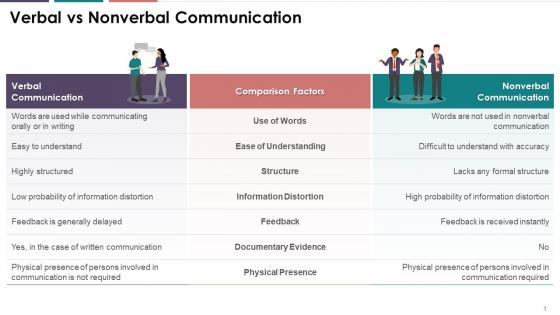
This slide illustrates the key difference between verbal and nonverbal communication. The multiple comparison factors used to differentiate are the usage of words, ease of understanding, structure, information distortion, feedback, documentary evidence, and physical presence.
People who downloaded this PowerPoint presentation also viewed the following :
Difference Between Verbal And Nonverbal Communication Training Ppt with all 17 slides:
Use our Difference Between Verbal And Nonverbal Communication Training Ppt to effectively help you save your valuable time. They are readymade to fit into any presentation structure.





FAQs for Difference Between Verbal And Nonverbal
Dude, your body language is doing like 55% of the talking - way more than actual words. I bombed so many presentations thinking I looked confident while fidgeting nonstop lol. When your posture and gestures match what you're saying, people actually trust you more. Eye contact is huge. Leaning in when someone's talking helps too. Open posture instead of crossing your arms - basic stuff but it works. Honestly, just pay attention to what your body's doing during important conversations. Your face and hands either back up your words or totally sabotage them.
Dude, visuals are a game changer! People remember like 65% more stuff when they can actually see it instead of just listening. Nobody wants to stare at walls of text - those presentations are brutal. Charts and images give people something to look at while you're talking, plus they're perfect for explaining complicated data that would sound confusing otherwise. I learned this the hard way after boring people to death with text-heavy slides. Just don't go overboard with fancy animations or whatever. Simple visuals that actually relate to what you're saying will make your points stick way better.
Honestly, just break stuff down into bite-sized pieces and use examples they already get. I know it sounds dumb, but I literally try explaining things like I'm talking to a middle schooler first - works every time. Lead with the big picture, then dive deeper if they need it. Concrete examples beat abstract concepts any day. Oh, and don't dump everything at once! Check in with "make sense?" before moving forward. Repeat important stuff in different ways too. Visual aids are clutch if you can swing it. Way better than just talking at someone for 20 minutes straight.
Your cultural background totally changes how you communicate. Some people are super direct, others hint at things and expect you to pick up on subtle cues. Eye contact, personal space, interrupting vs. waiting - it's all different depending on where you're from. I bombed my first international work call because I didn't get this! Now I try to watch how others communicate first. Short sentences, long pauses, formal or casual tone? You'll save yourself awkward moments if you don't assume everyone communicates like you do.
So basically verbal is just the actual words you're saying. Non-verbal is everything else - your face, how you're standing, tone, even awkward silences. But here's what's crazy - non-verbal stuff is like 55% of how people read you! Your body language literally matters more than your words. I learned this the hard way in job interviews honestly. You could say all the right things but if you're slouched over or avoiding eye contact, people won't buy it. They'll trust what your body's telling them over what's coming out of your mouth.
Look, when you actually listen - like really listen instead of just waiting to jump in - people notice immediately. They feel heard, which honestly makes such a difference. You'll pick up on stuff you'd normally miss too. Put your phone down and focus completely on what they're saying. Then try summarizing their point before you respond - trust me on this one, it works. Your follow-up questions get way better, and you avoid those cringe moments where it's obvious you zoned out. It's probably the easiest way to level up any conversation.
Honestly, just pick 2-3 tools and stick with them - don't go crazy with options. Slack's perfect for quick messages and keeping conversations organized by topic. Zoom calls are clutch when you need face time (makes everything less awkward tbh). Oh, and Loom is amazing for recording your screen when you need to explain something without scheduling another meeting. We use Notion for docs too but that might be overkill depending on your team size. The biggest mistake? Jumping between too many platforms. Start simple with what you've already got access to.
Honestly, most people suck at feedback because they're way too vague. Skip the "good job" stuff - be specific about what actually worked or didn't. Focus on what someone did, not their personality (that gets messy fast). When you're getting feedback? Don't get all defensive right away. Ask questions instead. I'd do regular quick check-ins rather than those awful annual review dumps. Makes it feel more like a normal conversation. Oh, and start with positive feedback first - builds up your confidence before tackling the harder stuff. Way less awkward that way.
Dude, stories are literally a game-changer for presentations. Instead of boring people with facts and bullet points, you're giving them something they can actually picture and remember. Think about it - would you rather sit through someone reading statistics, or hear about how they screwed up a project and what they learned? Pretty obvious choice. When you tell stories, people connect the dots to their own experiences. They're not just hearing your message, they're feeling it. Honestly, even a quick 30-second story at the beginning can completely change how engaged your audience is. Try it next time - you'll be shocked at the difference.
Look for the obvious stuff first - people looking confused after meetings, conversations that just keep looping, or when you explain something three times and still get blank stares. Language barriers are huge, but honestly? The worst ones are when people make assumptions about what everyone else already knows. My go-to fix is paraphrasing back what I think I heard. "So what you're saying is..." - works every time. Ask questions without making people feel dumb about it. Oh, and ditch the jargon when you can. Try that paraphrasing thing next time someone's not getting you. Game changer.
Three things that actually work: First, build some trust before jumping into your pitch. Find something you both care about or have in common. Then use examples or data that matter to *them*, not just what you think is cool. I'm terrible at this part honestly - I always lead with the stats I find fascinating instead of what they need to hear. Make your ask super specific too. Don't say "we should do better" - try something like "can we run this test for two weeks?" Way easier for them to say yes when it's concrete and low-stakes.
Honestly, emotional intelligence is a game changer for communication. You get so much better at reading people's moods - like when your boss is stressed or your friend seems off. Then you can adjust how you talk to them. I've definitely stuck my foot in my mouth before by not paying attention to the vibe! But when you're more aware of your own emotions too, you don't react as defensively. You learn to pick better timing for hard conversations instead of just blurting things out. Quick tip: always check where both of you are at emotionally before diving into serious stuff.
Okay so first thing - don't cram text everywhere. One main point per slide, that's it. Make your fonts big enough that someone in the back row can actually read them (you'd be surprised how many people mess this up). Skip the bullet point spam - I swear every corporate presentation does this and it's painful. Instead, throw in some good visuals or charts that actually add to what you're saying, not just repeat it word for word. Try to make it flow like you're telling a story rather than just rattling off facts. Oh, and practice how you move between slides beforehand so you're not awkwardly fumbling around during the actual thing.
Honestly, start with response times - how fast do people actually get back to each other? Also watch if your team's constantly asking "wait, what did you mean by that?" because that's usually a red flag. I'd probably track meeting effectiveness too (like, are you making real decisions or just talking in circles every week?). Survey people anonymously about feeling heard - you'll get way more honest answers. But here's what really matters: how fast does your team deal with problems? Good communicators don't let stuff fester. Pick one thing to track for a month and see what happens.
Honestly, empathy is like having superpowers in conversations. You start picking up on what people are *actually* feeling, not just their words. Then you can respond to what they really need to hear. I swear it makes such a difference - people open up more when they feel like you get them. Try pausing mid-conversation and asking yourself "what's going on beneath the surface here?" Works every time. You'll catch body language better too. Creates this whole vibe where people feel safe to be real with you, which is pretty rare these days tbh.
-
Editable, diversified, compatible with MS PPT and Google Slides, and on top of that finest graphics!! I mean in the words of the famous Ross Geller, “What more do you want!”
-
Mesmerized with the fantastic collection! Super sleek, relevant infographics.