

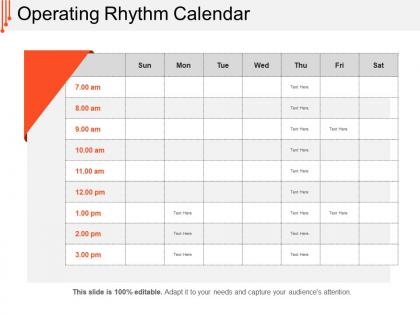
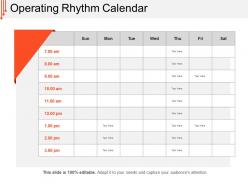
Operating rhythm calendar




Try Before you Buy Download Free Sample Product
 Impress Your
 Audience
 100%
100% Editable
 Save Hours
 of Time


Forge your ideas as you desire with our Operating Rhythm Calendar. It acts as an ideal anvil.
People who downloaded this PowerPoint presentation also viewed the following :
Operating rhythm calendar with all 5 slides:
Arguments become hard hitting with our Operating Rhythm Calendar. They get across your conviction.

FAQs for
Honestly, you need three things: regular meetings that actually happen, agendas people stick to, and follow-through (that last one's where most teams die). Map out daily standups, weekly syncs, monthly reviews - whatever fits your team. The trick is making it predictable so people aren't constantly wondering when stuff gets decided. I've watched so many companies just meeting about meetings with zero outcomes. Mix tactical stuff with bigger picture thinking. Start by looking at what meetings you already have, spot the gaps or weird overlaps, then build something simple that pushes decisions forward instead of just eating everyone's calendar alive.
Map out how your team's daily stuff actually connects to company goals - seriously, draw it out if you need to. Your weekly meetings should track metrics that matter to the business, not just stuff that makes you feel busy. Teams get stuck in their own little bubble all the time (honestly happens to everyone). Set up quarterly sessions where you step back and ask: is our routine actually moving the needle? The trick isn't treating business objectives like some separate thing - weave them into your regular rhythm so they're impossible to ignore.
Tech can totally save your sanity here. Set up dashboards so everyone sees what's happening in real-time instead of playing email tag. Project management tools keep meetings from going off the rails too. Honestly, automated reporting changed my life - no more scrambling to pull numbers together every week. Just make sure whatever you pick actually works together. Nothing's worse than having five different systems that don't talk to each other. Start with one good tool first, then add others that integrate well. You'll spend way less time hunting down updates and actually get stuff done.
Honestly? Connect it to what's already driving them crazy. Show how regular check-ins actually stop those awful last-minute scrambles that ruin everyone's plans. Nobody wants more meetings - I get that. But frame it like "this saves your evenings and weekends" instead of just another thing on their plate. Give them real examples of when things went sideways before because you didn't have rhythm. Run a pilot for maybe 6 weeks? The results will do the convincing for you. Way better than just telling people it'll work.
Honestly, most companies just go overboard right out the gate - cramming every meeting and dashboard they can think of into their schedule. Then everyone's exhausted and confused why. Also seen way too many teams become slaves to their calendar even when everything's on fire and priorities flip (which happens constantly, btw). The meetings turn into boring status reports instead of actually solving problems. Oh, and leaders are the worst offenders - they'll create all these rules then skip their own sessions. My advice? Start super basic. Pick like three key check-ins that actually matter. Get those running smooth first, then add more later.
Honestly, having set meeting times is a game changer - like every Tuesday for team sync, first Friday for monthly check-ins, that kind of thing. People actually show up prepared instead of scrambling. No more "uhh what were we doing again?" conversations that just waste everyone's time. You'll catch issues before they blow up too. I'd say start small though - maybe just one weekly meeting that's always same time, same basic format. Once that sticks, add more. The consistency is what makes it work, not having a million meetings right off the bat.
Track both leading and lagging indicators to see if your operating rhythm actually works. Meeting effectiveness matters - look at decision speed and whether action items get done. Also watch cycle times, stakeholder engagement scores, error rates. Most teams get obsessed with attendance numbers but totally miss the real outcomes, which drives me crazy. You want 4-6 solid metrics that show whether you're driving results or just keeping everyone busy. Start with whatever connects most to your business goals - customer satisfaction, time-to-market, resource use. Don't overthink it initially.
When everything's going crazy, you gotta speed up how often you're checking in with people. Monthly reviews? Forget it - make them weekly or even daily if things are moving fast. I learned this the hard way last year, honestly. Your quarterly planning is probably way too slow right now. The trick is keeping the same meeting structure you already have, just compress the timing. Same agendas, same roles, but way more frequent. It keeps everyone on the same page when nobody knows what's happening next. Double your current meeting schedule first, then adjust based on what actually works.
Yeah so your operating rhythm literally becomes your culture - that's just how it works. Like, forget whatever's in the handbook. Look at your actual meetings, how decisions get made, when people check in with each other. That rhythm either builds trust and alignment, or it creates total chaos. I've watched teams completely flip just by fixing this stuff. Map out what you're doing now - all your meetings, update processes, decision points. Then honestly ask yourself: is this creating the culture you want? Because whatever rhythm you have now is reinforcing certain behaviors, whether you realize it or not.
Honestly, you've gotta make everything super visible since you can't just glance over at people's desks anymore. Daily standups are clutch, plus weekly team check-ins. Response time expectations help too - like when people should actually be reachable vs when they're deep in work mode. Shared project boards are your friend here. People can see what's happening without constant updates. The sweet spot is when your team naturally starts checking in with each other without you micromanaging every interaction. I'd say pick maybe two regular meeting times first? Don't go crazy with meetings right away - that backfires quick. Build the rhythm slowly and let it develop from there.
Honestly, having that predictable rhythm just makes everyone feel way less stressed. Your team knows exactly when they can bring up issues or share what they're working on - no more wondering if they'll get heard. Short, regular check-ins beat those awful last-minute "emergency" meetings every time (we've all been there). When people can count on these touchpoints, they trust that problems will actually get surfaced before everything hits the fan. Plus you'll catch stuff early instead of scrambling later. I'd start by looking at what meetings you already have and see what's missing or redundant.
Focus on three things: scheduling tools, progress tracking, and communication. Calendly or Google Calendar work great for consistent check-ins. Monday.com or Asana help track who's doing what. But honestly? Teams get way too caught up in fancy software when a basic weekly scorecard does the trick. Slack or Teams are perfect for staying connected between meetings - that's where the real momentum happens. Pick one tool from each area first. Get everyone actually using them before you add more stuff. I've seen people pile on ten different apps and then wonder why nothing sticks.
Think of operating rhythm as your team's heartbeat - it's just having consistent timing for sprints, standups, and retros. Everyone knows what's happening when, which cuts down on so much chaos. Your team builds momentum because there's no guessing about next steps. Plus you get those natural pivot points when feedback comes in (honestly, that's agile's superpower right there). I'd start by looking at your current meeting schedule - even tweaking a few things to be more consistent makes a surprisingly big difference. The predictability thing sounds boring but it actually frees you up to focus on the real work.
Dude, inconsistent rhythms totally wreck project timelines. You'll miss deadlines left and right, plus scope creep becomes this nightmare you can't escape. Small problems turn into massive blockers when there's no regular check-ins or decision points. I've watched entire projects completely fall apart because of this - it's honestly painful to see. Your deliverables get sloppy too since there's no quality checks happening. The solution? Set up weekly standups or milestone reviews, whatever fits your team. Then actually stick to them! I know it sounds boring but trust me on this one.
Yeah, totally do different rhythms for each team! Sales probably wants daily check-ins and weekly pipeline stuff, but your product people work better with those bi-weekly sprints. Engineering hates constant interruptions - they need longer focus time. Customer success is the opposite though, they need frequent touchpoints to stay on top of things. Just ask each team what actually works for them first. Then build meeting schedules around their real deadlines and deliverables. Keep a few company-wide meetings so nobody's completely siloed, but let departments figure out their own internal rhythm. Way better than cramming everyone into the same box.
-
Nice and innovative design.
-
Topic best represented with attractive design.