


Organisation Chart Airbnb Company Profile Ppt Mockup CP SS




Try Before you Buy Download Free Sample Product
 Impress Your
 Audience
 100%
100% Editable
 Save Hours
 of Time


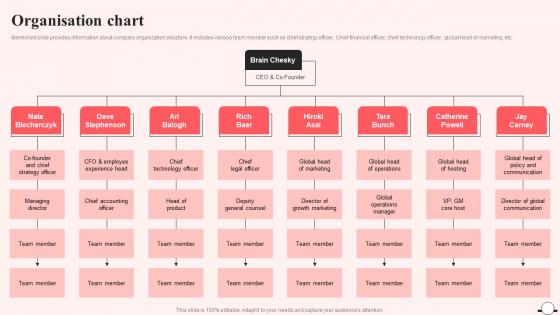
Mentioned slide provides information about company organization structure. It includes various team member such as chief strategy officer, Chief financial officer, chief technology officer, global head of marketing, etc.
People who downloaded this PowerPoint presentation also viewed the following :
Organisation Chart Airbnb Company Profile Ppt Mockup CP SS with all 9 slides:
Use our Organisation Chart Airbnb Company Profile Ppt Mockup CP SS to effectively help you save your valuable time. They are readymade to fit into any presentation structure.








FAQs for Organisation Chart Airbnb Company Profile Ppt
Location's huge - downtown spots obviously charge way more than suburban places. Check what similar properties around you are asking first. Seasonal stuff matters too, like holidays and local events that spike demand. Pool or parking? You can bump up your rates for those. I'd honestly start by testing different price points to see what sticks - it's kinda like gambling sometimes lol. Don't forget your actual costs though, cleaning fees and utilities add up. Property type makes a difference too, but really it comes down to scoping out your competition and adjusting from there.
Yeah location is everything for Airbnbs, way more than hotels. Hotels just plop down in business districts and tourist spots - super predictable. But your Airbnb? It can be in some random converted barn in wine country and still kill it because people want that authentic vibe. I've seen places in walkable neighborhoods with character do amazing, especially near cool stuff but not necessarily downtown. People book Airbnbs to "live like a local" so think residential areas, vacation spots, quirky places hotels won't touch. That's honestly where the money is.
Honestly, it's all about the small stuff that makes guests feel at home. Clear check-in instructions are a must - nothing worse than confused people standing outside your door. I always tell hosts to share local spots (that tiny bakery down the street beats Starbucks every time). Good WiFi and clean sheets sound basic but you'd be surprised how many places mess this up. Response time matters too - don't leave people hanging. A handwritten note or little snack goes way further than you'd think. Oh, and definitely follow up afterward for feedback. Think about what'd make you book the same place twice.
Dude, reviews are everything for Airbnb success. Higher ratings = better search ranking, so more people actually see your place. I personally skip anything under 4.5 stars when I'm booking - most guests do the same. The written reviews matter too since they help people picture staying there. One crappy review about dirty sheets or sketchy locks? That'll tank your bookings fast. Get your first 5-10 reviews by going above and beyond, then just stay consistent. Oh, and reply to reviews when you can - makes you look engaged.
Dude, zoning laws will be your biggest pain. Most cities have crazy restrictions on short-term rentals - some need permits that take forever to get. Tax stuff is messy too since you're collecting occupancy taxes and dealing with income reporting. Oh, and if you've got an HOA? Check those rules first because tons of them just ban Airbnbs completely. Honestly, do all this research before you list anything. Getting shut down later costs way more than just figuring it out upfront. Trust me on this one.
Okay so first thing - get killer photos. I can't stress this enough, they're literally everything. Your title and description need keywords people actually type in, like "downtown" or whatever your neighborhood's called. Keep your calendar current and reply to messages super fast. Here's what I'd do: start with lower prices to snag those first reviews, then bump them up once you get some 5-stars going. Also throw your listing on VRBO while you're at it - why not? Once Airbnb's algorithm starts liking you, you're golden.
Honestly, it's the tech that keeps you sane when running an Airbnb. Property management systems handle all your messaging and booking stuff across different platforms automatically. Smart locks are a game-changer - guests just check themselves in, no more meeting people at weird hours. Dynamic pricing adjusts your rates based on what's happening locally (though sometimes it gets a bit aggressive). IoT devices track occupancy and alert you to maintenance problems. Channel managers make sure you don't accidentally double-book, which happened to my friend once and was a nightmare. Just pick tools that actually make your life easier, not ones that create more hassle.
Honestly, seasons make or break your Airbnb numbers. Summer's usually your goldmine - people travel more, pay higher rates. Winter? Total ghost town unless you're near skiing or somewhere tropical. I've watched friends go from packed solid in July to like 25% occupancy by February. It's brutal but predictable. Your pricing needs to flex with this - bump rates during peak times, maybe push monthly stays when it's slow. Oh and definitely scope out your local event calendar early. Nothing worse than underpricing during some random festival you forgot about. Start mapping out your rates months ahead or you'll miss the boat.
Honestly, the biggest issue is how it messes with housing costs. Property owners start converting regular apartments into Airbnbs, which means fewer places for people who actually live there. Pretty brutal if you're apartment hunting on a budget. Lower-income neighborhoods get hit hardest - it basically speeds up gentrification. Cities are starting to crack down with permits and restrictions, though some are way behind the curve. If you're thinking about hosting, definitely check what rules your city has. Also worth considering how it might affect your neighbors trying to find housing.
So basically these laws make you rent for like 30+ days minimum instead of just a few nights. Most Airbnb guests obviously want short weekend trips, not month-long commitments, so your bookings get crushed. Cities started doing this because residents were over the constant parade of tourists and parties - honestly, I get it. Your property basically gets pushed back into regular rental territory. Oh and definitely check your local rules first if you're considering this. Some cities have made it almost pointless to even try hosting short-term anymore.
Yeah, dynamic pricing can bump your revenue up 10-40% which is pretty solid. Basically adjusts rates based on demand and local events automatically. But here's the thing - some of these tools get way too aggressive with pricing suggestions. You might piss off guests when they see your rates jumping around like crazy. Plus you kinda lose control over your own pricing strategy, which feels weird at first. Oh, and definitely watch it during slow periods or it'll price you right out of bookings. I'd start conservative and see how it goes with your place specifically before letting it go wild.
Oh man, COVID completely changed the game. Guests are obsessed with cleanliness now - like, they'll literally book based on your cleaning protocols. You need to shout about your enhanced sanitization in your listing. Show them you're using the good stuff (hospital-grade cleaners) and leaving 24 hours between guests. CDC guidelines are basically non-negotiable at this point. Reviews are brutal if your place isn't spotless. Contactless check-in is huge too - nobody wants to meet face-to-face anymore. I swear, hosts who don't advertise their safety measures are just throwing money away. The competition is fierce and cleanliness is your biggest selling point now.
Honestly, cultural stuff makes a huge difference in how people pick Airbnbs. Guests from more family-oriented cultures usually want communal spaces and room for everyone, but people who value independence care more about privacy and their own amenities. Language is big too - some feel way more comfortable when hosts speak their language or at least translate the house rules. Oh, and don't forget religious/dietary needs like prayer areas or kosher kitchens. I'd say figure out who you're targeting and play up whatever features match their values in your listing. Makes total sense when you think about it.
Honestly, checking your data weekly changed everything for me. Your Airbnb dashboard shows which photos people actually click on and what pricing gets you booked. I had no clue Tuesday check-ins were huge in my area until I looked at the patterns. You can see how you're doing vs other places nearby too. Most people just guess at pricing, but tracking booking trends and what guests say in reviews? Game changer. Even seasonal stuff helps - like my place does way better in shoulder season than I thought. Takes like 10 minutes to check but fills so many more nights.
Look, you can't just throw up any listing and expect bookings. What's your hook? That amazing coffee setup or cool vintage vinyl collection - lean into whatever makes your place special. Get decent photos, seriously. Your description should make people actually picture themselves there, not sound like a hotel brochure. Don't go crazy low on pricing just to compete. Add little touches instead - local restaurant recs, snacks, maybe partner with that cute bakery down the street. Check out your competition but find what they're missing. Oh, and honestly? Most people underestimate how much those small details matter.
-
I am a big fan of their newsletters because that is how I found my perfect requirement at the time of urgency. Thank God, I kept opening those.
-
Their professional templates are very impressive, even my manager was curious about the source. I am very grateful.