


Organizational Chart Accenture Company Profile CP SS





Try Before you Buy Download Free Sample Product
 Impress Your
 Audience
 100%
100% Editable
 Save Hours
 of Time


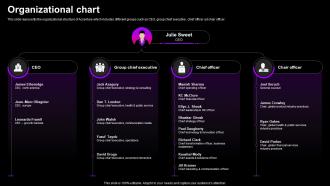
This slide represents the organizational structure of Accenture which includes different groups such as CEO, group chief executive, chief officer ad chair officer.
People who downloaded this PowerPoint presentation also viewed the following :
Organizational Chart Accenture Company Profile CP SS with all 9 slides:
Use our Organizational Chart Accenture Company Profile CP SS to effectively help you save your valuable time. They are readymade to fit into any presentation structure.








FAQs for Organizational Chart Accenture Company
So Accenture breaks down into three chunks. Geography first - North America, Europe, all that. Services are next: Strategy & Consulting, Technology, Operations, plus Song which is their artsy marketing side (kinda cool actually). Then they slice everything by industry - finance, healthcare, communications, you name it. Makes sense when you think about it. Oh and if you're trying to navigate their maze or find the right person, start with your region then narrow it down by what type of work and which industry. Way easier than going in blind.
Accenture's org chart is wild - they basically split everything by geography first (North America, Europe, Growth Markets, etc.) then layer their main services on top. Strategy, Consulting, Tech, and Operations all run through each region. Honestly took me forever to figure out when I first started looking into them. The whole matrix thing actually works pretty well though since clients get local teams with the right expertise. Pro tip: if you need to reach someone there, start with your region then narrow down to whatever service you're after. Way easier than trying to navigate their massive directory blind.
Honestly, Accenture's matrix setup is way better for working across teams than most places. Teams get built around actual client work instead of those stupid departmental walls, so Strategy and Tech people end up collaborating naturally. The MDs are pretty key here - they know everyone and help connect the dots between different practices. You'll have two bosses basically (functional + project), which sounds weird but gives you more ways to get stuff done. Oh and those dotted-line relationships? Use them early. They're gold for cutting through red tape when you need something from another team.
So at Accenture you'll have multiple bosses instead of just one - took me a minute to figure that out too. There's your practice lead who handles the technical stuff, a client partner running your current project, plus a career counselor for development things. Honestly the setup is pretty smart once you get used to it. Different people give you different kinds of support. Just figure out early on who does what - like don't bug your career counselor about project deadlines, you know? Map it out and you'll be fine.
So Accenture pulls people from different departments - Strategy, Tech, Operations - and throws them all on the same client project. Pretty smart actually. You might have consultants working next to developers and industry experts. The matrix thing they do means you technically belong to one team but get staffed wherever they need your skills. Honestly beats having just one type of person trying to solve everything. They can hit business problems from like three different angles at once. Oh and if you're trying to get on a good project, definitely play up any time you've worked across different teams or functions.
So Accenture's matrix thing is kinda wild - you're basically reporting to like 3 different people at once. Project managers are juggling functional leads, client teams, and practice groups all day. It gets chaotic but honestly the upside is you can tap into expertise from anywhere pretty fast. Decisions take forever though since everything goes up the chain. Oh and pro tip - figure out early who actually calls the shots on your stuff because that saved me so much headache. The resource sharing across teams is actually pretty solid once you get used to it.
From what I've seen, they usually do it quarterly - around December, March, June, September. But honestly? They're constantly shuffling things around when big client deals come up or the market shifts. It's like they never stop reorganizing lol. The changes usually happen because of new service areas, expanding into different regions, or chasing whatever tech trend is hot (AI, cloud stuff, you know). Sometimes the unofficial changes happen way before the actual org chart gets updated though. I'd just ask your manager or HR person directly - they'll have the real scoop on what's happening in your area.
So Accenture's leadership structure is pretty straightforward - Managing Directors run strategy at the top. Then you've got Senior Principals and Principals handling the big client relationships and P&L stuff. Managers and Senior Managers do the day-to-day operations, though honestly the Manager level is where things actually get done since they're in the trenches with projects. Each role owns revenue targets, developing people, and client results. Oh, and if you want to move up? Figure out what competencies your target level needs and start showing them now. Don't wait around for someone to tell you.
So Accenture ditched the old consulting pyramid thing and reorganized around their "New" business model. They're all about digital services now. Market units like North America work directly with their tech and interactive teams - makes sense since that's where the money is. Teams aren't stuck in silos anymore, which honestly makes a huge difference when you need to move fast on projects. Way more agile than most firms. If you end up working with them on digital stuff, you'll see how quickly they can throw together cross-functional teams since their structure actually supports it instead of creating roadblocks.
So Accenture ditched the whole traditional hierarchy thing for these "pod" teams that can actually move fast when clients change their minds (which happens constantly). They organize people around skills and markets now instead of those rigid department silos. Pretty smart honestly - means teams can collaborate without jumping through a million hoops. People rotate between different projects and locations all the time to build up varied experience. Oh and here's the weird part - you might report to like 2-3 different managers depending on what you're working on. Sounds chaotic but it keeps decisions moving quickly.
So the org chart connects everyone's role to Accenture's three big goals - growth, profit, and talent stuff. Your day-to-day work flows up through your capability group and market unit to hit those targets. Like if you're in Tech, your projects feed into their whole "reinvention" push. Managing Directors are more about client relationships that drive revenue. Makes sense when you map it out, honestly. The main thing is figuring out where you fit in the chain so you can tie your work back to company objectives - super helpful come review time.
Honestly, coordination becomes a total mess when you're dealing with 700,000+ people scattered everywhere. Time zones alone will drive you crazy. Decision-making crawls to a halt because there's suddenly like 15 layers of management between you and anything getting done. That startup speed? Gone. Plus keeping everyone on the same page culturally gets way harder - I mean, how do you maintain the same vibe across that many offices? Your org chart turns into this bloated nightmare. Digital tools help but you've got to stay flexible with structure or you'll drown in bureaucracy.
Honestly, Accenture's flat structure is pretty smart for talent stuff. Career progression happens way faster without all those middle management layers clogging things up. The matrix thing means you're bouncing between different teams and locations - keeps work from getting stale, you know? They've got these specialized tracks too (tech, strategy, consulting) so you can go deep in your area but still move around. My cousin actually works there and moved up twice in like 18 months. When you're job hunting, check how fast people actually get promoted, not just the fancy recruiting pitch.
Accenture's org chart actually shows they're serious about D&I - not just putting up a front. They've got their Chief Leadership & HR Officer running diversity programs, plus D&I leads in different regions. What's smart is how they built accountability right into the hierarchy instead of dumping it all on one team. Management layers throughout the company handle inclusion stuff, and there are clear reporting lines so executives actually see the metrics. Honestly, if you're thinking about working there, check out how they've woven these values into their real structure - tells you a lot.
Accenture's way flatter than the old-school firms like McKinsey or BCG. They organize around what you actually do - tech, strategy, operations - instead of just how senior you are. Makes sense, right? Other firms still do that pyramid thing where you're climbing toward partner or bust. But at Accenture you can bounce between different areas without restarting your whole career. I mean, who wants to be stuck in one lane forever? The flexibility is honestly the biggest win - you won't feel trapped if you want to switch up your focus down the road.
-
I joined SlideTeam last month and there’s no doubt that I tend to find our bond only strengthening over time. Best place to find world-class themes, templates, and icons.
-
SlideTeam is my one-stop solution for all the presentation needs. Their templates have beautiful designs that are worth every penny!