


Organizational Chart Ernst And Young Company Profile CP SS





Try Before you Buy Download Free Sample Product
 Impress Your
 Audience
 100%
100% Editable
 Save Hours
 of Time


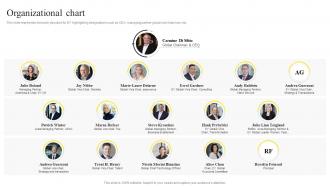
This slide represents hierarchy structure for EY highlighting designations such as CEO, managing partner global vice chairman, etc.
People who downloaded this PowerPoint presentation also viewed the following :
Organizational Chart Ernst And Young Company Profile CP SS with all 9 slides:
Use our Organizational Chart Ernst And Young Company Profile CP SS to effectively help you save your valuable time. They are readymade to fit into any presentation structure.








FAQs for Organizational Chart Ernst And Young Company
So EY's basically split into four big areas: Assurance (that's the audit stuff), Tax, Transaction Advisory, and Consulting. There's definitely overlap between them though - like way more than you'd expect. Each one has its own bosses and specialties, but they all roll up to regional and global managing partners. Honestly, I'd just focus on whichever service line fits what you're doing since that's where you'll actually be working with people day-to-day. That's also where promotions usually happen. Oh and the consulting side seems to be growing like crazy lately.
So basically EY doesn't trap you in one department like some firms do. You can easily jump between Tax, Audit, Advisory, whatever - they actually want people collaborating on the same clients. The regional setup is pretty smart too since you can just hit up specialists nearby instead of dealing with bureaucratic nonsense. They've got these mixed teams working on innovation stuff which is cool I guess. When you're stuck on something complex, you literally just message whoever knows that area. Way less rigid than I expected honestly.
So Partners are basically the big bosses at EY who actually own part of the company. They make all the major calls for their areas and client accounts. If you're a senior manager or director, you'll report to them. These guys handle the huge client relationships and business development stuff - honestly, they're more like business owners than regular employees since they get a cut of profits. They oversee tons of different projects at once. Oh, and pretty much anything important needs their final approval before it goes out the door. So yeah, they're the last stop for major decisions.
So EY basically flattened everything after they split from consulting in 2021. Way less pyramid-y now. They're doing this "one firm" thing where audit, tax, and advisory actually talk to each other - which honestly makes sense since clients don't care about internal silos. The teams are more agile and can switch up expertise when needed. Oh, and they created new leadership roles around tech and ESG stuff because that's what everyone's asking for. If you're checking out their structure, look at the sector teams instead of just service lines - that's where the real action is.
So EY's got pretty standard progression - you start as Associate/Staff, then Senior Associate, Manager, Senior Manager, up to Partner. Takes about 2-3 years between the early levels. The Manager to Senior Manager jump though? That one drags forever, I swear. Timeline can vary between Assurance, Tax, Advisory, Consulting but structure's basically the same across all of them. You'll need to hit your utilization numbers and keep clients happy - that's like the golden rule there. Oh, and definitely talk through your goals with your counselor next review. They actually know the insider track for moving up faster.
So EY basically weaves tech people into every part of their business - audit, tax, consulting, you name it. They've got Chief Innovation Officers and Digital Leaders scattered throughout different regions and service lines instead of just cramming everyone into IT. Smart approach if you ask me. Innovation labs work directly with the client teams too, which makes way more sense than keeping tech stuff separate. The whole setup connects horizontally across different services rather than just having everything report straight up the chain. Actually works pretty well from what I've seen.
Honestly, EY's structure is kind of a mess - but that's basically every Big Four firm. You end up reporting to like three different people, which gets weird when they want conflicting things. Decision-making takes forever because everything goes through multiple layers. Career paths? Good luck figuring those out when you're bouncing between divisions. Oh, and there's this constant back-and-forth between "we need global standards" versus "but this market is different!" My biggest tip is figuring out early who actually matters in your reporting chain and just... talk to them regularly. Makes life way easier.
So EY splits into four regions - Americas, EMEIA, Asia-Pacific, and Japan. Pretty straightforward setup. What's cool is you get global standards but with people who actually know the local markets. Different countries have crazy different regulations, so this helps a lot. Cross-border projects run way smoother when you're not dealing with one massive centralized system. Oh, and definitely reach out to regional leads early if you're doing international stuff - I learned that the hard way. They'll know all the weird local requirements that'll otherwise blindside you later.
So EY's hierarchy goes Partner → Director → Senior Manager → Manager → Senior Associate → Associate. You'll report to whoever's one level up from you. Pretty standard stuff. Directors juggle multiple clients and manage several Managers at once, which honestly sounds exhausting. Partners are more focused on landing new business and keeping the big clients happy while doing the whole strategic vision thing. Your actual reporting structure might be a bit different depending on what service line you're in and which office - my friend in London had a slightly weird setup compared to what I expected. But yeah, that's the general flow.
So EY actually bakes D&I right into their structure - they've got Chief Diversity Officers at every level, plus regional partners handling it locally. Their Employee Networks are pretty cool too, like the Pride Network and Veterans Network, and these groups actually get to weigh in on business stuff and career paths. What really caught my attention though? They tie D&I goals to partner pay, which honestly shows they're not just talking. They do the usual unconscious bias training and diverse interview panels for leadership spots. Oh, and their annual diversity reports are surprisingly honest about where they're falling short - worth checking out if you want the real picture.
The matrix thing actually works pretty well for sharing knowledge. You're plugged into your service line AND industry teams, so info flows everywhere. There are these formal communities where specialists swap ideas across regions - some are amazing, others... meh, depends who shows up. But here's the thing: the hierarchy isn't crazy steep, so you can actually ping senior people without jumping through hoops. Project teams always mix people from different offices and backgrounds. Oh, and there's solid mentoring baked into promotions. Just don't be weird about reaching out to experts in other locations - seriously, most people are happy to help.
So basically operational roles are the people actually doing the work - staff, seniors, experienced associates grinding through audits, tax returns, consulting projects. Once you hit manager level though, that's when you shift into overseeing people and dealing with P&L stuff. Managers, senior managers, directors - they're handling client relationships, figuring out who goes where, business development. Way less technical work. The jump from operational to managerial is honestly pretty dramatic when you think about it. You go from "doing the thing" to "managing the people who do the thing." Start working on leadership skills now if that's where you're headed.
EY organizes around both service lines and industry sectors, which is actually pretty clever. Your team won't just be generic tax or audit people - they'll be experts who specialize in your specific industry. So if you're in healthcare, you get healthcare tax experts who've dealt with your exact headaches before. The dual structure thing means they can hit the ground running instead of spending weeks figuring out how your business works. Honestly, it's one of their stronger selling points. When you're talking to them, definitely dig into their actual experience in your sector though - some firms oversell that expertise.
Honestly, EY's org chart is way more useful than you'd think. You can literally see your whole career path mapped out - what roles exist above you, what skills you need, who to network with. I actually study mine sometimes to figure out my next 2-3 moves. It creates this weird healthy competition too since everyone can see the same progression. The hierarchy thing sounds corporate and boring, but it's basically your cheat sheet for finding mentors and sponsors. Don't just ignore it - use it to be strategic about your growth.
So EY basically uses this matrix setup where you'll report to multiple people when new stuff launches. Pretty messy tbh, but that's how they roll. They're always moving people around based on what clients want. Like when they started the digital transformation thing, they just grabbed people from audit, tax, consulting - whoever - and threw them together. Honestly, don't get too attached to your org chart because it changes constantly. Oh and definitely watch those internal emails about new practice areas since they'll probably shuffle your reporting again. Stay flexible with it.
-
Presentation Design is very nice, good work with the content as well.
-
Very well designed and informative templates.