


Organization Structure Interior Decoration Company Profile Ppt Template




Try Before you Buy Download Free Sample Product
 Impress Your
 Audience
 100%
100% Editable
 Save Hours
 of Time


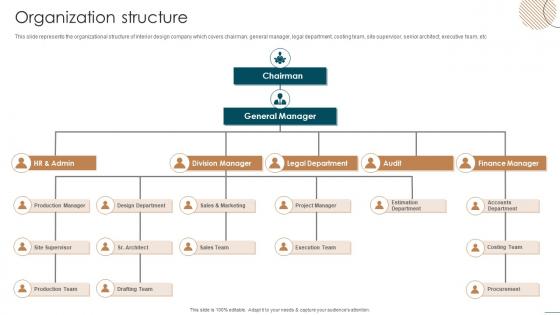
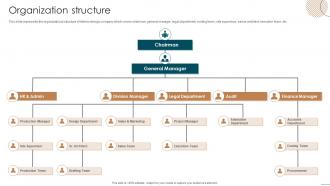
This slide represents the organizational structure of interior design company which covers chairman, general manager, legal department, costing team, site supervisor, senior architect, executive team, etc.
People who downloaded this PowerPoint presentation also viewed the following :
Organization Structure Interior Decoration Company Profile Ppt Template with all 6 slides:
Use our Organization Structure Interior Decoration Company Profile Ppt Template to effectively help you save your valuable time. They are readymade to fit into any presentation structure.





FAQs for Organization Structure Interior Decoration Company
So basically you need clear reporting lines - who reports to who, what decisions people can make solo. Communication channels matter too. I've watched companies where everyone's constantly confused about who owns what (such a time suck). Match your structure to strategy though - like if you're innovating fast, don't build some crazy rigid hierarchy. Info should flow easily between teams, not just up and down. Oh, and map your current setup first. Find where the bottlenecks are happening most. People need defined roles so they're not asking permission for every little thing.
Your org structure really shapes how much freedom and clarity people get daily. Clear roles help everyone know what's expected, but too much rigidity? Total creativity killer. You need that balance - enough structure so people are accountable, but room to actually innovate. Flatter companies usually see better engagement since employees feel more ownership. Traditional hierarchies just create those annoying bottlenecks we've all dealt with. I'd honestly look at your setup and ask if it's helping your team crush it or just getting in their way. Structure should serve the work, not the other way around.
So basically functional means grouping by what people do - all your marketing people sit together, finance folks in another spot, etc. Pretty straightforward. Divisional is the opposite - you're organizing around products or markets instead. Each product gets its own little team with different specialists. Go functional if you want deep expertise and people bouncing ideas off similar roles. Honestly though, I've seen companies mess this up by going divisional too early when they don't really need it yet. Pick divisional when you've got distinct products that actually need separate focus. Just think about how complex your stuff is and what matters most right now.
Dude, matrix structures are actually great for complex stuff. People report to two bosses - their regular department head AND the project manager. Sounds chaotic, right? But you keep all that specialized knowledge while getting teams to actually work together. The dual reporting thing is weird at first, I won't lie. What I love though is how fast you can grab the right people for different project phases, then shuffle things around when priorities change. Worth trying on your next big cross-department project.
Honestly, flat structures are amazing because your ideas actually make it to the people who can say yes. No more waiting for five different managers to approve everything. You can move fast when something's working or bail when it's not. Everyone feels way more invested too since they're part of the real decisions, not just following orders from three levels up. I've seen so many good ideas just die in traditional companies because of all the red tape. Just make sure people know how to communicate with each other - otherwise you'll end up with total chaos instead of that quick decision-making you want.
Your company's culture is basically what decides how you'll structure everything. Collaborative cultures? You get flat teams with way fewer managers. But traditional, buttoned-up places (like banks) love their rigid chains of command - totally different vibe than startups. Culture also shapes whether decisions get made at the top or if people can actually make calls themselves. Oh, and here's the thing - don't try to force a structure that fights against your culture. I've seen that backfire so hard. Work with what you've got instead of creating unnecessary drama.
Yeah so remote work totally changes how your company is structured. No more bump-into-people-by-the-coffee-machine conversations, which honestly sucked anyway. Teams become way more independent and you end up doing most communication async. The hierarchy thing gets weird - it's less about office politics and more about who actually knows their stuff. You have to be super explicit about who does what though, because people will just sit there confused otherwise. Oh and document everything! Sounds boring but it actually saves your butt later. Regular check-ins become crucial.
Ugh, people HATE change - that's your biggest headache right there. They'll dig in their heels when you mess with their comfy routines or who they report to. Then everyone gets confused about what they're actually supposed to be doing now. It's honestly chaos for a while. Your old systems probably won't match the new setup either, which is super annoying. Oh, and don't be surprised if some good people bail - they see all the uncertainty and just... nope out. Definitely over-explain why you're doing this stuff and get them involved in planning. Trust me on that one.
Most startups start completely flat - everyone reports to the founder. But once you hit 15-25 people, you gotta add management layers or things get messy. Engineering, sales, marketing departments usually come first. Here's where founders screw up: they wait way too long to promote managers because they think staying "scrappy" matters more than actually functioning. Trust me, clear reporting structures make everything faster, not slower. Around 50-100 employees you'll need directors or VPs. By 200+ it's pretty much a normal company hierarchy. The trick is getting ahead of your growth instead of scrambling to catch up later.
Honestly, tech is just demolishing those old-school corporate pyramids. Middle management? Half of it's disappearing because teams can ping executives directly now. Remote work changed everything too - who cares where someone sits when they're crushing it from their kitchen table? Companies are ditching the whole "department" thing and organizing around actual projects instead. Your org chart from 2019 probably looks ancient now. The smart move is rolling with it rather than clinging to outdated structures. Figure out how these collaboration tools can actually work for your team's setup.
Having clear reporting lines seriously speeds things up because everyone knows who can make what decisions. No more of those annoying "let me ask my boss's boss" chains that drag on forever. People actually take ownership when they know a decision is theirs to make - can't just keep passing it up the ladder. The trick is making sure your structure actually works for real decisions, not just what looks neat on the org chart. I'd honestly map out the decisions you make most often and see if your current setup helps or gets in the way. Sometimes what looks logical on paper is a total mess in practice.
Honestly, hierarchical structures are pretty straightforward - everyone knows who's boss and who reports where. Makes accountability way clearer and you get those nice promotion ladders people love. Communication flows better too, at least in theory. But man, the downsides can be rough. Decisions take forever since they have to bounce through like three different levels. Innovation gets squashed because good ideas die in meetings before they reach anyone important. Plus your front-line people end up feeling totally cut off from leadership. Really depends on what you value more - control or speed. Some industries need that structure though.
So basically, cross-functional teams just work better because people actually talk to each other instead of sending stuff up the chain forever. When everyone's working toward the same goal, they share info naturally. Decisions happen way faster too - no more waiting weeks for approval on simple stuff. Honestly, half the battle is just getting people to know each other as humans, not just names in Slack. You've got all these different skills in one group, so complex projects don't require coordinating with like five departments. Maybe sketch out how info flows in your company right now? You'll spot the bottlenecks pretty quickly.
Think of it like having a solid foundation but flexible walls, you know? Keep your core stuff - finance, HR, operations - structured and stable with clear processes. But your customer teams and innovation work? Make those way more agile with cross-functional groups. Honestly, most companies try to be flexible everywhere and it's a mess. Map out what needs to stay steady (your backbone stuff) versus what needs to pivot fast when the market shifts. Start there and be really intentional about which bucket each function goes in for your specific situation.
You definitely need both the numbers stuff and the softer feedback to really see what's going on. Decision-making speed is huge - plus look at span of control ratios and how engaged people actually are. The financial side? Cost per employee and revenue by organizational layer tell you a lot. Honestly, my favorite question is "how many people does one decision have to go through?" That usually reveals if you've got too much bloat happening. Role clarity surveys work great too since confused employees are basically a red flag for structural problems. Pick maybe 3-4 metrics that match your worst pain points right now, then check them quarterly. You'll start seeing patterns pretty quickly.
-
I have been using SlideTeam for the past six months. Very happy and satisfied!
-
If you have visited their site and failed to find the products, try reaching the customer service because it will be the case that you didn't use the search bar well.