

Organization structure ppt template




Try Before you Buy Download Free Sample Product
 Impress Your
 Audience
 100%
100% Editable
 Save Hours
 of Time


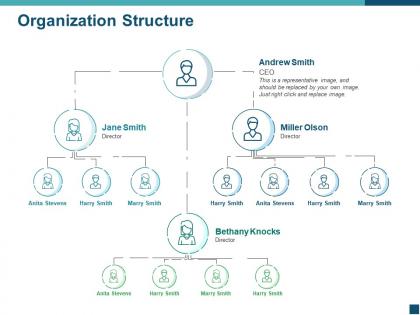
Aren’t you in search of some innovative and admirable presentation idea to talk about the very basic concept of organization? If your head nods yes, then our aesthetically designed organization structure PPT template is your answer. In the provided organization structure PowerPoint presentation design our team has used visual graphics to showcase the hierarchical structure present within a particular organization. This organizational structure and management design PowerPoint model best fits to the company presentation of any firm irrespective of its nature of business. Undoubtedly this organization chart PPT PowerPoint visual is very useful for those who are keen to build the company’s organization chart or rebuild a new structure. If you are hunting for a professional organizational chart PowerPoint template design with specific mention to designation and name of designation holder then you should download our multi level organizational chart PPT slide background for use. Use the available organization chart PPT infographic as part of your pre designed presentation or solely by simply clicking on the download link provided below. Handle it with aplomb with our Organization Structure Ppt Template. Carry it off in a brilliant fashion.
People who downloaded this PowerPoint presentation also viewed the following :
Organization structure ppt template with all 5 slides:
Exceed your imagination with our Organization Structure Ppt Template. You will achieve abundant growth.

FAQs for Organization
Honestly, most places screw this up because they skip the basics. Map out who reports to who first - sounds simple but trust me, half the companies I've worked with can't even get that right. Make sure each manager isn't drowning with too many direct reports. Communication paths need to be crystal clear too, otherwise info just gets lost in the shuffle. Don't overlook accountability stuff either - people need to know exactly what they're responsible for. I'd literally draw your current setup on paper first. You'll spot the gaps and overlaps pretty quickly that way.
So your org structure totally controls who talks to who and how fast info moves around. Flat setups? Way faster communication, teams actually collaborate instead of staying isolated. Hierarchical ones though - ugh, they create these annoying silos where important stuff just gets trapped at different levels. The whole reporting chain thing shapes whether people make decisions together or just stick to their own departments. Honestly, I've watched this mess up so many companies! If you're trying to get teams working better together, simplify the structure. Create more direct paths for people to actually communicate.
Yeah, tech is totally reshaping how companies work. Middle management is getting squeezed out because teams can just ping leadership directly now. Remote work changed everything too - I swear some of my coworkers are basically mythical creatures I've only seen on Zoom. But here's the thing: it's creating weird new jobs nobody planned for, like all these data specialist roles. Companies are scrambling to fill them. Your best bet? Focus on collaboration tools that actually solve problems instead of just making your old messy processes... digital and messy.
Honestly, just ask your team straight up what's broken - they'll tell you the truth. Decision-making speed is huge though. Are things getting stuck waiting for approvals? Employee surveys work great too since people will actually say when they're confused about who reports to whom. Communication between departments is another big one to watch. Oh, and try the org chart test - if someone can't quickly explain who does what, that's messy. Track if you're actually hitting your business goals without everyone pulling their hair out. The bottlenecks usually show up pretty fast once you start paying attention.
Honestly, flat structures are pretty sweet for quick decisions - you're not waiting around for five managers to sign off on everything. Your team gets way more engaged too since they can actually talk to the big bosses. Communication is so much cleaner without that whole telephone game mess. The downside though? Things get messy fast when you're growing, and some people genuinely want that clear chain of command thing. Career paths get weird since there aren't many levels to move up through. I'd say it really depends on your team size and whether your people do well with freedom or need more hand-holding.
Honestly, structure makes a huge difference in how your team actually feels every day. Flat orgs are great - people feel heard, decisions happen fast. But once you hit like 50+ people? Total chaos. Hierarchical setups give everyone clear direction (which people secretly love), though decisions crawl and junior folks feel miles away from leadership. Matrix structures work well for complex stuff but nobody knows who their real boss is half the time lol. Really depends on your size and what you're trying to accomplish rather than just doing what sounds trendy.
So Netflix does this "keeper" culture thing - they'll fire underperformers but give top people crazy freedom. No vacation policies, barely any processes. Spotify breaks everyone into tiny "squads" that basically act like startups. Then there's Haier, this Chinese company that split into 4,000+ self-managed teams running like separate businesses. Honestly sounds like chaos to me, but whatever works I guess? The main thing they all did was push decisions down and cut red tape. If you're gonna try this, test it small first - pick one team before going nuclear on your whole org.
So basically as your company grows, everything gets way more formal and layered. You know how startups begin with everyone just talking to the founder directly? That shifts into actual departments with managers and structured processes. Growth spurts are honestly chaotic - I've watched teams trip over each other when roles aren't clear. The trick is restructuring before things fall apart. Look out for warning signs like nobody knows who's deciding what, or simple choices taking forever. That's when you know it's time to add some structure, even if it feels bureaucratic at first.
Honestly, it depends on a bunch of stuff. Company size matters huge - 20 people vs 200 is completely different. Your strategy and how complex things are day-to-day play into it too. Some cultures love hierarchy, others think it's BS. Industry norms are worth checking out, plus what talent you can actually afford (budget's always fun, right?). Growth plans matter since you don't want to restructure every six months. My take? Keep it dead simple at first. You can always add complexity later, but untangling a mess is way harder.
Org charts are definitely your best bet here - they show who reports to who super clearly. The interactive ones are even better because people can click around and explore different departments. For processes and decision-making stuff, flowcharts work really well. Oh, and color-coding different teams makes everything way easier to follow - honestly wish more companies did this. Simple infographics are clutch for explaining things to new people or anyone outside the company. Just use whatever tool your team already has (PowerPoint's totally fine) and make sure someone's actually keeping it updated.
Start with your big goals and figure out what capabilities you actually need. Innovation priority? Structure teams for quick decisions and cross-department work. Most org chart templates are garbage anyway - they don't fit real companies. Look at who reports to whom and whether it helps or hurts your strategy. Span of control matters. So does who gets to decide what. Information needs to flow where it's supposed to go. Do a quick check on where your current setup creates roadblocks against your priorities. Those bottlenecks are killing you - fix them first. Your structure should make strategy execution smoother, not turn it into a nightmare.
So with hierarchical stuff, everything has to go up and down like 5 different management levels - super slow but at least everyone's on the same page. Decentralized is way faster since teams just decide things themselves. Honestly, I've seen this save people's butts when something urgent comes up. But then you get weird inconsistencies where marketing does one thing and sales does something totally different. Really depends what you need more - speed or control. Maybe try a mix? Let teams handle day-to-day decisions but keep the big strategic stuff centralized.
Dude, remote work basically blew up those old department walls. Now everyone's doing cross-functional teams and flattening hierarchies like crazy. Companies finally ditched that "butts in seats" nonsense for outcome-based stuff - thank god. Teams get way more autonomy now. Decision-making happens at lower levels instead of everything going up the chain. There's this whole "pod" thing too where small groups just run themselves and pivot fast. Middle managers? Half are gone, half became coaches. Honestly didn't see that coming so quick. You should figure out what decisions your team could handle solo. That's where everything's headed anyway.
Hybrid structure is honestly your best bet here. You'll get flexibility when you need it, plus some clear hierarchy for teams that work better that way. Different people thrive under different management styles - some want direct access to leadership, others prefer knowing exactly who they report to. Really depends on their background and what they're comfortable with. The cool thing is you can mix and match per team instead of cramming everyone into the same box. I'd start by figuring out which departments need more freedom versus structure. Way better than picking one approach and hoping it works for everyone.
Honestly, your company's culture is like the blueprint for everything else. Collaborative places? You'll get flat teams and people actually talking to each other. Traditional spots create approval hell - I swear some places need three signatures just to order pens. Culture totally shapes who makes decisions and whether info actually reaches people or just dies in some middle manager's inbox. Teams either get real freedom or they don't. Next time you're annoyed by "the way we do things," dig into what values are driving it all.
-
Design layout is very impressive.
-
Perfect template with attractive color combination.