

Organizational chart and business model restructuring project roles and responsibilities




Try Before you Buy Download Free Sample Product
 Impress Your
 Audience
 100%
100% Editable
 Save Hours
 of Time


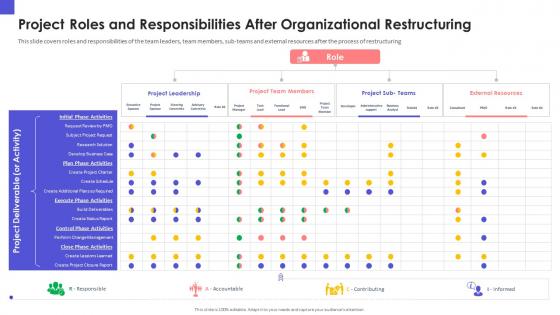
This slide covers roles and responsibilities of the team leaders, team members, sub-teams and external resources after the process of restructuring.
People who downloaded this PowerPoint presentation also viewed the following :
Organizational chart and business model restructuring project roles and responsibilities with all 6 slides:
Use our Organizational Chart And Business Model Restructuring Project Roles And Responsibilities to effectively help you save your valuable time. They are readymade to fit into any presentation structure.





FAQs for Organizational chart and business model restructuring project
Look, it usually comes down to money problems or big market shifts hitting your company. Revenue drops, new competitors show up, mergers happen - that kind of stuff. Sometimes leadership just wants to cut redundancies and make things run smoother. Tech disruption is absolutely brutal right now too, honestly it's reshaping everything. New executives love doing restructures when they come in, which... whatever, I guess that's just how it goes. Figure out if you're reacting to crisis or planning ahead for growth. That distinction matters more than you'd think. Write down your exact reasons because they'll drive every choice you make later.
Honestly, just talk to people constantly - way more than you think you need to. Everyone's gonna hate being kept in the dark worse than whatever changes you're making. Tell them WHY stuff is happening, not just what's changing. Yeah, it probably does suck for everyone right now, so don't pretend otherwise. Set up town halls, team meetings, whatever - give people actual chances to complain and ask questions. Don't just blast out some corporate email and vanish. People need time to wrap their heads around this stuff. Oh, and actually listen when they give feedback. Even if you can't fix everything, they'll fight you way less if they feel heard.
Dude, culture will absolutely make or break your restructuring. I've seen this play out so many times - if people don't trust leadership or hate change, they'll drag their feet and spread rumors like crazy. Your brilliant plan becomes a total mess. But when teams actually embrace change? They'll help push things forward instead of fighting you. Here's what works: figure out your current culture first, then work with it instead of trying to force something completely different. Find those culture champions early - honestly, they're worth their weight in gold. They'll save you so much headache later.
Honestly, you need to watch a bunch of different stuff to know if it actually worked. Obviously track the money side - profits, efficiency, productivity compared to before. Employee surveys are critical though, because if everyone's pissed off, you screwed up somewhere. Customer satisfaction matters too since internal drama always spills over to clients somehow. Keep an eye on who's quitting, especially your good people. I'd do check-ins at 3, 6, and 12 months so you can fix things before they get worse. Oh, and retention rates - both employees and customers.
Honestly, most restructures fail because of crappy communication and rushing the process. Don't make changes in a vacuum - I've watched so many crash because leadership didn't loop in the right people early on. People freak out about losing their jobs, so you really can't over-communicate here. Also, give yourself way more time than you think you need for transitions. Oh, and here's the thing - resist doing everything at once even though it's tempting. Try it with one department first, see what actually works, then roll it out everywhere else. Trust me on this one.
Look, you've gotta hit people from multiple angles - surveys, focus groups, quick one-on-ones, maybe some town halls. But here's the thing: ask real questions about what's bugging them or what they'd actually want to see happen. Don't just throw out some vague "thoughts?" because people can spot fake consultation from space. Actually use their feedback though! Like, make changes and tell them "hey, we switched this because you said X." Once they see their input actually moved the needle, they'll buy in way more than if you just steamroll them. Oh, and start early - don't wait until everything's decided.
Yeah, restructuring is rough at first. Everyone freaks out about losing their job or getting shuffled around randomly. Plus productivity goes to hell because nobody knows what they're supposed to be doing anymore - especially if there were layoffs and now you're covering three people's work. Management usually makes it worse with those awful vague emails that say nothing useful. Honestly though, if they're actually transparent about timelines and what's happening, things can bounce back pretty well. The trick is involving people in decisions instead of just blindly announcing changes. Way better than leaving everyone in the dark.
Start with employment stuff - that's where companies usually mess up big time. Check your WARN Act compliance for layoffs and dig into those employment contracts for change-of-control clauses. Union agreements too if you've got them (ugh, those are the worst). Also review vendor contracts, leases, financing deals since restructuring might trigger penalties or need approvals. Oh and get legal involved like... now. Seriously, I learned this the hard way at my last job - fixing compliance disasters later costs way more than just doing it right from the start.
Look, stop trying to keep everyone - you want the right people who actually fit where you're heading. Your top performers and the ones with skills you need? Those are your priority. Here's what most companies screw up: they go completely silent during restructuring. Don't do that. Tell people exactly what career paths look like now, because uncertainty is way worse than bad news. Get your internal mobility stuff running since everything's changing anyway. But honestly? The real magic happens when managers actually talk to their teams every week during this mess. That's where retention lives - not in some generic company email.
Look, there's a bunch of ways to figure out what needs fixing. McKinsey's 7S framework is pretty solid for organizational stuff, plus span-of-control analysis. Obviously you need the financial metrics - cost per employee, productivity, revenue per person. Employee surveys are clutch though because they catch problems before they tank your numbers. Oh, and process mapping shows you where things are getting stuck or duplicated. Communication flow analysis sounds boring but it's wild how much dysfunction it uncovers. Don't go crazy trying every tool - just pick 2 or 3 that actually fit your mess and you'll get way clearer answers.
Tech really saves your butt during big organizational changes. Slack or Teams will keep everyone talking when teams get shuffled around. Project management tools track what's actually getting done - trust me, you'll need that visibility. Digital training platforms help people pick up new processes fast, which is huge. Oh, and internal wikis are perfect for dumping all the new procedures and org charts so people can reference them later. Just don't go overboard with tools. Your team's already stressed enough without learning five new apps on top of everything else.
Honestly, restructuring can totally tank your customer relationships if you mess it up. Service gets choppy during transitions - slower response times, new account managers, different processes. Your team gets so caught up in internal changes that customers become an afterthought (I've seen this happen way too many times). Communication is everything here. Tell customers upfront about changes affecting them. Maybe assign temp relationship managers so there's still someone they recognize? Oh, and definitely map out your customer communication plan before you even tell your own staff about the restructuring. That order matters more than people think.
Dude, cross-functional teams are seriously where it's at for restructuring stuff. Different departments actually talk to each other instead of working in their own little bubbles. Finance sits down with operations and HR - suddenly you're catching problems before they blow up. People buy into changes way more when they help build them vs having some plan dropped on their desk. Oh, and don't just make them "advisory" - that's basically pointless. Give them real power to make decisions from day one. Trust me, you'll save yourself so many headaches later.
Dude, severance packages will probably be your biggest expense, plus recruiting new people gets pricey fast. Training costs add up too, especially if you're changing systems or processes. The thing that always catches companies off guard though? Temp workers and consultants while you're in transition mode - that stuff gets expensive quick. Legal fees for reviewing contracts, communication rollouts, maybe office changes if you're consolidating spaces. Oh and real estate moves are such a pain. I'd honestly tack on like 15-20% extra to whatever you calculate because there's always some random cost that pops up halfway through.
Start with your big goals and figure out which teams should own what - get super specific about who's responsible for each piece. Don't just make a fancy org chart that looks good on paper. Make sure your reporting structure actually helps people work together instead of creating silos. Before you launch anything, walk through real examples of how projects would actually move through this new setup. Honestly, you're gonna need to adjust things once people start using it anyway, so don't stress about making it perfect right away. I'd rather see something that works decently and gets tweaked than something that sits in planning forever.
-
Great experience, I would definitely use your services further.
-
The Designed Graphic are very professional and classic.