


Organizational Structure Of Start Up Bakery Business Bakery Supply Store Business Plan BP SS




Try Before you Buy Download Free Sample Product
 Impress Your
 Audience
 100%
100% Editable
 Save Hours
 of Time


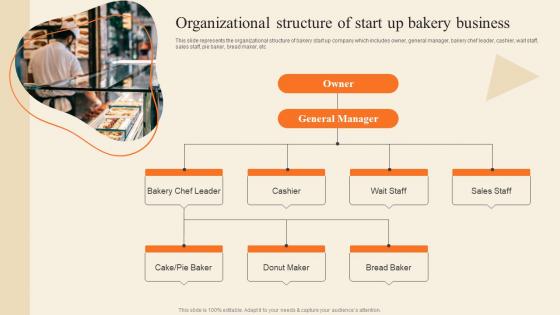
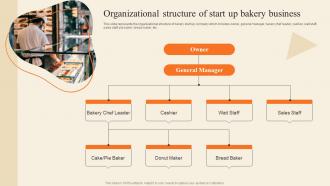
This slide represents the organizational structure of bakery start up company which includes owner, general manager, bakery chef leader, cashier, wait staff, sales staff, pie baker, bread maker, etc
People who downloaded this PowerPoint presentation also viewed the following :
Organizational Structure Of Start Up Bakery Business Bakery Supply Store Business Plan BP SS with all 9 slides:
Use our Organizational Structure Of Start Up Bakery Business Bakery Supply Store Business Plan BP SS to effectively help you save your valuable time. They are readymade to fit into any presentation structure.








FAQs for Organizational Structure Of Start Up Bakery Business Bakery Supply Store Business
You need clear hierarchy first - who reports to who, that kind of thing. Don't overthink the span of control either (how many people each manager handles). Defined roles matter too, plus decent communication paths. I swear, most companies totally overcomplicate this stuff when simple works way better. Everyone should know exactly who they answer to and who answers to them. Oh, and make sure decision-making isn't confusing - like when someone new starts, can they figure out who handles what pretty quickly? That's honestly the best test of whether your structure actually works.
Honestly, your org structure makes or breaks everything. Clear roles and good communication? Your team knows what they're doing and actually gets stuff done. But those crazy rigid hierarchies where you need seventeen approvals for a stapler? Total creativity killer. Flat structures usually make people happier since they feel more empowered, though sometimes nobody knows who's actually responsible for what (been there). Really depends on your team size too. I'd say check in regularly - like, is your current setup actually helping people or just creating more headaches? Sometimes the "perfect" structure on paper is a nightmare in real life.
Communication channels totally shape your org chart, just maybe not how you'd expect. Formal channels where everything goes through your manager? That reinforces the old-school hierarchy. But tools like Slack flip the script - junior people can suddenly ping executives directly. I've watched this completely transform teams (sometimes in good ways, sometimes... not so much). Your communication patterns end up becoming your actual structure over time. Want to flatten things out? Start with how people talk to each other and who gets included in conversations. It's way more powerful than you'd think.
Oh definitely! Flat structures are where the magic happens. People actually talk to each other instead of sending ideas up some endless approval chain. Look at Google's 20% time thing - or how startups can pivot overnight while big companies are still scheduling meetings about scheduling meetings. Cross-functional teams work wonders too. When marketing sits next to engineering, stuff just clicks faster. You need open communication and honestly? Permission to fail without getting your head chopped off. Bureaucracy is creativity's worst enemy. Pick one annoying process this week and just... cut it. See what happens.
So organizational structure totally controls who gets to decide what and how fast stuff moves. Flat structures? Decisions happen quick since you're not waiting for like five different approvals. But honestly, sometimes it gets chaotic when nobody knows who owns what. Hierarchical companies have clearer paths but man, the waiting game for sign-offs is brutal. Matrix setups are cool because you can grab expertise from anywhere - though good luck figuring out who's actually in charge half the time. I'd just map out where your decisions currently get stuck and work backwards from there.
Flat structures are great for speed - decisions happen fast without layers of bureaucracy getting in the way. Communication flows better too. Your team feels empowered and collaboration just works. The problem? It gets messy when you grow. I've seen companies where nobody knows who's actually responsible for what, and managers get completely overwhelmed. Hierarchical setups give you clear career paths and defined roles. Better control, specialized knowledge at each level. But man, the slowness kills me sometimes. Everything takes forever to decide, and information gets twisted as it travels up and down the chain. Honestly, most growing companies do best with some hybrid approach. Depends on your size and what kind of culture you're building.
Honestly, start with flatter hierarchies and cross-functional teams - way less bureaucratic nonsense when you need to move fast. Build clear decision-making processes that actually work. When the market inevitably shifts (because it always does), you'll be able to reallocate resources or restructure without wanting to pull your hair out. Stay super close to your customers and data so you can spot changes early. Here's what I'd do right now: look at your most rigid processes and ask "what would totally slow us down if we had to pivot tomorrow?" Those bottlenecks? Fix them first.
Honestly? Remote work kills those middle management layers pretty fast. Communication gets way more direct when everyone's just messaging each other instead of going through chains of command. Teams have to become self-sufficient since you can't just pop over to someone's desk for constant check-ins. Decision-making naturally shifts down because, well, it has to. The geography thing is huge too - suddenly your marketing team can work directly with engineering without worrying about being on different floors or whatever. You really have to rethink how info moves around though. That old top-down stuff? Doesn't work when people are scattered everywhere.
Oh man, this is such a real thing. Japanese teams love their hierarchies and formal approvals - totally different from how Americans or Germans just cut straight to the point. Power distance matters too. Some places need that clear chain of command, others work better when everyone's throwing ideas around equally. Honestly, I've watched companies completely bomb trying to use the same structure everywhere. You kinda have to adapt regionally but keep your main operations consistent. It's like... respect how people actually work in each country, but don't lose your efficiency in the process, you know?
Honestly, just pick 2-3 things that match your biggest headaches right now. Decision speed is massive - time how long approvals actually take. Employee engagement scores show if people feel stuck or empowered. Communication breakdowns kill most structures (seriously, I've seen this wreck so many teams). Also check if your managers are drowning with too many direct reports. Department turnover rates are telling too. Oh, and don't sleep on customer satisfaction - structural mess often shows up there first. Track whatever you pick consistently or you won't spot the real patterns.
Honestly, tech just demolishes those old-school barriers that made rigid hierarchies seem necessary. With Slack or Teams, your people can pitch ideas straight to leadership instead of climbing through manager after manager. Cloud stuff means everyone works from wherever, so you can actually pull off those matrix teams that used to be a logistical nightmare. AI handles the boring decisions now - who needs three layers of middle management for that? I've seen companies cut whole departments this way. The trick is choosing tools that fit the structure you're building, not just grabbing whatever's trendy.
Honestly, the worst part is dealing with people who absolutely hate change - they'll fight you every step of the way. Communication becomes a total mess, productivity tanks while everyone's confused about their new roles, and don't even think about touching reporting structures without bruising some egos. Company culture? Good luck keeping that intact during the chaos. Budget overruns are pretty much guaranteed too. Here's what actually works though - talk to people constantly, get your key players involved in planning from day one, and be brutally honest about timelines. Oh, and maybe stock up on coffee because it's gonna be a long few months.
Startups are pretty much chaos - but the fun kind. Everyone does everything. Your marketing person answers customer emails, the CEO makes sales calls, you know? Really flat structure where you'll probably end up wearing like five different hats. Bigger companies are way more organized though. They've got actual departments, clear reporting chains, specialized roles since they can afford all that structure. Honestly depends what you're looking for. If you go the startup route, just expect your job to change constantly and be ready to help out wherever things are falling apart.
Honestly, leadership shapes your entire org structure more than people realize. They pick whether you're doing hierarchy, flat teams, matrix - whatever matches the company vibe. But creating it on paper? That's the easy part. The real work is leaders actually living it through how they make decisions and delegate stuff. I've seen so many places where leadership preaches one structure but then micromanages everything - total disaster. Short sentences work better sometimes. Your leaders need to walk the walk, not just talk about it in meetings. Otherwise the whole thing crumbles and you're left with confused employees who don't know who reports to who.
Figure out what your strategy actually needs first - that's the starting point. Innovation-focused? Go flatter with cross-functional teams. Efficiency matters more? Centralized control works better. Most companies just blindly copy competitors, which is honestly pretty dumb. Put decision-making power where speed matters most. Don't forget your existing culture and talent when you're reshaping things. Oh, and here's the thing - your strategy will keep evolving, so you'll need to regularly check if your structure still makes sense. Be ready to tweak it when it doesn't.
-
Great quality product.
-
Commendable slides with attractive designs. Extremely pleased with the fact that they are easy to modify. Great work!