


Event Management Business Plan Organizational Structure Of Start Up Event Business BP SS




Try Before you Buy Download Free Sample Product
 Impress Your
 Audience
 100%
100% Editable
 Save Hours
 of Time


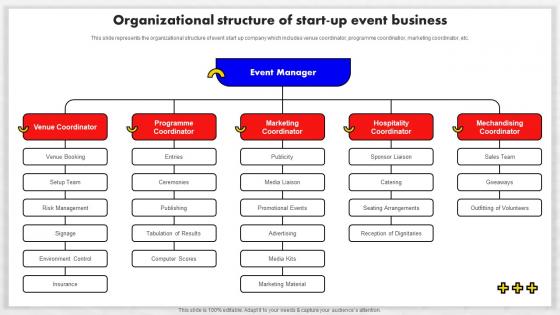
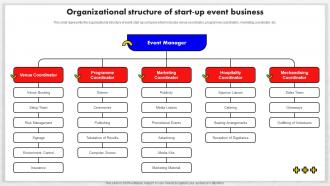
This slide represents the organizational structure of event start up company which includes venue coordinator, programme coordinatior, marketing coordinator, etc.
People who downloaded this PowerPoint presentation also viewed the following :
Event Management Business Plan Organizational Structure Of Start Up Event Business BP SS with all 9 slides:
Use our Event Management Business Plan Organizational Structure Of Start Up Event Business BP SS to effectively help you save your valuable time. They are readymade to fit into any presentation structure.








FAQs for Event Management Business Plan Organizational Structure Of Start Up Event
So for your event business plan, you'll need the usual suspects - executive summary, market analysis, services breakdown, marketing approach. The competitive analysis part is honestly such a drag to write, but you gotta know where you stand against other planners. Include your team setup and how you'll price things. Financial projections are key too - startup costs, revenue forecasts, break-even stuff for three years minimum. Oh, and definitely cover your risk management strategy because events can go sideways fast! Find a decent template online and tweak it for whatever you're focusing on - weddings, corporate gigs, festivals, whatever.
Look, you really need to know if your event business idea actually makes sense before diving in. Check out what competitors are charging and where they're dropping the ball - that's where you swoop in. Surveys and competitor stalking online are pretty cheap to start with. Trust me, finding out the market's packed now beats learning it after blowing your savings. Wedding planners vs corporate events hit totally different audiences too. The research gives you real numbers for your business plan instead of just guessing. Way better than crossing your fingers and hoping it works out.
Figure out what your event's actually about first, then think backwards - who would genuinely care? Build profiles of your dream attendees by digging into their demographics and what keeps them up at night. Social media data is honestly your best friend here since it shows who's already interested in similar stuff. If you've run events before, definitely survey those people. They're basically giving you the answers. Once you know your crowd, pick channels where they actually spend time (not where you think they should). Test different messages on small groups first - saves you from bombing with a huge audience later.
Dude, you HAVE to get your numbers straight before anything else. Map out startup costs, monthly expenses, plus realistic revenue for like 12-18 months minimum. I've watched so many event businesses totally crash because they thought clients would just magically appear faster than they actually do. Flying blind without solid financials? Good luck getting funding or even knowing if you're making money. Be super conservative with revenue estimates - honestly, probably more conservative than you think. Then be ruthlessly honest about expenses. Way better to be surprised by extra cash than panicking when you're broke six months in.
Oh man, branding is everything in event planning! Seriously, it's what separates you from the million other companies out there. Clients are trusting you with their big moments, so they need to feel confident you won't screw it up. Your brand should scream whatever makes your events different - whether that's your creative style or how organized you are. Good marketing gets you in front of the right people and shows off your best work. Word-of-mouth spreads like wildfire in this business too, which is honestly both scary and amazing. Figure out what makes your events special, then let that vibe show up everywhere - your website, proposals, even how you answer emails.
Find what the big companies are ignoring - maybe sustainable events or those smaller 30-person gatherings that aren't worth their time. Listen to what clients hate about their current providers. Then build everything around fixing those exact problems. The huge firms can't move fast or give personal attention like you can. Honestly, most established event companies are pretty terrible at adapting to what clients actually want these days. Your whole advantage is being quick and flexible. Pick one specific thing you'll be known for instead of trying to do everything. Those niche gaps are where you'll make money.
Get your business registered first - every state's different with licensing requirements. Liability insurance is non-negotiable though, seriously. One slip-and-fall lawsuit will destroy you. Draft solid contracts for everyone - clients, vendors, venues. Nobody remembers what they agreed to verbally when money's involved. Permits are a pain but mandatory, especially for outdoor events or anything with alcohol. Oh, and find a lawyer who actually knows event law. Generic business attorneys don't get our industry's weird liability issues. Worth every penny upfront versus scrambling later.
Honestly, tech has been a game changer for my event planning chaos. I started with Eventbrite for handling registrations and payments - saves me hours of back-and-forth emails. Asana keeps all my vendor stuff and timelines straight (I used to lose track constantly). Mobile apps are clutch for check-ins and sending updates when things inevitably change last minute. Oh, and CRM tools help me actually follow up with leads instead of forgetting like I used to. My advice? Pick whatever's driving you most crazy right now and fix that first. Don't try to overhaul everything at once.
Okay so first thing - split everything into fixed costs (venue, main staff) versus variable stuff like catering and entertainment. Corporate events are unpredictable beasts, so you'll want a 20% buffer. Weddings are easier to plan, 15% works fine there. Trade shows though? Ugh, those will eat your budget alive with all the booth fees and shipping nightmares. I always start from scratch - write down literally every expense you can think of, then tack on your buffer. After each event, compare what you actually spent versus what you planned. You'll get way better at guessing costs. Oh, and make templates for events you do a lot - saves tons of time later.
Honestly, you gotta track this stuff from the start or you'll be kicking yourself later. Add up everything you spent - venue, people, marketing, all that jazz. Then look at what came back: new clients, actual revenue, leads you can follow up on. The squishy stuff like relationships and team building? Yeah, it matters but good luck putting a number on it. I'd say give yourself 30-90 days to see real conversions since people don't always buy right away. Oh, and set up some way to track where leads actually came from - otherwise you're just guessing about what worked.
You'll need solid partnerships with venues, caterers, AV suppliers, photographers - the usual suspects. Transportation and florists too. Don't sleep on marketing agencies either. Hit up industry networking events and trade shows first. The food's usually decent anyway, so why not? Reach out directly with actual collaboration ideas, not just "hey let's work together" nonsense. Set up referral deals and try to lock in preferred vendor rates. Build real relationships before you worry about contracts. I'd start with maybe 3-4 key partners instead of trying to connect with everyone at once. Way less overwhelming.
Definitely add a risk section to your business plan - cover the major headaches like vendors bailing, weather disasters, going over budget, and clients changing their minds last minute. Murphy's Law is so real with events! Map out backup plans for each scenario beforehand. Keep lists of alternate vendors handy and always have indoor options ready. Build extra time and money into everything - trust me on this one. Having solutions ready beats panicking when things inevitably go sideways. Way easier to stay calm when you're not scrambling to figure out plan B.
Honestly, pick like 5-7 metrics max or you'll go crazy trying to track everything. Revenue vs budget is obvious but super important - that one still stresses me out lol. I always look at attendance numbers, how many people actually showed up after registering, and social media engagement. Post-event surveys are gold, especially Net Promoter Scores. Oh and repeat attendees - that's huge for knowing if people actually enjoyed it. Don't ignore the operational stuff either, like how long check-in took or if vendors were disasters. Just make sure whatever you track actually connects to your event goals, not random vanity metrics.
Honestly, just bake sustainability into everything from day one instead of tacking it on later. Digital tickets, zero-waste catering, local vendors - all that stuff reduces emissions and saves money. Clients are obsessed with green events now (like, it's seriously a dealbreaker for some). Track your waste reduction and carbon footprint in your financial projections. You'll need upfront cash for sustainable equipment and training your team, but the cost savings from reusable materials add up fast. Oh, and definitely play up these practices in your marketing - it's become a huge selling point.
Honestly, I'd start with the basics - get your team trained on project management software and vendor negotiation tactics. Client communication skills are huge too. Cross-training is smart because someone always calls out sick right before a big wedding! Stay on top of industry trends through conferences or webinars. After every event, do feedback sessions - that's where you learn the most. Budget for quarterly training sessions and work it into annual reviews. Oh, and make sure it's consistent, not just when you remember to do it.
-
I was really impressed with the presentation I created with their templates. I’ll be using their services moving forward.
-
Every time I ask for something out-of-the-box from them and they never fail in delivering that. No words for their excellence!
-
Loved the templates on SlideTeam, I believe I have found the go to place for my presentation needs!
-
Well-designed and informative templates. Absolutely brilliant!