


Wedding Catering Business Plan Catering Service Company Organizational Structure BP SS




Try Before you Buy Download Free Sample Product
 Impress Your
 Audience
 100%
100% Editable
 Save Hours
 of Time


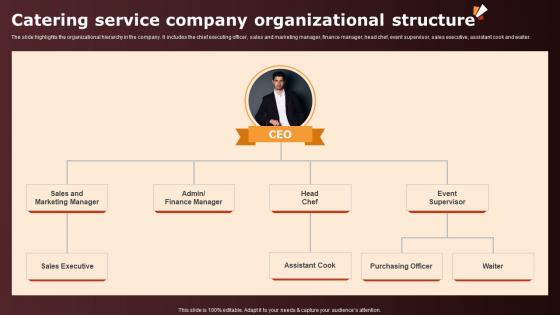
The slide highlights the organizational hierarchy in the company. It includes the chief executing officer, sales and marketing manager, finance manager, head chef, event supervisor, sales executive, assistant cook and waiter.
People who downloaded this PowerPoint presentation also viewed the following :
Wedding Catering Business Plan Catering Service Company Organizational Structure BP SS with all 9 slides:
Use our Wedding Catering Business Plan Catering Service Company Organizational Structure BP SS to effectively help you save your valuable time. They are readymade to fit into any presentation structure.








FAQs for Wedding Catering Business Plan Catering Service Company Organizational
First thing - figure out if you're targeting fancy weddings or more budget-conscious couples. That'll drive everything else. Map out your menu and pricing from there. Honestly, the financial stuff is where most people mess up because wedding season is so unpredictable - you'll be slammed in summer then dead in January. Don't overlook the boring operational stuff like kitchen space and how you're getting food to venues. Marketing is mostly referrals and Instagram these days. Oh, and definitely scope out your competition first to see what they're doing wrong that you can do better.
Look, market research shows you what couples *actually* want, not what you assume they want. Check out competitor websites - I was shocked at what some places charge! Survey engaged couples and lurk in wedding forums to find pricing sweet spots and trending menu items. You'll spot seasonal patterns too. There's usually money in underserved niches like dietary restrictions or specific cultural foods. Mystery shop your competition while you're at it. All this data guides your menu and marketing so you're not just throwing stuff at the wall hoping it sticks.
Okay so break it down into three chunks: equipment, permits/licensing, and your initial marketing budget. Kitchen equipment is gonna be your biggest hit - commercial stuff is insanely expensive, like way more than you'd think. Business licenses and food permits are mandatory, obviously, plus liability insurance (especially for weddings, people are lawsuit-happy). Marketing costs and maybe 4-6 months of expenses as backup. Honestly, I'd make a spreadsheet with everything and tack on an extra 20% buffer. Random expenses always pop up when you least expect them.
Honestly, couples are getting super creative with food these days! You could do dietary stuff like vegan or gluten-free menus, or maybe interactive food stations. Farm-to-table sourcing is big too. Late-night snack bars are always a hit - who doesn't want tacos at midnight? Cultural fusion menus work well, plus everything needs to look Instagram-ready now. Don't forget your service side either. Maybe bundle rental equipment or offer tastings at the venue itself. Pick like 2-3 things you'll actually be amazing at instead of spreading yourself thin. Also, ask your recent clients what they wish existed!
Build your menu in tiers - good/better/best with clear value jumps between each one. Classic crowd-pleasers are your foundation, but don't forget dietary options like vegetarian, vegan, gluten-free stuff. I lost three bookings in one month learning this the hard way! Cultural fusion and seasonal dishes help you stand out too. Make packages modular so couples can mix and match apps, mains, desserts based on their budget and what their guests actually want. Oh, and test everything at tastings first - seriously, never promise something you haven't nailed down yet.
So you'll need the basic trio - business license, food service license, and catering permit. Food handler certs are required for you and your crew in most places (the courses are boring but not hard, maybe 3-4 hours). Your city might want extra stuff like alcohol permits or temp event licenses too. Health department inspections are pretty much guaranteed. Honestly, requirements vary so much by location that I'd just call your local health dept and business office directly. Way better than guessing and missing something that bites you later.
Oh definitely, marketing makes a huge difference! You want couples finding YOU instead of the other way around. Post tons of food photos on social - weddings are so emotional, people buy the whole vibe not just your menu. But honestly? Skip the random online ads. Your real goldmine is building relationships with wedding planners and venues first. They'll send you way more consistent leads than anything else. Get those connections locked down, then focus on collecting reviews and getting referrals. Once that snowball starts rolling, you'll be booked solid.
Honestly, seasonal demand will drive you crazy - everyone wants June weddings but nobody's booking in February. Cash flow's brutal too since couples book months ahead but you're paying for ingredients and staff right now. Last-minute changes are the worst though. I swear, there's always someone who suddenly hates the salmon 48 hours before their big day! Build solid relationships with your vendors so you can scramble when needed. Price in a 20-30% buffer for "tiny changes" that aren't tiny at all. And get everything in writing - when final headcounts are due, what changes cost extra, all of it.
Honestly, nothing beats showing up in person. Hit up those bridal shows and networking events - and definitely bring samples because people remember good food way more than a fancy business card. I'd pick like 5-10 key planners and venues in your area first, then actually make contact this month. Don't be that person who follows up every other day though, that's annoying. Instead, offer tastings for their clients or help them out with vendor referrals when they're stuck. Really it's about proving you're not gonna flake on them and you're actually pleasant to work with.
Dude, feedback is everything for catering. Your clients will tell you which dishes killed it and which ones... didn't. Plus you'll catch service issues before they become real problems. The crazy thing is, some of my favorite menu items actually started as weird client requests that I thought were nuts at first. Don't just sit around waiting for people to complain though. Call them within two days of the event - that's when they actually remember details. Quick surveys work too. Set up some kind of system because honestly, the good feedback is just as valuable as the bad stuff.
Okay so first thing - dump all your startup costs in there. Equipment, licenses, initial inventory, the works. Revenue projections come next based on your different event types and what you're charging. Don't skip the ongoing stuff either - ingredients, labor, insurance, gas money since you'll be driving all over creation. Wedding season's gonna be your goldmine but winter might suck, so definitely account for those swings. Oh and figure out when you'll actually break even. I'd make three versions - best case, realistic, and the "oh crap everything's falling apart" scenario. Trust me on that last one.
Look, flexibility is everything from day one. Build modular packages - appetizer stations, buffet options, different service levels that mix and match. Trust me on this - I had a 50-person wedding explode to 120 guests with two weeks notice! Make your pricing scale linearly so quotes are easy to adjust. Get tight with rental companies and temp agencies early (seriously, they'll save your butt). Oh, and standardized recipes are clutch - what works for 25 should work for 250, just multiply everything. Document it all now because when that dream 300-person wedding calls, you don't want to be scrambling like I was.
Interactive food stations are huge right now - people want the whole experience, not just plated meals. Everyone's going crazy for sustainable local sourcing too, which honestly makes sense but can be pricey. You'll need way more dietary options than just throwing in a veggie plate. The Instagram factor is real - grazing tables, fancy cocktail garnishes, live cooking shows. Oh, and mini desserts are totally replacing traditional wedding cakes. Farm-to-table stuff is everywhere, plus couples want family recipes worked in somehow. Outdoor flexibility became essential after COVID. I'd start reaching out to local suppliers now because the good ones book up fast.
Start small with one thing - maybe source from local farms? Cuts transport costs and people eat up that farm-to-table vibe. Food waste is where you'll really see savings though. Get some compost bins going and portion control down - honestly, the waste fees alone will shock you how much you save. Digital menus beat printed ones every time. Biodegradable plates help too. Oh, and hook up with food rescue orgs for leftovers - feels good plus it's practical. Clients don't mind paying more when they know you're doing things right environmentally.
Honestly, start with your core team - head chef, sous chef, event coordinator, plus someone to handle bookings. For events you'll need servers (one per 12-15 guests), bartenders, prep cooks, and setup crew. Wedding season is insane though, so plan to scale up. I learned the hard way that people always call out at the worst possible moments, so build in backup staff. Mix full-time salaries with hourly event rates in your budget. Oh, and maybe don't rely on your cousin's friend who "knows about catering" - invest in actual experienced people.
-
SlideTeam is my go-to resource for professional PPT templates. They have an exhaustive library, giving you the option to download the best slide!
-
Excellent template with unique design.