


Organizational Structure Of Start Up Jewelry Business Fine Jewelry Business Plan BP SS




Try Before you Buy Download Free Sample Product
 Impress Your
 Audience
 100%
100% Editable
 Save Hours
 of Time


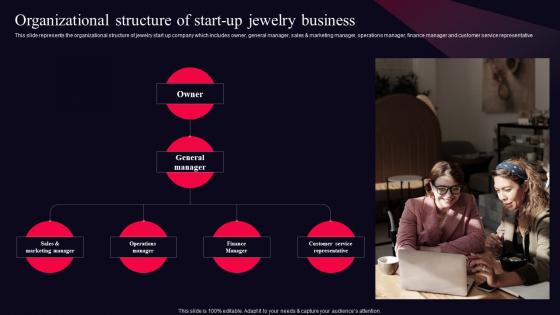
This slide represents the organizational structure of jewelry start up company which includes owner, general manager, sales marketing manager, operations manager, finance manager and customer service representative.
People who downloaded this PowerPoint presentation also viewed the following :
Organizational Structure Of Start Up Jewelry Business Fine Jewelry Business Plan BP SS with all 1 slides:
Use our Organizational Structure Of Start Up Jewelry Business Fine Jewelry Business Plan BP SS to effectively help you save your valuable time. They are readymade to fit into any presentation structure.
FAQs for Organizational Structure Of Start Up Jewelry Business Fine Jewelry Business
You need clear hierarchy first - who reports to who, that kind of thing. Defined roles help too so people aren't stepping on each other's toes. Communication channels matter big time, otherwise decisions just get stuck in limbo forever. Oh, and don't give managers too many direct reports - like 15 people is insane, nobody can handle that. I'd honestly start by drawing out what you have now and see where things break down. Geographic divisions work well if you're spread out. The whole structure should actually match your goals though, which sounds obvious but you'd be surprised how many places get this backwards.
Honestly, your org structure makes or breaks how fast people can actually get stuff done. Too many layers? Everything crawls to a halt while people wait for approvals - it's maddening. Flat structures work better most of the time since people feel empowered and move faster. But I've also seen flat orgs become complete disasters without clear ownership (learned that one the hard way). Really depends on matching the structure to how your team actually works. Where does your team hit roadblocks most? Start there - that's usually your biggest clue about what needs fixing.
Honestly, flat structures are pretty great for quick decisions since you don't have like 5 layers of approval to get through. Communication flows way better too. Your team feels more involved in everything, which is nice. But here's the thing - career paths get super murky when everyone's basically at the same level. Where do you even go from there? Role confusion happens a lot since responsibilities overlap. Oh, and your managers will be drowning with too many people reporting to them. If you go this route, just make sure everyone knows exactly what they're supposed to be doing from day one.
Start with your company's main goals - that's what should drive everything else. Size matters too, plus your industry and growth speed. Do you need fast decisions or more team input? There's honestly no magic formula, which is why companies are always reshuffling departments (kinda exhausting if you ask me). Think about your people - remote workers need different setups than in-office teams. Specialized roles vs generalists also changes things. Pick whatever actually helps work flow smoothly, not just something that looks neat on an org chart. If you can, try it with one team first.
Oh man, this is so true from experience - your company's structure totally changes how you communicate. Hierarchical places? You're stuck with endless meetings and approval chains going up and down. Flat orgs let you just ping whoever directly (way faster tbh), but things can get messy without clear processes. Matrix is the worst though - you're juggling multiple bosses and constantly updating everyone. I learned the hard way that you can't use startup communication in a corporate environment or vice versa. You've got to read the room and match how your company actually works.
Honestly, org charts are like GPS for office politics - they show you who's boss and how everything connects. When you're lost about who handles what, just check the chart instead of randomly emailing people (trust me on this one). Pretty handy for seeing decision flows too. New job? Pull it up first thing. They're basically family trees but for work stuff, which sounds weird but makes total sense once you see it. Also helps spot communication roadblocks before they bite you. Way better than guessing your way through approval chains.
Honestly, remote work is crushing those old-school hierarchies. Middle management layers are disappearing because teams can just talk directly to leadership now. Companies are ditching the whole department silo thing for cross-functional project teams - which is actually pretty cool after dealing with corporate bureaucracy for so long. Your job boundaries get way more flexible since you're constantly working with people across different time zones and departments. The big shift? Individual contributors are making more decisions themselves instead of everything going up the chain. If you're managing people, just focus on results rather than micromanaging how they get there.
Honestly, your org structure is like the traffic system for decisions. Flat setups move fast since fewer people need to sign off, but things can get messy when nobody's sure who owns what. Hierarchical ones? Clear chain of command, sure, but God help you if you need a quick yes/no - I've watched colleagues wait two weeks for approval on basic stuff. Really depends on what kinds of decisions you're making daily. If you're constantly stuck waiting for the green light, might be worth pushing your boss to delegate more authority down.
So there's three main types you'll run into. Functional is when everyone's grouped by what they do - marketing together, HR together, that stuff. Works well but people get stuck in their little bubbles. Then there's divisional where each product line or region basically runs itself. Way faster decisions since they don't need to check with everyone. Matrix is where people have multiple bosses and honestly, it's a headache most of the time. Good for sharing resources though. Really depends on how big you are and whether your teams actually need to talk to each other regularly.
Honestly, most companies wait way too long to fix this stuff. Map out your current setup and see where things get stuck - like where decisions sit forever or people can't move up. Survey your team about what's driving them crazy. Sometimes you need more layers to handle growth, other times fewer to move faster. The trick is doing it before you're forced to. Oh and definitely explain why you're making changes, otherwise people just think you're reorganizing for fun. I've seen too many places restructure only after everything's already broken.
Honestly, they feed into each other constantly. Rigid hierarchy? You're gonna get that formal, buttoned-up vibe where people wait for orders. Meanwhile flat structures usually spark more collaboration - though sometimes it's just organized chaos, not gonna lie. But culture pushes back too. Teams that really value autonomy will naturally start breaking down those bureaucratic walls over time. I've seen it happen. The trick is getting them working together instead of against each other. When they're misaligned, everything feels like you're swimming upstream.
So cross-functional stuff basically tears down those departmental walls, which is huge. You end up needing way fewer managers since people just talk directly instead of playing telephone up the chain. Matrix structures pop up where you're reporting to like 2-3 different people depending on the project - sounds chaotic but it actually works pretty well. Your expertise matters more than your spot on some org chart. Oh, and relationships become everything. Honestly I'd test it out with just one small project first and watch how people start communicating differently. You'll be surprised how fast things change.
First things first - figure out exactly why you're doing this. Cost cuts? Growing fast? Different reasons need totally different game plans. Then communicate like crazy (I can't stress this enough - silence breeds panic). Map where you are now, design where you want to go with your key people involved, and build a solid timeline. The people stuff has to happen early - who's staying, who's not, role changes, all of it. Honestly, most companies screw this up by going too fast. Try it in one department first, see what actually works, then expand from there. Way less messy that way.
Ugh, M&As are a nightmare - you're basically starting over with the org chart. Duplicate jobs get axed, everyone's scrambling to figure out new bosses, and the whole reporting structure gets flipped upside down. Usually the acquiring company calls the shots on how things will look, though sometimes you get this weird hybrid thing that tries to keep both cultures happy. Pro tip though - write down your current setup and who knows who before they start the integration mess. Trust me, you'll want that roadmap when everything goes sideways for like 6-12 months.
Honestly, start with decision-making speed - like how long approvals actually take. That'll tell you a lot. Employee engagement surveys are gold because frustrated people usually mean broken structure. Check your span of control ratios too (are managers drowning or is there too much bureaucracy?). Communication is huge - messages shouldn't get mangled as they flow through departments. I'd also track turnover rates and how well cross-functional projects go. Don't overwhelm yourself though - pick maybe 2-3 metrics that match whatever's bugging you most right now.
-
I am a big fan of their newsletters because that is how I found my perfect requirement at the time of urgency. Thank God, I kept opening those.
-
“Excellent service from the customer support team when I wanted a slide that was a bit different from those on their standard menu. Super helpful.”