


Organization Structure Of The Coffee Shop Cafe Business Plan BP SS




Try Before you Buy Download Free Sample Product
 Impress Your
 Audience
 100%
100% Editable
 Save Hours
 of Time


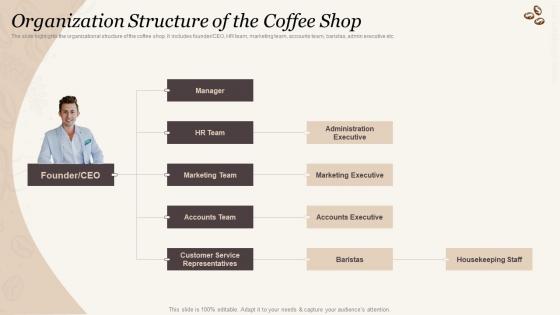
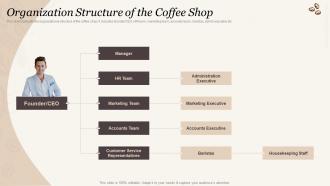
The slide highlights the organizational structure of the coffee shop. It includes founder CEO, HR team, marketing team, accounts team, baristas, admin executive etc.
People who downloaded this PowerPoint presentation also viewed the following :
Organization Structure Of The Coffee Shop Cafe Business Plan BP SS with all 9 slides:
Use our Organization Structure Of The Coffee Shop Cafe Business Plan BP SS to effectively help you save your valuable time. They are readymade to fit into any presentation structure.








FAQs for Organization Structure Of The Coffee Shop Cafe Business
So basically you'll have the owner/manager dealing with money stuff and schedules at the top. Shift supervisors come next - they're the ones putting out fires and keeping everything from falling apart during busy rushes. Your baristas are doing the heavy lifting though: making drinks, dealing with customers, cleaning constantly. Most places don't bother with separate cashiers anymore since baristas can handle both anyway. Oh, and definitely cross-train everyone on different positions because coffee shops always run short-staffed. Trust me on that one. Figure out who can cover what shifts early or you'll hate yourself later when someone calls out sick.
Honestly, having clear hierarchy just makes everything run smoother when shit hits the fan. Your baristas know exactly who can approve that refund without having to hunt down three different managers. Customers feel way more confident too - they can tell when someone actually has the authority to fix their problem. During rush hours especially, everyone knows their role so things don't get chaotic. The trick is giving your front-line people enough power to handle the basic stuff. You don't want them escalating every single complaint up the chain, that just slows everything down.
Honestly, flat structures are perfect for coffee shops. Your baristas can make quick calls without hunting down a manager - especially clutch during morning rush. Communication flows way better too. I mean, most coffee places are tiny anyway, so why complicate things with layers of management? It just bogs everything down. Staff feel more ownership when they can actually solve problems themselves, like handling a complaint or tweaking someone's order. Cross-training becomes easier since everyone's more involved. Give your team real decision-making power and you'll see the difference.
Honestly, staffing can make or break your whole operation. During morning rush, you absolutely cannot have two newbies running register - trust me on that one. Put your experienced baristas on the complex drinks and let newer people handle simple stuff. Cross-training is a lifesaver when people call out sick (which they will). I'd track your busy periods for like 2-3 weeks instead of just winging it. Match your schedule to actual traffic, not what you think it'll be. Oh and having the right mix of skills matters way more than just having warm bodies there.
Each role needs totally different training - baristas should master espresso machines, latte art, and basic customer stuff first. Shift supervisors need cash handling, inventory, conflict resolution. Managers get the heavy stuff like scheduling and P&L. Most places screw up by rushing barista training though, which is honestly backwards since they're your front line. Make new hires shadow someone good for at least a week. Don't let anyone advance until they've actually nailed their current role - I've seen too many crappy supervisors who couldn't even pull a decent shot. Build 30-day roadmaps with checklists for each position.
So basically, who's in charge at your coffee shop totally changes how marketing works. Small independent place? You can literally decide this afternoon to post a flash sale because it's raining and nobody's coming in. Chain stores have way more red tape - everything gets planned months out with bigger budgets but zero flexibility. Your brand voice changes too. Mom-and-pop spots can be weird and personal (honestly the best kind of marketing), while corporate places need the same boring message everywhere. Figure out who actually says yes to your marketing budget and plan around that timeline. It'll save you so much headache.
Honestly, just pick one good communication app and stick with it - Slack works great but even a group chat helps way more than those sticky notes that vanish into thin air. Your POS system probably has messaging built in already, so baristas can flag problems right away. I'd grab a scheduling app too since that eliminates so much confusion about shifts. Digital task boards are clutch for tracking cleaning and maintenance stuff. Don't go crazy downloading five different apps though. Start small with something everyone will actually use consistently, then build from there once they're comfortable.
So here's what worked for me - start with your core full-timers for the basics, then add part-timers and seasonal people you can ramp up when things get crazy. Cross-training is honestly a game changer. When someone no-shows during your busiest day, you won't be totally screwed if your other staff can jump between roles. I'd grab some scheduling software that lets you move shifts around fast based on what you're expecting. Oh, and definitely start tracking your busy seasons now - like, even if it seems obvious, the data helps you plan way ahead instead of panicking every holiday rush.
Stop doing the whole top-down thing and actually listen to your baristas. Regular huddles are great, but let them talk - not just sit there while you announce stuff. Ask what they think about new drinks or schedule changes before you roll them out. Honestly, most managers think they know how the bar works but haven't made a latte in months! You should jump behind the counter sometimes too. Cross-training keeps you grounded. Treat them like they're part of the business decisions, not just people taking orders. Makes a huge difference.
Honestly, workflow is everything when you're setting up a café. Put your espresso machine too far from the register and you'll watch your staff sprint back and forth all day - total nightmare. Kitchen needs a clear path to the counter too, otherwise your food runners are doing this awkward dance around customers (been there, it sucks). Oh, and think about seating! Comfy chairs make people camp out with their laptops, which is great for atmosphere but terrible during lunch rush. You'll need different staffing depending on whether you want quick turnover or that cozy hangout vibe. Map out how orders flow first, then figure out where everything goes.
Your supervisors are basically quality control - they're doing taste tests all shift and making sure everyone follows the recipes right. Without them jumping in to fix issues, your drinks would be all over the place. They handle complaints too and decide when drinks need remakes. The trick is finding supervisors who actually give a damn about the product, not just bossing people around. Make sure they're tasting stuff constantly and giving feedback on the spot. Oh and they need to stay on top of cleaning protocols - that's huge for consistency.
Dude, just bake it into how you normally operate. Weekly team huddles work great - let your baristas bring up whatever's bugging them operationally. Monthly one-on-ones between shift leads and staff too. Quarterly meetings for the big picture stuff. Your floor staff will have the best ideas anyway since they're the ones actually dealing with customers. Oh, and make sure feedback goes both directions - not just upward to management. Don't wait for problems to pop up either. Pick one solid feedback method first, then add more later. Keep it simple to start.
Honestly, the hardest part is keeping your brand consistent when you can't just pop into locations. Quality control goes out the window. Some franchisees will definitely cut corners when they think you're not watching - it's just human nature. Communication gets messy fast, especially with time zones and owners who barely know how to use email (you'd be shocked how many there are). You miss out on those random conversations with staff that actually tell you what's going on. Video calls help way more than just phone check-ins. Also get some kind of digital monitoring system set up early.
Honestly, your customers totally shape how you should set up your team. Busy professionals need speed, so go with dedicated stations - one person on espresso, another on register, maybe mobile order pickup too. College kids are way more chill (and broke lol), so you can cross-train everyone and they won't mind waiting. Rich clientele though? That's where you need your coffee nerds who can actually explain why that Ethiopian single origin costs $6. I learned this the hard way at my old job. Short version: just watch how your customers act and build your setup around that.
Honestly, it all comes down to who's behind the counter. Veterans can juggle like five things at once - shots, small talk, teaching the new guy how to steam milk properly. They know Mrs. Johnson's weird extra-hot cappuccino order by heart. New people? They're slower but way more consistent since they actually follow the rules. What works best is mixing them up during rush hours. Let your experienced folks handle the tricky customers while newbies stick to basics. Oh, and definitely pair them together - you'll avoid those awkward moments when someone doesn't know what a cortado is.
-
Well-designed and informative templates. Absolutely brilliant!
-
Excellent design and quick turnaround.