


Organizational Structure Of Waste Management Team Sustainable Waste Management Ppt Template





Try Before you Buy Download Free Sample Product
 Impress Your
 Audience
 100%
100% Editable
 Save Hours
 of Time


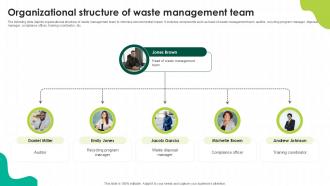
The following slide depicts organizational structure of waste management team to minimize environmental impact. It includes components such as head of waste management team, auditor, recycling program manager, disposal manager, compliance officer, training coordinator, etc.
People who downloaded this PowerPoint presentation also viewed the following :
Organizational Structure Of Waste Management Team Sustainable Waste Management Ppt Template with all 9 slides:
Use our Organizational Structure Of Waste Management Team Sustainable Waste Management Ppt Template to effectively help you save your valuable time. They are readymade to fit into any presentation structure.








FAQs for Organizational Structure Of Waste Management Team Sustainable Waste
Honestly just buy less stuff first - sounds dumb but most places skip this and go straight to recycling. Switch to reusable containers, redesign your processes to use less material upfront. Go digital for docs, that cuts paper waste like crazy. I'd audit your biggest waste streams first though, way easier than trying to fix everything at once. Standardize packaging sizes too. Train people to ask "do we actually need this?" before ordering. My old job was terrible at this - we'd order supplies just because we always did, not because we needed them. Start with prevention, not cleanup.
Waste segregation is crazy different everywhere you look. Germany and Japan are obsessed with detailed sorting - like, multiple bins for everything and they'll actually fine you for messing up. Sweden does the color-coded bag thing really well. South Korea makes you pay for waste bags which is honestly pretty smart for getting people to use less. Other places just stick to basic organic/non-organic splits. Oh, and if this is for school or something, check out European Environment Agency reports - they break down what systems actually work vs. the ones that just sound impressive.
Dude, waste management tech is getting crazy good right now. Smart bins tell you when they're full so trucks aren't driving around for nothing. AI sorting beats humans by miles - honestly didn't think we'd get there this fast. Route optimization saves tons on fuel, and you can track everything with GPS. Blockchain's even helping with compliance stuff, which is wild. But here's the real game-changer: you'll actually know what's happening with your waste instead of just winging it. I'd start with smart sensors in whatever areas produce the most trash. Makes a huge difference once you see the data.
Honestly, start with a waste audit first - sounds boring but you can't fix what you don't know about. Then flip your thinking: instead of tossing stuff, how can you repair or refurbish it? Your waste could be gold for another company (or even a different department). I've watched businesses cut costs big time doing this. Product-as-a-service is another angle - you keep ownership through the whole lifecycle instead of just selling and forgetting. Oh, and partnerships are clutch here. Someone else's trash might literally be your treasure.
Honestly, it's a mess of problems. Cities don't have enough space for proper collection spots, so people just throw phones in regular trash - can't really blame them. Processing costs are insane because you need special equipment to handle lithium batteries and rare metals safely. Half the facilities aren't even equipped for it properly. Then there's contamination - broken screens, leaking batteries during transport make everything way harder to sort through. Oh, and people mix electronics with regular recycling all the time which screws things up. Your best move? Find a certified e-waste place nearby.
Dude, these programs totally work because of peer pressure and making things super convenient. Your neighbors start composting? You'll probably follow. Simple as that. The best ones give clear instructions and put drop-off spots everywhere - plus they show you the actual results, which is pretty motivating. Educational workshops are a solid starting point if you want more people involved. Oh, and those visible competitions between neighborhoods? They're weirdly effective at getting everyone fired up about recycling. It's all about making participation feel normal and showing people their efforts actually matter.
Honestly, I'd focus on waste diversion rate first - that's your main number showing how much you're keeping out of landfills. Cost per ton matters too since budgets are always tight. Contamination rates in recycling are huge because one person throwing pizza boxes in there can mess up a whole batch. Super frustrating but you need to track it. If you're doing new programs, definitely measure how many people actually participate. I've seen great ideas fail because nobody bought in. Oh, and volume reduction over time is solid for tracking progress. Start small though - maybe 2-3 metrics max. You don't want to drown in spreadsheets that never get looked at.
So awareness campaigns actually work really well for getting more people to recycle. Most folks have no clue what goes where - like, pizza boxes are a huge no-go but everyone throws them in anyway. The trick is keeping it super visual and specific to your area. Show people exactly what your local facility takes and where it ends up. Honestly, when someone sees their plastic bottle turned into a bench at the park down the street, they're way more likely to participate. Just don't dump too much info on them at once - simple messaging wins every time.
Ugh, landfills are such a nightmare for the environment. Basically the toxic leachate seeps into groundwater and soil, which kills off plants and wildlife. Then you've got all that methane pumping into the air - terrible for climate stuff and just makes the whole area smell awful. Animals either get poisoned or just bail completely. What really gets me is how invasive species move in afterward because the native plants can't handle the messed up soil anymore. Honestly, if you're involved in any waste decisions, just push hard for recycling programs first. Way better than dealing with this mess later.
So composting in cities vs rural areas is totally different. You're stuck with small spaces in urban areas, which means relying on city programs or those little indoor bins. Rural people have it made though - they can do massive backyard piles or just toss scraps to their chickens. Cities are way pickier about regulations too. I swear my friend's suburban HOA has like ten rules about compost bins alone. Anyway, I'd check what your city offers first since that's usually the easiest route, then work around whatever space you've got.
So basically, companies can swap waste - like beverage brands teaming up with recyclers, or food companies working with composting places. What's wild is competitors actually collaborate on this stuff since everyone wins. You'll want to look at shared sorting tech and material exchanges too. Industry-wide standards help a ton. My favorite examples are the cross-industry swaps where one company's trash literally becomes another's treasure. Start by figuring out what waste your industry churns out most, then find companies that'd actually want it. Joint logistics networks make it way more efficient.
Look, municipalities can actually save a ton through better waste management. Landfill fees drop big time, collection gets cheaper, and recycling brings in actual revenue. Health costs go down too - fewer violations means dodging those nasty environmental fines. Honestly? It's become this weird selling point that attracts businesses and residents. Like everyone cares about sustainability now. The initial investment usually pays itself back in just a few years through all these savings combined. I'd start by checking what's costing you the most in your current waste streams - that's where the money is.
So basically waste management is getting a major climate makeover. Cities are banning single-use plastics and making composting mandatory. The whole focus has shifted from just "where do we put this trash" to actually counting carbon footprints. Methane reduction from landfills is huge now. Recycling rates matter more than ever. There's this whole circular economy push happening too - though honestly the compliance stuff is getting pretty intense. But here's the thing: done right, waste management can actually help solve climate problems instead of just creating them. If you're planning anything, build in the greenhouse gas piece from the start.
Oh man, there's some wild stuff coming out! Seaweed packaging that just dissolves when it hits water - honestly blew my mind when I first saw it. Mushroom mycelium works exactly like styrofoam but actually breaks down. You can even get edible films made from fruit peels now, which feels very sci-fi to me. Plant-based plastics are finally getting decent too. Corn starch and sugarcane versions actually decompose, unlike those fake "biodegradable" ones that fooled us all. Main issue is still cost and ramping up production though. If you're switching stuff over, I'd hit your high-volume items first since that's where you'll actually see results.
Honestly, start small with something like campus clean-ups or waste audits - kids get genuinely shocked seeing how much food gets tossed daily. Set up those interactive recycling stations with super clear labels (trust me, confusion kills participation). Don't just stick this stuff in science class either - work it into history, math, wherever it fits. Peer programs are gold because teenagers actually listen to other teenagers, which... makes sense when you think about it. Try "Meatless Mondays" or composting first, then expand once you've got some momentum. Making it relevant to their actual daily routine is what matters most.
-
I am not the best at presentations but using SlideTeam’s PPT template made it easier for me. Thank you SlideTeam!
-
I want to express my gratitude to SlideTeam’s presentation design services team for helping me create the best presentation of my life!